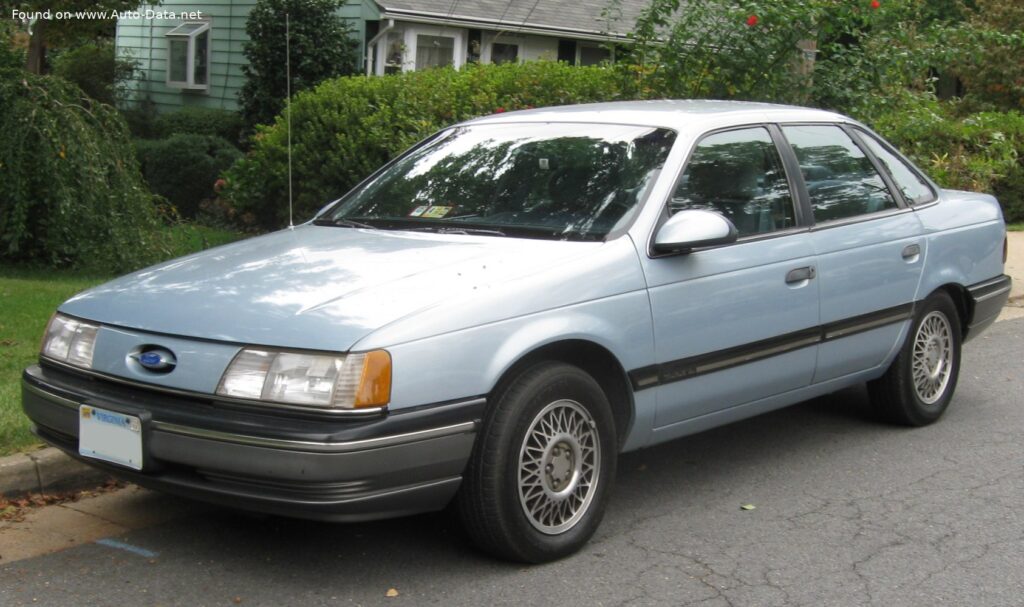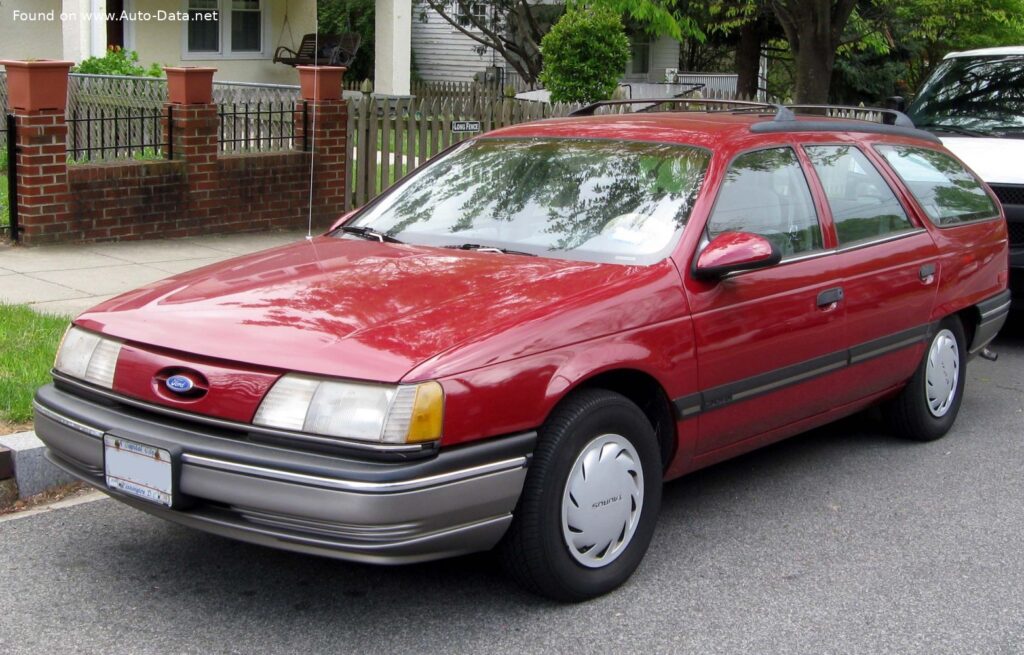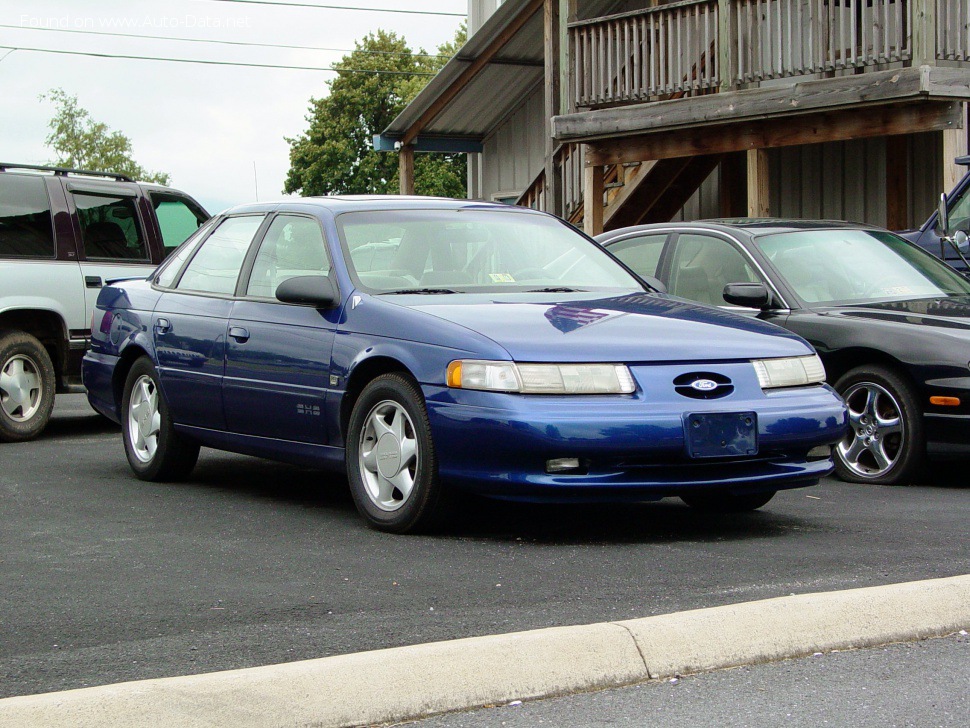
The Ford Taurus II SHO, produced between 1993 and 1995, represents a performance-oriented iteration of the popular Ford Taurus sedan. The “SHO” designation, standing for “Super High Output,” signified a substantial upgrade over the standard Taurus models, aimed at attracting buyers seeking a more engaging driving experience. This generation of the Taurus SHO distinguished itself with a Yamaha-designed 3.2-liter V6 engine, a sophisticated suspension, and subtle styling cues that hinted at its sporting intentions. While not a high-volume seller, the Taurus SHO cultivated a dedicated following and remains a sought-after vehicle among enthusiasts.
Ford Taurus II SHO: A Performance Sedan
The Taurus II SHO occupied a unique niche in the American automotive landscape of the early 1990s. It wasn’t a direct competitor to European sports sedans, but rather a domestic offering that attempted to bridge the gap between family transportation and spirited driving. The SHO aimed to provide a comfortable and practical sedan experience with a level of performance previously unseen in the mainstream mid-size segment. It was positioned above the standard Taurus in terms of price and features, appealing to buyers who desired a more refined and capable vehicle.
Engine & Performance
The heart of the Taurus SHO was its 3.2-liter, 24-valve V6 engine. This engine was the result of a collaboration between Ford and Yamaha Motor Corporation, a partnership that proved highly successful. Yamaha was responsible for the engine’s design and manufacturing, bringing its expertise in high-performance engines to the project. The engine produced 223 horsepower at 6000 rpm and 292 Nm (215.37 lb.-ft.) of torque at 4800 rpm. This output, combined with a four-speed automatic transmission, allowed the SHO to accelerate from 0 to 60 mph in approximately 8 seconds and achieve a top speed of 224 km/h (139.19 mph). The engine’s naturally aspirated design and multi-port fuel injection contributed to its smooth power delivery and responsive character. The weight-to-power ratio of 6.6 kg/Hp and a weight-to-torque ratio of 5.1 kg/Nm further enhanced its performance capabilities.
Design & Features
The Taurus II SHO retained the overall body style of the standard Taurus sedan, a design characterized by its rounded edges and relatively conservative aesthetic. However, the SHO received several subtle visual enhancements to differentiate it from its more pedestrian counterparts. These included a unique front fascia with integrated fog lights, a rear spoiler, and monochromatic exterior trim. The interior featured sport seats with enhanced bolstering, a leather-wrapped steering wheel, and upgraded instrumentation. Standard features included air conditioning, power windows and locks, and an AM/FM stereo. Safety features, increasingly important in the 1990s, included ABS (Anti-lock Braking System). The SHO’s suspension was also upgraded with stiffer springs and dampers, providing improved handling and stability. The sedan offered seating for five passengers and a trunk capacity of 507 liters (17.9 cu. ft.).
Technical Specifications
| Brand | Ford |
| Model | Taurus |
| Generation | Taurus II |
| Type (Engine) | SHO 3.2 V6 24V5 (223 Hp) Automatic |
| Start of production | 1993 |
| End of production | 1995 |
| Powertrain Architecture | Internal Combustion engine |
| Body type | Sedan |
| Seats | 5 |
| Doors | 4 |
| Fuel Type | Petrol (Gasoline) |
| Acceleration 0 – 100 km/h | 8.4 sec |
| Acceleration 0 – 62 mph | 8.4 sec |
| Acceleration 0 – 60 mph | 8 sec |
| Maximum speed | 224 km/h (139.19 mph) |
| Weight-to-power ratio | 6.6 kg/Hp |
| Weight-to-torque ratio | 5.1 kg/Nm |
| Power | 223 Hp @ 6000 rpm |
| Power per litre | 69.9 Hp/l |
| Torque | 292 Nm @ 4800 rpm (215.37 lb.-ft. @ 4800 rpm) |
| Engine layout | Front, Transverse |
| Engine displacement | 3191 cm3 (194.73 cu. in.) |
| Number of cylinders | 6 |
| Engine configuration | V-engine |
| Cylinder Bore | 92.13 mm (3.63 in.) |
| Piston Stroke | 80 mm (3.15 in.) |
| Number of valves per cylinder | 4 |
| Fuel injection system | Multi-port manifold injection |
| Engine aspiration | Naturally aspirated engine |
| Kerb Weight | 1480 kg (3262.84 lbs.) |
| Trunk (boot) space – minimum | 507 l (17.9 cu. ft.) |
| Fuel tank capacity | 70 l (18.49 US gal | 15.4 UK gal) |
| Length | 4877 mm (192.01 in.) |
| Width | 1808 mm (71.18 in.) |
| Height | 1374 mm (54.09 in.) |
| Wheelbase | 2692 mm (105.98 in.) |
| Front track | 1562 mm (61.5 in.) |
| Rear (Back) track | 1537 mm (60.51 in.) |
| Minimum turning circle (turning diameter) | 11.76 m (38.58 ft.) |
| Drivetrain Architecture | The Internal combustion engine (ICE) drives the front wheels of the vehicle. |
| Drive wheel | Front wheel drive |
| Number of gears and type of gearbox | 4 gears, automatic transmission |
| Front suspension | Wishbone |
| Rear suspension | Wishbone |
| Front brakes | Ventilated discs |
| Rear brakes | Disc |
| Assisting systems | ABS (Anti-lock braking system) |
| Steering type | Steering rack and pinion |
| Tires size | 215/65 R15 |
| Wheel rims size | 15 |
The Ford Taurus II SHO, while a relatively short-lived model, remains a significant vehicle in Ford’s history. Its Yamaha-designed engine and performance-oriented features set it apart from the standard Taurus and offered a compelling alternative for buyers seeking a more engaging driving experience. The SHO’s legacy continues to resonate with enthusiasts who appreciate its unique blend of practicality, performance, and understated style.