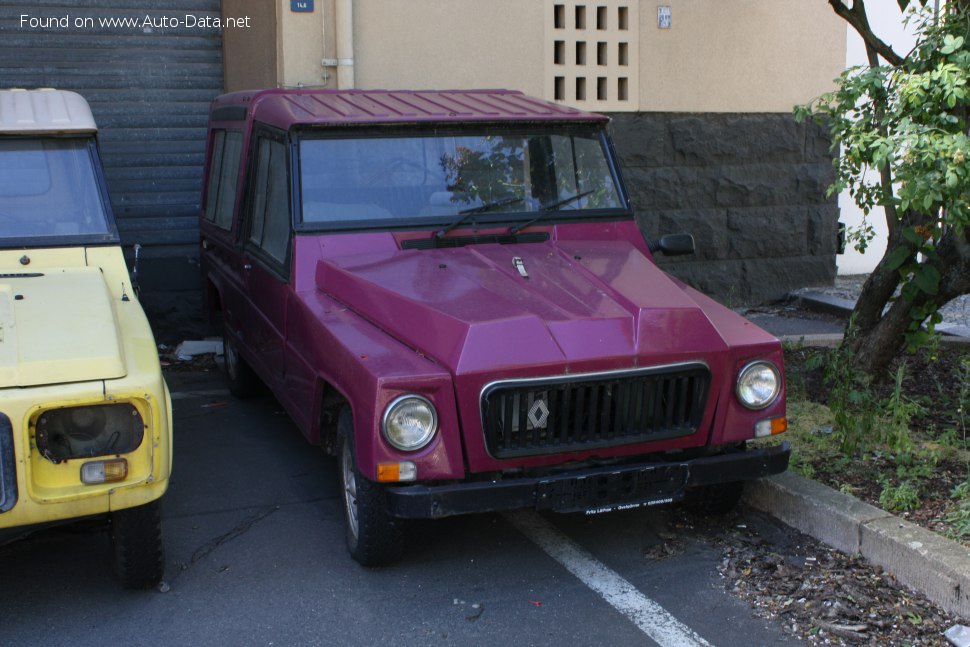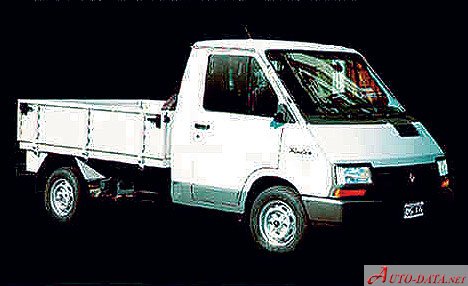
The Renault Rodeo 6 1.1, produced from 1972 to 1981, was a utilitarian pick-up truck primarily aimed at the European market, particularly France. It represented Renault’s entry into the light commercial vehicle segment, offering a simple, robust, and affordable transportation solution for small businesses, farmers, and individuals. While never officially sold in the United States, the Rodeo 6 filled a crucial niche in Europe as a compact and versatile workhorse. It was based on the Renault 4 platform, sharing many components and mechanical features, but with a dedicated pick-up bed configuration. The “6” designation referred to its payload capacity of 600 kilograms (approximately 1,323 pounds). The 1.1-liter engine variant, producing 48 horsepower, was a common configuration, prioritizing fuel economy and reliability over outright performance.
Renault Rodeo 6 1.1: A European Workhorse
The Rodeo 6 occupied a unique position in the European automotive landscape of the 1970s. Unlike larger, more complex pick-up trucks, the Rodeo 6 was designed for simplicity and ease of maintenance. This made it particularly appealing to users who needed a dependable vehicle for everyday tasks without the expense and complexity of larger commercial vehicles. It competed with other small pick-ups like the Citroën C27 and the Fiat 800T, but distinguished itself through its Renault 4-derived mechanicals and relatively modern (for the time) construction. The Rodeo 6 wasn’t intended for heavy-duty work, but rather for lighter loads and shorter distances, making it ideal for urban deliveries, agricultural tasks, and general utility purposes.
Origins and Market Context
Renault’s decision to produce the Rodeo 6 stemmed from a growing demand for small commercial vehicles in post-war Europe. The Renault 4, already a popular passenger car, provided a cost-effective and reliable base for a pick-up truck. By adapting the 4’s chassis and mechanical components, Renault could offer a commercial vehicle at a competitive price point. The Rodeo 6 was primarily marketed in France, but also found buyers in other European countries, as well as in some export markets. It served as a practical and affordable solution for businesses and individuals who required a small, versatile pick-up truck for their daily needs. The vehicle’s success was tied to the overall economic conditions of the time, with a focus on practicality and affordability.
Engine & Performance
The Renault Rodeo 6 1.1 was powered by a 1.1-liter (1108 cc) naturally aspirated inline-four cylinder gasoline engine. This engine, derived from the Renault 4, produced 48 horsepower (36 kW) at approximately 5,000 rpm and around 69 lb-ft (94 Nm) of torque. While not a powerhouse, the engine was known for its reliability and fuel efficiency. Power was delivered to the front wheels via a four-speed manual transmission. The front-wheel-drive configuration, inherited from the Renault 4, contributed to the Rodeo 6’s relatively light weight and improved traction in slippery conditions.
Performance was modest, as expected from a vehicle of this type and engine size. Acceleration was slow, and top speed was limited to around 75 mph (120 km/h). However, the Rodeo 6 was not designed for speed; its focus was on practicality and load-carrying capacity. The suspension system, also derived from the Renault 4, consisted of independent front suspension with torsion bars and a trailing arm rear suspension. This provided a reasonably comfortable ride, even when carrying a load. The Rodeo 6’s braking system consisted of drum brakes on all four wheels. The overall driving experience was characterized by simplicity and ease of use, making it accessible to a wide range of drivers.
Design & Features
The Renault Rodeo 6 featured a simple, utilitarian design. The body was a traditional pick-up configuration, with a separate cab and cargo bed. The cab was typically offered in a basic configuration, with minimal creature comforts. Interior appointments were sparse, focusing on durability and functionality rather than luxury. The cargo bed was constructed from steel and offered a payload capacity of 600 kg (1,323 lbs), as indicated by the “6” in the model name. The bed dimensions were approximately 1.8 meters long and 1.4 meters wide.
Safety features were limited by the standards of the 1970s. The Rodeo 6 did not include features such as airbags or anti-lock brakes. However, it did offer basic safety equipment such as seatbelts and a steering column-mounted gear shifter. The vehicle’s relatively small size and light weight contributed to its maneuverability and ease of handling. The Rodeo 6’s design prioritized practicality and affordability, making it a popular choice for businesses and individuals who needed a reliable and versatile work vehicle. The exterior styling was functional, with a focus on maximizing cargo space and minimizing weight. The vehicle’s overall appearance reflected its utilitarian purpose.
Technical Specifications
| Specification | Detail |
| Brand | Renault |
| Model | Rodeo |
| Generation | Rodeo 6 |
| Type (Engine) | 1.1 (48 Hp) |
| Start of Production | 1972 |
| End of Production | 1981 |
| Powertrain Architecture | Internal Combustion Engine |
| Body Type | Pick-up |
| Fuel Type | Petrol (Gasoline) |
| Engine Power | 48 Hp (36 kW) |
| Engine Aspiration | Naturally Aspirated |
| Engine Displacement | 1.1 Liters (1108 cc) |
| Transmission | 4-Speed Manual |
| Drivetrain | Front-Wheel Drive |
| Payload Capacity | 600 kg (1,323 lbs) |
| Braking System | Drum Brakes (All Wheels) |
The Renault Rodeo 6 1.1, while a relatively simple vehicle, played an important role in the European light commercial vehicle market during the 1970s. Its affordability, reliability, and practicality made it a popular choice for a wide range of users. Although it was never officially sold in the United States, the Rodeo 6 represents a significant example of Renault’s engineering and its ability to adapt existing platforms to meet the needs of a diverse market. Its legacy lies in its contribution to the development of small, versatile pick-up trucks that continue to be popular today.