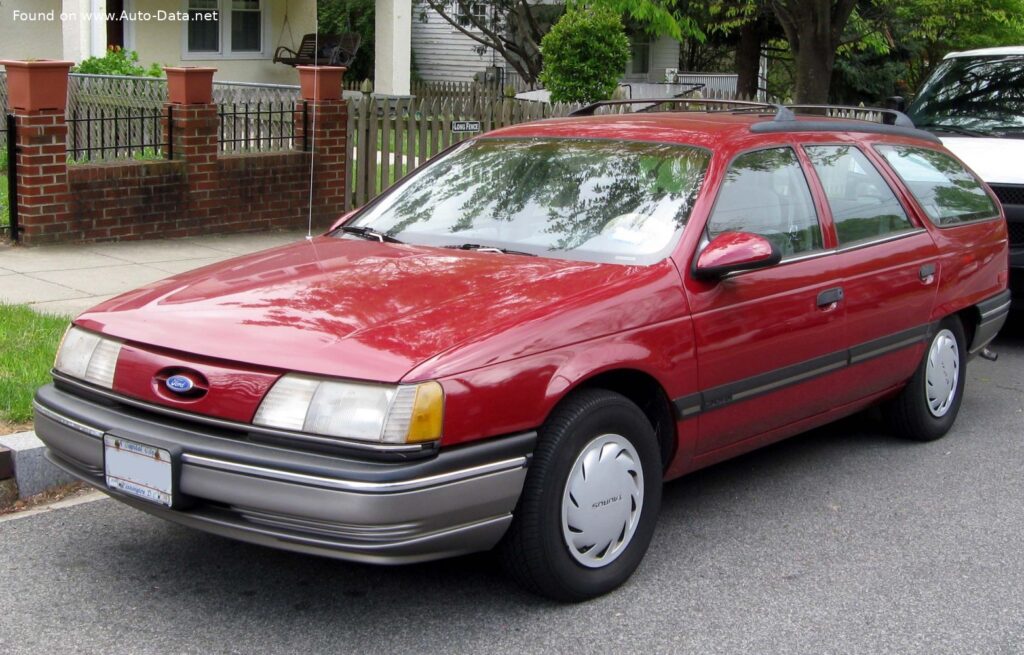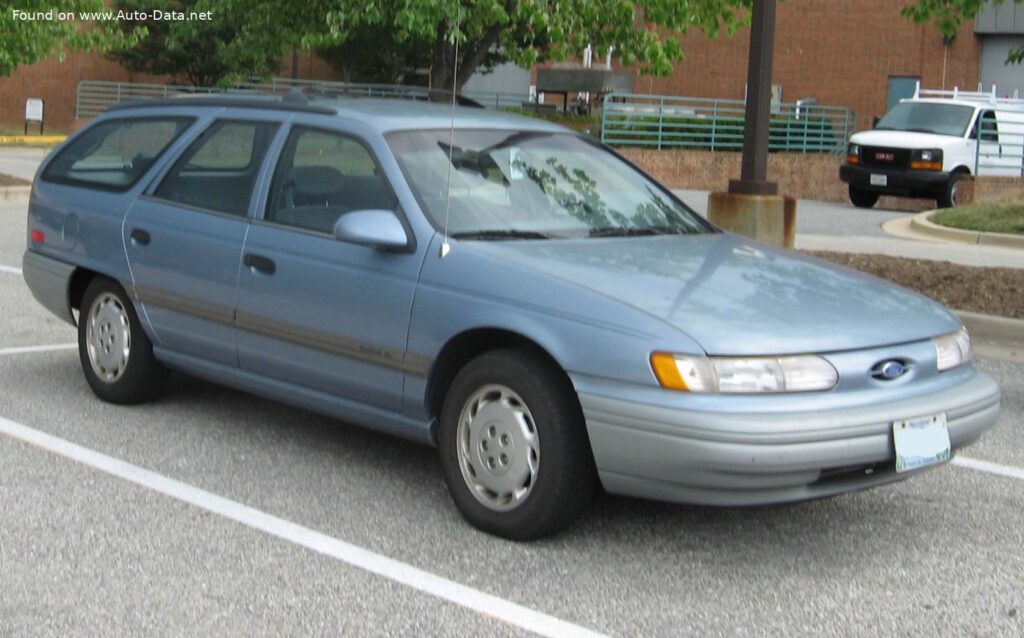
The Ford Taurus II Station Wagon, produced between 1992 and 1995, represented a significant iteration of Ford’s full-size family car. Part of the second generation of the Taurus line, this station wagon variant offered families a practical and spacious alternative to the sedan, capitalizing on the enduring popularity of estate cars in North America. Positioned within the large family car segment, the Taurus II Station Wagon aimed to provide a comfortable and reliable transportation solution, blending practicality with Ford’s evolving design language. The 3.8 V6 engine option, producing 141 horsepower, was a mainstay of the Taurus lineup, offering a balance of performance and fuel economy for the era.
Ford Taurus II Station Wagon: A Detailed Overview
The Taurus II generation, launched in 1992, brought a refreshed aesthetic and mechanical refinements to the popular model. The station wagon body style continued to be a key offering, catering to buyers who prioritized cargo capacity and versatility. While the Taurus nameplate had already established itself as a strong seller, the second generation aimed to solidify its position in a competitive market. The 3.8-liter V6 engine, paired with an automatic transmission, was a common configuration, providing adequate power for everyday driving and hauling loads. This model year saw continued improvements in safety and convenience features, reflecting the growing expectations of car buyers.
Engine & Performance
The heart of the 1992-1995 Ford Taurus II Station Wagon was the 3.8-liter Essex V6 engine. This naturally aspirated powerplant delivered 141 horsepower at 3800 rpm and 292 Nm (215.37 lb.-ft.) of torque at 2200 rpm. The engine featured multi-port fuel injection, contributing to improved fuel efficiency and smoother operation compared to earlier carbureted designs. The engine’s configuration – a 90-degree V6 with 2 valves per cylinder – was a common layout for Ford during this period. The engine’s 3797 cm3 (231.71 cu. in.) displacement provided a good balance between power and economy. Power delivery was managed through a 4-speed automatic transmission, directing power to the front wheels. The weight-to-power ratio of 10.6 kg/Hp and a power-to-tonne ratio of 94.3 Hp/tonne indicated a respectable, though not particularly sporty, performance profile. The weight-to-torque ratio of 5.1 kg/Nm and 195.3 Nm/tonne suggested adequate pulling power for a family vehicle.
Design & Features
The Ford Taurus II Station Wagon adopted the aerodynamic styling cues that were becoming increasingly prevalent in the early 1990s. The station wagon body style maximized interior space, offering a generous 2297 liters (81.12 cu. ft.) of cargo volume with the rear seats folded down. The vehicle’s dimensions – 4905 mm (193.11 in.) in length, 1808 mm (71.18 in.) in width, and 1410 mm (55.51 in.) in height – provided ample room for passengers and luggage. Inside, the Taurus II offered seating for five passengers. Standard features typically included air conditioning, power steering, and an AM/FM radio. Safety features, while not as comprehensive as modern standards, included an Anti-lock Braking System (ABS), which was becoming increasingly common on larger vehicles. The suspension system, featuring wishbone front suspension and a double wishbone rear setup, aimed to provide a comfortable ride. The 205/70 R14 tires mounted on 14-inch wheels were typical for the era, balancing ride quality and handling.
Technical Specifications
| Brand | Ford |
| Model | Taurus |
| Generation | Taurus II Station Wagon |
| Type (Engine) | 3.8 V6 (141 Hp) Automatic |
| Start of production | 1992 |
| End of production | 1995 |
| Powertrain Architecture | Internal Combustion engine |
| Body type | Station wagon (estate) |
| Seats | 5 |
| Doors | 5 |
| Fuel Type | Petrol (Gasoline) |
| Weight-to-power ratio | 10.6 kg/Hp |
| Hp/tonne | 94.3 Hp/tonne |
| Weight-to-torque ratio | 5.1 kg/Nm |
| Nm/tonne | 195.3 Nm/tonne |
| Power | 141 Hp @ 3800 rpm |
| Power per litre | 37.1 Hp/l |
| Torque | 292 Nm @ 2200 rpm / 215.37 lb.-ft. @ 2200 rpm |
| Engine layout | Front, Transverse |
| Engine Model/Code | Essex |
| Engine displacement | 3797 cm3 / 231.71 cu. in. |
| Number of cylinders | 6 |
| Engine configuration | V-engine |
| Cylinder Bore | 96.8 mm / 3.81 in. |
| Piston Stroke | 86 mm / 3.39 in. |
| Compression ratio | 9:1 |
| Number of valves per cylinder | 2 |
| Fuel injection system | Multi-port manifold injection |
| Engine aspiration | Naturally aspirated engine |
| Engine oil capacity | 4.7 l / 4.97 US qt | 4.14 UK qt |
| Coolant | 11 l / 11.62 US qt | 9.68 UK qt |
| Kerb Weight | 1495 kg / 3295.91 lbs. |
| Trunk (boot) space – maximum | 2297 l / 81.12 cu. ft. |
| Fuel tank capacity | 61 l / 16.11 US gal | 13.42 UK gal |
| Length | 4905 mm / 193.11 in. |
| Width | 1808 mm / 71.18 in. |
| Height | 1410 mm / 55.51 in. |
| Wheelbase | 2692 mm / 105.98 in. |
| Front track | 1562 mm / 61.5 in. |
| Rear (Back) track | 1521 mm / 59.88 in. |
| Minimum turning circle (turning diameter) | 11.76 m / 38.58 ft. |
| Drivetrain Architecture | The Internal combustion engine (ICE) drives the front wheels of the vehicle. |
| Drive wheel | Front wheel drive |
| Number of gears and type of gearbox | 4 gears, automatic transmission |
| Front suspension | Wishbone |
| Rear suspension | Double wishbone |
| Front brakes | Ventilated discs |
| Rear brakes | Drum |
| Assisting systems | ABS (Anti-lock braking system) |
| Steering type | Steering rack and pinion |
| Tires size | 205/70 R14 |
| Wheel rims size | 14 |
The Ford Taurus II Station Wagon, while not a performance icon, served as a reliable and practical family vehicle during its production run. Its spacious interior, comfortable ride, and adequate power made it a popular choice for buyers seeking a versatile and affordable station wagon. The model represents a snapshot of automotive design and technology from the early 1990s, reflecting the priorities of the era – practicality, comfort, and a growing emphasis on safety.