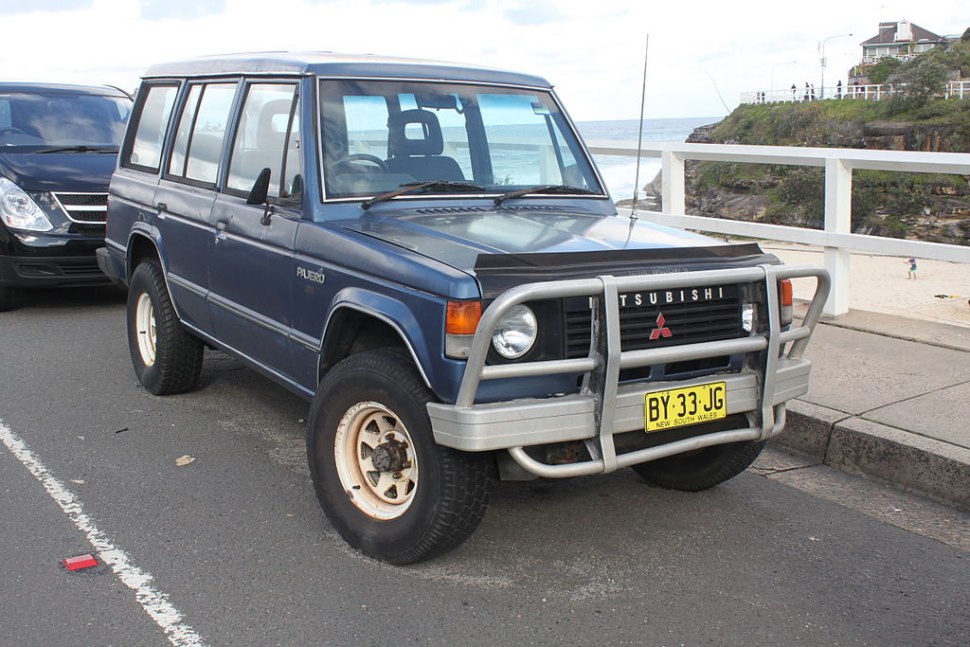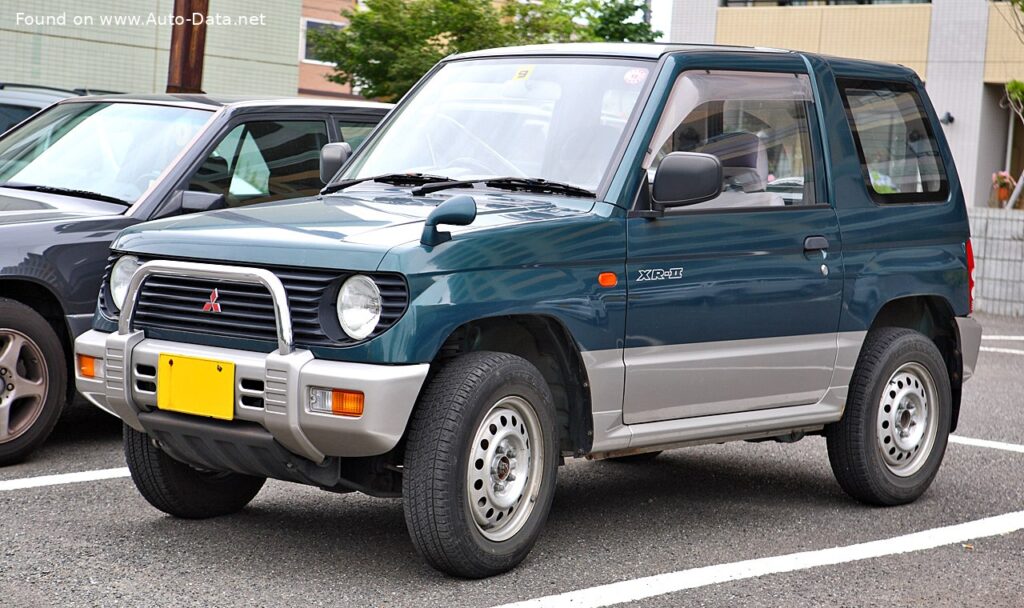
The Mitsubishi Pajero Mini 0.7 20V Turbo, produced between 1994 and 1998, represents a unique offering from the Japanese automaker. This compact SUV, designed to fit within Japan’s Kei car regulations, provided a blend of off-road capability and urban practicality. While not officially sold in the United States, the Pajero Mini is a significant vehicle in understanding Mitsubishi’s engineering prowess and its approach to the micro-SUV segment. It catered to a specific market need in Japan – a small, affordable, and capable four-wheel-drive vehicle for navigating both city streets and challenging terrain.
Mitsubishi Pajero Mini: A Kei Car Phenomenon
The Pajero Mini is part of a broader category of vehicles known as “Kei cars” in Japan. These vehicles are subject to strict regulations regarding engine displacement, dimensions, and power output, resulting in smaller, more fuel-efficient cars. The Pajero Mini, despite its diminutive size, successfully incorporated many of the design cues and off-road technologies found in its larger Pajero siblings. It quickly gained popularity for its surprisingly capable four-wheel-drive system and its ability to handle diverse driving conditions. The vehicle’s success demonstrated Mitsubishi’s ability to innovate within the constraints of the Kei car regulations.
Engine & Performance
Powering the Pajero Mini is a 659 cc (40.21 cubic inches) inline-four cylinder engine equipped with a turbocharger and multi-port fuel injection. This engine produces 64 horsepower at 7000 rpm and 97 Nm (71.54 lb-ft) of torque at 3500 rpm. While these figures may seem modest by American standards, they are competitive within the Kei car class. The engine’s power-to-weight ratio of 13.9 kg/Hp (71.9 Hp/tonne) contributes to a respectable level of performance. The Pajero Mini achieves a maximum speed of 130 km/h (80.78 mph). Fuel economy is a strong point, with urban consumption rated at 9 l/100 km (26.1 US mpg), and extra-urban consumption at 4 l/100 km (58.8 US mpg). The engine is transversely mounted, and power is delivered to all four wheels via a 3-speed automatic transmission.
Design & Features
The Pajero Mini is a three-door SUV with seating for five passengers. Its boxy, utilitarian design is reminiscent of larger, more rugged SUVs, albeit scaled down. The vehicle’s compact dimensions – 3295 mm (129.72 in) in length, 1395 mm (54.92 in) in width, and 1630 mm (64.17 in) in height – make it easy to maneuver in tight urban environments. The Pajero Mini features a double wishbone front suspension and a coil spring rear suspension, providing a comfortable ride on and off-road. Braking duties are handled by disc brakes in the front and drum brakes in the rear, supplemented by an Anti-lock Braking System (ABS). The steering system is a rack and pinion type with hydraulic power assistance. The vehicle rides on 15-inch wheels with 175/80 R15 tires. The interior, while basic, is functional and designed to maximize space within the vehicle’s small footprint.
Technical Specifications
| Brand | Mitsubishi |
| Model | Pajero |
| Generation | Pajero Mini |
| Type (Engine) | 0.7 20V Turbo (64 Hp) Automatic |
| Start of production | 1994 |
| End of production | 1998 |
| Powertrain Architecture | Internal Combustion engine |
| Body type | SUV |
| Seats | 5 |
| Doors | 3 |
| Fuel consumption (urban) | 9 l/100 km (26.1 US mpg) |
| Fuel consumption (extra urban) | 4 l/100 km (58.8 US mpg) |
| Fuel Type | Petrol (Gasoline) |
| Maximum speed | 130 km/h (80.78 mph) |
| Weight-to-power ratio | 13.9 kg/Hp |
| Weight-to-torque ratio | 9.2 kg/Nm |
| Power | 64 Hp @ 7000 rpm |
| Torque | 97 Nm @ 3500 rpm (71.54 lb.-ft. @ 3500 rpm) |
| Engine layout | Front, Transverse |
| Engine displacement | 659 cm3 (40.21 cu. in.) |
| Number of cylinders | 4 |
| Engine configuration | Inline |
| Cylinder Bore | 60 mm (2.36 in.) |
| Piston Stroke | 58.3 mm (2.3 in.) |
| Compression ratio | 8.5:1 |
| Number of valves per cylinder | 5 |
| Fuel injection system | Multi-port manifold injection |
| Engine aspiration | Turbocharger |
| Valvetrain | DOHC |
| Kerb Weight | 890 kg (1962.11 lbs.) |
| Fuel tank capacity | 35 l (9.25 US gal | 7.7 UK gal) |
| Length | 3295 mm (129.72 in.) |
| Width | 1395 mm (54.92 in.) |
| Height | 1630 mm (64.17 in.) |
| Wheelbase | 2200 mm (86.61 in.) |
| Front track | 1190 mm (46.85 in.) |
| Rear track | 1200 mm (47.24 in.) |
| Minimum turning circle | 9.8 m (32.15 ft.) |
| Drive wheel | All wheel drive (4×4) |
| Number of gears | 3 |
| Gearbox type | Automatic transmission |
| Front suspension | Double wishbone |
| Rear suspension | Coil spring |
| Front brakes | Disc |
| Rear brakes | Drum |
| Assisting systems | ABS (Anti-lock braking system) |
| Steering type | Steering rack and pinion |
| Power steering | Hydraulic Steering |
| Tires size | 175/80 R15 |
| Wheel rims size | 15 |
The Mitsubishi Pajero Mini, while a niche vehicle outside of Japan, demonstrates the ingenuity and adaptability of Japanese automotive engineering. Its combination of compact size, four-wheel-drive capability, and fuel efficiency made it a popular choice for drivers in Japan, and it remains a noteworthy example of the Kei car class.