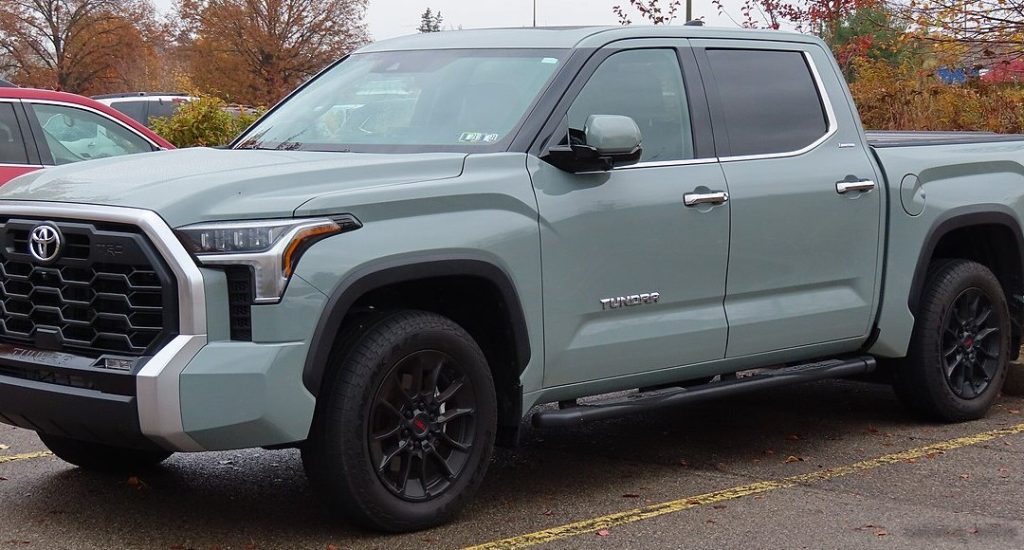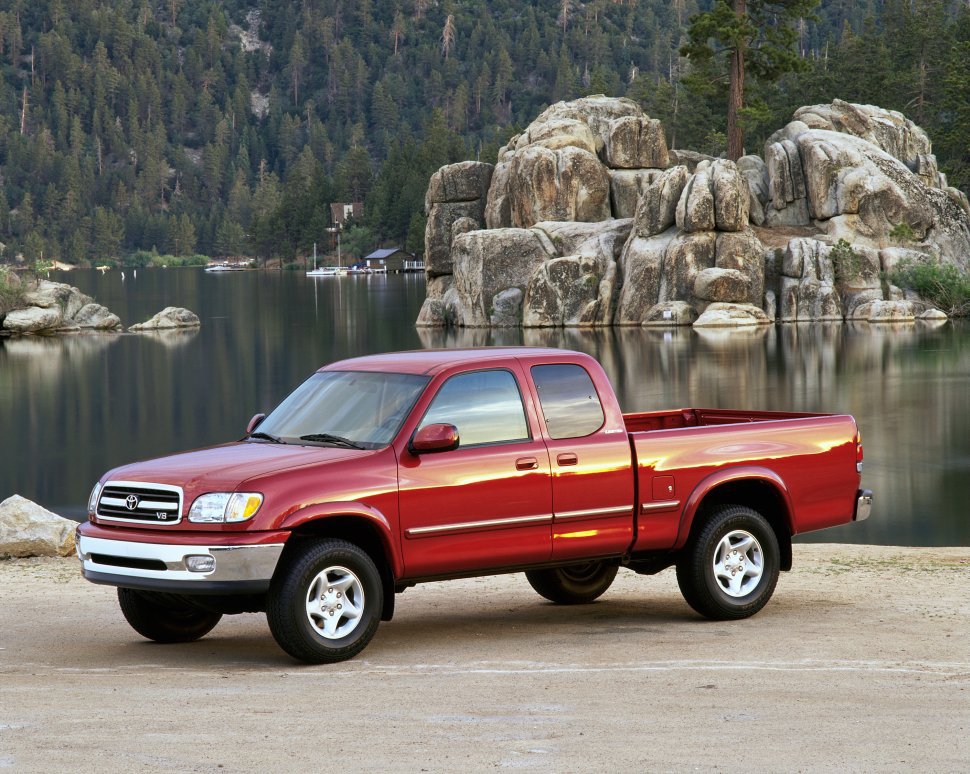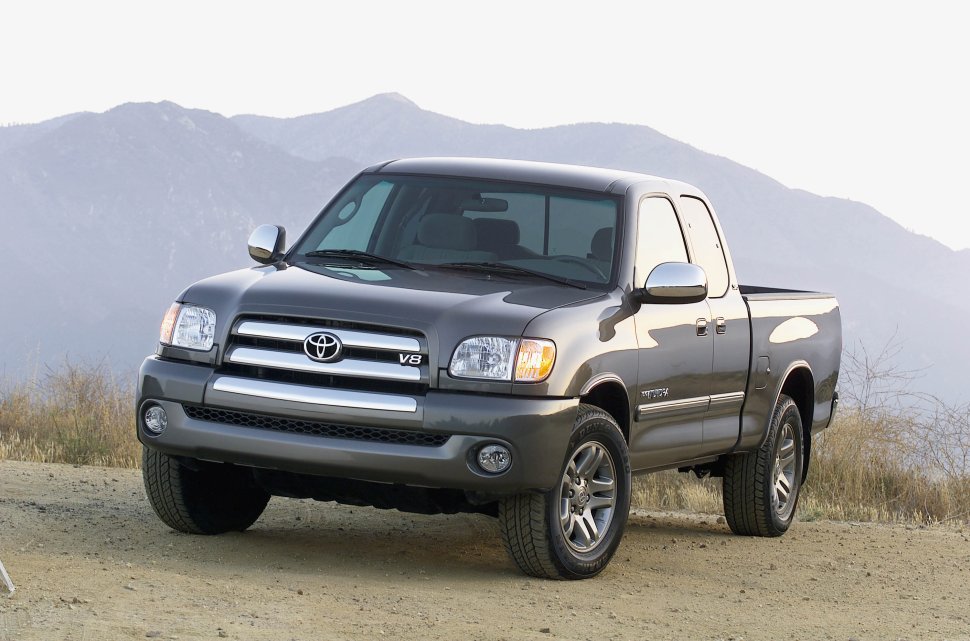
The Toyota Tundra II Regular Cab Long Bed, produced between 2006 and 2009, represents Toyota’s second-generation full-size pickup truck. Designed specifically for the North American market, the Tundra II aimed to challenge established domestic manufacturers like Ford, Chevrolet, and Dodge. This generation marked a significant increase in size and capability compared to its predecessor, offering a more robust platform and a powerful engine lineup. The Regular Cab Long Bed configuration catered to buyers prioritizing cargo space and towing capacity over passenger comfort, making it a popular choice for work and recreational use.
Toyota Tundra II Regular Cab Long Bed: An Overview
The Tundra II was a pivotal model for Toyota, demonstrating a commitment to competing directly in the highly competitive full-size truck segment. It was a departure from the smaller, more compact pickups Toyota had previously offered in the US. The Regular Cab configuration, paired with the long bed, provided a practical and utilitarian option within the Tundra II range. This model focused on providing a workhorse vehicle capable of handling demanding tasks, while still incorporating Toyota’s reputation for reliability and durability.
Engine & Performance
The heart of the Tundra II Regular Cab Long Bed was the 3UR-FE 5.7-liter V8 engine. This naturally aspirated powerplant produced 381 horsepower at 5,600 rpm and 401.23 lb-ft of torque at 3,600 rpm. The engine featured a double overhead camshaft (DOHC) valvetrain with Variable Valve Timing-intelligent (VVT-i) technology, optimizing performance and efficiency. Power was delivered through a six-speed automatic transmission to the rear wheels, providing smooth and responsive shifting. The weight-to-power ratio of 6 kg/Hp (167.7 Hp/tonne) and a weight-to-torque ratio of 4.2 kg/Nm (239.4 Nm/tonne) contributed to its strong acceleration and towing capabilities. Fuel economy was rated at 16 US mpg combined (14.7 l/100km urban, 11.7 l/100km extra-urban), typical for a full-size V8 truck of this era.
Design & Features
The Tundra II Regular Cab Long Bed featured a traditional pickup truck design, emphasizing ruggedness and functionality. The body-on-frame construction provided a solid and durable foundation. The long bed offered ample cargo space, while the Regular Cab configuration provided seating for three passengers. Interior features, while not as luxurious as some competitors, were designed for practicality and ease of use. Standard features included air conditioning, power windows and locks, and an AM/FM radio. Safety features, while evolving during this period, included Anti-lock Braking System (ABS) as standard equipment. The truck’s dimensions – a length of 5810 mm (228.74 in), a width of 2030 mm (79.92 in), and a height of 1925 mm (75.79 in) – reflected its full-size stature. A notable ground clearance of 259 mm (10.2 in) enhanced its off-road capability. Approach and departure angles of 27° and 26° respectively, further aided in navigating challenging terrain.
Technical Specifications
| Brand | Toyota |
| Model | Tundra |
| Generation | Tundra II Regular Cab Long Bed |
| Type (Engine) | 5.7 V8 32V (381 Hp) Automatic |
| Start of production | 2006 |
| End of production | 2009 |
| Powertrain Architecture | Internal Combustion engine |
| Body type | Pick-up |
| Seats | 3 |
| Doors | 2 |
| Fuel consumption (urban) | 14.7 l/100 km (16 US mpg, 19.2 UK mpg) |
| Fuel consumption (extra urban) | 11.7 l/100 km (20.1 US mpg, 24.1 UK mpg) |
| Fuel Type | Petrol (Gasoline) |
| Weight-to-power ratio | 6 kg/Hp |
| Weight-to-torque ratio | 4.2 kg/Nm |
| Power | 381 Hp @ 5600 rpm |
| Torque | 544 Nm @ 3600 rpm (401.23 lb.-ft. @ 3600 rpm) |
| Engine layout | Front, Longitudinal |
| Engine Model/Code | 3UR-FE |
| Engine displacement | 5663 cm3 (345.58 cu. in.) |
| Number of cylinders | 8 |
| Engine configuration | V-engine |
| Cylinder Bore | 94 mm (3.7 in.) |
| Piston Stroke | 102 mm (4.02 in.) |
| Number of valves per cylinder | 4 |
| Fuel injection system | Multi-port manifold injection |
| Engine aspiration | Naturally aspirated engine |
| Valvetrain | DOHC, VVT-i |
| Engine oil capacity | 7 l (7.4 US qt | 6.16 UK qt) |
| Coolant capacity | 13 l (13.74 US qt | 11.44 UK qt) |
| Kerb Weight | 2272 kg (5008.9 lbs.) |
| Max. weight | 3174 kg (6997.47 lbs.) |
| Max load | 902 kg (1988.57 lbs.) |
| Fuel tank capacity | 100 l (26.42 US gal | 22 UK gal) |
| Permitted trailer load with brakes (12%) | 4898 kg (10798.24 lbs.) |
| Length | 5810 mm (228.74 in.) |
| Width | 2030 mm (79.92 in.) |
| Height | 1925 mm (75.79 in.) |
| Wheelbase | 3700 mm (145.67 in.) |
| Front track | 1725 mm (67.91 in.) |
| Rear track | 1725 mm (67.91 in.) |
| Ride height (ground clearance) | 259 mm (10.2 in.) |
| Minimum turning circle | 13.6 m (44.62 ft.) |
| Drivetrain Architecture | Rear wheel drive |
| Number of gears | 6 |
| Type of gearbox | Automatic transmission |
| Front suspension | Double wishbone |
| Rear suspension | Leaf spring |
| Front brakes | Ventilated discs |
| Rear brakes | Drum |
| Assisting systems | ABS (Anti-lock braking system) |
| Steering type | Steering rack and pinion |
| Power steering | Hydraulic Steering |
| Tires size | 255/70 R18; 275/65 R18; 275/55 R20 |
| Wheel rims size | 8.0J x 18; 8.0J x 20 |
The Toyota Tundra II Regular Cab Long Bed, while discontinued after 2009, remains a popular choice in the used truck market. Its robust construction, powerful engine, and Toyota’s reputation for reliability continue to appeal to buyers seeking a capable and dependable full-size pickup.