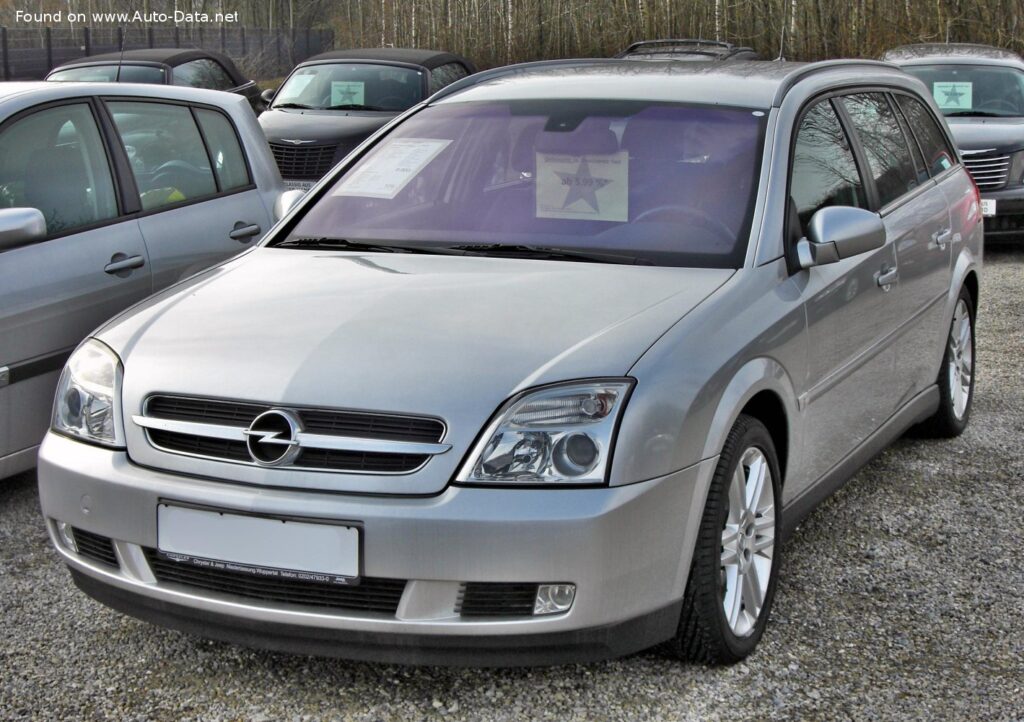
The Opel Vectra C Caravan 2.0i 16V Turbo, produced between 2003 and 2005, represents a significant iteration in Opel’s mid-size family car lineage. As a station wagon (estate) variant of the Vectra C, it aimed to provide practicality and space without sacrificing driving dynamics. While the Vectra nameplate was not widely marketed in the United States, the model was a popular choice in Europe, competing with vehicles like the Ford Mondeo Estate, Volkswagen Passat Variant, and Peugeot 406 SW. The Vectra C Caravan offered a blend of comfort, technology, and performance, catering to families and individuals needing a versatile vehicle.
Opel Vectra C Caravan: An Overview
The Vectra C, launched in 2002, was a substantial redesign of the Vectra B, moving towards a more modern and refined aesthetic. The Caravan body style, specifically, emphasized cargo capacity and usability. The 2.0i 16V Turbo variant, equipped with the Z20NET engine, was positioned as a performance-oriented option within the range, offering a balance between fuel efficiency and spirited driving. This model year saw improvements in safety features and interior appointments, solidifying the Vectra C’s position as a competitive offering in the European market.
Engine & Performance
At the heart of the Vectra C Caravan 2.0i 16V Turbo lies the Z20NET, a 1.998-liter (121.93 cubic inches) inline-four cylinder gasoline engine. This engine is notable for its turbocharging and intercooling, which boost power output to 175 horsepower at 5500 rpm and 265 Nm (195.45 lb-ft) of torque at 2500 rpm. The turbocharger significantly enhances the engine’s responsiveness and provides strong acceleration. Power per liter is a respectable 87.6 hp/l. The engine features multi-port fuel injection and a double overhead camshaft (DOHC) valvetrain with four valves per cylinder. This configuration contributes to efficient combustion and a broad powerband.
Power is delivered to the front wheels via a six-speed manual transmission. This gearbox allows for precise control and contributes to the vehicle’s engaging driving experience. Performance figures include a 0-100 km/h (0-62 mph) acceleration time of 9.4 seconds, and a 0-60 mph time of 8.9 seconds. The vehicle boasts a maximum speed of 222 km/h (137.94 mph). The weight-to-power ratio of 9.1 kg/hp and weight-to-torque ratio of 6 kg/Nm indicate a reasonably efficient powertrain.
Design & Features
The Opel Vectra C Caravan is a five-door station wagon, offering seating for five passengers. Its design emphasizes practicality and spaciousness. The Caravan body style provides a generous cargo area, with a minimum capacity of 530 liters (18.72 cubic feet) and a maximum capacity of 1850 liters (65.33 cubic feet) with the rear seats folded down. This makes it well-suited for families, outdoor enthusiasts, or anyone needing to transport large items.
The Vectra C incorporated several features common for its era, including ABS (Anti-lock Braking System) for enhanced safety. The front brakes are ventilated discs, while the rear brakes are solid discs. The steering system utilizes a rack and pinion setup for precise handling. The vehicle rides on 215/55 R16V tires mounted on 6.5J x 16 inch wheel rims. Interior features focused on comfort and convenience, though specifics varied depending on trim level. The overall design language of the Vectra C was intended to be modern and appealing, reflecting Opel’s design direction at the time.
Technical Specifications
| Brand | Opel |
| Model | Vectra |
| Generation | Vectra C Caravan |
| Type (Engine) | 2.0i 16V Turbo (175 Hp) |
| Start of production | April, 2003 |
| End of production | 2005 |
| Powertrain Architecture | Internal Combustion engine |
| Body type | Station wagon (estate) |
| Seats | 5 |
| Doors | 5 |
| Fuel consumption (urban) | 13.1 l/100 km (18 US mpg, 21.6 UK mpg, 7.6 km/l) |
| Fuel consumption (extra urban) | 6.9 l/100 km (34.1 US mpg, 40.9 UK mpg, 14.5 km/l) |
| Fuel consumption (combined) | 9.2 l/100 km (25.6 US mpg, 30.7 UK mpg, 10.9 km/l) |
| CO2 emissions | 222 g/km |
| Fuel Type | Petrol (Gasoline) |
| Acceleration 0 – 100 km/h | 9.4 sec |
| Acceleration 0 – 62 mph | 9.4 sec |
| Acceleration 0 – 60 mph | 8.9 sec |
| Maximum speed | 222 km/h (137.94 mph) |
| Weight-to-power ratio | 9.1 kg/Hp |
| Weight-to-torque ratio | 6 kg/Nm |
| Power | 175 Hp @ 5500 rpm |
| Torque | 265 Nm @ 2500 rpm (195.45 lb.-ft. @ 2500 rpm) |
| Engine layout | Front, Transverse |
| Engine Model/Code | Z20NET |
| Engine displacement | 1998 cm3 (121.93 cu. in.) |
| Number of cylinders | 4 |
| Engine configuration | Inline |
| Cylinder Bore | 86 mm (3.39 in.) |
| Piston Stroke | 86 mm (3.39 in.) |
| Compression ratio | 9.5:1 |
| Number of valves per cylinder | 4 |
| Fuel injection system | Multi-port manifold injection |
| Engine aspiration | Turbocharger, Intercooler |
| Valvetrain | DOHC |
| Engine oil capacity | 6 l (6.34 US qt | 5.28 UK qt) |
| Coolant | 7.5 l (7.93 US qt | 6.6 UK qt) |
| Kerb Weight | 1585 kg (3494.33 lbs.) |
| Max. weight | 2120 kg (4673.8 lbs.) |
| Max load | 535 kg (1179.47 lbs.) |
| Trunk (boot) space – minimum | 530 l (18.72 cu. ft.) |
| Trunk (boot) space – maximum | 1850 l (65.33 cu. ft.) |
| Fuel tank capacity | 60 l (15.85 US gal | 13.2 UK gal) |
| Length | 4822 mm (189.84 in.) |
| Width | 1798 mm (70.79 in.) |
| Height | 1500 mm (59.06 in.) |
| Wheelbase | 2830 mm (111.42 in.) |
| Front track | 1536 mm (60.47 in.) |
| Rear (Back) track | 1525 mm (60.04 in.) |
| Drivetrain Architecture | Front wheel drive |
| Number of gears and type of gearbox | 6 gears, manual transmission |
| Front suspension | Spring Strut |
| Rear suspension | Several levers and rods |
| Front brakes | Ventilated discs |
| Rear brakes | Disc |
| Assisting systems | ABS (Anti-lock braking system) |
| Steering type | Steering rack and pinion |
| Tires size | 215/55 R16V |
| Wheel rims size | 6.5J X 16 |
The Opel Vectra C Caravan 2.0i 16V Turbo, while not a common sight in North America, remains a noteworthy vehicle in the history of European family cars. Its combination of performance, practicality, and features made it a popular choice for those seeking a versatile and engaging driving experience.