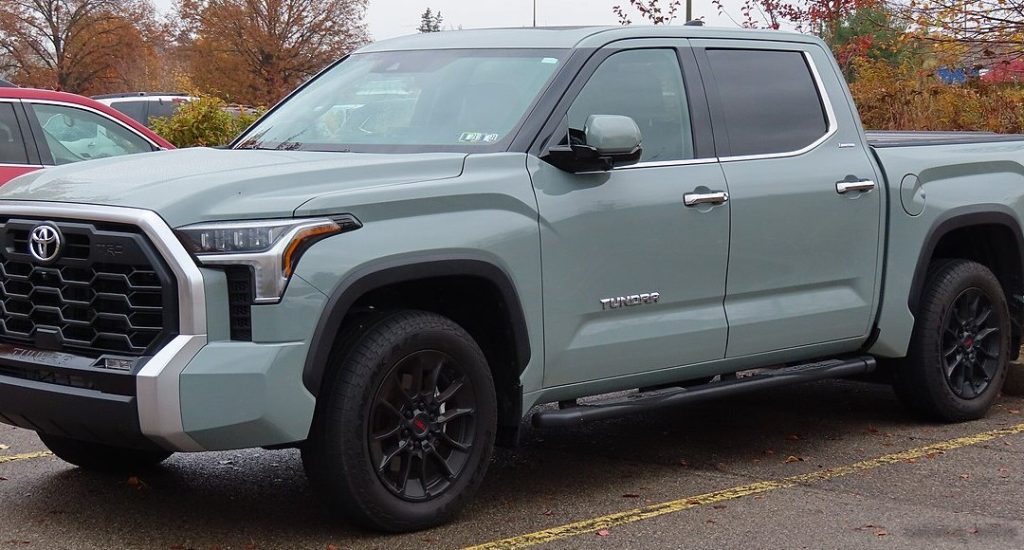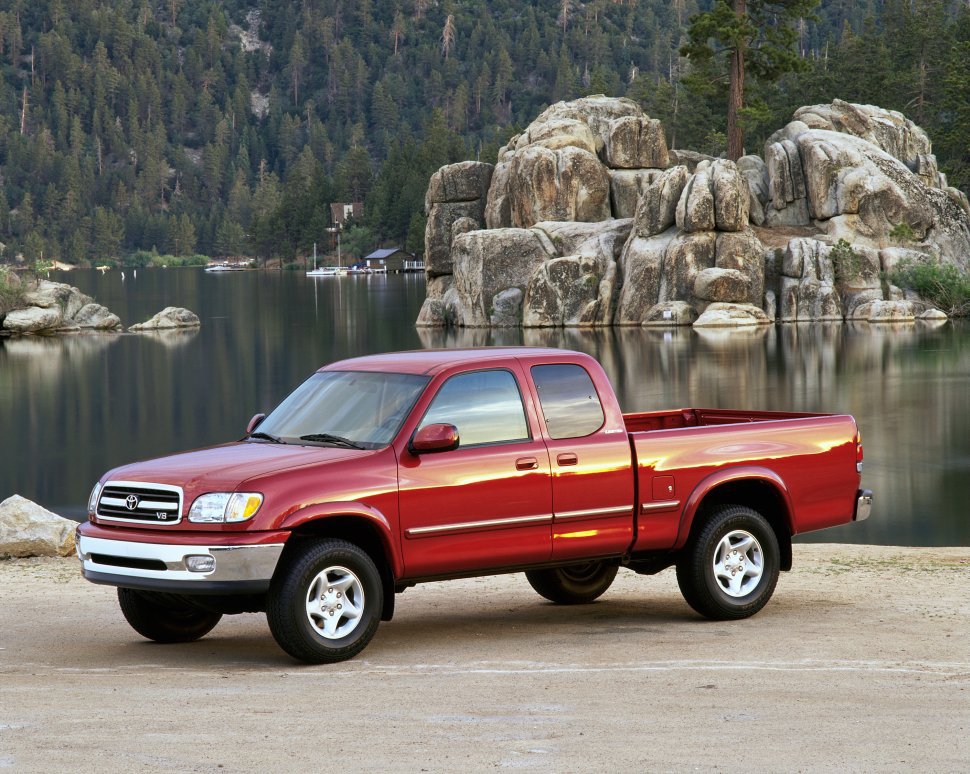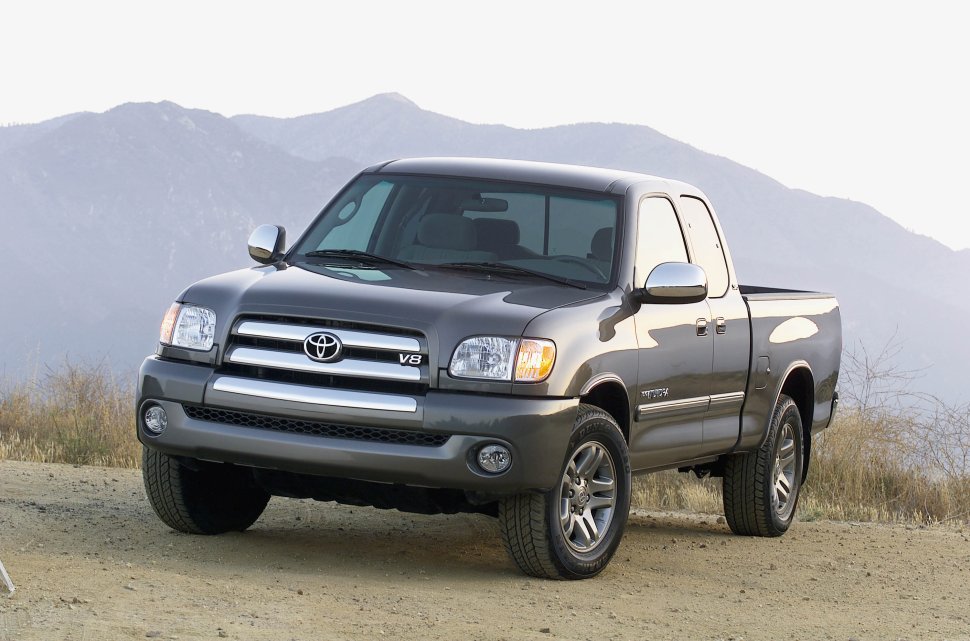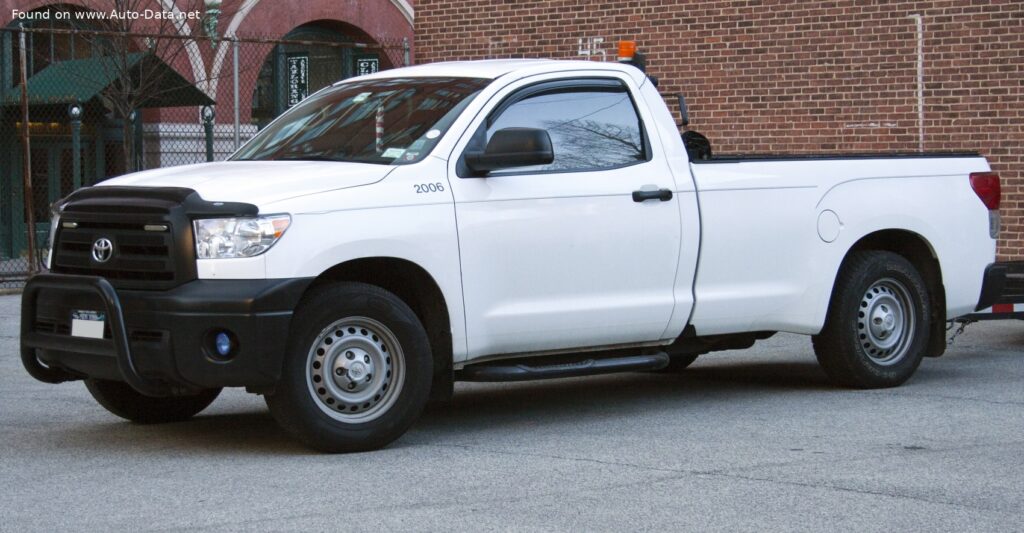
The Toyota Tundra II Regular Cab Long Bed, specifically the facelifted version produced from 2010 to 2011, represents Toyota’s second-generation full-size pickup truck. Introduced initially in 2007, the Tundra was designed to directly compete with established American manufacturers like Ford, Chevrolet, and Dodge. While the Tundra has not consistently achieved the sales volume of its domestic rivals, it has earned a reputation for reliability and build quality. The 2010 facelift brought minor cosmetic updates and refinements to the existing platform. This particular configuration, equipped with a 4.0-liter V6 engine and automatic transmission, was aimed at buyers seeking a capable work truck with a focus on value and fuel efficiency compared to the larger V8 options available.
Toyota Tundra II: A Focus on the 4.0L V6
The Tundra II, in its various configurations, aimed to provide a compelling alternative in the highly competitive full-size pickup truck segment. Toyota positioned the Tundra as a robust and dependable vehicle, emphasizing its build quality and long-term ownership costs. The Regular Cab Long Bed model catered to customers needing a practical and spacious bed for hauling, while the 4.0L V6 engine offered a balance between power and economy. This engine was particularly relevant for those who didn’t require the higher towing capacity of the V8 models, making it a popular choice for everyday use and lighter-duty tasks.
Engine & Performance
The heart of this Tundra variant is the 1GR-FE 4.0-liter V6 engine. This naturally aspirated engine produces 236 horsepower at 5200 rpm and 361 Newton-meters (266.26 lb.-ft.) of torque at 4000 rpm. The engine features a double overhead camshaft (DOHC) valvetrain with four valves per cylinder, and utilizes a multi-port fuel injection system. The longitudinal engine layout contributes to a balanced weight distribution. The power-to-weight ratio stands at 9 kg/Hp, or 111.1 Hp/tonne, while the torque-to-weight ratio is 5.9 kg/Nm, or 169.9 Nm/tonne. Power delivery is managed through a 5-speed automatic transmission, sending power to the rear wheels. Fuel economy is rated at 15.6 liters per 100 kilometers (15.1 US mpg / 18.1 UK mpg) in urban driving and 12.3 liters per 100 kilometers (19.1 US mpg / 23 UK mpg) in extra-urban conditions. While not exceptional by modern standards, these figures were competitive for a full-size pickup truck of its era.
Design & Features
The Toyota Tundra II Regular Cab Long Bed is a traditional body-on-frame pickup truck. The Regular Cab configuration offers seating for three passengers, with a focus on functionality rather than luxury. The Long Bed provides a substantial cargo area, measuring 5809 mm (228.7 inches) in length. The truck’s exterior design is characterized by a bold front grille, prominent headlights, and a robust stance. The 2010 facelift included minor styling tweaks to the front fascia. The interior is designed for durability and ease of use, with straightforward controls and durable materials. Safety features for this model year include an Anti-lock Braking System (ABS), a standard feature for the time. The suspension utilizes a double wishbone setup at the front and a leaf spring configuration at the rear, optimized for load-carrying capacity and ride comfort. The truck rides on 255/70 R18 tires mounted on 8.0J x 18 inch wheel rims.
Technical Specifications
| Brand | Toyota |
| Model | Tundra |
| Generation | Tundra II Regular Cab Long Bed (facelift 2010) |
| Type (Engine) | 4.0 V6 24V (236 Hp) Automatic |
| Start of production | 2009 |
| End of production | 2011 |
| Powertrain Architecture | Internal Combustion engine |
| Body type | Pick-up |
| Seats | 3 |
| Doors | 2 |
| Fuel consumption (urban) | 15.6 l/100 km (15.1 US mpg / 18.1 UK mpg) |
| Fuel consumption (extra urban) | 12.3 l/100 km (19.1 US mpg / 23 UK mpg) |
| Fuel Type | Petrol (Gasoline) |
| Weight-to-power ratio | 9 kg/Hp |
| Weight-to-torque ratio | 5.9 kg/Nm |
| Power | 236 Hp @ 5200 rpm |
| Torque | 361 Nm @ 4000 rpm (266.26 lb.-ft. @ 4000 rpm) |
| Engine layout | Front, Longitudinal |
| Engine Model/Code | 1GR-FE |
| Engine displacement | 3956 cm3 (241.41 cu. in.) |
| Number of cylinders | 6 |
| Engine configuration | V-engine |
| Cylinder Bore | 94 mm (3.7 in.) |
| Piston Stroke | 95 mm (3.74 in.) |
| Number of valves per cylinder | 4 |
| Fuel injection system | Multi-port manifold injection |
| Engine aspiration | Naturally aspirated engine |
| Valvetrain | DOHC |
| Engine oil capacity | 5.2 l (5.49 US qt | 4.58 UK qt) |
| Coolant capacity | 9.6 l (10.14 US qt | 8.45 UK qt) |
| Kerb Weight | 2125 kg (4684.82 lbs.) |
| Max. weight | 2903 kg (6400.02 lbs.) |
| Max load | 778 kg (1715.2 lbs.) |
| Fuel tank capacity | 100 l (26.42 US gal | 22 UK gal) |
| Permitted trailer load with brakes (12%) | 2313 kg (5099.29 lbs.) |
| Length | 5809 mm (228.7 in.) |
| Width | 2029 mm (79.88 in.) |
| Height | 1925 mm (75.79 in.) |
| Wheelbase | 3700 mm (145.67 in.) |
| Front track | 1725 mm (67.91 in.) |
| Rear track | 1725 mm (67.91 in.) |
| Ride height (ground clearance) | 259 mm (10.2 in.) |
| Minimum turning circle | 13.4 m (43.96 ft.) |
| Approach angle | 27° |
| Departure angle | 26° |
| Drivetrain Architecture | Rear wheel drive |
| Number of gears | 5 |
| Gearbox type | Automatic transmission |
| Front suspension | Double wishbone |
| Rear suspension | Leaf spring |
| Front brakes | Ventilated discs |
| Rear brakes | Ventilated discs |
| Assisting systems | ABS (Anti-lock braking system) |
| Steering type | Steering rack and pinion |
| Power steering | Hydraulic Steering |
| Tires size | 255/70 R18 |
| Wheel rims size | 8.0J x 18 |
The Toyota Tundra II Regular Cab Long Bed with the 4.0L V6 engine offered a compelling package for buyers seeking a reliable and capable full-size pickup truck. While it may not have been the most powerful or technologically advanced option in its class, its reputation for durability and long-term value made it a popular choice for those prioritizing practicality and dependability.