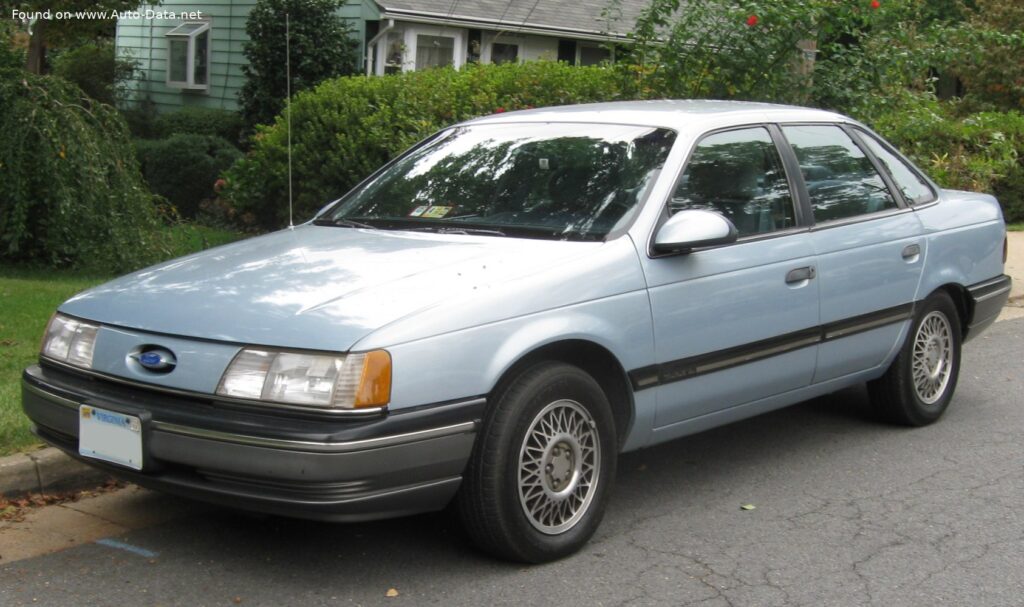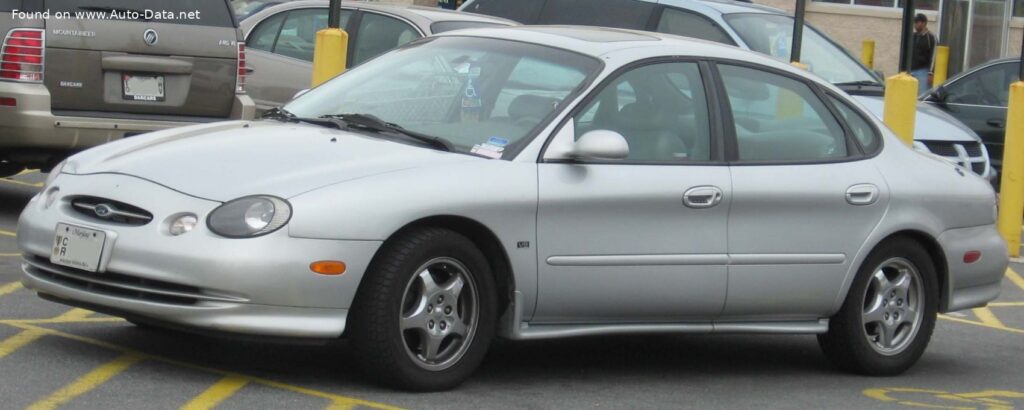
The Ford Taurus III SHO, produced between 1997 and 1999, represented a performance-oriented iteration of the popular Ford Taurus sedan. The “SHO” designation, standing for Super High Output, signified a substantial upgrade over standard Taurus models, primarily through the inclusion of a unique Yamaha-designed V8 engine. Positioned within the mid-size sedan segment, the Taurus SHO aimed to deliver a blend of family-friendly practicality and engaging driving dynamics, appealing to buyers seeking a more spirited alternative to conventional sedans. While not a high-volume seller, the Taurus SHO cultivated a dedicated following due to its distinctive engine and performance characteristics.
Ford Taurus III SHO: A Performance Sedan
The third generation of the Ford Taurus, launched in 1996, brought a significant redesign to the model line. The SHO variant, introduced in 1997, continued the tradition of offering a high-performance version of the Taurus. Unlike previous SHO models which utilized a V6 engine, the Taurus III SHO featured a 3.4-liter V8, co-developed with Yamaha. This engine was a key differentiator, setting the SHO apart from other Taurus models and competitors in the American market. The Taurus SHO was exclusively offered as a four-door sedan with seating for five passengers.
Engine & Performance
The heart of the Taurus SHO is its 3.4-liter V8 engine, designated the SHO engine. This naturally aspirated powerplant produced 238 horsepower at 6,100 rpm and 312 Nm (230.12 lb.-ft.) of torque at 4,800 rpm. The engine featured a 10:1 compression ratio, multi-port fuel injection, and four valves per cylinder, contributing to its responsive performance. Power was delivered to the front wheels via a four-speed automatic transmission. The combination resulted in a 0 to 60 mph time in the low-to-mid 6-second range, making it a relatively quick sedan for its time. The engine’s power-to-weight ratio was 6.6 kg/Hp, and the power per liter was 70.2 Hp/l. Maximum speed was electronically limited to 225 km/h (139.81 mph). Fuel economy was rated at 13.8 l/100 km (17 US mpg) in urban driving and 9.1 l/100 km (25.8 US mpg) on the highway.
Design & Features
The Taurus SHO maintained the overall styling of the third-generation Taurus, but incorporated subtle visual cues to denote its performance status. These included unique wheels, a monochromatic paint scheme, and a rear spoiler. The interior featured sport seats and a revised instrument cluster. Standard features included air conditioning, power windows and locks, and an AM/FM stereo. Safety features, increasingly important in the late 1990s, included ABS (Anti-lock Braking System). The body type is a sedan with four doors and five seats. The Taurus SHO’s suspension utilized a wishbone configuration at both the front and rear, providing a balance between ride comfort and handling precision. Ventilated disc brakes were fitted to the front wheels, while solid discs were used at the rear. The vehicle’s drag coefficient was 0.31, contributing to its aerodynamic efficiency.
Technical Specifications
| Brand | Ford |
| Model | Taurus |
| Generation | Taurus III |
| Type (Engine) | SHO 3.4 V8 32V (238 Hp) Automatic |
| Start of production | 1997 |
| End of production | 1999 |
| Powertrain Architecture | Internal Combustion engine |
| Body type | Sedan |
| Seats | 5 |
| Doors | 4 |
| Fuel consumption (urban) | 13.8 l/100 km (17 US mpg) |
| Fuel consumption (extra urban) | 9.1 l/100 km (25.8 US mpg) |
| Fuel Type | Petrol (Gasoline) |
| Maximum speed | 225 km/h (139.81 mph) |
| Weight-to-power ratio | 6.6 kg/Hp |
| Weight-to-torque ratio | 5 kg/Nm |
| Power | 238 Hp @ 6100 rpm |
| Torque | 312 Nm @ 4800 rpm (230.12 lb.-ft. @ 4800 rpm) |
| Engine layout | Front, Transverse |
| Engine Model/Code | SHO |
| Engine displacement | 3392 cm3 (206.99 cu. in.) |
| Number of cylinders | 8 |
| Engine configuration | V-engine |
| Cylinder Bore | 82.4 mm (3.24 in.) |
| Piston Stroke | 79.5 mm (3.13 in.) |
| Compression ratio | 10:1 |
| Number of valves per cylinder | 4 |
| Fuel injection system | Multi-port manifold injection |
| Engine aspiration | Naturally aspirated |
| Engine oil capacity | 6.1 l (6.45 US qt | 5.37 UK qt) |
| Coolant | 10 l (10.57 US qt | 8.8 UK qt) |
| Kerb Weight | 1560 kg (3439.21 lbs.) |
| Trunk (boot) space (minimum) | 447 l (15.79 cu. ft.) |
| Fuel tank capacity | 61 l (16.11 US gal | 13.42 UK gal) |
| Length | 5016 mm (197.48 in.) |
| Width | 1854 mm (72.99 in.) |
| Height | 1400 mm (55.12 in.) |
| Wheelbase | 2756 mm (108.5 in.) |
| Front track | 1565 mm (61.61 in.) |
| Rear track | 1560 mm (61.42 in.) |
| Drag coefficient (Cd) | 0.31 |
| Minimum turning circle | 11.8 m (38.71 ft.) |
| Drivetrain Architecture | Front wheel drive, Internal Combustion engine |
| Number of gears | 4 |
| Gearbox type | Automatic transmission |
| Front suspension | Wishbone |
| Rear suspension | Wishbone |
| Front brakes | Ventilated discs |
| Rear brakes | Disc |
| Assisting systems | ABS (Anti-lock braking system) |
| Steering type | Steering rack and pinion |
| Power steering | Hydraulic |
| Tires size | 225/55 R16 |
| Wheel rims size | 16 |
The Ford Taurus III SHO, though a relatively short-lived model, remains a notable example of a performance sedan from the late 1990s. Its Yamaha-designed V8 engine and front-wheel-drive configuration offered a unique driving experience, and the car continues to be appreciated by enthusiasts for its blend of practicality and performance.