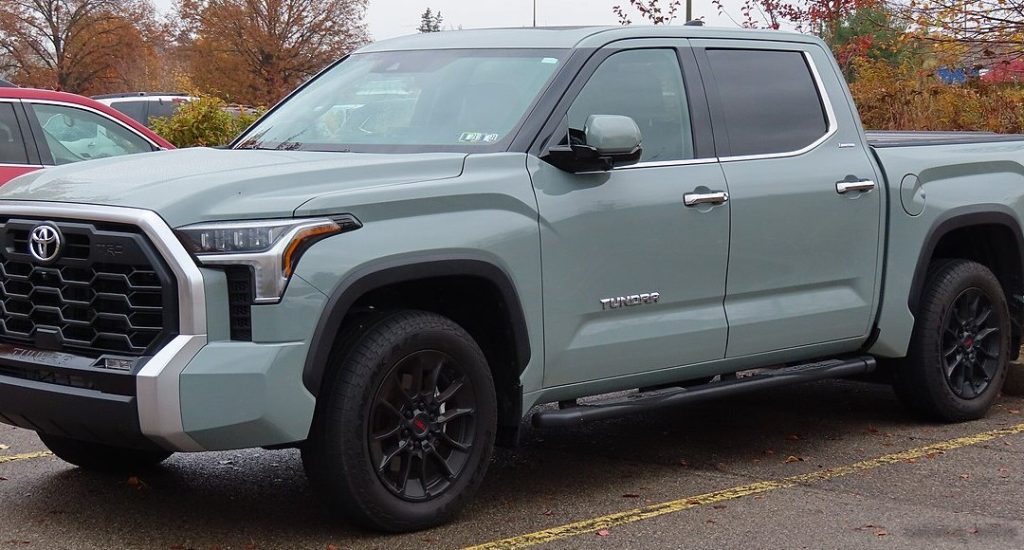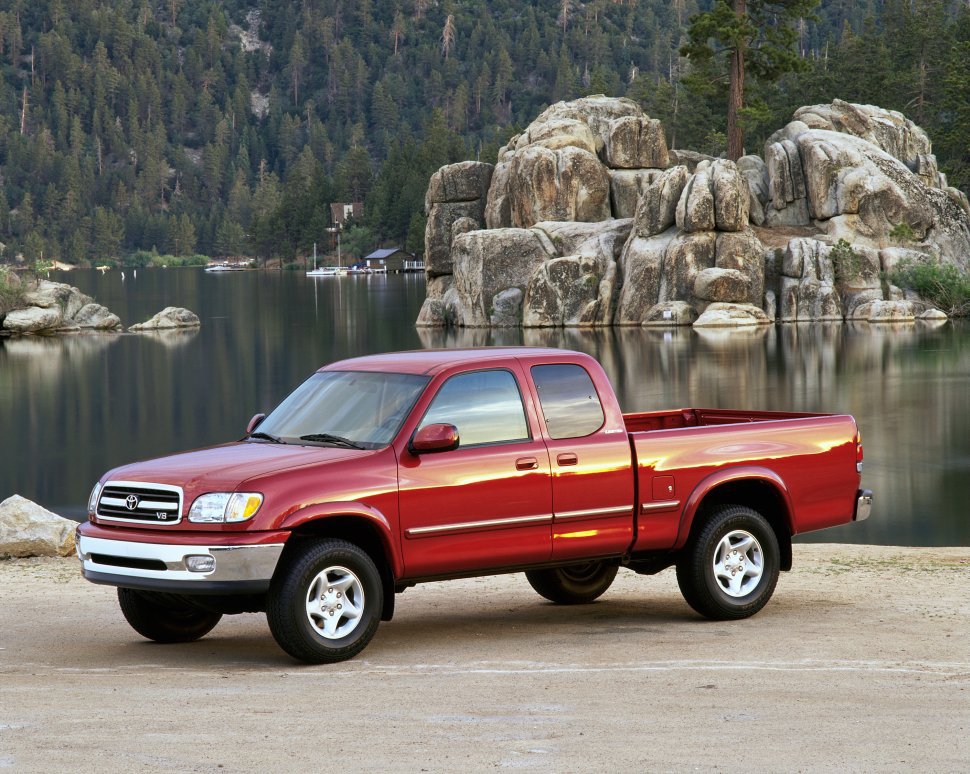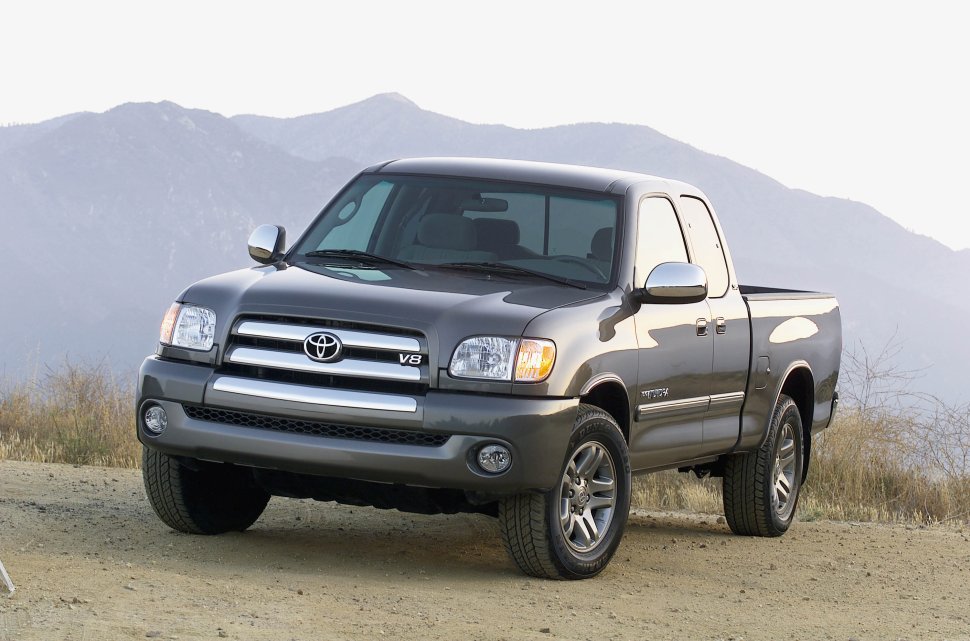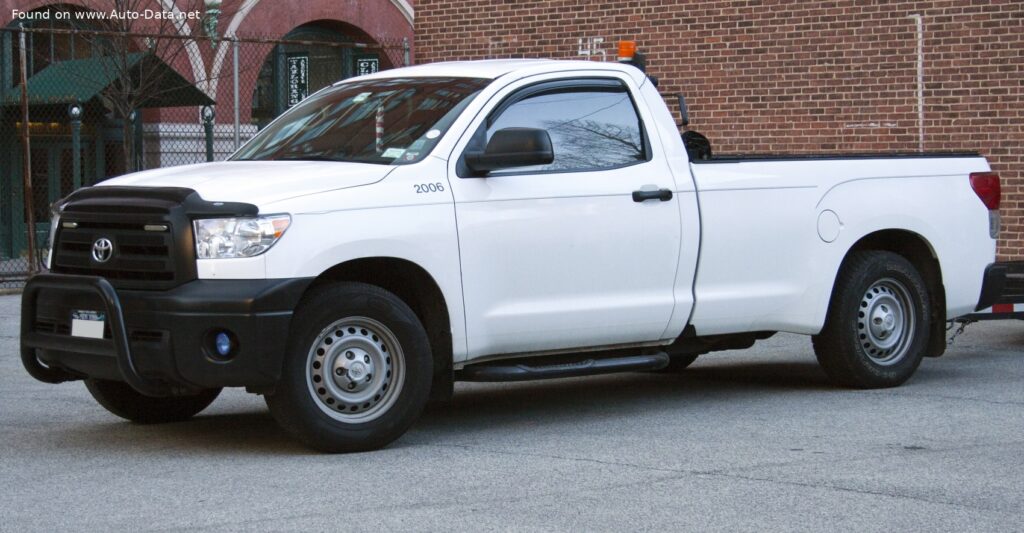
The Toyota Tundra II Regular Cab Long Bed, specifically the facelifted version produced from 2010 to 2013, represents Toyota’s second-generation full-size pickup truck. Introduced initially in 2007, the Tundra was designed to directly compete with established American manufacturers like Ford, Chevrolet, and Dodge. The 2010 facelift brought minor cosmetic and equipment updates, refining an already capable platform. This model, equipped with the 4.6-liter V8 engine and four-wheel drive, was aimed at buyers needing a robust, reliable work truck with ample towing and hauling capacity. While not as popular as its domestic rivals in the US market, the Tundra II established Toyota as a serious contender in the full-size truck segment, known for its build quality and longevity.
Toyota Tundra II: A Detailed Overview
The Tundra II, and particularly the 2010-2013 facelift, was a significant undertaking for Toyota. Recognizing the importance of the full-size truck market in North America, Toyota invested heavily in designing a vehicle specifically tailored to American preferences. The Regular Cab Long Bed configuration offered a practical and utilitarian option for those prioritizing cargo space and towing ability over passenger comfort. The 4.6-liter V8 engine provided a balance of power and fuel efficiency, making it suitable for both work and recreational use. The four-wheel-drive system enhanced its capability in various weather conditions and off-road scenarios.
Engine & Performance
The heart of the 2010-2013 Toyota Tundra II Regular Cab Long Bed is the 1UR-FE 4.6-liter V8 engine. This naturally aspirated powerplant produces 310 horsepower at 5600 rpm and 460 Nm (339.28 lb.-ft.) of torque at 3400 rpm. The engine features a double overhead camshaft (DOHC) valvetrain with Variable Valve Timing-intelligent (VVT-i) technology, optimizing performance and efficiency across the rev range. The engine’s displacement of 4608 cm3 (281.2 cu. in.) and a compression ratio of 10.2:1 contribute to its robust power delivery. Power per liter is rated at 67.3 Hp/l. The engine is paired with a six-speed automatic transmission, delivering smooth and responsive shifting. The weight-to-power ratio of 7.5 kg/Hp and a weight-to-torque ratio of 5 kg/Nm demonstrate the truck’s respectable performance capabilities. Fuel economy is rated at 16.8 l/100 km (14 US mpg) in urban driving and 12.3 l/100 km (19.1 US mpg) in extra-urban conditions.
Design & Features
The Toyota Tundra II Regular Cab Long Bed is a traditional body-on-frame pickup truck, designed for durability and functionality. The Regular Cab configuration features two doors and seating for three passengers. The Long Bed provides a substantial cargo area, making it ideal for hauling large items. The 2010 facelift included minor styling updates to the front fascia, grille, and headlights, giving the truck a more modern appearance. Key features include a robust suspension system – double wishbone at the front and leaf springs at the rear – designed to handle heavy loads. Safety features, while not as advanced as contemporary vehicles, included an Anti-lock Braking System (ABS). The truck’s dimensions are substantial, with a length of 5809 mm (228.7 in.), a width of 2029 mm (79.88 in.), and a height of 1925 mm (75.79 in.). Ground clearance is a generous 269 mm (10.59 in.), enhancing its off-road capability. The turning circle is 13.4 m (43.96 ft.). Approach and departure angles are 27° and 26° respectively.
Technical Specifications
| Brand | Toyota |
| Model | Tundra |
| Generation | Tundra II Regular Cab Long Bed (facelift 2010) |
| Type (Engine) | 4.6 V8 32V (310 Hp) 4×4 Automatic |
| Start of production | 2010 |
| End of production | 2013 |
| Powertrain Architecture | Internal Combustion engine |
| Body type | Pick-up |
| Seats | 3 |
| Doors | 2 |
| Fuel consumption (urban) | 16.8 l/100 km (14 US mpg) |
| Fuel consumption (extra urban) | 12.3 l/100 km (19.1 US mpg) |
| Fuel Type | Petrol (Gasoline) |
| Weight-to-power ratio | 7.5 kg/Hp |
| Weight-to-torque ratio | 5 kg/Nm |
| Power | 310 Hp @ 5600 rpm |
| Torque | 460 Nm @ 3400 rpm (339.28 lb.-ft. @ 3400 rpm) |
| Engine layout | Front, Longitudinal |
| Engine Model/Code | 1UR-FE |
| Engine displacement | 4608 cm3 (281.2 cu. in.) |
| Number of cylinders | 8 |
| Engine configuration | V-engine |
| Cylinder Bore | 94 mm (3.7 in.) |
| Piston Stroke | 83 mm (3.27 in.) |
| Compression ratio | 10.2:1 |
| Number of valves per cylinder | 4 |
| Fuel injection system | Multi-port manifold injection |
| Engine aspiration | Naturally aspirated engine |
| Valvetrain | DOHC, VVT-i |
| Engine oil capacity | 7.5 l (7.93 US qt | 6.6 UK qt) |
| Coolant capacity | 12.1 l (12.79 US qt | 10.65 UK qt) |
| Kerb Weight | 2318 kg (5110.32 lbs.) |
| Max. weight | 3175 kg (6999.68 lbs.) |
| Max load | 857 kg (1889.36 lbs.) |
| Fuel tank capacity | 100 l (26.42 US gal | 22 UK gal) |
| Permitted trailer load with brakes (12%) | 3900 kg (8598.03 lbs.) |
| Length | 5809 mm (228.7 in.) |
| Width | 2029 mm (79.88 in.) |
| Height | 1925 mm (75.79 in.) |
| Wheelbase | 3700 mm (145.67 in.) |
| Front track | 1725 mm (67.91 in.) |
| Rear track | 1725 mm (67.91 in.) |
| Ride height (ground clearance) | 269 mm (10.59 in.) |
| Minimum turning circle | 13.4 m (43.96 ft.) |
| Drive wheel | All wheel drive (4×4) |
| Number of gears | 6 |
| Gearbox type | Automatic transmission |
| Front suspension | Double wishbone |
| Rear suspension | Leaf spring |
| Front brakes | Ventilated discs |
| Rear brakes | Ventilated discs |
| Assisting systems | ABS (Anti-lock braking system) |
| Steering type | Steering rack and pinion |
| Power steering | Hydraulic Steering |
| Tires size | 255/70 R18 |
| Wheel rims size | 8.0J x 18 |