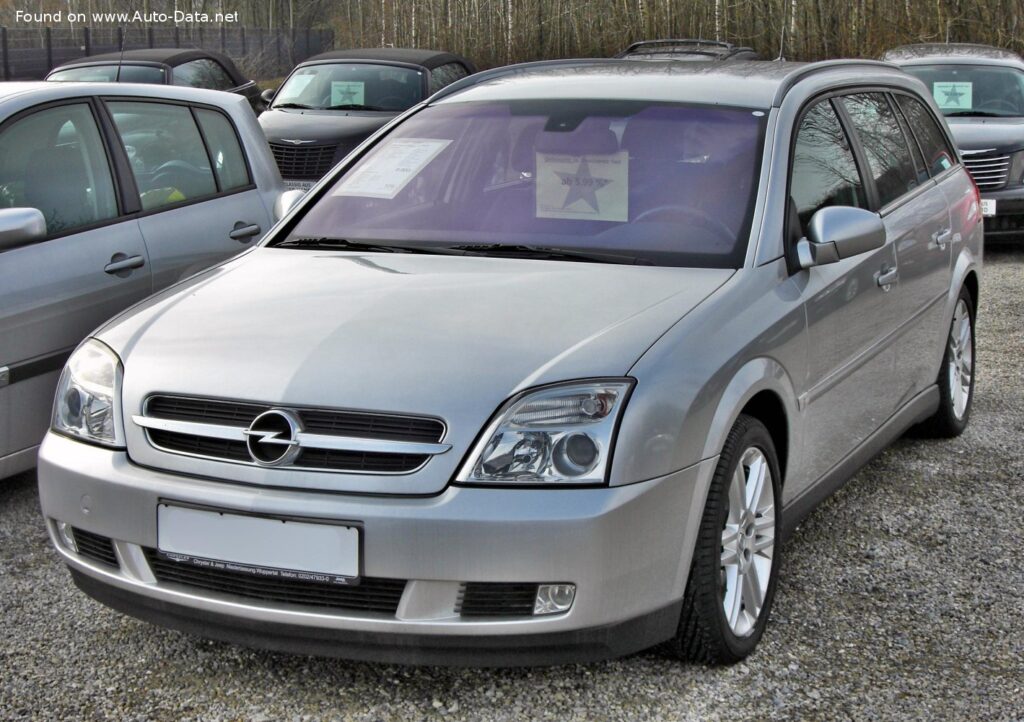
The Opel Vectra C Caravan 2.2 DTI Automatic, produced between 2002 and 2004, represents a significant iteration in Opel’s mid-size family car lineage. As a station wagon (estate) variant of the Vectra C, it aimed to provide practicality and space without sacrificing driving comfort. While not officially sold in the United States, the Vectra held a prominent position in the European market, competing with vehicles like the Ford Mondeo, Volkswagen Passat, and Peugeot 407. The “Caravan” designation specifically denotes the estate body style, emphasizing its cargo-carrying capabilities. This model was geared towards families and individuals requiring a versatile vehicle for both daily commuting and longer journeys.
Opel Vectra C Caravan: A Detailed Overview
The Vectra C, launched in 2002, was a substantial redesign of the previous Vectra B, offering improved refinement, safety features, and a more modern aesthetic. The Caravan variant, with its extended roofline and larger rear opening, further enhanced the vehicle’s practicality. The 2.2 DTI engine option, coupled with an automatic transmission, provided a balance between fuel efficiency and acceptable performance for the time. It was positioned as a comfortable and capable option within the Vectra range, appealing to buyers prioritizing space and ease of use.
Engine & Performance
The heart of the Vectra C Caravan 2.2 DTI is a 2.2-liter inline-four cylinder diesel engine, designated Y22DTR. This engine produces 125 horsepower at 4000 rpm and 280 Nm (206.52 lb.-ft.) of torque at 1500 rpm. The engine utilizes a turbocharger with an intercooler to enhance power output and efficiency. Fuel is delivered via a Diesel Commonrail injection system, contributing to improved combustion and reduced emissions compared to older diesel technologies. The engine’s transverse mounting and front-wheel-drive configuration are typical for European family cars of this era. The five-speed automatic transmission provides smooth gear changes, prioritizing comfort over outright performance. Acceleration from 0 to 100 km/h (0-62 mph) takes 12.2 seconds, while 0 to 60 mph is achieved in approximately 11.6 seconds. The vehicle has a top speed of 199 km/h (123.65 mph). The weight-to-power ratio of 13 kg/Hp and weight-to-torque ratio of 5.8 kg/Nm indicate a reasonable balance between engine output and vehicle mass.
Design & Features
The Opel Vectra C Caravan boasts a traditional station wagon body style, characterized by its elongated roofline and large rear cargo area. The design language of the Vectra C was considered modern for its time, featuring rounded edges and a relatively understated aesthetic. The interior prioritizes practicality and comfort, offering seating for five passengers. Key features include a spacious trunk with a minimum capacity of 530 liters (18.72 cu. ft.) which expands to 1850 liters (65.33 cu. ft.) with the rear seats folded down. Safety features, while not as advanced as modern standards, included ABS (Anti-lock Braking System) as standard equipment. The vehicle’s dimensions are 4822 mm (189.84 in.) in length, 1798 mm (70.79 in.) in width, and 1500 mm (59.06 in.) in height. The wheelbase measures 2830 mm (111.42 in.). The suspension utilizes a spring strut setup at the front and a multi-link system at the rear, aiming to provide a comfortable ride quality. The vehicle rides on 195/65 R15 tires mounted on 6.5J x 15 inch wheel rims.
Technical Specifications
| Brand | Opel |
| Model | Vectra |
| Generation | Vectra C Caravan |
| Type (Engine) | 2.2 DTI (125 Hp) Automatic |
| Start of production | April, 2002 |
| End of production | November, 2004 |
| Powertrain Architecture | Internal Combustion engine |
| Body type | Station wagon (estate) |
| Seats | 5 |
| Doors | 5 |
| Fuel consumption (urban) | 10.5 l/100 km (22.4 US mpg / 26.9 UK mpg / 9.5 km/l) |
| Fuel consumption (extra urban) | 5.6 l/100 km (42 US mpg / 50.4 UK mpg / 17.9 km/l) |
| Fuel consumption (combined) | 7.4 l/100 km (31.8 US mpg / 38.2 UK mpg / 13.5 km/l) |
| Fuel Type | Diesel |
| Acceleration 0 – 100 km/h | 12.2 sec |
| Acceleration 0 – 62 mph | 12.2 sec |
| Acceleration 0 – 60 mph | 11.6 sec |
| Maximum speed | 199 km/h (123.65 mph) |
| Weight-to-power ratio | 13 kg/Hp |
| Weight-to-torque ratio | 5.8 kg/Nm |
| Power | 125 Hp @ 4000 rpm |
| Torque | 280 Nm @ 1500 rpm (206.52 lb.-ft. @ 1500 rpm) |
| Engine layout | Front, Transverse |
| Engine Model/Code | Y22DTR |
| Engine displacement | 2171 cm3 (132.48 cu. in.) |
| Number of cylinders | 4 |
| Engine configuration | Inline |
| Cylinder Bore | 84 mm (3.31 in.) |
| Piston Stroke | 98 mm (3.86 in.) |
| Compression ratio | 18.5:1 |
| Number of valves per cylinder | 4 |
| Fuel injection system | Diesel Commonrail |
| Engine aspiration | Turbocharger, Intercooler |
| Valvetrain | OHC |
| Engine oil capacity | 5.5 l (5.81 US qt | 4.84 UK qt) |
| Coolant | 7.8 l (8.24 US qt | 6.86 UK qt) |
| Kerb Weight | 1620 kg (3571.49 lbs.) |
| Max. weight | 2155 kg (4750.96 lbs.) |
| Max load | 535 kg (1179.47 lbs.) |
| Trunk (boot) space – minimum | 530 l (18.72 cu. ft.) |
| Trunk (boot) space – maximum | 1850 l (65.33 cu. ft.) |
| Fuel tank capacity | 60 l (15.85 US gal | 13.2 UK gal) |
| Length | 4822 mm (189.84 in.) |
| Width | 1798 mm (70.79 in.) |
| Height | 1500 mm (59.06 in.) |
| Wheelbase | 2830 mm (111.42 in.) |
| Front track | 1536 mm (60.47 in.) |
| Rear track | 1525 mm (60.04 in.) |
| Drivetrain Architecture | Front wheel drive |
| Number of gears | 5 |
| Gearbox type | Automatic transmission |
| Front suspension | Spring Strut |
| Rear suspension | Several levers and rods |
| Front brakes | Ventilated discs |
| Rear brakes | Disc |
| Assisting systems | ABS (Anti-lock braking system) |
| Steering type | Steering rack and pinion |
| Tires size | 195/65 R15 |
| Wheel rims size | 6.5J X 15 |