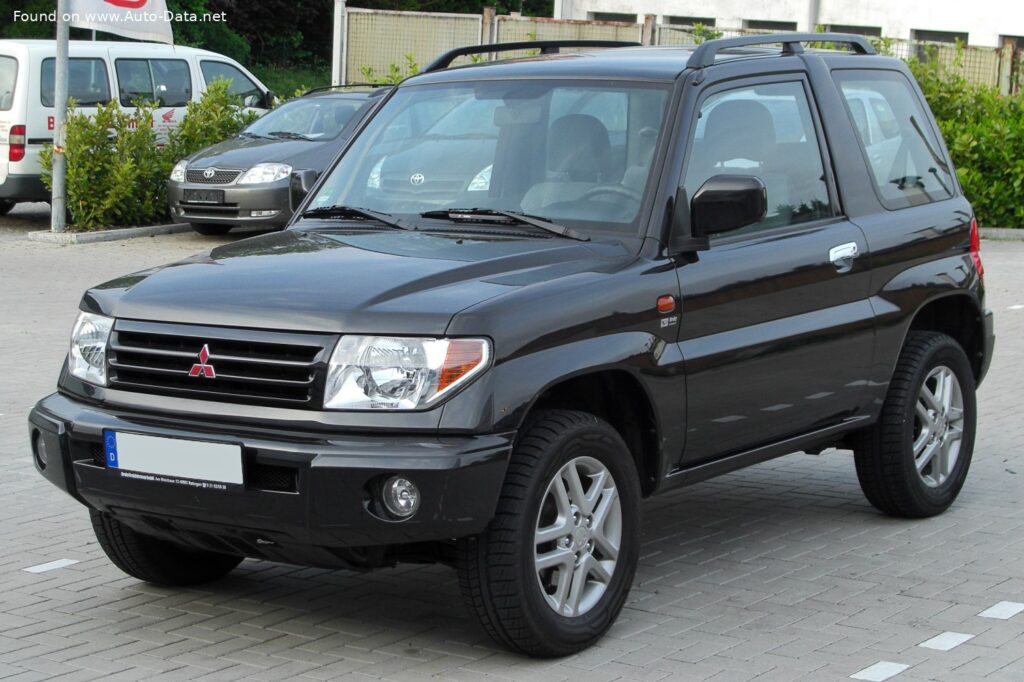
The Mitsubishi Pajero Pinin (H60) is a compact sport utility vehicle (SUV) produced by Mitsubishi Motors between 2001 and 2006. Positioned as a smaller, more affordable alternative to the full-size Pajero, the Pinin was primarily aimed at the European market, where demand for smaller, versatile SUVs was growing. While not officially sold in the United States, it represents a significant part of Mitsubishi’s global SUV strategy during the early 2000s. The “Pinin” name itself is derived from the Italian word for pine, reflecting a connection to outdoor adventure and ruggedness. This generation offered a blend of practicality, off-road capability, and a relatively compact footprint, making it a popular choice for urban drivers and those seeking a weekend adventure vehicle.
Mitsubishi Pajero Pinin (H60): Overview
The Pajero Pinin (H60) occupied a unique niche in the European SUV landscape. It was designed to appeal to buyers who wanted the styling and some of the capabilities of a larger SUV, but in a more manageable and fuel-efficient package. The three-door configuration, while less common in the US market, was popular in Europe due to parking constraints and road conditions. The H60 series represented a downsized version of the larger Pajero, offering a more accessible entry point into the Mitsubishi SUV family. It competed with vehicles like the Suzuki Vitara and the Nissan Terrano II, focusing on providing a capable and reliable all-wheel-drive experience.
Engine & Performance
The 1.8 i 16V variant of the Pajero Pinin is powered by Mitsubishi’s 4G93 inline-four cylinder gasoline engine. This naturally aspirated engine produces 114 horsepower at 5500 rpm and 160 Nm (118.01 lb.-ft.) of torque at 4000 rpm. While not a powerhouse, the engine provides adequate performance for everyday driving and light off-road use. The engine’s power-to-weight ratio of 11 kg/Hp and torque-to-weight ratio of 7.8 kg/Nm contribute to a reasonably responsive driving experience. Acceleration from 0 to 100 km/h (0-62 mph) takes approximately 13 seconds, and it achieves a maximum speed of 150 km/h (93.21 mph). The engine features a multi-port fuel injection system and a double overhead camshaft (DOHC) valvetrain, contributing to its efficiency and relatively smooth operation. The 1.8-liter displacement (1834 cm3 or 111.92 cu. in.) and 10:1 compression ratio are typical for engines of this era, balancing performance and fuel economy. The engine is longitudinally mounted in the front of the vehicle.
Design & Features
The Mitsubishi Pajero Pinin (H60) is a three-door SUV with seating for five passengers. Its body-on-frame construction provides a robust and durable platform, enhancing its off-road capabilities. The exterior design is characterized by its boxy shape, typical of SUVs from the early 2000s, and features a relatively high ground clearance. The three-door layout necessitates smaller rear doors, which can make access to the rear seats somewhat challenging. Inside, the Pinin offers a functional and utilitarian interior, prioritizing practicality over luxury. Standard features included air conditioning, power steering, and an anti-lock braking system (ABS). The trunk space varies from 166 liters (5.86 cu. ft.) with the rear seats up to 801 liters (28.29 cu. ft.) with the rear seats folded down, providing reasonable cargo capacity for its size. The vehicle’s all-wheel-drive system, coupled with ventilated front disc brakes and rear disc brakes, provides enhanced traction and stopping power. The suspension utilizes a spring strut setup in the front and coil springs in the rear, offering a comfortable ride on paved roads and sufficient articulation for off-road terrain.
Technical Specifications
| Brand | Mitsubishi |
| Model | Pajero |
| Generation | Pajero Pinin (H60) |
| Type | 1.8 i 16V (114 Hp) 3dr Automatic |
| Start of production | November, 2001 |
| End of production | 2006 |
| Powertrain Architecture | Internal Combustion engine |
| Body type | SUV |
| Seats | 5 |
| Doors | 3 |
| Fuel consumption (urban) | 12 l/100 km (19.6 US mpg, 23.5 UK mpg, 8.3 km/l) |
| Fuel consumption (extra urban) | 8 l/100 km (29.4 US mpg, 35.3 UK mpg, 12.5 km/l) |
| Fuel consumption (combined) | 9.5 l/100 km (24.8 US mpg, 29.7 UK mpg, 10.5 km/l) |
| Fuel Type | Petrol (Gasoline) |
| Acceleration 0 – 100 km/h | 13 sec |
| Acceleration 0 – 62 mph | 13 sec |
| Acceleration 0 – 60 mph | 12.4 sec |
| Maximum speed | 150 km/h (93.21 mph) |
| Weight-to-power ratio | 11 kg/Hp |
| Weight-to-torque ratio | 7.8 kg/Nm |
| Power | 114 Hp @ 5500 rpm |
| Torque | 160 Nm @ 4000 rpm (118.01 lb.-ft. @ 4000 rpm) |
| Engine layout | Front, Longitudinal |
| Engine Model/Code | 4G93 |
| Engine displacement | 1834 cm3 (111.92 cu. in.) |
| Number of cylinders | 4 |
| Engine configuration | Inline |
| Cylinder Bore | 81 mm (3.19 in.) |
| Piston Stroke | 89 mm (3.5 in.) |
| Compression ratio | 10:1 |
| Number of valves per cylinder | 4 |
| Fuel injection system | Multi-port manifold injection |
| Engine aspiration | Naturally aspirated engine |
| Valvetrain | DOHC |
| Engine oil capacity | 3.8 l (4.02 US qt | 3.34 UK qt) |
| Coolant | 6 l (6.34 US qt | 5.28 UK qt) |
| Kerb Weight | 1250 kg (2755.78 lbs.) |
| Max. weight | 1680 kg (3703.77 lbs.) |
| Max load | 430 kg (947.99 lbs.) |
| Trunk (boot) space – minimum | 166 l (5.86 cu. ft.) |
| Trunk (boot) space – maximum | 801 l (28.29 cu. ft.) |
| Fuel tank capacity | 53 l (14 US gal | 11.66 UK gal) |
| Length | 3735 mm (147.05 in.) |
| Width | 1695 mm (66.73 in.) |
| Height | 1735 mm (68.31 in.) |
| Wheelbase | 2280 mm (89.76 in.) |
| Front track | 1435 mm (56.5 in.) |
| Rear (Back) track | 1445 mm (56.89 in.) |
| Minimum turning circle | 9.8 m (32.15 ft.) |
| Drive wheel | All wheel drive (4×4) |
| Number of gears | 4 |
| Gearbox type | Automatic transmission |
| Front suspension | Spring Strut |
| Rear suspension | Coil spring |
| Front brakes | Ventilated discs |
| Rear brakes | Disc |
| Assisting systems | ABS (Anti-lock braking system) |
| Steering type | Steering rack and pinion |
| Power steering | Hydraulic Steering |
| Tires size | 215/65 R16 |
| Wheel rims size | 16 |