
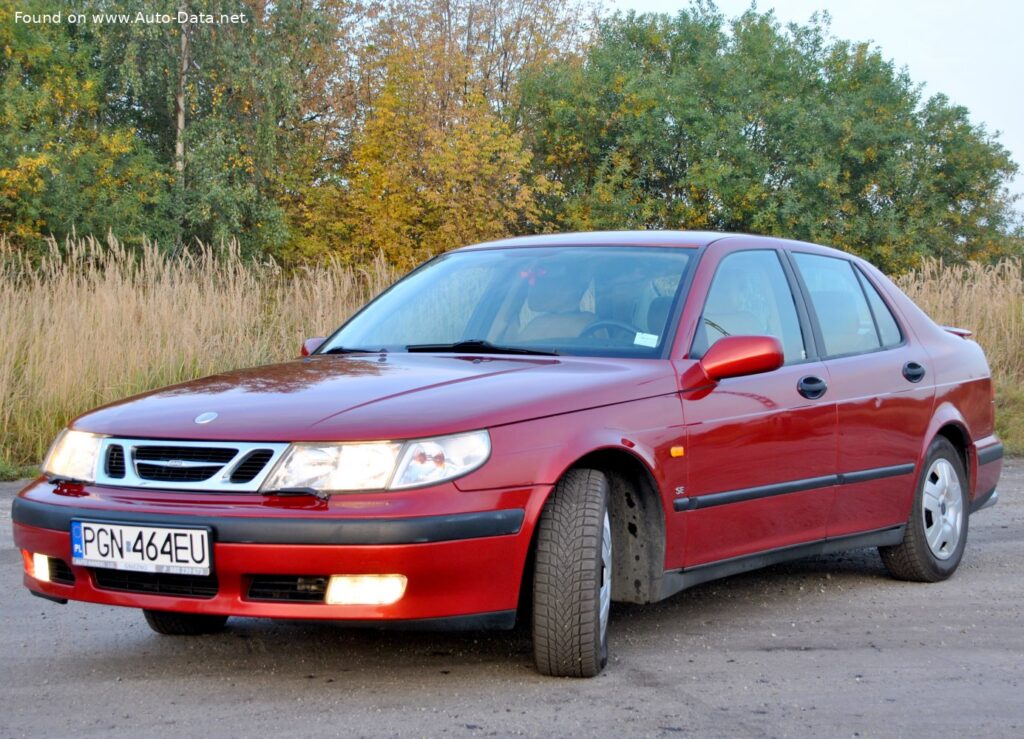
The Saab 9-5 2.0 T 16V, produced between 1999 and 2001, represents a significant iteration in Saab’s mid-size executive car lineage. Positioned as a competitor to vehicles like the BMW 5 Series, Audi A6, and Volvo S80, the 9-5 aimed to blend Scandinavian practicality with a distinctive, often unconventional, design philosophy. This generation of the 9-5, while not achieving the sales success of some rivals, cemented Saab’s reputation for innovative engineering and a loyal following. The 2.0 T 16V model, equipped with a turbocharged four-cylinder engine and automatic transmission, was a popular choice for buyers seeking a balance of performance and fuel efficiency.
Saab 9-5 2.0 T 16V: A Detailed Overview
The first-generation Saab 9-5, launched in 1997, was a crucial model for the Swedish automaker. It replaced the aging Saab 9000 and marked a move upmarket for the brand. The 2.0 T 16V variant, introduced shortly after, offered a compelling package for European drivers. While Saab never enjoyed the same level of market penetration in the United States as its German competitors, the 9-5 found a niche among those seeking an alternative to the mainstream. The car’s unique styling, comfortable interior, and focus on safety were key selling points. The 1999-2001 model years saw refinements to the original design, improving both performance and reliability.
Engine & Performance
The heart of the Saab 9-5 2.0 T 16V is its 1985 cc (121.13 cu. in.) inline-four cylinder engine, designated the B205E. This engine features a turbocharger and multi-port fuel injection, allowing it to produce 185 horsepower at 5500 rpm and 263 Nm (193.98 lb.-ft.) of torque at 2100 rpm. This configuration provides a good balance of power and responsiveness, making the car enjoyable to drive in a variety of conditions. The engine’s power-to-liter ratio is a respectable 93.2 hp/l. Power is delivered to the front wheels via a four-speed automatic transmission. Acceleration from 0 to 100 km/h (0-62 mph) takes 9.5 seconds, while 0 to 60 mph is achieved in approximately 9 seconds. The car boasts a maximum speed of 225 km/h (139.81 mph). Fuel economy figures are rated at 14.8 l/100 km (15.9 US mpg, 19.1 UK mpg) in urban driving, 7.2 l/100 km (32.7 US mpg, 39.2 UK mpg) on the extra-urban cycle, and 10 l/100 km (23.5 US mpg, 28.2 UK mpg) combined. The engine meets Euro 4 emission standards.
Design & Features
The Saab 9-5 2.0 T 16V is a four-door sedan with a distinctive, aerodynamic profile. The car’s design incorporates Saab’s signature styling cues, including a wraparound windshield and a sloping rear deck. The interior is spacious and comfortable, offering seating for five passengers. Key features include a well-appointed dashboard, supportive seats, and a generous trunk capacity of 500 liters (17.66 cu. ft.). Safety was a priority for Saab, and the 9-5 is equipped with an Anti-lock Braking System (ABS) as standard. The car’s hydraulic power steering provides precise and responsive handling. The suspension utilizes spring struts on both the front and rear axles, offering a comfortable ride. The vehicle rides on 205/65 R15 tires. The 9-5’s design prioritized both form and function, resulting in a car that is both aesthetically pleasing and practical for everyday use.
Technical Specifications
| Brand | Saab |
| Model | 9-5 |
| Generation | 9-5 |
| Type (Engine) | 2.0 T 16V (185 Hp) Automatic |
| Start of production | 1999 |
| End of production | 2001 |
| Powertrain Architecture | Internal Combustion engine |
| Body type | Sedan |
| Seats | 5 |
| Doors | 4 |
| Fuel consumption (urban) | 14.8 l/100 km (15.9 US mpg, 19.1 UK mpg) |
| Fuel consumption (extra urban) | 7.2 l/100 km (32.7 US mpg, 39.2 UK mpg) |
| Fuel consumption (combined) | 10 l/100 km (23.5 US mpg, 28.2 UK mpg) |
| Fuel Type | Petrol (Gasoline) |
| Acceleration 0 – 100 km/h | 9.5 sec |
| Acceleration 0 – 62 mph | 9.5 sec |
| Acceleration 0 – 60 mph | 9 sec |
| Maximum speed | 225 km/h (139.81 mph) |
| Emission standard | Euro 4 |
| Weight-to-power ratio | 8.5 kg/Hp, 117.5 Hp/tonne |
| Weight-to-torque ratio | 6 kg/Nm, 167 Nm/tonne |
| Power | 185 Hp @ 5500 rpm |
| Power per litre | 93.2 Hp/l |
| Torque | 263 Nm @ 2100 rpm (193.98 lb.-ft. @ 2100 rpm) |
| Engine layout | Front, Transverse |
| Engine Model/Code | B205E |
| Engine displacement | 1985 cm3 (121.13 cu. in.) |
| Number of cylinders | 4 |
| Engine configuration | Inline |
| Cylinder Bore | 90 mm (3.54 in.) |
| Piston Stroke | 78 mm (3.07 in.) |
| Compression ratio | 8.8:1 |
| Number of valves per cylinder | 4 |
| Fuel injection system | Multi-port manifold injection |
| Engine aspiration | Turbocharger |
| Valvetrain | DOHC |
| Engine oil capacity | 4 l (4.23 US qt | 3.52 UK qt) |
| Coolant | 7.4 l (7.82 US qt | 6.51 UK qt) |
| Kerb Weight | 1575 kg (3472.28 lbs.) |
| Max. weight | 2100 kg (4629.71 lbs.) |
| Max load | 525 kg (1157.43 lbs.) |
| Trunk (boot) space – minimum | 500 l (17.66 cu. ft.) |
| Fuel tank capacity | 70 l (18.49 US gal | 15.4 UK gal) |
| Length | 4810 mm (189.37 in.) |
| Width | 1790 mm (70.47 in.) |
| Height | 1450 mm (57.09 in.) |
| Wheelbase | 2705 mm (106.5 in.) |
| Front track | 1520 mm (59.84 in.) |
| Rear (Back) track | 1520 mm (59.84 in.) |
| Drivetrain Architecture | The Internal combustion engine (ICE) drives the front wheels of the vehicle. |
| Drive wheel | Front wheel drive |
| Number of gears and type of gearbox | 4 gears, automatic transmission |
| Front suspension | Spring Strut |
| Rear suspension | Spring Strut |
| Front brakes | Ventilated discs |
| Rear brakes | Disc |
| Assisting systems | ABS (Anti-lock braking system) |
| Steering type | Steering rack and pinion |
| Power steering | Hydraulic Steering |
| Tires size | 205/65 R15 |
