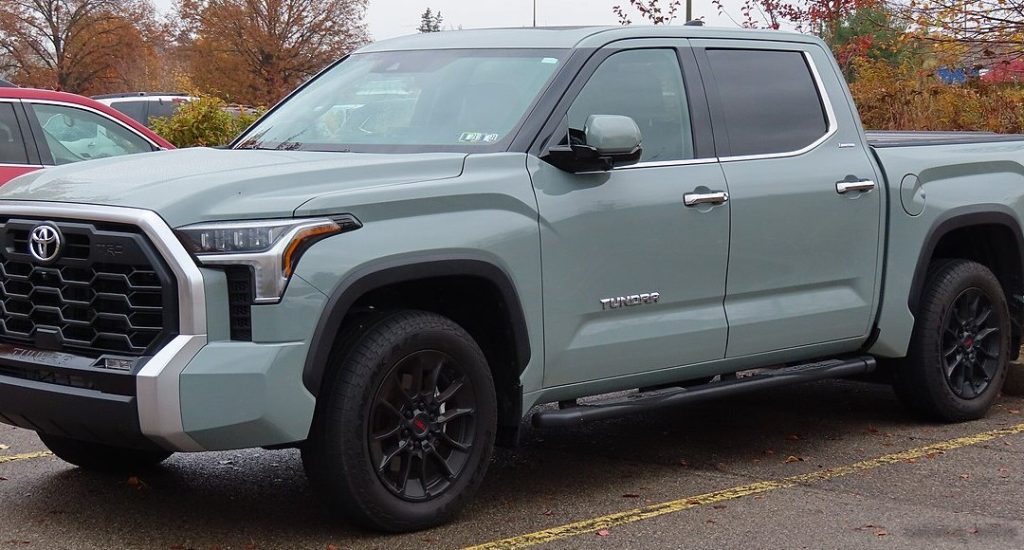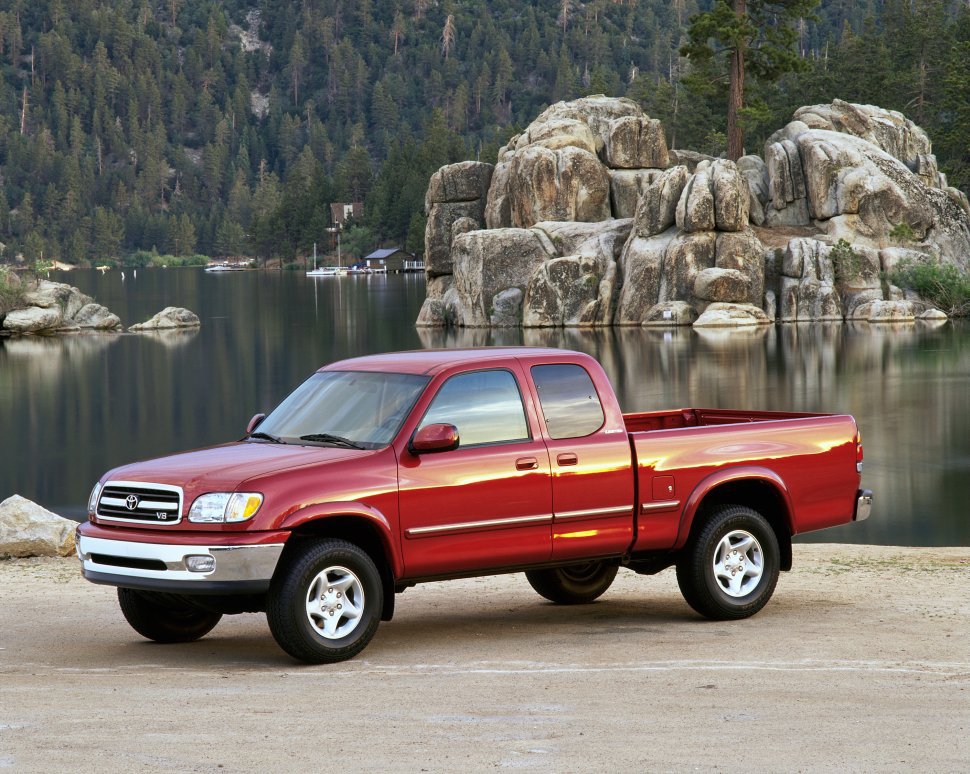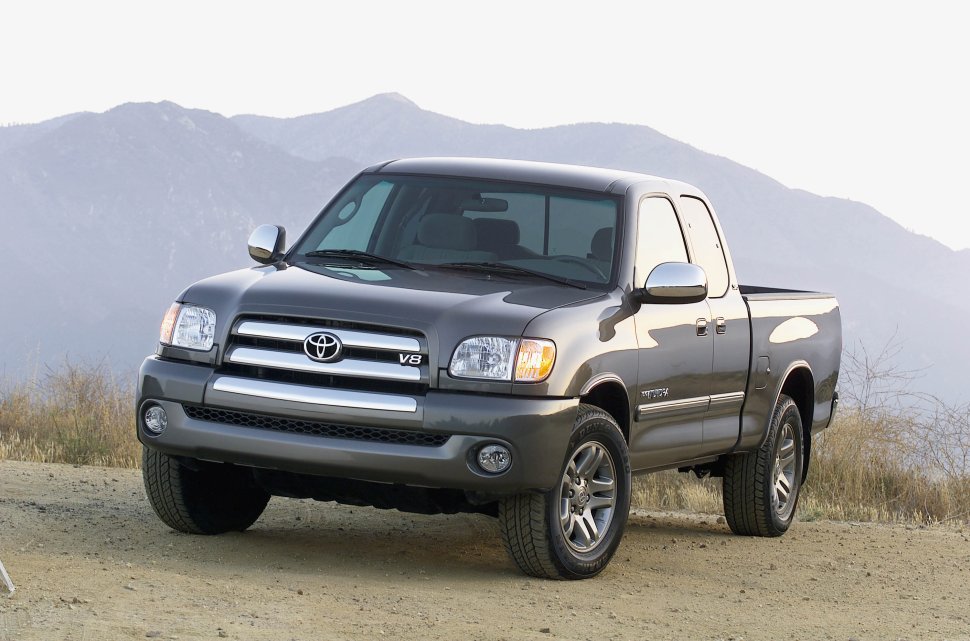
The Toyota Tundra, a mainstay in the North American full-size pickup truck segment, established itself as a reliable and capable contender. The second generation, launched in 2007, received a significant refresh in 2013, enhancing its appeal to a broad range of buyers. The Toyota Tundra II Regular Cab Long Bed (facelift 2013) 4.0 V6 24V, produced from 2013 to 2014, represented a key offering for those seeking a robust yet efficient work truck. This configuration aimed to deliver a blend of power, utility, and the renowned Toyota dependability, positioning itself as a compelling alternative to established domestic brands in the highly competitive U.S. market.
Toyota Tundra II: A Focus on Capability
The 2013 facelift of the Tundra II wasn’t a complete redesign, but rather a series of strategic enhancements designed to modernize the truck’s appearance and refine its overall driving experience. Toyota focused on improving interior materials, bolstering safety features, and optimizing the powertrain for better fuel efficiency without sacrificing the Tundra’s core strength: its ability to handle demanding tasks. The Regular Cab Long Bed configuration specifically catered to buyers who prioritized cargo space and towing capacity over passenger comfort, making it a popular choice for commercial users and those requiring a versatile work vehicle.
Engine & Performance
Powering the Toyota Tundra II Regular Cab Long Bed (facelift 2013) is Toyota’s 4.0-liter 1GR-FE V6 engine. This naturally aspirated powerplant produces 270 horsepower at 5600 rpm and 278.06 lb.-ft. (377 Nm) of torque at 4400 rpm. The engine utilizes a Dual Overhead Camshaft (DOHC) valvetrain with Variable Valve Timing with intelligence (VVT-i), a technology that optimizes valve timing to enhance both power delivery and fuel economy. The 1GR-FE’s 3956 cubic centimeter (241.41 cu. in.) displacement, combined with a 10.4:1 compression ratio, contributes to its durability and consistent performance. Its cylinder bore measures 3.7 inches (94 mm) and the piston stroke is 3.74 inches (95 mm).
The engine is mounted longitudinally in the front of the vehicle and drives the rear wheels through a robust 5-speed automatic transmission. This drivetrain configuration is typical for a full-size pickup truck, providing excellent traction and the ability to handle substantial loads. The Tundra’s weight-to-power ratio of 8 kg/Hp (125.1 Hp/tonne) and weight-to-torque ratio of 5.7 kg/Nm (174.6 Nm/tonne) demonstrate its capability to move its 4759.78 lbs (2159 kg) curb weight effectively, even when approaching its maximum gross weight of 6400.02 lbs (2903 kg). Fuel economy is rated at 13.8 liters per 100 kilometers combined (17 US mpg), with 14.7 l/100 km (16 US mpg) in urban settings and 11.7 l/100 km (20.1 US mpg) on the highway. A generous 26.42 US gallon (100 liter) fuel tank provides a substantial driving range.
Design & Features
The Toyota Tundra II Regular Cab Long Bed (facelift 2013) is a traditional pick-up truck, featuring a two-door configuration with seating for three passengers. The long bed provides ample cargo space for hauling materials and equipment. The 2013 facelift brought subtle styling updates to the front fascia, grille, and headlights, giving the Tundra a more contemporary appearance. Its dimensions – a length of 228.9 inches (5814 mm), a width of 79.88 inches (2029 mm), and a height of 75.79 inches (1925 mm) – contribute to its imposing presence and practical utility.
The truck’s suspension system is designed for both comfort and capability. The front utilizes a double wishbone setup for precise handling and a smoother ride, while the rear employs a leaf spring system to manage heavy payloads. Ground clearance is a substantial 10.2 inches (259 mm), with approach and departure angles of 26 and 21 degrees respectively, enhancing its off-road capability. Safety features include ventilated disc brakes on all four wheels and an Anti-lock Braking System (ABS). Hydraulic rack and pinion steering provides responsive control. The Tundra rides on 255/70 R18 tires mounted on 8.0J x 18-inch wheels. It boasts a maximum payload capacity of 1640.24 lbs (744 kg) and a maximum trailer towing capacity of 3999.19 lbs (1814 kg) when equipped with brakes. The minimum turning circle is 43.96 feet (13.4 meters).
Technical Specifications
| Brand | Toyota |
| Model | Tundra |
| Generation | Tundra II Regular Cab Long Bed (facelift 2013) |
| Type (Engine) | 4.0 V6 24V (270 Hp) Automatic |
| Start of production | 2013 year |
| End of production | 2014 year |
| Powertrain Architecture | Internal Combustion engine |
| Body type | Pick-up |
| Seats | 3 |
| Doors | 2 |
| Urban Fuel Economy | 14.7 l/100 km (16 US mpg) |
| Extra-Urban Fuel Economy | 11.7 l/100 km (20.1 US mpg) |
| Combined Fuel Economy | 13.8 l/100 km (17 US mpg) |
| Fuel Type | Petrol (Gasoline) |
| Weight-to-power ratio | 8 kg/Hp (125.1 Hp/tonne) |
| Weight-to-torque ratio | 5.7 kg/Nm (174.6 Nm/tonne) |
| Power | 270 Hp @ 5600 rpm |
| Power per liter | 68.3 Hp/l |
| Torque | 377 Nm (278.06 lb.-ft.) @ 4400 rpm |
| Engine layout | Front, Longitudinal |
| Engine Model/Code | 1GR-FE |
| Engine displacement | 3956 cm³ (241.41 cu. in.) |
| Number of cylinders | 6 |
| Engine configuration | V-engine |
| Cylinder Bore | 94 mm (3.7 in.) |
| Piston Stroke | 95 mm (3.74 in.) |
| Compression ratio | 10.4:1 |
| Number of valves per cylinder | 4 |
| Fuel injection system | Multi-port manifold injection |
| Engine aspiration | Naturally aspirated engine |
| Valvetrain | DOHC, VVT-i |
| Engine oil capacity | 5.2 l (5.49 US qt) |
| Coolant capacity | 9.6 l (10.14 US qt) |
| Kerb Weight | 2159 kg (4759.78 lbs) |
| Max. weight (GVWR) | 2903 kg (6400.02 lbs) |
| Max load (Payload) | 744 kg (1640.24 lbs) |
| Fuel tank capacity | 100 l (26.42 US gal) |
| Permitted trailer load with brakes (12%) | 1814 kg (3999.19 lbs) |
| Length | 5814 mm (228.9 in.) |
| Width | 2029 mm (79.88 in.) |
| Height | 1925 mm (75.79 in.) |
| Wheelbase | 3700 mm (145.67 in.) |
| Front track | 1725 mm (67.91 in.) |
| Rear (Back) track | 1725 mm (67.91 in.) |
| Ride height (ground clearance) | 259 mm (10.2 in.) |
| Minimum turning circle (turning diameter) | 13.4 m (43.96 ft.) |
| Approach angle | 26° |
| Departure angle | 21° |
| Drivetrain Architecture | Internal Combustion engine drives the rear wheels |
| Drive wheel | Rear wheel drive |
| Number of gears and type of gearbox | 5 gears, automatic transmission |
| Front suspension | Double wishbone |
| Rear suspension | Leaf spring |
| Front brakes | Ventilated discs |
| Rear brakes | Ventilated discs |
| Assisting systems | ABS (Anti-lock braking system) |
| Steering type | Steering rack and pinion |
| Power steering | Hydraulic Steering |
| Tires size | 255/70 R18 |
| Wheel rims size | 8.0J x 18 |