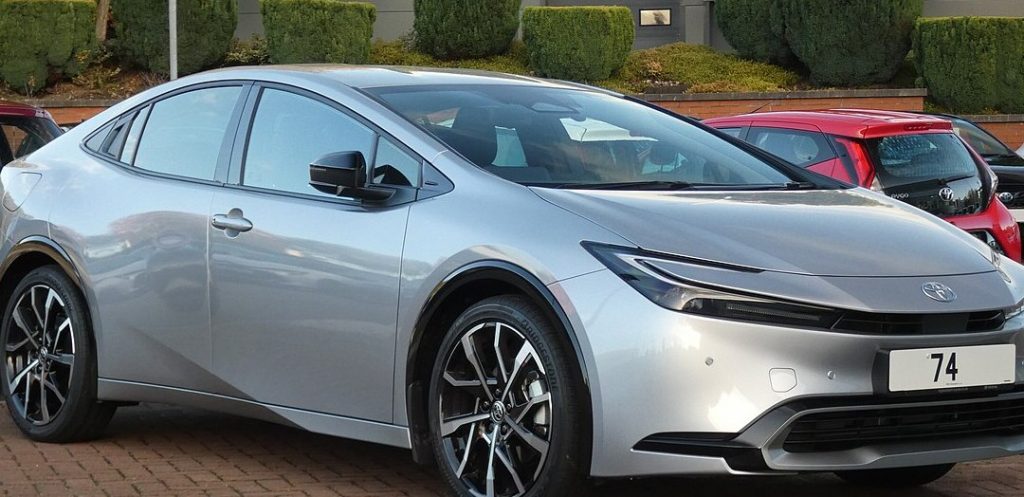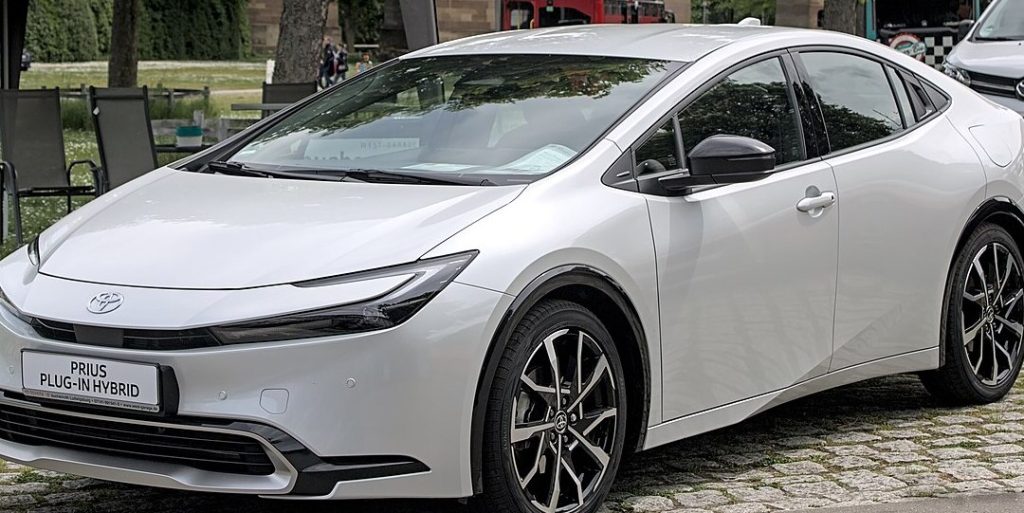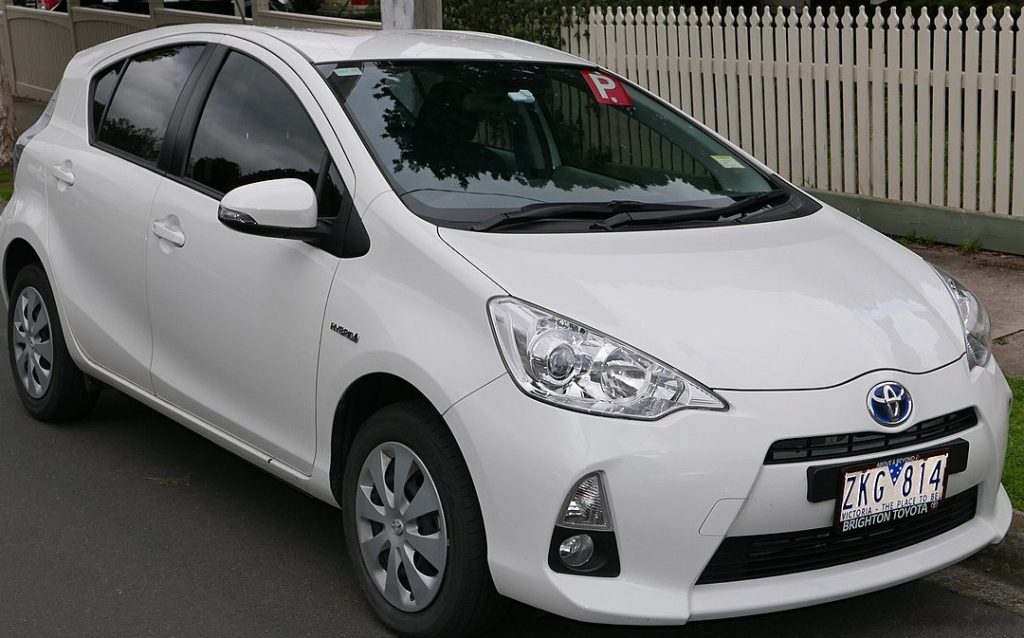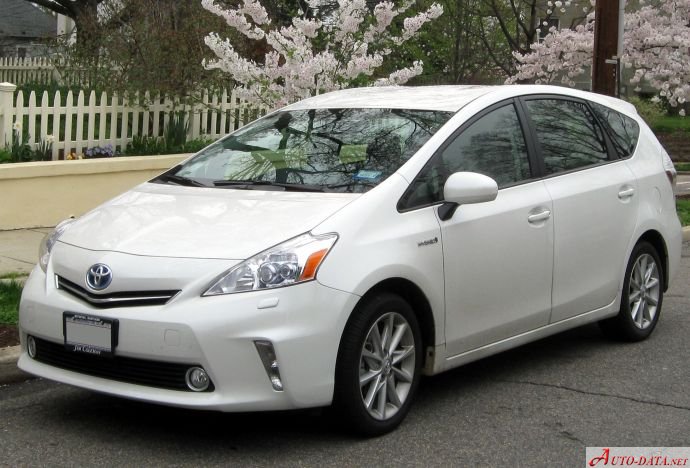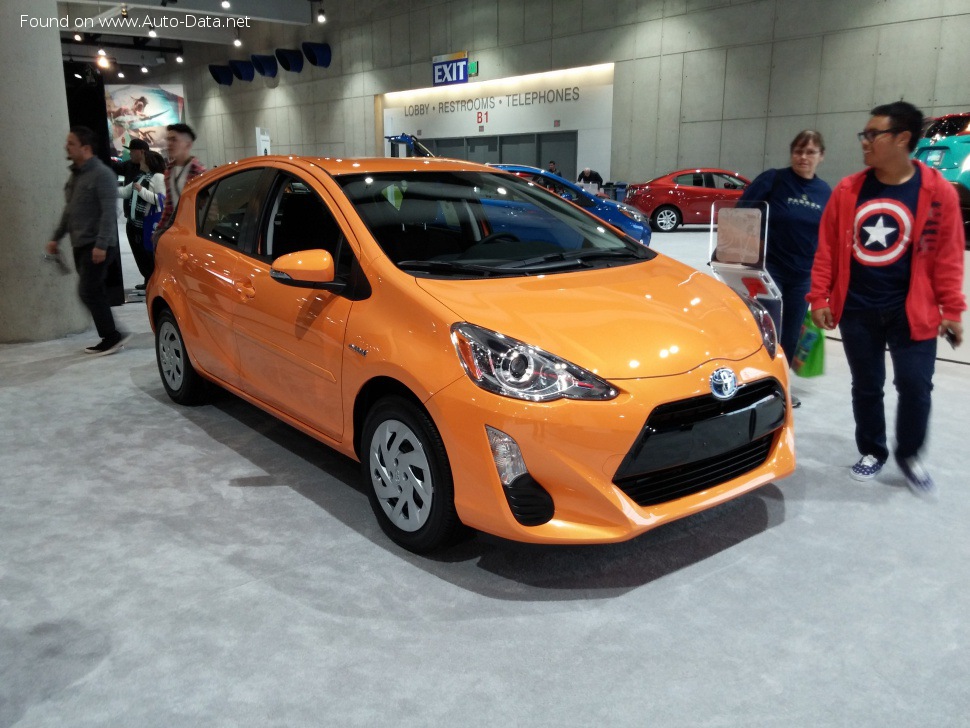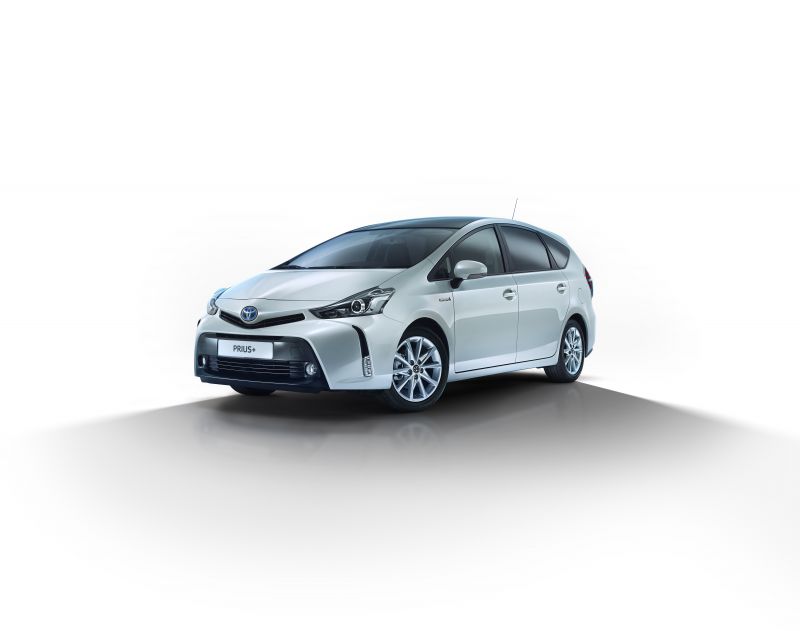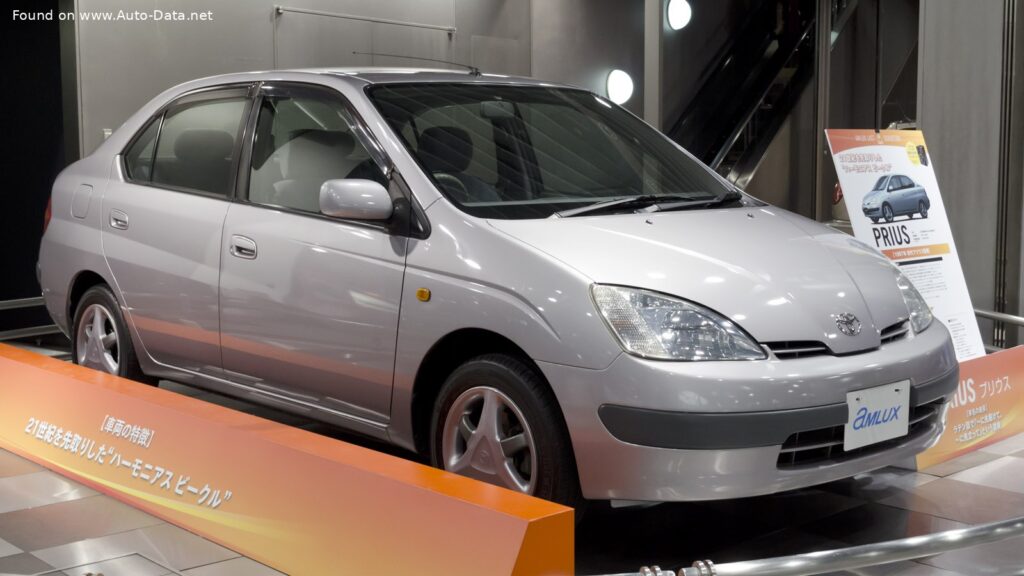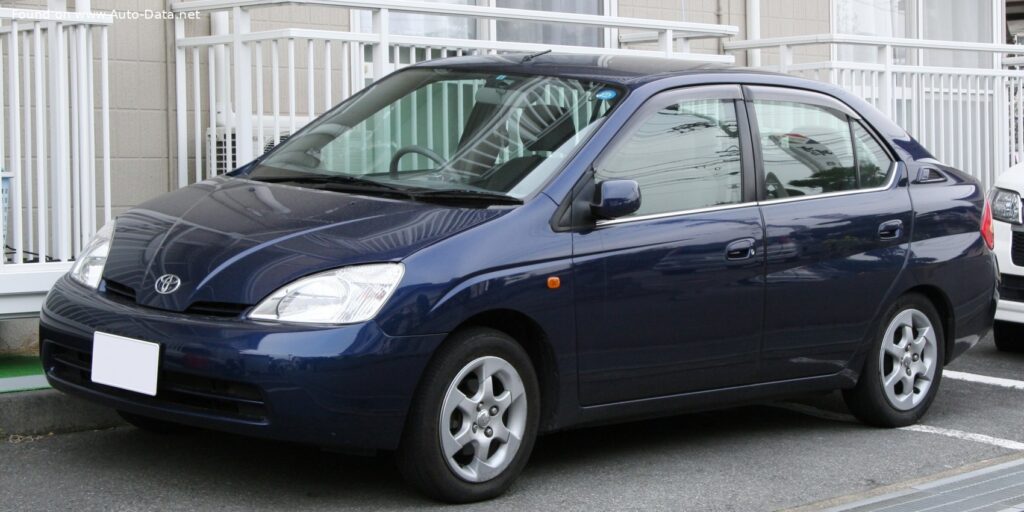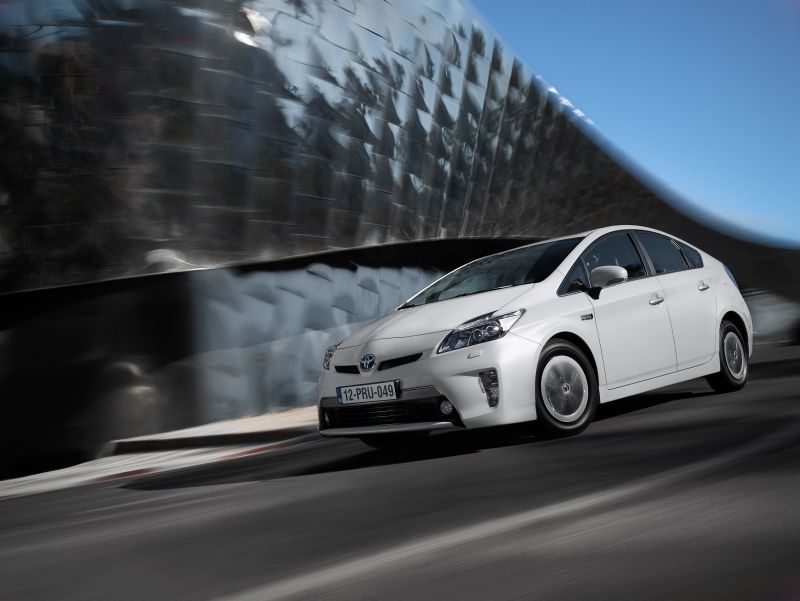
The Toyota Prius III (ZVW30) 1.8 Plug-in Hybrid, produced from 2012 to 2015, represents a significant evolution in Toyota’s hybrid technology. As the third generation of the Prius, it built upon the success of its predecessors by introducing plug-in capability, allowing for a limited all-electric driving range. While the Prius was already a mainstay in markets like Japan and the United States, the ZVW30 Plug-in Hybrid was initially focused on European markets, where government incentives for low-emission vehicles were particularly strong. It offered a compelling option for environmentally conscious consumers seeking improved fuel efficiency and reduced emissions without sacrificing practicality.
Toyota Prius III (ZVW30) – A Detailed Overview
The Prius III Plug-in Hybrid distinguished itself from the standard third-generation Prius through its larger battery pack and the ability to be charged from an external power source. This allowed for a substantial increase in all-electric range, making it suitable for shorter commutes and daily errands without relying on the gasoline engine. The ZVW30 continued the Prius’s reputation for reliability, fuel economy, and innovative technology, solidifying its position as a leader in the hybrid vehicle segment.
Engine & Performance
The ZVW30 Prius Plug-in Hybrid utilizes a 1.8-liter (1798 cm3) inline four-cylinder gasoline engine, designated the 2ZR-FXE. This engine produces 99 horsepower at 5200 rpm and 142 Nm (104.73 lb.-ft.) of torque at 4000 rpm, boasting a power density of 55.1 hp per liter. The engine is coupled with an 82 horsepower electric motor, integrated into the e-CVT (electronically controlled continuously variable transmission). The combined system output is 136 horsepower and 207 Nm (152.68 lb.-ft.) of torque. This powertrain configuration allows the vehicle to operate in various modes: all-electric, hybrid, and engine-only. Acceleration from 0 to 100 km/h (0-62 mph) takes 10.8 seconds, while 0-60 mph is achieved in 10.3 seconds. The vehicle has a maximum speed of 180 km/h (111.85 mph). Fuel economy is exceptional, achieving 2.1 l/100 km (112 US mpg, 134.5 UK mpg, 47.6 km/l) on the combined cycle, with CO2 emissions of just 49 g/km, meeting Euro 5 emission standards.
Design & Features
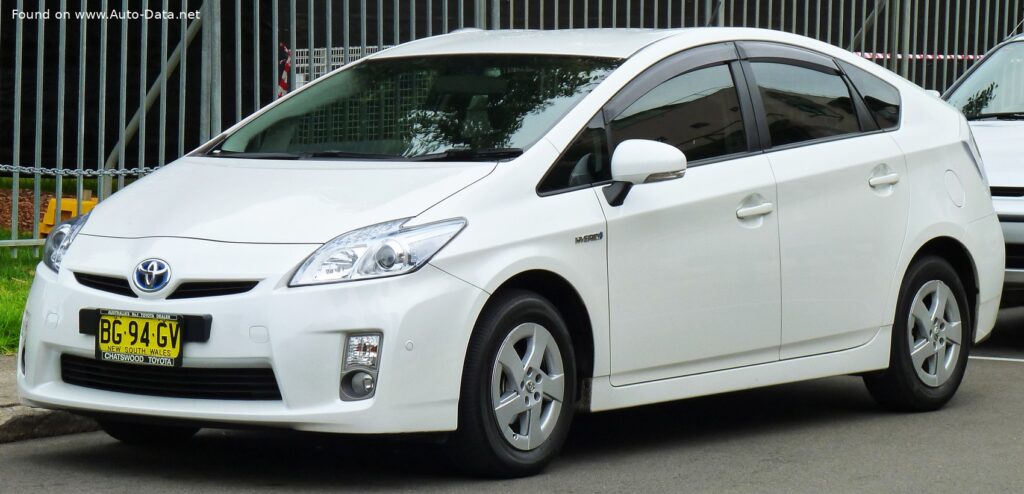
The Prius III maintains the distinctive liftback body style that has become synonymous with the model. Its aerodynamic silhouette, with a drag coefficient of 0.25, contributes to its fuel efficiency. The interior offers seating for five passengers and provides a practical and spacious cabin. Key features include a standard e-CVT transmission, regenerative braking, and various driving modes to optimize fuel efficiency or performance. The plug-in hybrid system necessitated a larger battery pack, which is located under the trunk floor, reducing cargo space compared to the standard Prius, but still offering 443 liters (15.64 cu. ft.) with the rear seats up and 1543 liters (54.49 cu. ft.) with them folded down. Safety features, typical for vehicles of this era, include ABS (Anti-lock Braking System), and a robust safety cell design. The car’s focus was on providing a technologically advanced and environmentally friendly transportation solution.
Technical Specifications
| Brand | Toyota |
| Model | Prius |
| Generation | Prius III (ZVW30) |
| Type (Engine) | 1.8 (136 Hp) Plug-in Hybrid e-CVT |
| Start of production | 2012 |
| End of production | 2015 |
| Powertrain Architecture | PHEV (Plug-in Hybrid Electric Vehicle) |
| Body type | Liftback |
| Seats | 5 |
| Doors | 5 |
| Fuel consumption (combined) | 2.1 l/100 km (112 US mpg, 134.5 UK mpg, 47.6 km/l) |
| CO2 emissions | 49 g/km |
| Fuel Type | Petrol / electricity |
| Acceleration 0 – 100 km/h | 10.8 sec |
| Acceleration 0 – 62 mph | 10.8 sec |
| Acceleration 0 – 60 mph | 10.3 sec |
| Maximum speed | 180 km/h (111.85 mph) |
| Emission standard | Euro 5 |
| Weight-to-power ratio | 10.5 kg/Hp |
| Weight-to-torque ratio | 6.9 kg/Nm |
| Gross battery capacity | 4.4 kWh |
| Battery voltage | 207.2 V |
| Battery technology | Lithium-ion (Li-Ion) |
| Battery weight | 76 kg (167.55 lbs.) |
| Battery location | Under the trunk |
| All-electric range | 25 km (15.53 mi) |
| Average Energy consumption | 5.2 kWh/100 km (8.37 kWh/100 mi, 403 MPGe, 19.2 km/kWh, 11.9 mi/kWh) |
| Max speed (electric) | 85 km/h (52.82 mph) |
| Electric motor power | 82 Hp |
| Electric motor Torque | 207 Nm (152.68 lb.-ft.) |
| Electric motor location | Integrated into the transmission |
| Electric motor type | Synchronous |
| System power | 136 Hp |
| System torque | 207 Nm (152.68 lb.-ft.) |
| Power | 99 Hp @ 5200 rpm |
| Torque | 142 Nm @ 4000 rpm (104.73 lb.-ft. @ 4000 rpm) |
| Engine layout | Front, Transverse |
| Engine Model/Code | 2ZR-FXE |
| Engine displacement | 1798 cm3 (109.72 cu. in.) |
| Number of cylinders | 4 |
| Engine configuration | Inline |
| Cylinder Bore | 80.5 mm (3.17 in.) |
| Piston Stroke | 88.3 mm (3.48 in.) |
| Compression ratio | 13:1 |
| Number of valves per cylinder | 4 |
| Fuel injection system | Multi-port manifold injection |
| Engine aspiration | Naturally aspirated engine |
| Valvetrain | DOHC, VVT-i |
| Engine oil capacity | 4.2 l (4.44 US qt | 3.7 UK qt) |
| Coolant | 6.5 l (6.87 US qt | 5.72 UK qt) |
| Kerb Weight | 1425-1450 kg (3141.59 – 3196.7 lbs.) |
| Max. weight | 1840 kg (4056.51 lbs.) |
| Max load | 390-415 kg (859.8 – 914.92 lbs.) |
| Trunk (boot) space – minimum | 443 l (15.64 cu. ft.) |
| Trunk (boot) space – maximum | 1543 l (54.49 cu. ft.) |
| Fuel tank capacity | 45 l (11.89 US gal | 9.9 UK gal) |
| Length | 4480 mm (176.38 in.) |
| Width | 1745 mm (68.7 in.) |
| Height | 1490 mm (58.66 in.) |
| Wheelbase | 2700 mm (106.3 in.) |
| Front track | 1525 mm (60.04 in.) |
| Rear (Back) track | 1520 mm (59.84 in.) |
| Drivetrain Architecture | Front wheel drive. PHEV. ICE and electric motor drive the front wheels. |
| Drive wheel | Front wheel drive |
| Number of gears and type of gearbox | automatic transmission e-CVT |
The Toyota Prius III Plug-in Hybrid (ZVW30) was a pivotal model in the evolution of hybrid technology, offering a practical and environmentally responsible transportation solution. Its combination of fuel efficiency, all-electric range, and Toyota’s renowned reliability made it a popular choice for consumers seeking a greener driving experience.