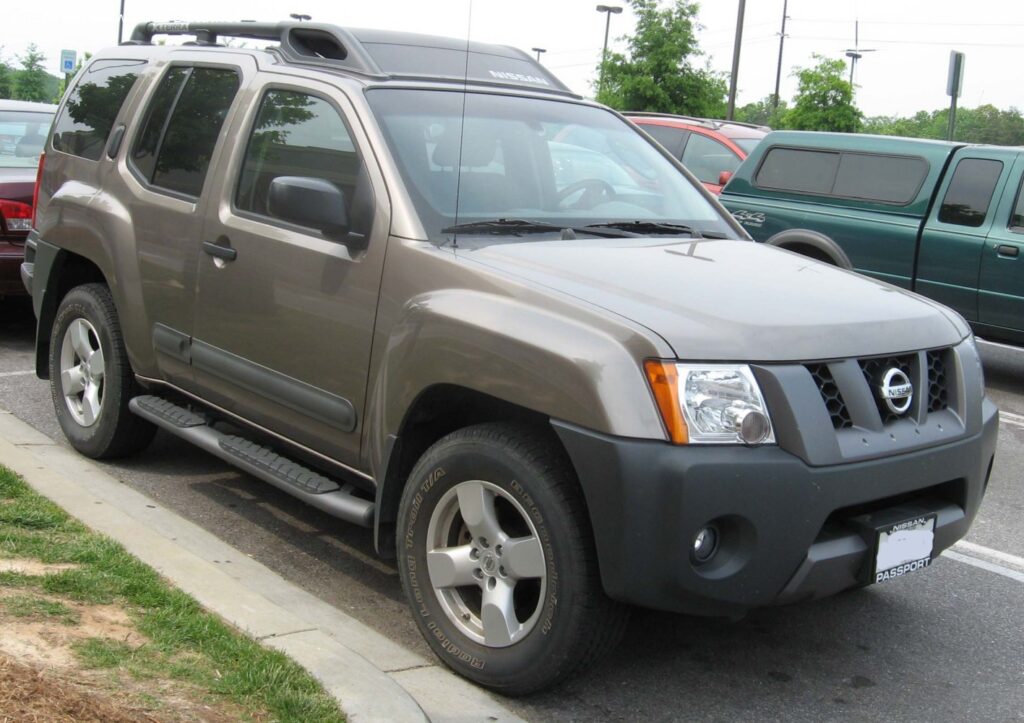
The Nissan Xterra II, produced between 2005 and 2008, represents the second generation of Nissan’s rugged, body-on-frame SUV. Designed primarily for the North American market, the Xterra filled a niche for buyers seeking a capable, affordable, and utilitarian vehicle with off-road potential. It distinguished itself from more car-based crossover SUVs by prioritizing durability and functionality over luxury. The Xterra II offered a compelling alternative to vehicles like the Jeep Wrangler and Toyota 4Runner, appealing to outdoor enthusiasts and those needing a robust vehicle for work and recreation. This generation saw improvements in refinement and features compared to its predecessor, while retaining the core attributes that made the Xterra popular.
Nissan Xterra II: A Detailed Overview
The Xterra II was a mid-size SUV positioned as a more affordable and practical option within the segment. It was never officially sold in Europe or Japan, focusing instead on the demands of the American consumer. The vehicle’s design emphasized a boxy, utilitarian aesthetic, reflecting its intended purpose. It was offered exclusively with a five-door body style and five-seat configuration. The Xterra II’s success stemmed from its blend of off-road capability, interior space, and relatively low price point, making it a popular choice for families and individuals with active lifestyles.
Engine & Performance
The primary engine offered in the Nissan Xterra II was the 4.0-liter VQ40DE V6 engine. This naturally aspirated powerplant produced 265 horsepower at 5600 rpm and 381 Nm (281.01 lb-ft) of torque at 4000 rpm. The engine featured a double overhead camshaft (DOHC) valvetrain and multi-port fuel injection. The VQ40DE was known for its reliability and smooth power delivery. Power per liter was a respectable 67 hp/l. The engine was longitudinally mounted in the front of the vehicle.
Power was transmitted to all four wheels through a five-speed automatic transmission. The Xterra II utilized a part-time four-wheel-drive system, with the rear wheels driven permanently and the front wheels engaged via an electrically or mechanically operated clutch when needed. This system provided enhanced traction in various off-road conditions. The weight-to-power ratio was 7.5 kg/Hp, or 133.5 Hp/tonne, while the weight-to-torque ratio was 5.2 kg/Nm, or 191.9 Nm/tonne. Fuel economy was rated at 14.7 l/100 km (16 US mpg, 19.2 UK mpg) in urban driving and 11.2 l/100 km (21 US mpg, 25.2 UK mpg) in extra-urban conditions. The Xterra II met LEV2-LEV emission standards.
Design & Features
The Nissan Xterra II maintained the rugged, utilitarian design language of the first generation, but with more refined styling cues. The body-on-frame construction provided a robust and durable platform, ideal for off-road adventures. The vehicle’s boxy shape maximized interior space and cargo capacity. Key exterior features included large headlights, a prominent grille, and flared wheel arches. The interior was designed with practicality in mind, featuring durable materials and a straightforward layout.
The Xterra II offered a spacious interior with ample headroom and legroom for passengers. The rear seats could be folded down to create a larger cargo area. Trunk space ranged from a minimum of 997 liters (35.21 cu. ft.) to a maximum of 1860 liters (65.69 cu. ft.) with the rear seats folded. Standard safety features included Anti-lock Braking System (ABS). The Xterra II was equipped with a hydraulic power steering system and ventilated disc brakes on all four wheels. Tire sizes were typically 265/75 R16 or 265/65 R17. The vehicle’s ride height (ground clearance) varied between 211 and 241 mm (8.31 – 9.49 in.), contributing to its off-road capability. Approach, departure, and ramp-over angles were 30.5-33.2°, 27.3-29.4°, and 22.1-24.6° respectively.
Technical Specifications
| Brand | Nissan |
| Model | Xterra |
| Generation | Xterra II |
| Type (Engine) | 4.0 V6 (265 Hp) 4×4 Automatic |
| Start of production | 2005 |
| End of production | 2008 |
| Powertrain Architecture | Internal Combustion engine |
| Body type | SUV |
| Seats | 5 |
| Doors | 5 |
| Fuel consumption (economy) – urban | 14.7 l/100 km (16 US mpg, 19.2 UK mpg) |
| Fuel consumption (economy) – extra urban | 11.2 l/100 km (21 US mpg, 25.2 UK mpg) |
| Fuel Type | Petrol (Gasoline) |
| Emission standard | LEV2-LEV |
| Weight-to-power ratio | 7.5 kg/Hp, 133.5 Hp/tonne |
| Weight-to-torque ratio | 5.2 kg/Nm, 191.9 Nm/tonne |
| Power | 265 Hp @ 5600 rpm |
| Power per litre | 67 Hp/l |
| Torque | 381 Nm @ 4000 rpm (281.01 lb.-ft. @ 4000 rpm) |
| Engine layout | Front, Longitudinal |
| Engine Model/Code | VQ40DE |
| Engine displacement | 3954 cm3 (241.29 cu. in.) |
| Number of cylinders | 6 |
| Engine configuration | V-engine |
| Cylinder Bore | 95.5 mm (3.76 in.) |
| Piston Stroke | 92 mm (3.62 in.) |
| Compression ratio | 9.7:1 |
| Number of valves per cylinder | 4 |
| Fuel injection system | Multi-port manifold injection |
| Engine aspiration | Naturally aspirated engine |
| Valvetrain | DOHC |
| Engine oil capacity | 5.1 l (5.39 US qt | 4.49 UK qt) |
| Coolant | 10.2 l (10.78 US qt | 8.97 UK qt) |
| Kerb Weight | 1985-1997 kg (4376.18 – 4402.63 lbs.) |
| Trunk (boot) space – minimum | 997 l (35.21 cu. ft.) |
| Trunk (boot) space – maximum | 1860 l (65.69 cu. ft.) |
| Fuel tank capacity | 80 l (21.13 US gal | 17.6 UK gal) |
| Permitted trailer load with brakes (12%) | 2268 kg (5000.08 lbs.) |
| Length | 4539 mm (178.7 in.) |
| Width | 1849 mm (72.8 in.) |
| Height | 1902 mm (74.88 in.) |
| Wheelbase | 2700 mm (106.3 in.) |
| Front track | 1570 mm (61.81 in.) |
| Rear (Back) track | 1570 mm (61.81 in.) |
| Ride height (ground clearance) | 211-241 mm (8.31 – 9.49 in.) |
| Number of gears and type of gearbox | 5 gears, automatic transmission |
The Nissan Xterra II, despite its relatively short production run, remains a popular choice among enthusiasts seeking a capable and reliable SUV. Its blend of off-road prowess, spacious interior, and affordability cemented its place as a distinctive vehicle in the mid-size SUV segment.