
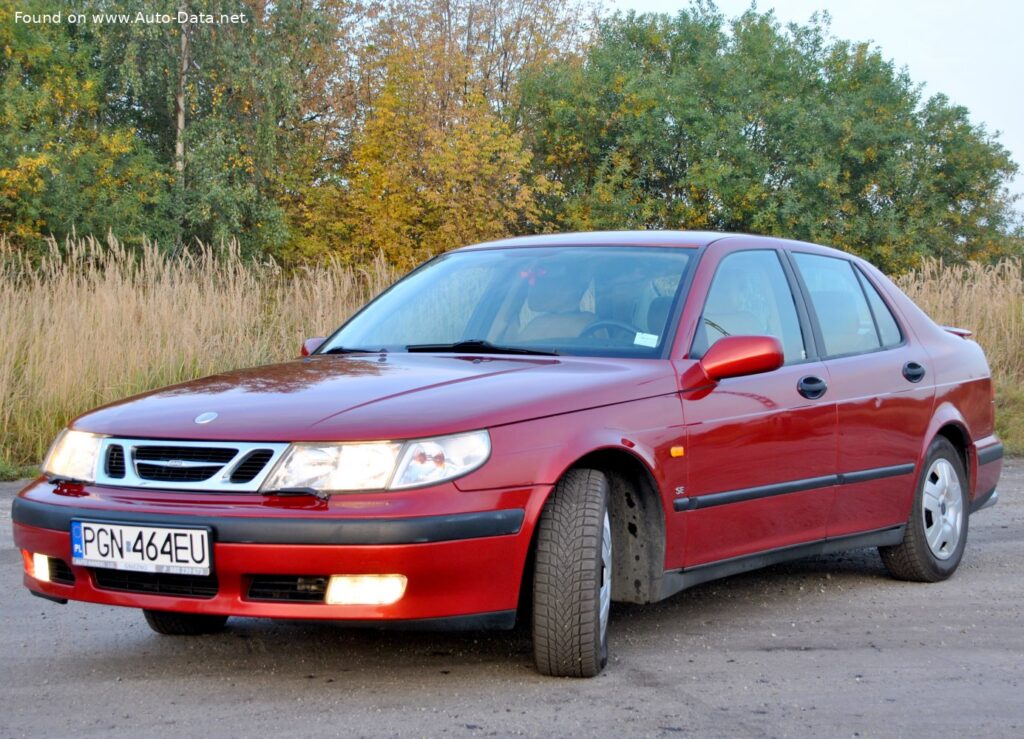
The Saab 9-5 2.3 T 16V Aero, produced between 1999 and 2001, represents a significant evolution in Saab’s mid-size executive car lineage. This generation, known internally as the 9-5, aimed to blend Scandinavian design principles with robust engineering and a focus on driver experience. Positioned as a competitor to vehicles like the BMW 5 Series, Audi A6, and Volvo S80, the 9-5 offered a distinctive alternative in a crowded market segment. The Aero trim level, as exemplified by the 2.3 T 16V model, signified the performance-oriented variant, boasting a turbocharged engine and enhanced features.
Saab 9-5 2.3 T 16V Aero: A Detailed Overview
The 9-5 was Saab’s attempt to move further upmarket and establish itself as a premium brand. It was the first all-new Saab model following General Motors’ acquisition of a 50% stake in the company in 1990. This partnership brought increased investment and access to GM platforms, though Saab maintained its unique brand identity. The 9-5 was built on the GM2900 platform, shared with the Opel/Vauxhall Vectra, but Saab extensively modified the chassis and bodywork to ensure a distinct driving experience and aesthetic.
Engine & Performance
At the heart of the 9-5 2.3 T 16V Aero lies a 2.3-liter, inline-four cylinder turbocharged engine. This powerplant, designated the B235R, produced 250 horsepower at 5300 rpm and 350 Nm (258.15 lb.-ft.) of torque at 1900 rpm. This output translated to a power-to-weight ratio of 6.2 kg/Hp and a respectable torque-to-weight ratio of 4.4 kg/Nm. The engine featured multi-port fuel injection and a double overhead camshaft (DOHC) valvetrain, contributing to its responsive performance. Power delivery was managed through a four-speed automatic transmission, driving the front wheels. Acceleration from 0 to 100 km/h (0-62 mph) took 8.2 seconds, while the 0-60 mph sprint was achieved in a calculated 7.8 seconds. The vehicle had a maximum speed of 250 km/h (155.34 mph).
The engine’s turbocharger provided a noticeable boost in power, enhancing both acceleration and overtaking capabilities. While fuel economy wasn’t a primary focus, the 9-5 2.3 T 16V Aero achieved combined fuel consumption of 10.1 l/100 km (23.3 US mpg, 28 UK mpg), with urban consumption at 15.3 l/100 km (15.4 US mpg, 18.5 UK mpg) and extra-urban consumption at 7.1 l/100 km (33.1 US mpg, 39.8 UK mpg). The engine required 4 liters (4.23 US qt, 3.52 UK qt) of oil and 7.4 liters (7.82 US qt, 6.51 UK qt) of coolant.
Design & Features
The Saab 9-5 2.3 T 16V Aero is a four-door sedan with a distinctive, aerodynamic profile. Saab’s design language was characterized by clean lines, a wraparound windshield, and a focus on functionality. The interior prioritized ergonomics and driver comfort, with a cockpit-style layout and intuitive controls. The Aero trim added features such as sport seats, alloy wheels (17-inch with 225/45 R17 tires), and unique exterior styling cues. Safety features included an Anti-lock Braking System (ABS), reflecting the growing importance of safety technology in the late 1990s. The vehicle offered a trunk capacity of 500 liters (17.66 cu. ft.) and a fuel tank capacity of 70 liters (18.49 US gal, 15.4 UK gal). The 9-5’s dimensions included a length of 4810 mm (189.37 in.), a width of 1790 mm (70.47 in.), and a height of 1450 mm (57.09 in.), with a wheelbase of 2705 mm (106.5 in.).
The 9-5’s suspension utilized a spring strut setup for both the front and rear axles, providing a balance between ride comfort and handling. Steering was rack and pinion with hydraulic power assistance. The kerb weight of the vehicle was 1540 kg (3395.12 lbs), with a maximum weight of 2110 kg (4651.75 lbs) and a maximum load capacity of 570 kg (1256.63 lbs).
Technical Specifications
| Brand | Saab |
| Model | 9-5 |
| Generation | 9-5 |
| Type (Engine) | 2.3 T 16V Aero (250 Hp) Automatic |
| Start of production | 1999 |
| End of production | 2001 |
| Powertrain Architecture | Internal Combustion engine |
| Body type | Sedan |
| Seats | 5 |
| Doors | 4 |
| Fuel consumption (urban) | 15.3 l/100 km (15.4 US mpg, 18.5 UK mpg) |
| Fuel consumption (extra urban) | 7.1 l/100 km (33.1 US mpg, 39.8 UK mpg) |
| Fuel consumption (combined) | 10.1 l/100 km (23.3 US mpg, 28 UK mpg) |
| Fuel Type | Petrol (Gasoline) |
| Acceleration 0 – 100 km/h | 8.2 sec |
| Acceleration 0 – 62 mph | 8.2 sec |
| Acceleration 0 – 60 mph | 7.8 sec |
| Maximum speed | 250 km/h (155.34 mph) |
| Weight-to-power ratio | 6.2 kg/Hp |
| Weight-to-torque ratio | 4.4 kg/Nm |
| Power | 250 Hp @ 5300 rpm |
| Torque | 350 Nm @ 1900 rpm (258.15 lb.-ft. @ 1900 rpm) |
| Engine layout | Front, Transverse |
| Engine Model/Code | B235R |
| Engine displacement | 2290 cm3 (139.74 cu. in.) |
| Number of cylinders | 4 |
| Engine configuration | Inline |
| Cylinder Bore | 90 mm (3.54 in.) |
| Piston Stroke | 90 mm (3.54 in.) |
| Compression ratio | 9.3:1 |
| Number of valves per cylinder | 4 |
| Fuel injection system | Multi-port manifold injection |
| Engine aspiration | Turbocharger |
| Valvetrain | DOHC |
| Engine oil capacity | 4 l (4.23 US qt | 3.52 UK qt) |
| Coolant | 7.4 l (7.82 US qt | 6.51 UK qt) |
| Kerb Weight | 1540 kg (3395.12 lbs.) |
| Max. weight | 2110 kg (4651.75 lbs.) |
| Max load | 570 kg (1256.63 lbs.) |
| Trunk (boot) space – minimum | 500 l (17.66 cu. ft.) |
| Fuel tank capacity | 70 l (18.49 US gal | 15.4 UK gal) |
| Length | 4810 mm (189.37 in.) |
| Width | 1790 mm (70.47 in.) |
| Height | 1450 mm (57.09 in.) |
| Wheelbase | 2705 mm (106.5 in.) |
| Front track | 1520 mm (59.84 in.) |
| Rear (Back) track | 1520 mm (59.84 in.) |
| Drivetrain Architecture | Front wheel drive |
| Number of gears and type of gearbox | 4 gears, automatic transmission |
| Front suspension | Spring Strut |
| Rear suspension | Spring Strut |
| Front brakes | Ventilated discs |
| Rear brakes | Disc |
| Assisting systems | ABS (Anti-lock braking system) |
| Steering type | Steering rack and pinion |
| Power steering | Hydraulic Steering |
| Tires size | 225/45 R17 |
| Wheel rims size | 17 |
