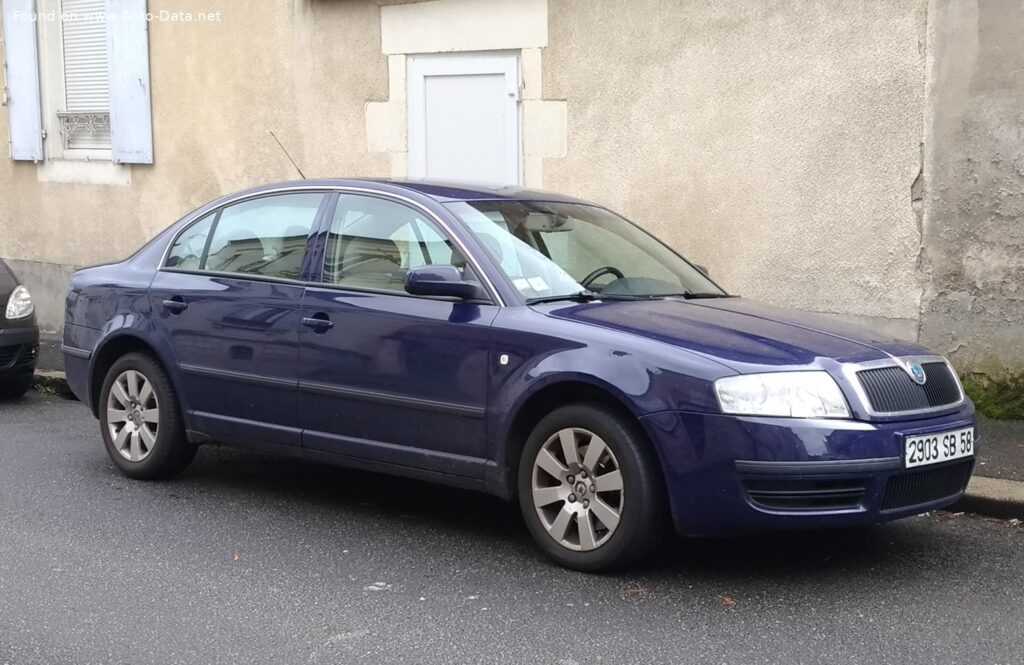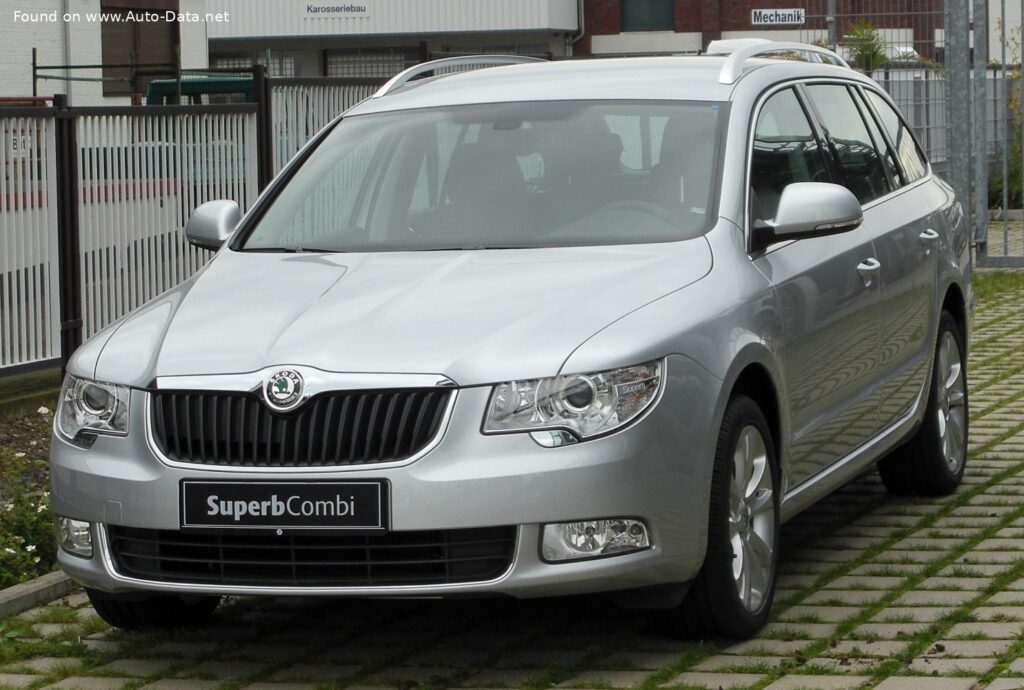
The Skoda Superb II Combi 1.8 TSI (158 Hp) represents a compelling chapter in the history of Skoda’s flagship model, embodying the brand’s evolution into a sophisticated yet value-driven automotive manufacturer within the Volkswagen Group. Launched in 2009 and produced until May 2013, this particular iteration of the Superb II Combi was a cornerstone of Skoda’s strategy in its primary European and Asian markets, offering an impressive blend of space, comfort, and refined driving dynamics, all while maintaining the brand’s reputation for practicality. While never officially sold in the United States, the Superb II Combi carved out a significant niche as a highly competent and generously proportioned executive station wagon (estate) that often challenged more premium offerings in terms of sheer utility and passenger comfort. Its introduction marked a period where Skoda was increasingly recognized for its engineering prowess and design maturity, moving beyond its historical reputation to become a formidable contender in the highly competitive mid-size segment.
The Skoda Superb II Combi: A European Executive Estate
The second generation of the Skoda Superb, particularly in its Combi (station wagon) guise, redefined expectations for the brand. Building on the success of its sedan counterpart, which notably featured an innovative “TwinDoor” trunk opening system, the Combi variant extended the Superb’s appeal to families and professionals requiring even greater cargo flexibility without compromising on elegance. The vehicle’s architecture, drawing heavily from the Volkswagen Passat B6 platform, provided a solid foundation for its impressive dimensions and handling characteristics. Its generous length of 190.47 inches (4838 mm) and a substantial wheelbase of 108.7 inches (2761 mm) translated directly into what was arguably best-in-class rear legroom and a cavernous cargo area, making it a favorite for long journeys and practical daily use across Europe. The Skoda Superb II Combi was lauded for its understated yet purposeful design, which exuded a sense of mature sophistication, moving away from the more utilitarian aesthetics of some of its predecessors. It successfully bridged the gap between mainstream and premium segments, offering a compelling alternative to more expensive German rivals by providing similar levels of refinement and technology at a more accessible price point.
Powertrain and Performance: The 1.8 TSI Engine
At the heart of the Skoda Superb II Combi 1.8 TSI (158 Hp) lies the renowned EA888 / CDAA engine, a 1.8-liter (1798 cm3 or 109.72 cu. in.) inline-four cylinder unit that epitomized Volkswagen Group’s commitment to efficient and responsive turbocharged gasoline engines during that era. This powerplant, featuring direct injection and an intercooled turbocharger, delivered a robust 158 horsepower (Hp) at a broad range of 4500-6200 revolutions per minute (rpm). More impressively, it produced a substantial 250 Newton-meters (Nm) of torque, equivalent to 184.39 pound-feet (lb.-ft.), available from a remarkably low 1500 rpm and sustained all the way up to 4500 rpm. This wide torque band ensured excellent drivability, offering strong acceleration from a standstill and flexible in-gear performance, making overtakes effortless even when the vehicle was fully laden.
Paired with a precise 6-speed manual transmission, the 1.8 TSI engine propelled the Superb II Combi from 0 to 60 mph in a respectable 8.3 seconds (0-100 km/h in 8.7 seconds) and enabled a top speed of 135.46 mph (218 km/h). Despite its strong performance, the engine was also designed with efficiency in mind. Its combined fuel economy was rated at 32.2 US mpg (7.3 l/100 km), with extra-urban consumption reaching an impressive 39.2 US mpg (6 l/100 km), demonstrating the benefits of forced induction and direct injection technology. The engine’s compliance with the Euro 5 emissions standard further underscored its environmental credentials for the period. The powertrain architecture featured a front, transverse engine layout, driving the front wheels, a common and effective setup for maximizing interior space and manufacturing efficiency in this segment. The vehicle’s weight-to-power ratio stood at 9.7 kg/Hp (103.1 Hp/tonne), indicating a well-balanced power delivery for its size and class.
Design, Ergonomics, and Features of the Superb II Combi
The design philosophy of the Skoda Superb II Combi was centered on maximizing utility and passenger comfort without sacrificing aesthetic appeal. Its station wagon (estate) body type, with five doors and seating for five adults, was meticulously crafted to offer unparalleled interior volume. The exterior lines were clean and unadorned, contributing to a timeless look that aged gracefully. The width of 71.54 inches (1817 mm) and height of 59.45 inches (1510 mm) further contributed to a commanding road presence and a spacious cabin environment.
Inside, the Superb II Combi was a masterclass in ergonomic design and thoughtful features. The emphasis on rear legroom was legendary, often surpassing vehicles from higher segments. The quality of materials and fit-and-finish were notably high for its class, reflecting its position as Skoda’s flagship. Standard features for the era included essential safety systems like ABS (Anti-lock Braking System), providing crucial stability during emergency braking. The steering system utilized an electric power steering rack and pinion setup, offering light effort at low speeds for easy maneuvering and more feedback at higher speeds for confident driving. The suspension system was engineered for comfort and stability, featuring an independent McPherson strut arrangement with coil springs and an anti-roll bar at the front, complemented by an independent multi-link suspension at the rear. This combination ensured a smooth ride over varied road surfaces while maintaining composed handling characteristics. Braking was handled by disc brakes on both the front and rear axles. The vehicle was typically fitted with 205/55 R16 or 225/45 R17 tires on 7.0J x 16 wheel rims, providing a good balance of grip, ride comfort, and aesthetic appeal. With a generous fuel tank capacity of 15.85 US gallons (60 liters), the Superb II Combi was well-suited for long-distance travel, further solidifying its reputation as a practical and comfortable family or executive vehicle.
Technical Specifications
| Feature | Value |
|---|---|
| Brand | Skoda |
| Model | Superb |
| Generation | Superb II Combi |
| Type (Engine) | 1.8 TSI (158 Hp) |
| Start of production | 2009 year |
| End of production | May, 2013 year |
| Powertrain Architecture | Internal Combustion engine |
| Body type | Station wagon (estate) |
| Seats | 5 |
| Doors | 5 |
| Fuel consumption (economy) – urban | 9.5 l/100 km (24.8 US mpg) |
| Fuel consumption (economy) – extra urban | 6 l/100 km (39.2 US mpg) |
| Fuel consumption (economy) – combined | 7.3 l/100 km (32.2 US mpg) |
| Fuel Type | Petrol (Gasoline) |
| Acceleration 0 – 60 mph | 8.3 sec |
| Acceleration 0 – 100 km/h | 8.7 sec |
| Maximum speed | 218 km/h (135.46 mph) |
| Emission standard | Euro 5 |
| Weight-to-power ratio | 9.7 kg/Hp (103.1 Hp/tonne) |
| Weight-to-torque ratio | 6.1 kg/Nm (163.1 Nm/tonne) |
| Power | 158 Hp @ 4500-6200 rpm |
| Power per liter | 87.9 Hp/l |
| Torque | 250 Nm @ 1500-4500 rpm (184.39 lb.-ft.) |
| Engine layout | Front, Transverse |
| Engine Model/Code | EA888 / CDAA |
| Engine displacement | 1798 cm3 (1.8 l / 109.72 cu. in.) |
| Number of cylinders | 4 |
| Engine configuration | Inline |
| Fuel injection system | Direct injection |
| Engine aspiration | Turbocharger, Intercooler |
| Engine oil capacity | 4.6 l (4.86 US qt) |
| Coolant | 8.6 l (9.09 US qt) |
| Kerb Weight | 1533 kg (3379.69 lbs) |
| Max. weight | 2096 kg (4620.89 lbs) |
| Max load | 563 kg (1241.2 lbs) |
| Fuel tank capacity | 60 l (15.85 US gal) |
| Length | 4838 mm (190.47 in) |
| Width | 1817 mm (71.54 in) |
| Height | 1510 mm (59.45 in) |
| Wheelbase | 2761 mm (108.7 in) |
| Front track | 1545 mm (60.83 in) |
| Rear (Back) track | 1517 mm (59.72 in) |
| Minimum turning circle (turning diameter) | 11.5 m (37.73 ft) |
| Drivetrain Architecture | Internal combustion engine (ICE) drives the front wheels |
| Drive wheel | Front wheel drive |
| Number of gears and type of gearbox | 6 gears, manual transmission |
| Front suspension | Independent, type McPherson with coil spring and anti-roll bar |
| Rear suspension | Independent multi-link suspension |
| Front brakes | Disc |
| Rear brakes | Disc |
| Assisting systems | ABS (Anti-lock braking system) |
| Steering type | Steering rack and pinion |
| Power steering | Electric Steering |
| Tires size | 205/55 R16; 225/45 R17 |
| Wheel rims size | 7.0J x 16 |