
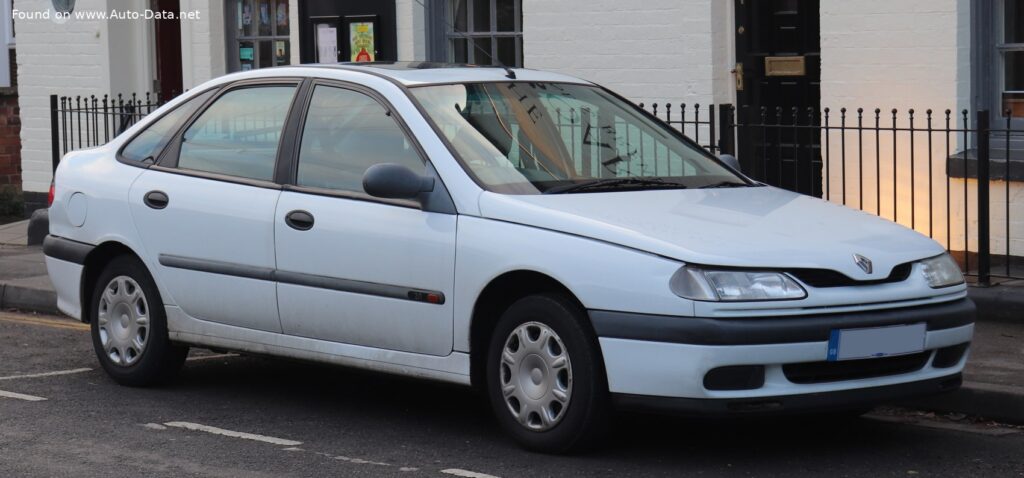
The Renault Laguna, particularly the 2.0 i 16V (140 Hp) variant produced between 2000 and 2002, represented a significant offering in the European mid-size family car segment, known as the D-segment. This second-generation Laguna, a successor to the original model launched in 1994, was pivotal for Renault, embodying the brand’s commitment to safety, comfort, and advanced technology for the new millennium. While never officially sold in the United States, the Laguna was a ubiquitous sight on European roads, where it competed fiercely against rivals such as the Ford Mondeo, Opel Vectra, and Volkswagen Passat. The 2.0 i 16V (140 Hp) model, specifically, offered a compelling blend of adequate power for highway cruising and daily practicality, packaged within a distinctive 5-door hatchback body style. It aimed to provide a sophisticated driving experience, emphasizing passenger well-being and a refined ride quality, which were hallmarks of Renault’s engineering philosophy during this era. Its role in the European market was to provide a comfortable, safe, and efficient vehicle for families and business users, establishing a benchmark for features and design that would influence subsequent models.
Engine and Performance of the Renault Laguna 2.0 i 16V (140 Hp)
At the heart of the Renault Laguna 2.0 i 16V (140 Hp) lies a robust and well-regarded F4R engine, a 2.0-liter (1998 cm³ or 121.93 cubic inches) naturally aspirated inline-four cylinder unit. This powertrain architecture, featuring a front, transverse engine layout, was designed to deliver a balanced combination of power and efficiency suitable for its target market. The engine’s configuration includes a Double Overhead Camshaft (DOHC) valvetrain with four valves per cylinder, totaling 16 valves, which was advanced for its time and contributed to better breathing and power delivery across the rev range. Fuel is delivered via a multi-port manifold injection system, ensuring precise fuel metering and combustion efficiency. With a compression ratio of 9.8:1, the engine produces a respectable 140 horsepower at 5500 revolutions per minute, translating to a power output of 70.1 horsepower per liter. Peak torque is rated at 138.66 lb.-ft. (188 Nm) at 3750 rpm, providing ample pulling power in typical driving situations.
The performance figures for the 2.0 i 16V variant underscore its capability as a competent family hauler. The vehicle accelerates from 0 to 60 mph in a swift 9.3 seconds, with a 0-100 km/h sprint completed in 9.8 seconds. This acceleration, coupled with a maximum speed of 127.38 mph (205 km/h), made it competitive within its segment, offering confident overtaking ability and comfortable cruising speeds on European motorways. Power is transmitted to the front wheels through a precise 5-speed manual transmission, which was the standard for engagement and control in this class. The powertrain architecture is front-wheel drive, a common and efficient setup for mid-size sedans and hatchbacks. In terms of fuel economy, the Laguna 2.0 i 16V achieves a combined rating of 27.7 US mpg (8.5 liters per 100 km), which was considered a reasonable figure for a gasoline engine of this displacement and power output in the early 2000s. The engine’s oil capacity stands at 5.3 liters, and the cooling system holds 7 liters, indicating a well-engineered thermal management system. The weight-to-power ratio of 9.1 kg/Hp (109.4 Hp/tonne) and a weight-to-torque ratio of 6.8 kg/Nm (146.9 Nm/tonne) further highlight the efficient utilization of its power and torque for its curb weight of 2821.92 lbs (1280 kg).
Design and Features of the Renault Laguna
The second-generation Renault Laguna, produced from 2000 to 2002 for this specific variant, was characterized by its distinctive and aerodynamic 5-door hatchback body style. Renault’s design language during this period emphasized fluidity, elegance, and a strong focus on passive and active safety. The Laguna’s exterior featured smooth lines and a rounded silhouette, contributing to its low drag coefficient and refined appearance. With a length of 177.48 inches (4508 mm), a width of 68.98 inches (1752 mm), and a height of 56.77 inches (1442 mm), the Laguna offered a substantial road presence while remaining agile enough for urban environments. The wheelbase of 105.12 inches (2670 mm) was generous for its class, contributing to interior space and ride comfort, while front and rear tracks of 58.31 inches (1481 mm) and 57.95 inches (1472 mm) respectively ensured stable handling.
Inside, the Laguna was designed to be a comfortable and practical family vehicle, accommodating five occupants across its five seats. The interior was praised for its ergonomic layout and quality materials, providing a serene environment for long journeys. Practicality was a strong suit, with a minimum trunk (boot) space of 15.96 cubic feet (452 liters), which could be expanded significantly to 31.22 cubic feet (884 liters) by folding the rear seats, offering considerable versatility for luggage and cargo. The fuel tank capacity of 17.44 US gallons (66 liters) provided an ample cruising range, aligning with its role as a long-distance tourer.
From a chassis and safety perspective, the Laguna incorporated several advanced features for its time. The suspension system utilized a Spring Strut setup at the front, providing a good balance of comfort and handling precision, while the rear featured a Torsion beam, a cost-effective and space-efficient solution that allowed for a larger trunk volume. Braking performance was ensured by ventilated discs at the front and disc brakes at the rear, complemented by an Anti-lock Braking System (ABS) as a standard assisting system, significantly enhancing stopping power and control in emergency situations. Steering was managed by a rack and pinion system with hydraulic power steering, offering a direct and communicative feel to the driver. The vehicle rode on 15-inch wheel rims fitted with 195/60 R15 tires, providing a comfortable ride and adequate grip. With a maximum weight capacity of 4100.6 lbs (1860 kg) and a maximum load of 1278.68 lbs (580 kg), the Laguna was engineered to safely transport both passengers and their belongings, reinforcing its reputation as a reliable and secure choice in its market segment.
Technical Specifications: Renault Laguna 2.0 i 16V (140 Hp)
| Brand | Renault |
| Model | Laguna |
| Generation | Laguna |
| Type (Engine) | 2.0 i 16V (140 Hp) |
| Start of production | 2000 year |
| End of production | 2002 year |
| Powertrain Architecture | Internal Combustion engine |
| Body type | Hatchback |
| Seats | 5 |
| Doors | 5 |
| Fuel consumption (economy) – combined | 27.7 US mpg (8.5 l/100 km) |
| Fuel Type | Petrol (Gasoline) |
| Acceleration 0 – 60 mph | 9.3 sec |
| Acceleration 0 – 100 km/h | 9.8 sec |
| Maximum speed | 127.38 mph (205 km/h) |
| Weight-to-power ratio | 9.1 kg/Hp, 109.4 Hp/tonne |
| Weight-to-torque ratio | 6.8 kg/Nm, 146.9 Nm/tonne |
| Power | 140 Hp @ 5500 rpm. |
| Power per liter | 70.1 Hp/l |
| Torque | 138.66 lb.-ft. (188 Nm) @ 3750 rpm. |
| Engine layout | Front, Transverse |
| Engine Model/Code | F4R |
| Engine displacement | 121.93 cu. in. (1998 cm³) |
| Number of cylinders | 4 |
| Engine configuration | Inline |
| Cylinder Bore | 3.26 in. (82.7 mm) |
| Piston Stroke | 3.66 in. (93 mm) |
| Compression ratio | 9.8:1 |
| Number of valves per cylinder | 4 |
| Fuel injection system | Multi-port manifold injection |
| Engine aspiration | Naturally aspirated engine |
| Valvetrain | DOHC |
| Engine oil capacity | 5.6 US qt (5.3 l) |
| Coolant | 7.4 US qt (7 l) |
| Kerb Weight | 2821.92 lbs (1280 kg) |
| Max. weight | 4100.6 lbs (1860 kg) |
| Max load | 1278.68 lbs (580 kg) |
| Trunk (boot) space – minimum | 15.96 cu. ft. (452 l) |
| Trunk (boot) space – maximum | 31.22 cu. ft. (884 l) |
| Fuel tank capacity | 17.44 US gal (66 l) |
| Length | 177.48 in. (4508 mm) |
| Width | 68.98 in. (1752 mm) |
| Height | 56.77 in. (1442 mm) |
| Wheelbase | 105.12 in. (2670 mm) |
| Front track | 58.31 in. (1481 mm) |
| Rear (Back) track | 57.95 in. (1472 mm) |
| Drivetrain Architecture | The Internal combustion engine (ICE) drives the front wheels of the vehicle. |
| Drive wheel | Front wheel drive |
| Number of gears and type of gearbox | 5 gears, manual transmission |
| Front suspension | Spring Strut |
| Rear suspension | Torsion |
| Front brakes | Ventilated discs |
| Rear brakes | Disc |
| Assisting systems | ABS (Anti-lock braking system) |
| Steering type | Steering rack and pinion |
| Power steering | Hydraulic Steering |
| Tires size | 195/60 R15 |
| Wheel rims size | 15 |
