
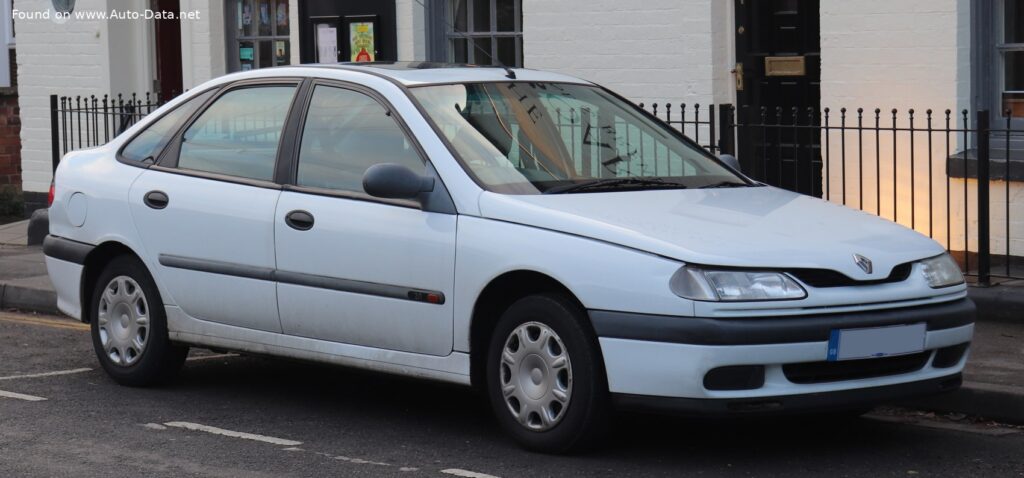
The Renault Laguna, a distinguished mid-size family car, represented a significant offering from the French automaker in the highly competitive European D-segment. The particular variant under scrutiny, the Renault Laguna 2.9 24V (190 Hp), produced between 1997 and 2000, stood out as the flagship performance model of its generation. While never officially imported to the United States, the Laguna carved a substantial niche in markets across Europe, Asia, and other international territories, celebrated for its blend of comfort, practicality, and sophisticated engineering. This specific iteration, equipped with a potent V6 engine, aimed to provide a more dynamic driving experience within the practical confines of a five-door hatchback body style, appealing to discerning buyers who desired both spirited performance and everyday usability. Its presence underscored Renault’s commitment to offering a diverse range of powertrains within its popular models, catering to a broad spectrum of consumer preferences.
Engine & Performance of the Renault Laguna 2.9 24V (190 Hp)
The heart of the Renault Laguna 2.9 24V (190 Hp) was its longitudinally mounted, naturally aspirated 2.9-liter V6 engine, designated with the L7X code. This sophisticated powertrain was a testament to Renault’s engineering prowess, featuring a Double Overhead Camshaft (DOHC) valvetrain with four valves per cylinder, totaling 24 valves, which was instrumental in optimizing both power output and engine breathing efficiency. The engine delivered a robust 190 horsepower at 5750 rpm, providing a compelling power-to-liter ratio of 64.5 horsepower per liter. Torque figures were equally impressive for its class, peaking at 196.93 lb.-ft. at 4000 rpm, ensuring strong mid-range acceleration and flexible driving characteristics. This power was channeled to the front wheels via a precise 5-speed manual transmission, offering direct engagement for the driver.
Performance metrics for the Renault Laguna 2.9 24V (190 Hp) were quite competitive for a family hatchback of its era. It could sprint from 0 to 60 mph in a brisk 7.3 seconds, a figure that placed it firmly in the realm of sportier sedans and coupes of the late 1990s. The vehicle boasted a top speed of 146.02 mph, underscoring its capabilities on unrestricted European highways. Despite its performance aspirations, the Laguna also demonstrated reasonable efficiency for a V6-powered vehicle of its size, with an extra-urban fuel economy rated at 29 US mpg. However, urban driving naturally saw consumption rise to 14.6 US mpg, reflecting the demands of city traffic on a larger displacement engine. The engine’s multi-port manifold injection system ensured precise fuel delivery, contributing to both its performance and relative efficiency. With a compression ratio of 10.5:1, the L7X engine was tuned for responsiveness and smooth power delivery, making the Renault Laguna 2.9 24V (190 Hp) a genuinely engaging car to drive.
Design & Features
The Renault Laguna 2.9 24V (190 Hp) adopted a practical yet elegant five-door hatchback body style, a popular choice in the European market for its versatility. Measuring 177.56 inches in length, 68.9 inches in width, and 56.3 inches in height, the Laguna presented a refined silhouette characterized by smooth lines and a cohesive design language typical of late 1990s Renault vehicles. Its 105.12-inch wheelbase contributed to a stable ride and generous interior space, accommodating five occupants comfortably. The design emphasized aerodynamic efficiency, contributing to both its top speed and fuel economy.
Inside, the Laguna was engineered with practicality and comfort in mind. The hatchback configuration offered exceptional cargo flexibility, providing a minimum trunk space of 15.89 cubic feet, which could expand significantly to 47.15 cubic feet with the rear seats folded down, making it highly suitable for families and varied lifestyles. Standard features for the segment included power steering, utilizing a hydraulic rack and pinion system for responsive handling. Safety was a key consideration, and the Renault Laguna 2.9 24V (190 Hp) came equipped with an Anti-lock Braking System (ABS), a crucial active safety feature for the period, enhancing control during emergency braking maneuvers. The braking system comprised ventilated discs at the front and solid discs at the rear, ensuring ample stopping power. The suspension setup featured a spring strut design at the front and a torsion beam at the rear, a common and effective combination for achieving a balance between ride comfort and handling precision. Rolling on 15-inch wheels fitted with 195/60 R15 tires, the Laguna offered confident road holding and a compliant ride quality, further cementing its appeal as a well-rounded and capable family vehicle in its primary European market.
Market Position and Legacy
In its market segment, the Renault Laguna 2.9 24V (190 Hp) faced stiff competition from rivals such as the Ford Mondeo, Opel Vectra (Vauxhall Vectra in the UK), and Volkswagen Passat, all vying for dominance in the D-segment. What set the Laguna apart, particularly in its V6 guise, was its distinctive French flair, often associated with a focus on ride comfort and ergonomic interiors, alongside a commitment to safety innovations. While it didn’t boast the ultimate performance of some niche sports sedans, its blend of a powerful V6 engine, practical hatchback body, and well-appointed interior offered a compelling package for those seeking a premium-feeling family car without stepping into the luxury brand territory. The Laguna’s design, while understated, contributed to its longevity in the market, with its smooth lines and sensible proportions appealing to a broad demographic. The inclusion of advanced features like DOHC and multi-port fuel injection for its engine, coupled with safety systems like ABS, positioned it as a technically competent and forward-thinking vehicle for its time. Its legacy in Europe is one of a reliable and versatile family car, with the 2.9 24V model standing as a testament to Renault’s ambition to offer performance and refinement in a mainstream package. This particular model encapsulated the era’s trend towards more powerful and feature-rich family vehicles, demonstrating that practicality didn’t have to come at the expense of driving enjoyment.
Technical Specifications
| Brand | Renault |
| Model | Laguna |
| Generation | Laguna |
| Type (Engine) | 2.9 24V (190 Hp) |
| Production Start | 1997 year |
| Production End | 2000 year |
| Powertrain Architecture | Internal Combustion engine |
| Body Type | Hatchback |
| Seats | 5 |
| Doors | 5 |
| Fuel Consumption (Urban) | 14.6 US mpg |
| Fuel Consumption (Extra Urban) | 29 US mpg |
| Fuel Type | Gasoline |
| Acceleration 0 – 60 mph | 7.3 sec |
| Maximum Speed | 146.02 mph |
| Weight-to-Power Ratio | 7.2 kg/Hp |
| Weight-to-Torque Ratio | 5.1 kg/Nm |
| Power | 190 Hp @ 5750 rpm |
| Power per Liter | 64.5 Hp/l |
| Torque | 196.93 lb.-ft. @ 4000 rpm |
| Engine Layout | Front, Transverse |
| Engine Model/Code | L7X |
| Engine Displacement | 179.78 cu. in. |
| Number of Cylinders | 6 |
| Engine Configuration | V-engine |
| Cylinder Bore | 3.43 in. |
| Piston Stroke | 3.25 in. |
| Compression Ratio | 10.5:1 |
| Valves per Cylinder | 4 |
| Fuel Injection System | Multi-port manifold injection |
| Engine Aspiration | Naturally aspirated engine |
| Valvetrain | DOHC |
| Engine Oil Capacity | 5.71 US qt |
| Coolant Capacity | 7.4 US qt |
| Kerb Weight | 3031.36 lbs. |
| Max. Weight | 4332.08 lbs. |
| Max Load | 1300.73 lbs. |
| Trunk Space (Minimum) | 15.89 cu. ft. |
| Trunk Space (Maximum) | 47.15 cu. ft. |
| Fuel Tank Capacity | 17.44 US gal |
| Length | 177.56 in. |
| Width | 68.9 in. |
| Height | 56.3 in. |
| Wheelbase | 105.12 in. |
| Front Track | 58.27 in. |
| Rear Track | 57.48 in. |
| Drivetrain Architecture | Internal combustion engine drives front wheels |
| Drive Wheel | Front wheel drive |
| Gearbox Type | 5 gears, manual transmission |
| Front Suspension | Spring Strut |
| Rear Suspension | Torsion |
| Front Brakes |

|