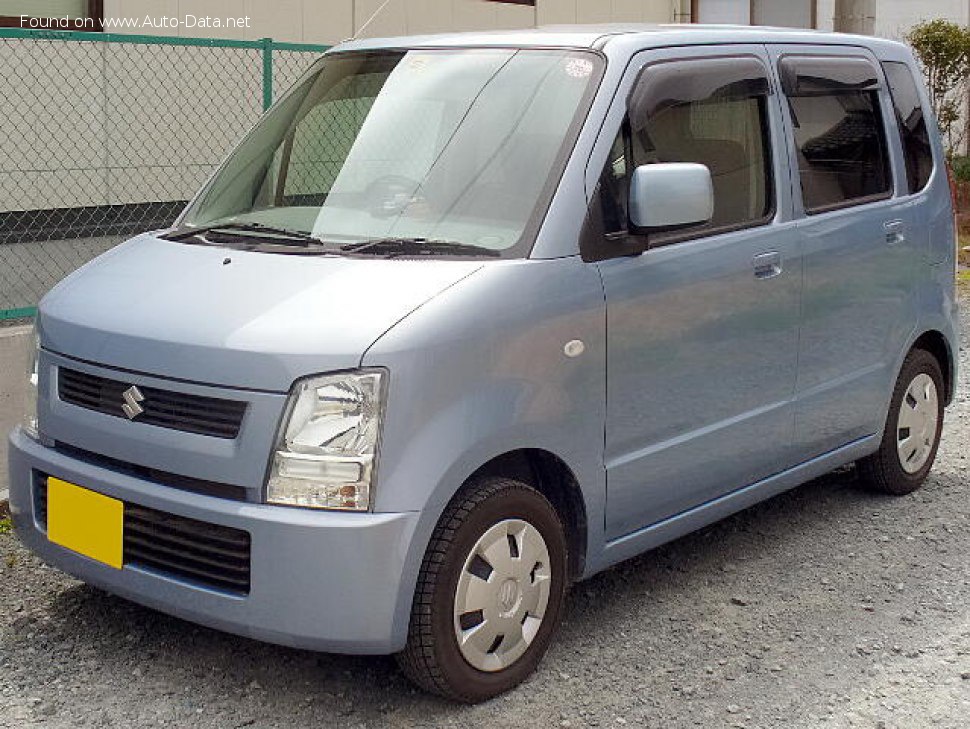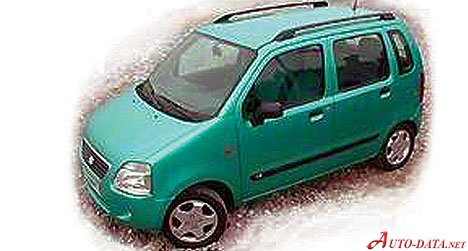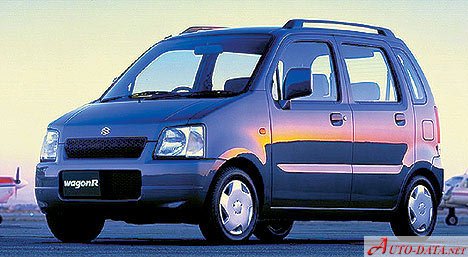
The Suzuki Wagon R+ II 1.3 i 16V (93 Hp) represents the second generation of Suzuki’s compact minivan, a vehicle primarily designed for urban practicality and efficiency in markets outside of North America, particularly Europe and Asia. Produced from 2004 to 2008, this iteration of the Wagon R+ built upon its predecessor’s reputation for clever packaging and economical operation. While not a direct competitor in the larger SUV or minivan segments familiar to the U.S. market, the Wagon R+ II carved out a significant niche as a versatile, space-efficient family car. Its “tall boy” design, characterized by a high roofline and compact footprint, allowed for surprising interior volume and ease of maneuverability in congested city environments, making it an ideal choice for buyers prioritizing utility and low running costs. The 1.3-liter engine variant, with its 93 horsepower output, offered a balanced blend of performance suitable for daily commuting and occasional longer journeys, reinforcing its appeal as a sensible and reliable choice within its class.
The Suzuki Wagon R+ II 1.3 i 16V (93 Hp): A Compact MPV for Global Markets
The Suzuki Wagon R+ II, particularly the 1.3 i 16V (93 Hp) variant, was a testament to Suzuki’s expertise in developing compact and highly functional vehicles. This second-generation model, succeeding the original Wagon R+, which itself was an evolution of the Japanese Kei car concept, was engineered to meet the broader demands of international markets. Its design philosophy centered on maximizing interior space within minimal exterior dimensions, a crucial consideration in regions where road space and parking are at a premium. The vehicle’s tenure from 2004 to 2008 saw it continue to offer an accessible and practical solution for families and individuals seeking a dependable, economical, and surprisingly spacious mode of transport. Its market positioning was clear: a no-nonsense, highly adaptable minivan that prioritized utility, fuel efficiency, and ease of ownership, distinguishing itself from larger, more conventional family vehicles.
Engine and Performance of the Suzuki Wagon R+ II 1.3 i 16V (93 Hp)
Powertrain Configuration
At the heart of the Suzuki Wagon R+ II 1.3 i 16V (93 Hp) was a robust and efficient M13A engine. This 1.3-liter (1328 cm³ or 81.04 cu. in.) naturally aspirated, inline four-cylinder engine was configured with a front, transverse layout, driving the front wheels. Equipped with a Double Overhead Camshaft (DOHC) valvetrain and four valves per cylinder, the engine was designed for optimal breathing and combustion efficiency. The fuel injection system utilized multi-port manifold injection, ensuring precise fuel delivery and contributing to the engine’s smooth operation and responsiveness. With a compression ratio of 9.5:1, the M13A delivered a respectable 93 horsepower at 6000 rpm, translating to a power output of 70 horsepower per liter. Torque figures stood at 87.03 lb.-ft. (118 Nm) peaking at a relatively accessible 4100 rpm. This power and torque combination, especially when paired with the vehicle’s modest curb weight of 2204.62 lbs. (1000 kg), provided a balanced weight-to-power ratio of 10.8 kg/Hp, or 93 Hp per tonne, allowing for sprightly performance in urban settings and adequate capability on open roads. The engine’s oil capacity was 4.1 liters (4.33 US qt), and it required 5.6 liters (5.92 US qt) of coolant, indicating a well-engineered thermal management system for durability.
Dynamic Capabilities
The performance metrics of the Suzuki Wagon R+ II 1.3 i 16V (93 Hp) underscored its role as a practical, rather than overtly sporty, vehicle. Acceleration from 0 to 60 mph was achieved in a calculated 15.2 seconds, with 0-62 mph (0-100 km/h) taking 16 seconds. While not blistering, these figures were perfectly adequate for merging into traffic and maintaining pace on highways. The vehicle’s maximum speed was rated at 99.42 mph (160 km/h), a sensible limit for a compact minivan focused on stability and fuel economy. Speaking of economy, the Wagon R+ II demonstrated commendable fuel efficiency. In urban driving conditions, it achieved approximately 29.4 US mpg (8 l/100 km), while extra-urban driving saw a significant improvement to around 44.4 US mpg (5.3 l/100 km). These figures highlight the engine’s design for efficiency, making it an economical choice for daily use. The powertrain was mated to a 5-speed manual transmission, offering drivers direct control over power delivery and contributing to the overall fuel efficiency. The front-wheel-drive architecture, combined with a manual gearbox, provided a straightforward and reliable driving experience.
Design and Features of the Suzuki Wagon R+ II 1.3 i 16V (93 Hp)
Exterior and Interior Design Philosophy
The design of the Suzuki Wagon R+ II 1.3 i 16V (93 Hp) was dictated by its functional purpose: to offer maximum interior volume within a highly compact exterior. Measuring 137.8 inches (3500 mm) in length, 62.99 inches (1600 mm) in width, and 65.35 inches (1660 mm) in height, its dimensions were notably small, yet its tall, boxy silhouette immediately conveyed its minivan classification. This “tall boy” design was not merely aesthetic; it was a fundamental aspect of its engineering, allowing for a remarkably spacious cabin relative to its footprint. The wheelbase of 92.91 inches (2360 mm) further contributed to a stable ride despite its height. The vehicle featured five doors and seating for five occupants, making ingress and egress convenient for all passengers. The exterior styling was clean and unpretentious, emphasizing practicality over aggressive design cues, fitting its target demographic perfectly.
Practicality and Utility
The interior of the Wagon R+ II truly excelled in terms of versatility. The five-seat configuration provided comfortable accommodation for a small family, while the adaptable cargo area was a standout feature. With all seats in place, the trunk offered a respectable 7.7 cubic feet (218 liters) of storage. However, when the rear seats were folded, this capacity expanded dramatically to an impressive 44.14 cubic feet (1250 liters), transforming the compact minivan into a highly capable cargo hauler. This flexibility made the Wagon R+ II ideal for a variety of uses, from grocery runs to transporting larger items. The fuel tank capacity of 10.83 US gallons (41 liters) provided a decent range, especially considering its excellent fuel economy, reducing the frequency of fill-ups. The maximum load capacity was 1036.17 lbs. (470 kg), underscoring its robust construction and utility-focused design.
Chassis and Safety Systems
Underpinning the Suzuki Wagon R+ II was a chassis designed for predictable handling and comfort. The front suspension utilized a spring strut system, a common and effective setup for compact vehicles, offering a good balance between ride quality and control. The rear suspension featured coil springs, contributing to the vehicle’s ability to absorb road imperfections and maintain stability. Braking performance was handled by ventilated discs at the front, providing effective stopping power, complemented by disc brakes at the rear. For enhanced safety, the vehicle was equipped with an Anti-lock Braking System (ABS), a crucial assisting system that helps drivers maintain steering control during hard braking. The steering system employed a rack and pinion setup, offering direct and responsive feedback, which is particularly beneficial for urban driving and maneuvering in tight spaces. The vehicle rode on 165/60 R14 tires mounted on 14-inch wheel rims, a specification that balanced grip, ride comfort, and replacement cost, aligning with the vehicle’s economical ethos.
Technical Specifications: Suzuki Wagon R+ II 1.3 i 16V (93 Hp)
| Brand | Suzuki |
| Model | Wagon R+ |
| Generation | Wagon R+ II |
| Type (Engine) | 1.3 i 16V (93 Hp) |
| Start of production | 2004 year |
| End of production | 2008 year |
| Powertrain Architecture | Internal Combustion engine |
| Body type | Minivan |
| Seats | 5 |
| Doors | 5 |
| Fuel consumption (economy) – urban | 8 l/100 km (29.4 US mpg, 35.3 UK mpg) |
| Fuel consumption (economy) – extra urban | 5.3 l/100 km (44.4 US mpg, 53.3 UK mpg) |
| Fuel Type | Petrol (Gasoline) |
| Acceleration 0 – 62 mph (0 – 100 km/h) | 16 sec |
| Acceleration 0 – 60 mph (Calculated) | 15.2 sec |
| Maximum speed | 160 km/h (99.42 mph) |
| Weight-to-power ratio | 10.8 kg/Hp, 93 Hp/tonne |
| Weight-to-torque ratio | 8.5 kg/Nm, 118 Nm/tonne |
| Power | 93 Hp @ 6000 rpm |
| Power per litre | 70 Hp/l |
| Torque | 118 Nm @ 4100 rpm (87.03 lb.-ft. @ 4100 rpm) |
| Engine layout | Front, Transverse |
| Engine Model/Code | M13A |
| Engine displacement | 1328 cm³ (81.04 cu. in.) |
| Number of cylinders | 4 |
| Engine configuration | Inline |
| Cylinder Bore | 78 mm (3.07 in.) |
| Piston Stroke | 69.5 mm (2.74 in.) |
| Compression ratio | 9.5:1 |
| Number of valves per cylinder | 4 |
| Fuel injection system | Multi-port manifold injection |
| Engine aspiration | Naturally aspirated engine |
| Valvetrain | DOHC |
| Engine oil capacity | 4.1 l (4.33 US qt, 3.61 UK qt) |
| Coolant | 5.6 l (5.92 US qt, 4.93 UK qt) |
| Kerb Weight | 1000 kg (2204.62 lbs.) |
| Max. weight | 1470 kg (3240.8 lbs.) |
| Max load | 470 kg (1036.17 lbs.) |
| Trunk (boot) space – minimum | 218 l (7.7 cu. ft.) |
| Trunk (boot) space – maximum | 1250 l (44.14 cu. ft.) |
| Fuel tank capacity | 41 l (10.83 US gal, 9.02 UK gal) |
| Length | 3500 mm (137.8 in.) |
| Width | 1600 mm (62.99 in.) |
| Height | 1660 mm (65.35 in.) |
| Wheelbase | 2360 mm (92.91 in.) |
| Front track | 1420 mm (55.91 in.) |
| Rear (Back) track | 1385 mm (54.53 in.) |
| Drivetrain Architecture | The Internal combustion engine (ICE) drives the front wheels of the vehicle. |
| Drive wheel | Front wheel drive |
| Number of gears and type of gearbox | 5 gears, manual transmission |
| Front suspension | Spring Strut |
| Rear suspension | Coil spring |
| Front brakes | Ventilated discs |
| Rear brakes | Disc |
| Assisting systems | ABS (Anti-lock braking system) |
| Steering type | Steering rack and pinion |
| Tires size | 165/60 R14 |
| Wheel rims size | 14 |