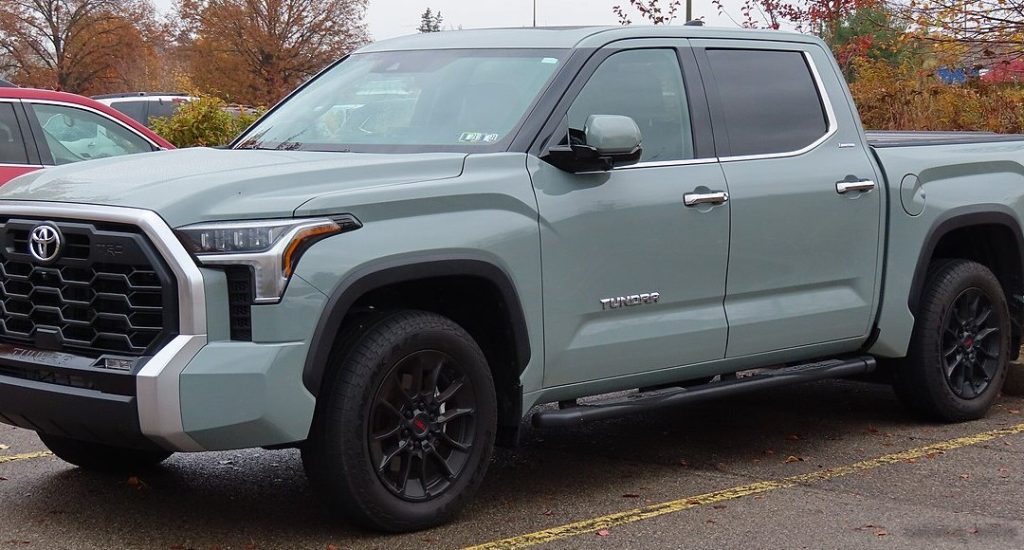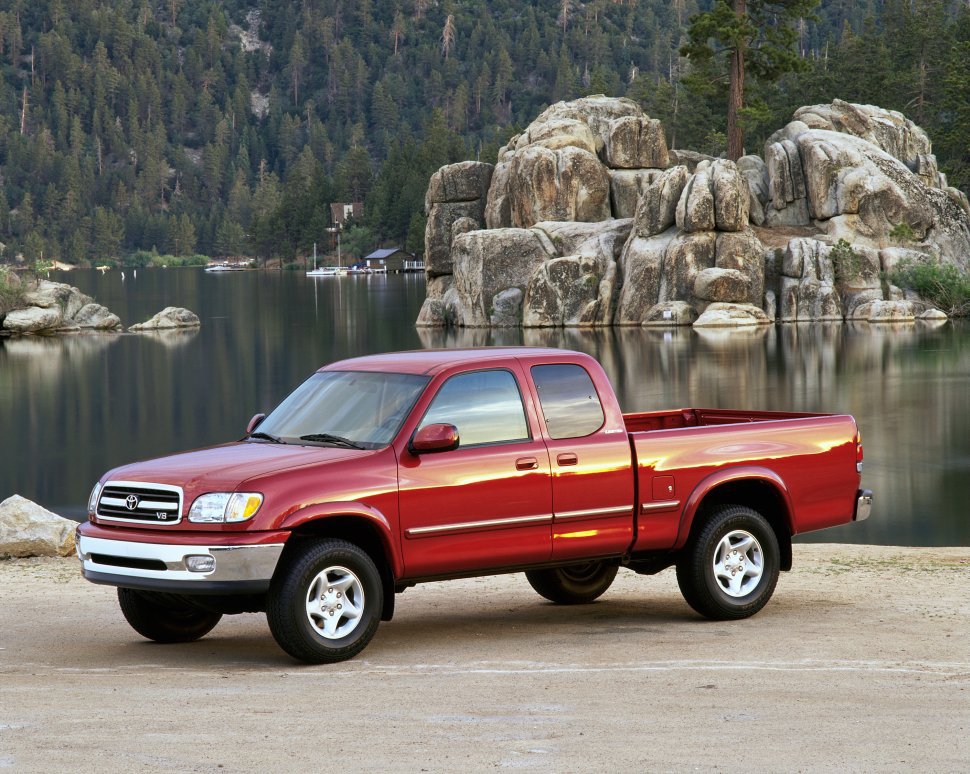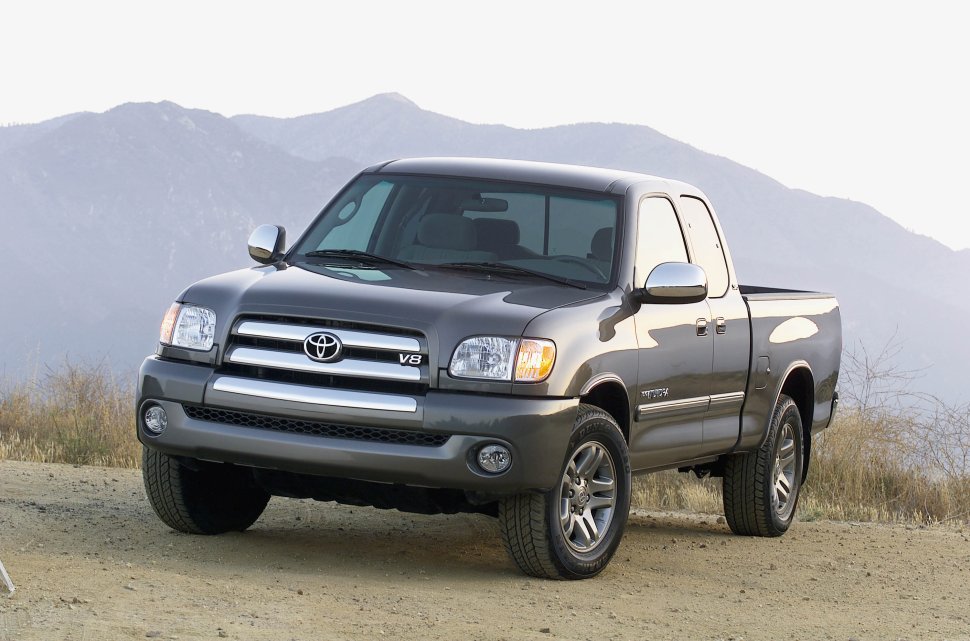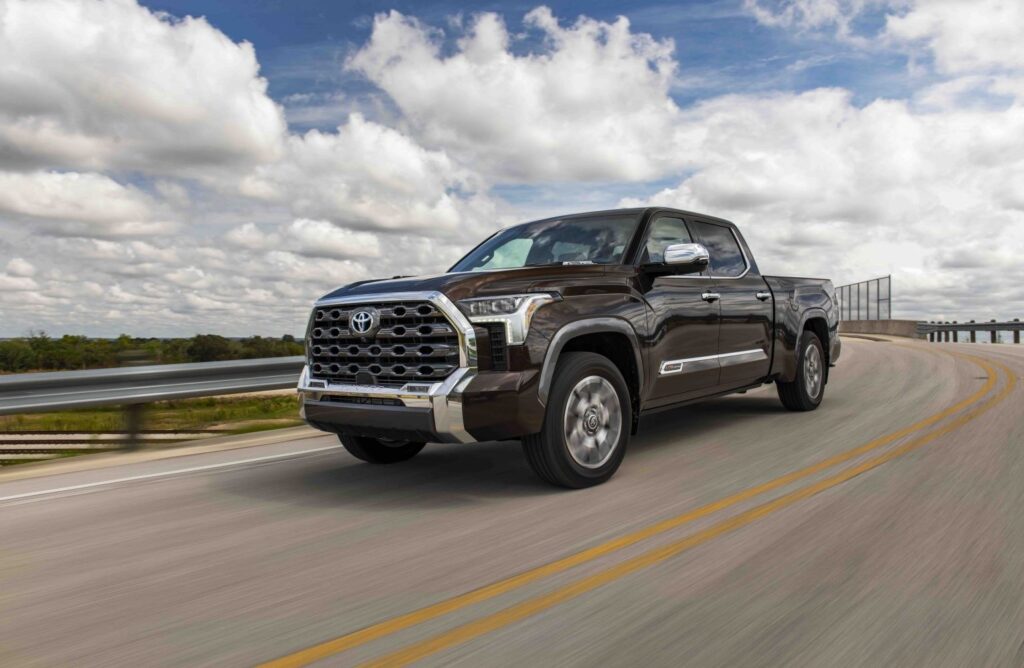
The third generation of Toyota’s venerable full-size pickup truck, represented here by the Toyota Tundra III CrewMax Standard Bed 3.5 V6 i-FORCE MAX (437 Hp) Hybrid ECT-i, marks a significant departure from its predecessors, ushering in a new era of advanced powertrain technology and enhanced capabilities for the North American market. Launched in September 2021, this iteration of the Tundra was meticulously engineered to compete in the fiercely contested segment dominated by domestic manufacturers. Shifting away from the long-standing V8 engine, the new Tundra embraces a Full Hybrid Electric Vehicle (FHEV) architecture, aiming to deliver superior performance, improved fuel efficiency, and a more refined driving experience without compromising its rugged utility. This specific configuration, the CrewMax with a Standard Bed, combines spacious five-passenger seating with a practical cargo solution, targeting a broad spectrum of buyers from recreational users to those requiring a robust workhorse.
Engine and Performance of the Toyota Tundra III CrewMax Standard Bed 3.5 V6 i-FORCE MAX (437 Hp) Hybrid ECT-i
At the heart of the third-generation Toyota Tundra’s formidable capabilities lies its revolutionary i-FORCE MAX hybrid powertrain. This sophisticated FHEV system seamlessly integrates a twin-turbocharged 3.5-liter V6 internal combustion engine with an electric motor, delivering a combined output of 437 horsepower at 5200 rpm and an impressive 582.67 lb.-ft. (790 Nm) of torque peaking at a low 2400 rpm. This robust power delivery ensures exceptional acceleration and towing performance, crucial attributes for a full-size pickup.
The internal combustion engine, designated V35A-FTS, is a 3445 cm³ (210.23 cu. in.) V-engine with six cylinders configured longitudinally at the front of the vehicle. It features a DOHC (Dual Overhead Camshaft) valvetrain with Dual VVT-i (Variable Valve Timing with intelligence), optimizing valve timing for both power and efficiency. Fuel delivery is handled by a sophisticated system combining direct injection and multi-port manifold injection, allowing for precise fuel atomization and combustion across varying engine loads. Twin-turbocharging, complemented by an intercooler, ensures rapid throttle response and sustained power output, while a compression ratio of 10.4:1 balances performance with efficiency. Each cylinder is equipped with four valves, further enhancing gas flow. The engine requires 7.3 liters (7.71 US qt) of engine oil and has a coolant capacity of 12.4 liters (13.1 US qt). It also incorporates a particulate filter to meet stringent emission standards, specifically LEV-III.
The hybrid component comprises a synchronous electric motor strategically placed between the combustion engine and the 10-speed automatic transmission, an ECT-i unit. This electric motor contributes 48 horsepower and 184.39 lb.-ft. (250 Nm) of torque, providing immediate supplemental power, particularly beneficial during acceleration and low-speed maneuvers. Powering the electric motor is a 1.87 kWh gross capacity Nickel-metal hydride (NiMH) battery, operating at 288 volts and conveniently located under the front seats. This setup allows the Tundra to operate in full electric mode for short distances, up to 18.02 mph (29 km/h), maximizing fuel efficiency in urban environments and during light-load driving. The powertrain architecture is designed for rear-wheel drive, with the ability for both the ICE and electric motor to drive the rear wheels, offering flexibility between full electric and mixed-mode operation.
The Tundra’s performance metrics underscore its capability: a weight-to-power ratio of 6 kg/Hp (166.5 Hp/tonne) and a weight-to-torque ratio of 3.3 kg/Nm (301.1 Nm/tonne) highlight its impressive power-to-weight balance for a vehicle of its size. The 10-speed automatic transmission is finely tuned to manage the complex interplay between the gasoline engine and electric motor, ensuring smooth shifts and optimal power delivery across the entire operating range.
Design and Features
The Toyota Tundra III CrewMax Standard Bed is designed as a robust and modern full-size pickup, blending rugged aesthetics with practical utility and advanced features. Its body type is a traditional pickup, featuring four doors to accommodate easy access for five occupants, a hallmark of the CrewMax configuration. The exterior design projects a powerful stance, characterized by a length of 245.59 inches (6238 mm), a width of 80.2 inches (2037 mm), and a height of 77.99 inches (1981 mm). These dimensions, coupled with a substantial wheelbase of 157.72 inches (4006 mm), contribute to a commanding road presence and stable handling. The front and rear tracks are identical at 68.39 inches (1737 mm), further aiding stability.
Underneath its imposing exterior, the Tundra is built for both comfort and capability. The suspension system is engineered to absorb the rigors of various terrains while providing a refined ride. The front features a double wishbone setup with a transverse stabilizer, offering precise steering and control. At the rear, a rigid axle suspension with coil springs replaces the leaf springs of previous generations, significantly improving ride quality, articulation, and handling dynamics, particularly when unladen. Stopping power is provided by large ventilated disc brakes, measuring 353 mm at the front and 345 mm at the rear, ensuring confident and consistent braking performance. An Anti-lock Braking System (ABS) is standard, enhancing safety during emergency braking maneuvers.
Steering is managed by an electric power steering system with a rack and pinion setup, providing precise feedback and ease of maneuverability, despite the vehicle’s large size. The minimum turning circle is 49.87 feet (15.2 meters), which is commendable for a full-size pickup. The Tundra rides on 265/60 R20 tires mounted on 8J x 20 wheel rims, a combination chosen for optimal traction, durability, and a comfortable ride. Its ground clearance of 8.5 inches (216 mm), along with an approach angle of 21 degrees and a departure angle of 24 degrees, underscore its off-road potential and ability to navigate challenging terrains.
In terms of utility, the Tundra CrewMax Standard Bed offers impressive hauling and towing capabilities. Its kerb weight ranges from 5784.93 to 5864.3 lbs. (2624-2660 kg), while the maximum permissible weight (GVWR) is between 6990.86 and 7209.12 lbs. (3171-3270 kg). This allows for a maximum payload capacity of 1205.93 to 1344.82 lbs. (547-610 kg). For towing, the Tundra is rated to pull a permitted trailer load with brakes (12%) of up to 11349.4 lbs. (5148 kg), with a permitted towbar download of 1144.2 lbs. (519 kg), making it well-suited for a wide range of towing duties. The generous 32.23 US gallon (122 L) fuel tank capacity ensures an extended driving range, a practical feature for long-distance travel or remote work sites. The vehicle’s drag coefficient (Cd) of 0.36 is relatively efficient for a truck of its stature, contributing to overall fuel economy and reduced wind noise.
Technical Specifications
| Brand | Toyota |
| Model | Tundra |
| Generation | Tundra III CrewMax Standard Bed |
| Type (Engine) | 3.5 V6 i-FORCE MAX (437 Hp) Hybrid ECT-i |
| Start of production | September, 2021 year |
| Powertrain Architecture | FHEV (Full Hybrid Electric Vehicle) |
| Body type | Pick-up |
| Seats | 5 |
| Doors | 4 |
| Performance specs | |
| Fuel Type | Petrol (Gasoline) |
| Emission standard | LEV-III |
| Weight-to-power ratio | 6 kg/Hp, 166.5 Hp/tonne |
| Weight-to-torque ratio | 3.3 kg/Nm, 301.1 Nm/tonne |
| Electric cars and hybrids specs | |
| Gross battery capacity | 1.87 kWh |
| Battery voltage | 288 V |
| Battery technology | Nickel-metal hydride (NiMH) |
| Battery location | Under the front seats |
| Max speed (electric) | 29 km/h (18.02 mph) |
| Electric motor 1 power | 48 Hp |
| Electric motor Torque | 250 Nm (184.39 lb.-ft.) |
| Electric motor location | Between the combustion engine and the transmission |
| Electric motor type | Synchronous |
| Internal combustion engine specs | |
| Power | 437 Hp @ 5200 rpm. |
| Power per litre | 126.9 Hp/l |
| Torque | 790 Nm @ 2400 rpm. (582.67 lb.-ft. @ 2400 rpm.) |
| Engine layout | Front, Longitudinal |
| Engine Model/Code | V35A-FTS |
| Engine displacement | 3445 cm³ (210.23 cu. in.) |
| Number of cylinders | 6 |
| Engine configuration | V-engine |
| Cylinder Bore | 85.5 mm (3.37 in.) |
| Piston Stroke | 100 mm (3.94 in.) |
| Compression ratio | 10.4:1 |
| Number of valves per cylinder | 4 |
| Fuel injection system | Direct injection and Multi-port manifold injection |
| Engine aspiration | Twin-Turbo, Intercooler |
| Valvetrain | DOHC, Dual VVT-i |
| Engine oil capacity | 7.3 l (7.71 US qt) |
| Coolant | 12.4 l (13.1 US qt) |
| Engine systems | |
| Particulate filter | Yes |
| Space, Volume and weights | |
| Kerb Weight | 2624-2660 kg (5784.93 – 5864.3 lbs.) |
| Max. weight | 3171-3270 kg (6990.86 – 7209.12 lbs.) |
| Max load | 547-610 kg (1205.93 – 1344.82 lbs.) |
| Fuel tank capacity | 122 l (32.23 US gal) |
| Permitted trailer load with brakes (12%) | 5148 kg (11349.4 lbs.) |
| Permitted towbar download | 519 kg (1144.2 lbs.) |
| Dimensions | |
| Length | 6238 mm (245.59 in.) |
| Width | 2037 mm (80.2 in.) |
| Height | 1981 mm (77.99 in.) |
| Wheelbase | 4006 mm (157.72 in.) |
| Front track | 1737 mm (68.39 in.) |
| Rear (Back) track | 1737 mm (68.39 in.) |
| Ride height (ground clearance) | 216 mm (8.5 in.) |
| Drag coefficient (Cd) | 0.36 |
| Minimum turning circle (turning diameter) | 15.2 m (49.87 ft.) |
| Approach angle | 21° |
| Departure angle | 24° |
| Drivetrain, brakes and suspension specs | |
| Drivetrain Architecture | The Internal combustion engine (ICE) and electric motor drive the rear wheels of the car with the ability to work in full electric or mixed mode. |
| Drive wheel | Rear wheel drive |
| Number of gears and type of gearbox | 10 gears, automatic transmission ECT-i |
| Front suspension | Double wishbone, Transverse stabilizer |
| Rear suspension | Rigid axle suspension, Coil spring |
| Front brakes | Ventilated discs, 353 mm |
| Rear brakes | Ventilated discs, 345 mm |
| Assisting systems | |
| ABS (Anti-lock braking system) | Yes |
| Steering type | Steering rack and pinion |
| Power steering | Electric Steering |
| Tires size | 265/60 R20 |
| Wheel rims size | 8J x 20 |