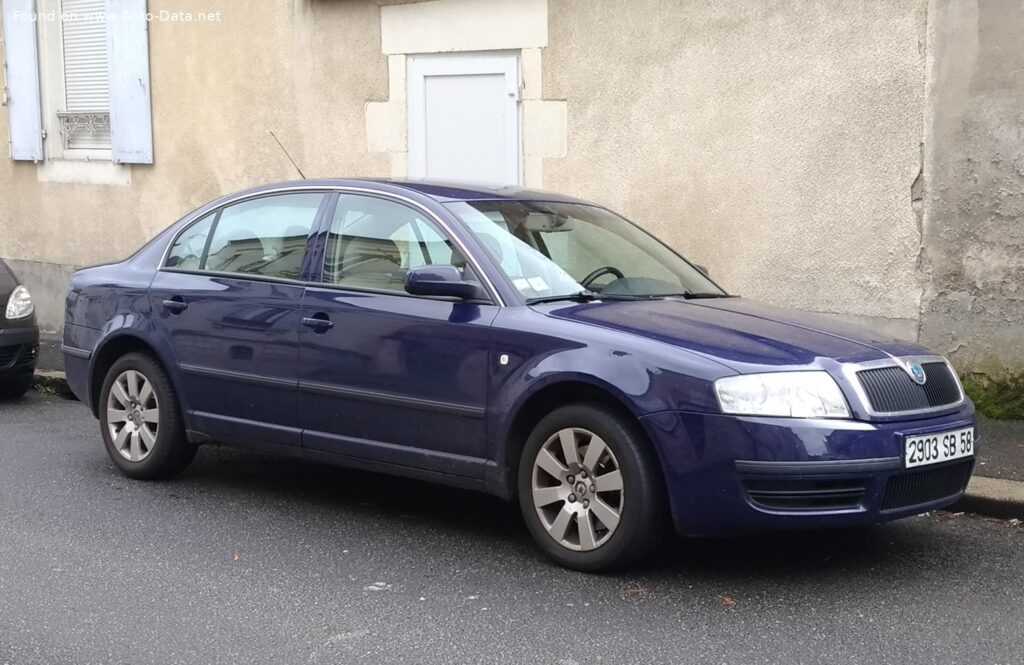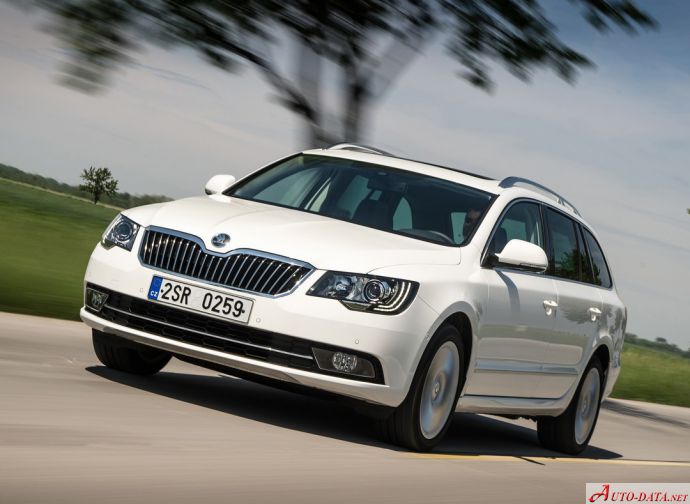
The Skoda Superb II Combi (facelift 2013) represents a significant chapter in the history of the Czech automaker, a brand renowned for its practical, value-driven, and increasingly sophisticated vehicles within the Volkswagen Group. While Skoda models are not widely retailed in the United States, the Superb, particularly in its estate or station wagon configuration, holds a prominent position in European and other international markets as a flagship offering. The second generation, known internally as the B6, received a comprehensive facelift in April 2013, enhancing its aesthetic appeal, refining its interior, and updating its powertrain options to maintain competitiveness in the fiercely contested executive and family car segments. This particular variant, the 1.6 TDI (105 Hp) DPF, stood out for its remarkable fuel efficiency and environmentally conscious design, making it a compelling choice for consumers prioritizing economy and utility without sacrificing space or comfort.
The Skoda Superb II Combi (facelift 2013): A Paragon of European Practicality
The Skoda Superb II Combi (facelift 2013) solidified Skoda’s reputation for delivering exceptional interior space and clever engineering solutions, often at a more accessible price point than its Volkswagen Group siblings. Positioned as a large family car or an executive estate, the Superb Combi was designed to cater to a broad spectrum of buyers, from private individuals requiring vast cargo capacity for hobbies and family life to fleet operators seeking reliable and economical long-distance cruisers. The 2013 facelift introduced sharper, more contemporary styling cues, aligning the Superb with Skoda’s evolving design language. This included revised front and rear fascias, updated lighting signatures, and subtle interior enhancements that elevated the perceived quality and modernity of the cabin. Its robust build quality and extensive standard equipment list further contributed to its appeal, making it a highly regarded contender in its class across Europe and beyond. The Superb’s role in its primary markets was to offer a compelling blend of space, comfort, and value, often exceeding expectations for a non-premium brand.
Powertrain and Performance Dynamics
At the heart of the Skoda Superb II Combi (facelift 2013) 1.6 TDI (105 Hp) DPF lies a highly efficient 1.6-liter (1598 cm3 or 97.52 cu. in.) inline four-cylinder turbodiesel engine, designated with the internal code EA189 / CAYC. This powerplant, a staple across numerous Volkswagen Group models, is engineered for optimal fuel economy and low emissions, critical factors in European automotive markets. It generates a respectable 105 horsepower, delivered at a useful rev range, and a robust 184.39 lb.-ft. (250 Nm) of torque, available between 1500 and 2500 rpm. This broad torque band ensures flexible performance in everyday driving, allowing for confident acceleration and relaxed cruising, even when the vehicle is fully loaded. The engine’s power density stands at 65.7 horsepower per liter, indicative of its modern design.
Power is transmitted to the front wheels via a smooth-shifting 6-speed manual transmission, a choice that emphasizes driver engagement and allows for precise control over the engine’s output and efficiency. The vehicle’s acceleration from 0 to 60 mph is achieved in a measured 11.6 seconds, with a top speed of 119.3 mph (192 km/h). While these figures don’t suggest a performance-oriented machine, they are perfectly adequate for the Superb Combi’s intended purpose as a practical and economical family hauler. The vehicle’s weight-to-power ratio is 14.6 kg/Hp, or 68.4 Hp/tonne, while its weight-to-torque ratio is 6.1 kg/Nm, or 163 Nm/tonne, further underscoring its design philosophy of balanced performance and efficiency.
A key feature of this powertrain is the inclusion of a Diesel Particulate Filter (DPF), an essential component for meeting stringent Euro 5 J emission standards. The DPF actively reduces particulate matter from the exhaust gases, contributing to cleaner air quality and lower environmental impact. This focus on emissions control, combined with the engine’s inherent efficiency, results in impressive fuel economy figures: an urban consumption of 44.4 US mpg, an extra-urban figure of 57.4 US mpg, and a combined cycle rating of 51.1 US mpg (4.6 liters/100 km). With CO2 emissions of just 119 g/km, the 1.6 TDI Superb Combi was a highly attractive option for environmentally conscious buyers and those seeking to minimize running costs.
Design, Practicality, and Advanced Features
The Superb II Combi (facelift 2013) is defined by its station wagon (estate) body type, a configuration chosen specifically to maximize interior volume and cargo utility. Measuring 190.28 inches (4833 mm) in length, 71.54 inches (1817 mm) in width, and 59.49 inches (1511 mm) in height, with a generous wheelbase of 108.7 inches (2761 mm), the Superb Combi offers cavernous space for both passengers and luggage. The five-door, five-seat layout provides comfortable accommodation for adults in all positions, with particularly expansive rear legroom—a hallmark of the Superb lineage. The design prioritizes ergonomic comfort and intuitive controls, reflecting Skoda’s commitment to user-friendly functionality.
One of the most compelling attributes of the Superb Combi is its cargo capacity. With all seats in place, it boasts a substantial trunk volume of 22.35 cu. ft. (633 liters). When the rear seats are folded down, this expands dramatically to a cavernous 65.86 cu. ft. (1865 liters), making it one of the most practical vehicles in its segment for carrying large items, sports equipment, or extensive family luggage. This versatility is a primary reason for its popularity among European families and professionals.
In terms of driver assistance and safety, the 2013 Superb Combi came equipped with essential modern features for its time. Standard systems included ABS (Anti-lock Braking System), enhancing braking stability and control in emergency situations. The steering system utilizes a responsive rack and pinion setup, providing precise and predictable handling characteristics. The vehicle’s robust chassis and well-tuned suspension, combined with a front-wheel-drive architecture, deliver a comfortable and composed ride, well-suited for long-distance travel on various road conditions. The fuel tank capacity of 15.85 US gallons (60 liters) further contributes to its long-distance touring capabilities, allowing for extended range between fill-ups given its outstanding fuel economy. Overall, the Skoda Superb II Combi (facelift 2013) 1.6 TDI (105 Hp) DPF masterfully combined practicality, efficiency, and comfort, establishing itself as a highly competent and respected offering in the competitive European automotive landscape.
Technical Specifications of the Skoda Superb II Combi (facelift 2013) 1.6 TDI (105 Hp) DPF
| Brand | Skoda |
| Model | Superb |
| Generation | Superb II Combi (facelift 2013) |
| Type (Engine) | 1.6 TDI (105 Hp) DPF |
| Start of production | April, 2013 year |
| End of production | 2015 year |
| Powertrain Architecture | Internal Combustion engine |
| Body type | Station wagon (estate) |
| Seats | 5 |
| Doors | 5 |
| Fuel consumption (economy) – urban | 5.3 l/100 km (44.4 US mpg) |
| Fuel consumption (economy) – extra urban | 4.1 l/100 km (57.4 US mpg) |
| Fuel consumption (economy) – combined | 4.6 l/100 km (51.1 US mpg) |
| CO2 emissions | 119 g/km |
| Fuel Type | Diesel |
| Acceleration 0 – 60 mph | 11.6 sec |
| Acceleration 0 – 100 km/h | 12.2 sec |
| Maximum speed | 119.3 mph (192 km/h) |
| Emission standard | Euro 5 J |
| Weight-to-power ratio | 14.6 kg/Hp (68.4 Hp/tonne) |
| Weight-to-torque ratio | 6.1 kg/Nm (163 Nm/tonne) |
| Power | 105 Hp |
| Power per litre | 65.7 Hp/l |
| Torque | 184.39 lb.-ft. (250 Nm) @ 1500-2500 rpm. |
| Engine layout | Front, Transverse |
| Engine Model/Code | EA189 / CAYC |
| Engine displacement | 1.6 l (1598 cm3 / 97.52 cu. in.) |
| Number of cylinders | 4 |
| Engine configuration | Inline |
| Compression ratio | 16.5:1 |
| Fuel injection system | Diesel Commonrail |
| Engine aspiration | Turbocharger, Intercooler |
| Engine oil capacity | 4.3 l (4.54 US qt) |
| Coolant | 8.4 l (8.88 US qt) |
| Engine systems | Particulate filter |
| Kerb Weight | 3381.89 lbs. (1534 kg) |
| Max. weight | 4623.09 lbs. (2097 kg) |
| Max load | 1241.2 lbs. (563 kg) |
| Trunk (boot) space – minimum | 22.35 cu. ft. (633 l) |
| Trunk (boot) space – maximum | 65.86 cu. ft. (1865 l) |
| Fuel tank capacity | 15.85 US gal (60 l) |
| Length | 190.28 in. (4833 mm) |
| Width | 71.54 in. (1817 mm) |
| Height | 59.49 in. (1511 mm) |
| Wheelbase | 108.7 in. (2761 mm) |
| Front track | 60.83 in. (1545 mm) |
| Rear (Back) track | 59.72 in. (1517 mm) |
| Minimum turning circle (turning diameter) | 38.35 ft. (11.69 m) |
| Drivetrain Architecture | The Internal combustion engine (ICE) drives the front wheels of the vehicle. |
| Drive wheel | Front wheel drive |
| Number of gears and type of gearbox | 6 gears, manual transmission |
| Assisting systems | ABS (Anti-lock braking system) |
| Steering type | Steering rack and pinion |