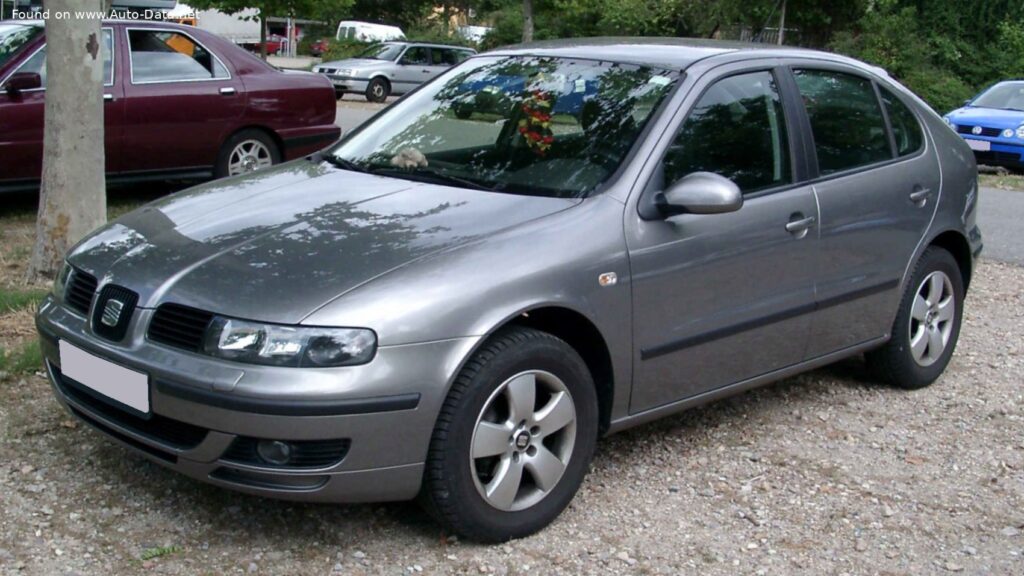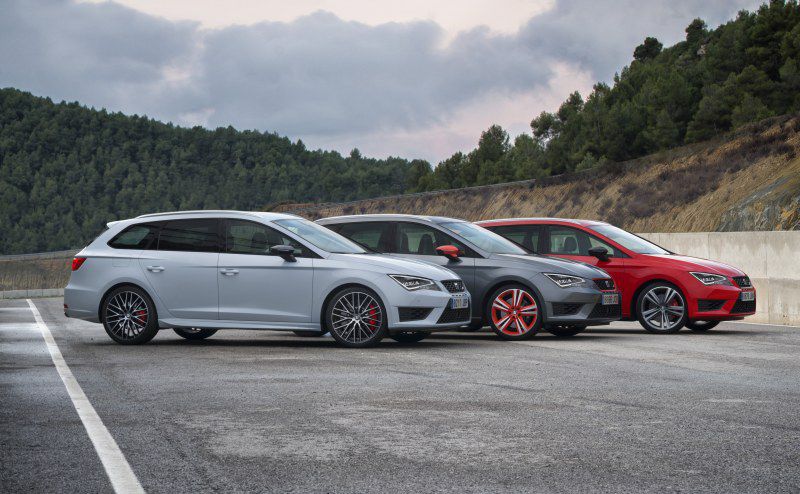
The Seat Leon III ST 1.2 TSI (110 Hp) start/stop represents a compelling proposition within Europe’s highly competitive compact station wagon segment, a niche not typically offered by the Seat brand in the United States. Launched in May 2014 as part of the third-generation Leon lineup, this particular variant, identified by its “ST” (Sport Tourer) designation, married the dynamic styling and driving characteristics of the Leon hatchback with enhanced practicality and cargo capacity. Positioned as an efficient and versatile family vehicle, it catered to European consumers seeking a blend of everyday usability, modern technology, and economical operation, particularly highlighted by its advanced 1.2-liter TSI engine featuring a start/stop system for optimized fuel efficiency and reduced emissions. Its production run extended through 2016, establishing its presence as a sensible yet engaging option in its class.
The Seat Leon III ST 1.2 TSI (110 Hp) start/stop: Engineering for Efficiency and Versatility
At the heart of the Seat Leon III ST 1.2 TSI (110 Hp) start/stop lies a meticulously engineered powertrain designed to deliver a balanced combination of performance and remarkable fuel economy. The 1.2-liter (1197 cm3 or 73.05 cu. in.) inline four-cylinder engine, bearing the internal code CYVB, is a testament to modern small-displacement engine technology. It features direct injection and is equipped with both a turbocharger and an intercooler, technologies crucial for extracting significant power and torque from such a compact unit. This configuration allows the engine to produce a respectable 110 horsepower, available across a broad rev range from 4600 to 5600 rpm. More impressively for daily driving, it generates a robust 129.07 lb.-ft. (175 Nm) of torque, which peaks early and sustains from a low 1400 rpm up to 4000 rpm. This wide torque band ensures responsive acceleration and flexible in-gear performance, minimizing the need for frequent downshifts.
The vehicle’s performance figures underscore its practical orientation. It accelerates from 0 to 60 mph in a swift 9.8 seconds, and 0 to 62 mph (100 km/h) in 10.3 seconds, demonstrating ample capability for merging onto highways or overtaking. Its maximum speed is rated at 118.68 mph (191 km/h), making it perfectly suited for sustained cruising on European motorways. A key differentiator for this specific model is the integrated start/stop system, a standard feature designed to automatically shut off the engine when the vehicle is stationary, such as at traffic lights or in congested traffic. This system significantly contributes to reducing fuel consumption and CO2 emissions, particularly in urban environments, aligning with contemporary demands for environmental responsibility. The engine’s compression ratio of 10.5:1, combined with four valves per cylinder, further optimizes combustion efficiency.
Fuel economy is a primary strength of the Leon III ST 1.2 TSI. The combined fuel consumption is an impressive 48 US mpg (4.9 l/100 km), with even better figures on the open road, achieving 54.7 US mpg (4.3 l/100 km) in extra-urban driving. In urban settings, it still manages 39.9 US mpg (5.9 l/100 km). These figures, coupled with CO2 emissions of just 114 g/km, highlight its compliance with the stringent Euro 6 emission standard, making it an environmentally conscious choice. Power is delivered to the front wheels via a smooth and precise 6-speed manual transmission, offering the driver engaging control and contributing to the overall efficiency by allowing optimal gear selection for various driving conditions. The powertrain architecture, with the internal combustion engine driving the front wheels, is a classic and efficient setup for a compact family car.
Design and Features of the Leon III ST
The Seat Leon III ST’s design language is characterized by sharp lines, a sporty stance, and a focus on functionality, all while maintaining the brand’s youthful and dynamic aesthetic. As a station wagon (estate), its primary appeal lies in its enhanced practicality over the standard hatchback. Measuring 178.54 inches (4535 mm) in length, 71.5 inches (1816 mm) in width, and 57.13 inches (1451 mm) in height, the Leon ST offers a substantial footprint for its segment, translating directly into a spacious interior for passengers and cargo. The wheelbase of 103.78 inches (2636 mm) provides a stable ride and ample legroom for the five occupants it is designed to accommodate across its five doors.
The true advantage of the station wagon body style becomes evident in its cargo capacity. The Leon III ST boasts a minimum trunk space of 20.73 cu. ft. (587 liters) with all seats in place, which is significantly larger than its hatchback sibling. When the rear seats are folded down, this volume expands dramatically to an impressive 51.91 cu. ft. (1470 liters), transforming the vehicle into a highly capable load-hauler, suitable for everything from family vacations to transporting bulky items. This flexibility is a key selling point in the European market, where station wagons are highly valued for their versatility.
Beyond its dimensions, the Leon III ST incorporates a range of features aimed at enhancing safety, comfort, and the overall driving experience. Standard safety equipment includes an Anti-lock Braking System (ABS), which was a fundamental safety feature in vehicles of this era, assisting drivers in maintaining steering control during hard braking. The steering system utilizes a rack and pinion setup, offering direct and responsive feedback to the driver. While specific luxury features vary by trim level, the core focus of the Leon ST was to provide a well-equipped, comfortable, and safe environment for its occupants. The vehicle’s kerb weight of 2764.6 lbs. (1254 kg) and a maximum permissible weight of 4012.41 lbs. (1820 kg) underscore its robust construction and load-carrying capability, with a maximum payload capacity of 1247.82 lbs. (566 kg). The front and rear track widths of 60.98 inches (1549 mm) and 59.84 inches (1520 mm), respectively, contribute to its stable road manners and confident handling, characteristic of its Volkswagen Group platform origins.
Technical Specifications
| Brand | Seat |
| Model | Leon |
| Generation | Leon III ST |
| Type (Engine) | 1.2 TSI (110 Hp) start/stop |
| Start of production | May, 2014 year |
| End of production | 2016 year |
| Powertrain Architecture | Internal Combustion engine |
| Body type | Station wagon (estate) |
| Seats | 5 |
| Doors | 5 |
| Fuel consumption (economy) – urban | 39.9 US mpg (5.9 l/100 km) |
| Fuel consumption (economy) – extra urban | 54.7 US mpg (4.3 l/100 km) |
| Fuel consumption (economy) – combined | 48 US mpg (4.9 l/100 km) |
| CO2 emissions | 114 g/km |
| Fuel Type | Petrol (Gasoline) |
| Acceleration 0 – 60 mph | 9.8 sec |
| Acceleration 0 – 100 km/h | 10.3 sec |
| Maximum speed | 118.68 mph (191 km/h) |
| Emission standard | Euro 6 |
| Weight-to-power ratio | 11.4 kg/Hp (87.7 Hp/tonne) |
| Weight-to-torque ratio | 7.2 kg/Nm (139.6 Nm/tonne) |
| Power | 110 Hp @ 4600-5600 rpm |
| Power per liter | 91.9 Hp/l |
| Torque | 129.07 lb.-ft. (175 Nm) @ 1400-4000 rpm |
| Engine layout | Front, Transverse |
| Engine Model/Code | CYVB |
| Engine displacement | 73.05 cu. in. (1197 cm3) |
| Number of cylinders | 4 |
| Engine configuration | Inline |
| Cylinder Bore | 2.8 in. (71 mm) |
| Piston Stroke | 2.98 in. (75.6 mm) |
| Compression ratio | 10.5:1 |
| Number of valves per cylinder | 4 |
| Fuel injection system | Direct injection |
| Engine aspiration | Turbocharger, Intercooler |
| Engine oil capacity | 4.23 US qt (4 l) |
| Coolant | 8.45 US qt (8 l) |
| Engine systems | Start & Stop System |
| Kerb Weight | 2764.6 lbs. (1254 kg) |
| Max. weight | 4012.41 lbs. (1820 kg) |
| Max load | 1247.82 lbs. (566 kg) |
| Trunk (boot) space – minimum | 20.73 cu. ft. (587 l) |
| Trunk (boot) space – maximum | 51.91 cu. ft. (1470 l) |
| Length | 178.54 in. (4535 mm) |
| Width | 71.5 in. (1816 mm) |
| Height | 57.13 in. (1451 mm) |
| Wheelbase | 103.78 in. (2636 mm) |
| Front track | 60.98 in. (1549 mm) |
| Rear (Back) track | 59.84 in. (1520 mm) |
| Drivetrain Architecture | The Internal combustion engine (ICE) drives the front wheels of the vehicle. |
| Drive wheel | Front wheel drive |
| Number of gears and type of gearbox | 6 gears, manual transmission |
| Assisting systems | ABS (Anti-lock braking system) |
| Steering type | Steering rack and pinion |