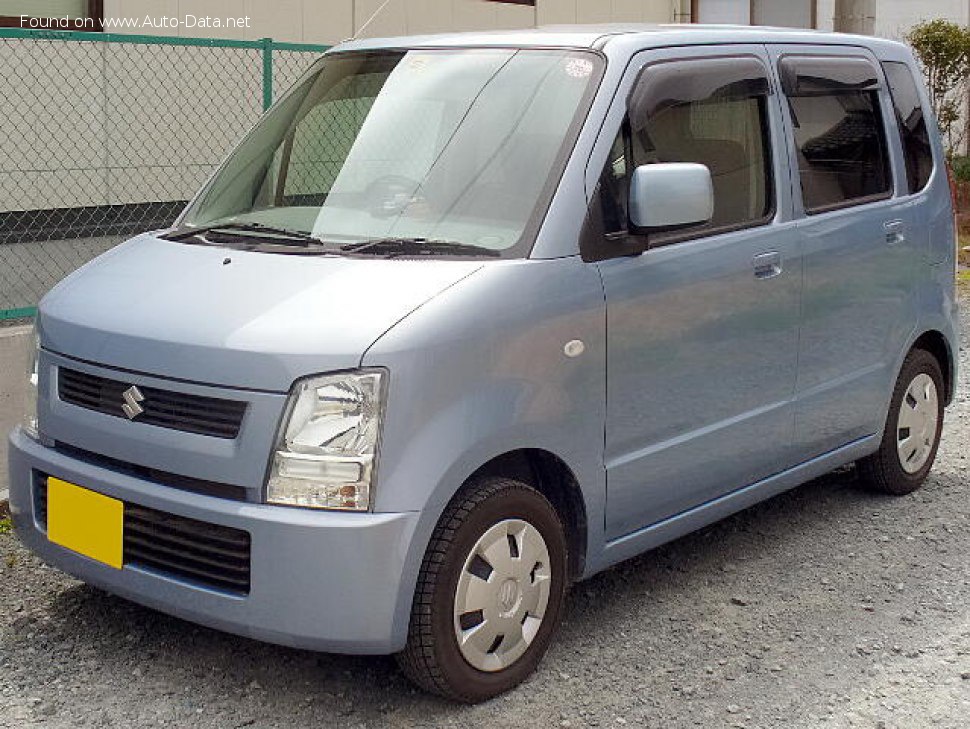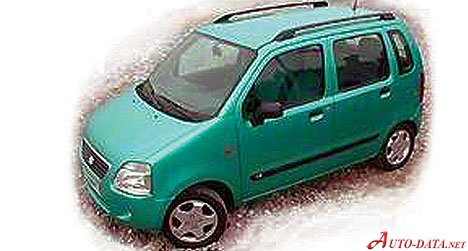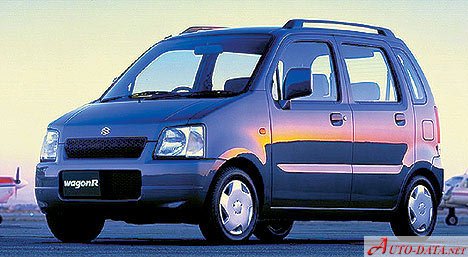
The Suzuki Wagon R+ II 1.3 i 16V R Sorio (88 Hp) represents a significant chapter in the evolution of compact urban mobility, particularly within European and Asian markets where space efficiency and maneuverability are paramount. Produced from 2000 to 2008, this second-generation Wagon R+ variant solidified Suzuki’s reputation for delivering highly practical and intelligently packaged vehicles. Classified as a minivan, or more accurately a mini-MPV (Multi-Purpose Vehicle), the Wagon R+ II embraced a distinctive “tall boy” design philosophy, maximizing interior volume within a remarkably compact footprint. This approach allowed the vehicle to offer surprising passenger and cargo capacity, making it an ideal solution for city dwellers and small families seeking versatility without the bulk of larger vehicles. While not widely available in the North American market, its influence on global automotive design, particularly in the realm of efficient urban transport, is undeniable, showcasing how clever engineering can redefine expectations for small cars.
The Suzuki Wagon R+ II 1.3 i 16V R Sorio (88 Hp): A Masterclass in Compact Utility
The Suzuki Wagon R+ II 1.3 i 16V R Sorio (88 Hp) was engineered from the ground up to excel in congested urban environments, where its compact dimensions and elevated driving position offered distinct advantages. This generation built upon the success of its predecessor by refining its core attributes: a spacious interior, excellent visibility, and nimble handling. Its market appeal stemmed from its ability to blend the practicality of a larger minivan with the fuel efficiency and ease of parking typically associated with a subcompact car. The “R Sorio” designation often indicated a higher trim level or a specific market variant, suggesting enhanced features or styling that further distinguished it within the Wagon R+ lineup. For consumers in its primary markets, the Wagon R+ II became synonymous with smart, no-nonsense transportation that prioritized functionality and affordability. Its enduring appeal in these regions underscores a demand for vehicles that are both economical to run and highly adaptable to diverse daily needs, from family errands to urban commutes.
Engine and Performance
At the heart of the Suzuki Wagon R+ II 1.3 i 16V R Sorio (88 Hp) lay a robust and efficient 1.3-liter (1328 cm3 or 81.04 cu. in.) naturally aspirated inline-four gasoline engine. This powerplant was a testament to Suzuki’s expertise in developing reliable and spirited small engines. Featuring a multi-port manifold injection system and a 16-valve configuration (four valves per cylinder), it delivered a respectable 88 horsepower at 6000 rpm. This power output, combined with a compression ratio of 9.5:1, provided adequate acceleration for city driving and comfortable cruising on open roads. The engine’s power-per-liter ratio stood at 66.3 Hp/l, indicating a well-tuned and efficient design for its displacement, aiming for a balance between performance and fuel economy characteristic of the early 2000s.
Torque figures were equally impressive for a vehicle of its class, peaking at 118 Nm (87.03 lb.-ft.) at a relatively low 3400 rpm. This healthy torque delivery at lower engine speeds was crucial for urban driving, allowing for brisk take-offs from a standstill and confident overtaking maneuvers without constantly needing to rev the engine high. The engine was configured in a front, transverse layout, an industry standard for front-wheel-drive vehicles, optimizing packaging efficiency and interior space. Power was sent to the front wheels via a smooth-shifting 4-speed automatic transmission. While some might consider a 4-speed automatic modest by today’s standards, it was a common and reliable choice for this segment during its production era, offering ease of use and contributing to the vehicle’s overall user-friendly character. The combination of a responsive engine and a well-matched transmission ensured that the Wagon R+ II delivered a balanced blend of performance and fuel economy, making it an economical choice for daily commuting and a reliable workhorse for families.
Design and Features
The design of the Suzuki Wagon R+ II was defined by its distinctive minivan body type, characterized by a tall roofline and a boxy silhouette. This “tall boy” architecture was not merely an aesthetic choice but a fundamental aspect of its utility, enabling exceptional interior headroom and a commanding driving position. With five doors and seating for five occupants, the vehicle offered easy access and comfortable accommodation for its size. The exterior dimensions were remarkably compact: a length of 140.75 inches (3575 mm), a width of 62.99 inches (1600 mm), and a height of 66.73 inches (1695 mm). These measurements underscore its agility in tight urban spaces, while the generous height contributed significantly to its interior volume, allowing for a surprisingly airy cabin feel despite its small footprint. This clever packaging made it an ideal vehicle for navigating narrow city streets and fitting into challenging parking spots.
The interior was designed with practicality in mind, reflecting the multi-purpose nature of the vehicle. The Wagon R+ II boasted a versatile cargo area, offering a minimum trunk space of 8.83 cu. ft. (250 liters). This could be expanded dramatically to a maximum of 21.01 cu. ft. (595 liters) by folding down the rear seats, providing ample room for groceries, luggage, or even larger items like small furniture. This flexibility made it a popular choice for those needing adaptable space without committing to a larger, less fuel-efficient vehicle. The wheelbase of 92.91 inches (2360 mm) contributed to a stable ride for its class, while front and rear tracks of 55.31 inches (1405 mm) and 54.53 inches (1385 mm), respectively, ensured a planted stance. For its era, the Wagon R+ II featured a conventional yet effective suspension setup, with Spring Struts at the front and Coil springs at the rear, balancing ride comfort with handling characteristics suitable for urban and suburban driving conditions, absorbing road imperfections adequately.
Braking performance was handled by ventilated discs at the front, offering good heat dissipation and consistent stopping power, complemented by reliable drum brakes at the rear. This combination was standard for the segment and provided confident deceleration. The steering system employed a rack and pinion setup, providing direct and responsive control, further enhancing its maneuverability in city traffic and making parking less of a chore. The vehicle rode on 165/60 R14 tires mounted on 14-inch wheel rims, a common specification for compact cars that provided a good balance of grip, comfort, and cost-effectiveness. The fuel tank capacity of 10.83 US gallons (41 liters) ensured a reasonable cruising range for its intended use, minimizing frequent stops at the gas station. In essence, the Suzuki Wagon R+ II 1.3 i 16V R Sorio (88 Hp) was a meticulously designed vehicle that masterfully combined compact exterior dimensions with a surprisingly spacious and adaptable interior, setting a benchmark for urban utility vehicles of its time by prioritizing functionality, efficiency, and ease of ownership.
Technical Specifications
| Brand | Suzuki |
| Model | Wagon R+ |
| Generation | Wagon R+ II |
| Type (Engine) | 1.3 i 16V R Sorio (88 Hp) |
| Start of production | 2000 year |
| End of production | 2008 year |
| Powertrain Architecture | Internal Combustion engine |
| Body type | Minivan |
| Seats | 5 |
| Doors | 5 |
| Fuel Type | Petrol (Gasoline) |
| Power | 88 Hp @ 6000 rpm. |
| Power per liter | 66.3 Hp/l |
| Torque | 118 Nm (87.03 lb.-ft.) @ 3400 rpm. |
| Engine layout | Front, Transverse |
| Engine displacement | 1328 cm3 (81.04 cu. in.) |
| Number of cylinders | 4 |
| Engine configuration | Inline |
| Cylinder Bore | 78 mm (3.07 in.) |
| Piston Stroke | 69.5 mm (2.74 in.) |
| Compression ratio | 9.5:1 |
| Number of valves per cylinder | 4 |
| Fuel injection system | Multi-port manifold injection |
| Engine aspiration | Naturally aspirated engine |
| Trunk (boot) space – minimum | 250 l (8.83 cu. ft.) |
| Trunk (boot) space – maximum | 595 l (21.01 cu. ft.) |
| Fuel tank capacity | 41 l (10.83 US gal) |
| Length | 3575 mm (140.75 in.) |
| Width | 1600 mm (62.99 in.) |
| Height | 1695 mm (66.73 in.) |
| Wheelbase | 2360 mm (92.91 in.) |
| Front track | 1405 mm (55.31 in.) |
| Rear (Back) track | 1385 mm (54.53 in.) |
| Drivetrain Architecture | The Internal combustion engine (ICE) drives the front wheels of the vehicle. |
| Drive wheel | Front wheel drive |
| Number of gears and type of gearbox | 4 gears, automatic transmission |
| Front suspension | Spring Strut |
| Rear suspension | Coil spring |
| Front brakes | Ventilated discs |
| Rear brakes | Drum |
| Steering type | Steering rack and pinion |
| Tires size | 165/60 R14 |
| Wheel rims size | 14 |