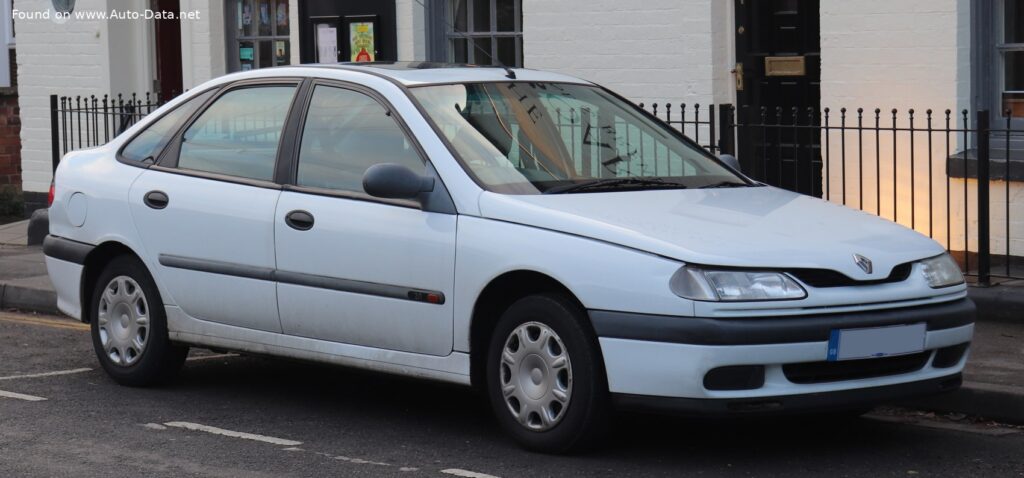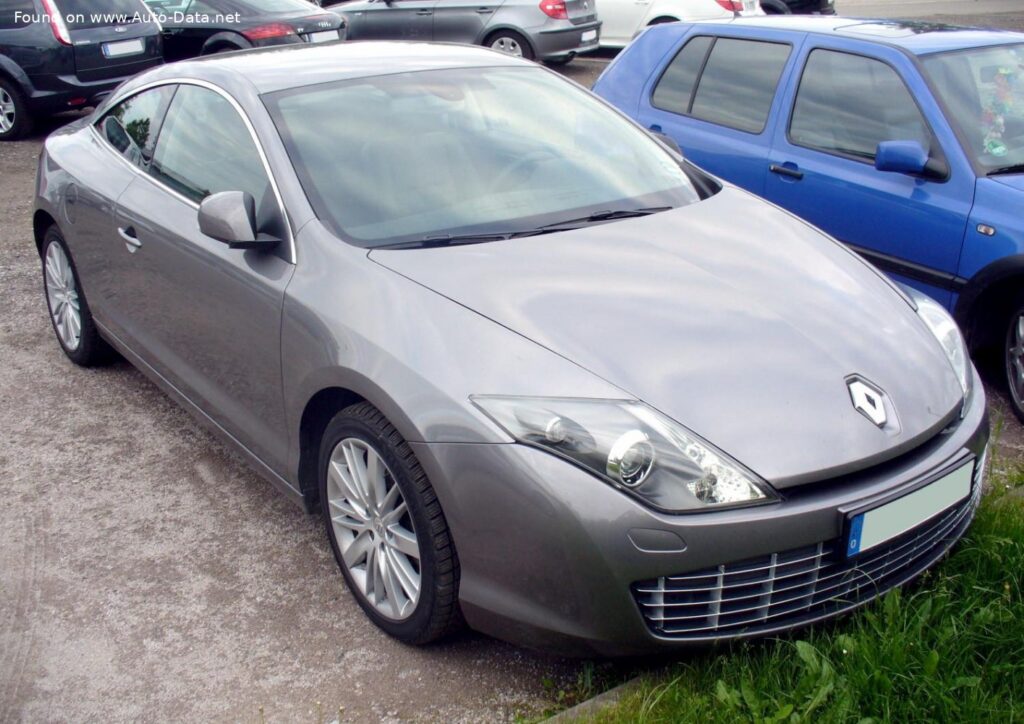
The Renault Laguna Coupe, representing a distinct and elegant chapter in the French automaker’s history, emerged as a stylish grand tourer designed primarily for the discerning European market. Launched in 2008 as a pivotal part of the third-generation Laguna lineup, this two-door, four-seat coupe stood apart from its more conventional sedan and station wagon siblings with a strikingly assertive and sophisticated design language. Positioned as a premium offering, it aimed to blend dynamic aesthetics with exceptional comfort for long-distance cruising, catering to buyers seeking a distinctive alternative in the highly competitive European coupe segment. Unlike its more utilitarian counterparts, the Renault Laguna Coupe 2.0 dCi FAP (150 Hp) emphasized emotional appeal, drawing inspiration from Renault’s earlier concept cars and even hinting at a “baby Aston Martin” silhouette in its gracefully executed profile. Its production run from 2008 to 2012 marked its presence as a testament to Renault’s ambition to offer a more upscale and driver-focused vehicle, showcasing a compelling blend of refined engineering and inherent Gallic flair. While never officially sold in the United States, the Laguna Coupe played a significant role in elevating Renault’s brand image across Europe, offering a compelling package of performance, efficiency, and distinctive style that resonated with its target audience.
Engine and Performance: The Heart of the Renault Laguna Coupe
At the core of the Renault Laguna Coupe‘s appeal, particularly in the variant under detailed consideration, was its robust and remarkably efficient powertrain. The 2.0 dCi FAP (150 Hp) engine is a prime example of Renault’s advanced diesel technology, meticulously engineered to deliver a compelling balance of power, torque, and outstanding fuel economy. This four-cylinder, inline engine, internally designated by the code M9R, boasts an engine displacement of 1995 cubic centimeters, which translates to approximately 2.0 liters or 121.74 cubic inches. It incorporates a sophisticated Diesel Commonrail fuel injection system, a highly effective turbocharger, and an intercooler, all working in concert to generate a respectable 150 horsepower at a peak of 4000 revolutions per minute. More crucially for dynamic, real-world driving scenarios, it produced a substantial 250.77 pound-feet of torque at a low 2000 rpm, providing excellent mid-range acceleration and an effortless sensation during highway cruising.
Power was efficiently delivered to the front wheels via a precise and engaging 6-speed manual transmission, offering the driver tactile control over the vehicle’s output. This well-matched combination allowed the Laguna Coupe 2.0 dCi FAP (150 Hp) to accelerate from 0 to 60 miles per hour in a brisk 9 seconds, with its maximum speed reaching an impressive 130.49 mph (210 km/h). These performance figures underscored its capability as a competent grand tourer, easily capable of covering long distances with a sense of composure and authority. Beyond raw performance, the emphasis on fuel efficiency was paramount, particularly within the stringent regulatory and market demands of Europe. The vehicle achieved truly impressive fuel economy figures: an urban rating of 31.8 US mpg (7.4 l/100 km), an extra-urban rating of 46.1 US mpg (5.1 l/100 km), and a combined cycle of 39.9 US mpg (5.9 l/100 km). This efficiency was further enhanced by the inclusion of a Diesel Particulate Filter (FAP), ensuring the vehicle met the stringent Euro 4 emission standards, a critical factor for environmental compliance and market acceptance in its primary operating regions. The engine’s DOHC (Double Overhead Camshaft) valvetrain with four valves per cylinder optimized combustion and volumetric efficiency, while a compression ratio of 9.8:1 facilitated the powerful and clean diesel combustion process. With an engine oil capacity of 6.6 liters (6.97 US quarts) and a coolant capacity of 7.8 liters (8.24 US quarts), the powertrain was meticulously designed for reliability, longevity, and ease of maintenance.
Design and Features: Elegance Meets Engineering in the Renault Laguna Coupe
The design of the Renault Laguna Coupe was arguably its most striking and defining attribute, deliberately setting it apart from its more conventional Laguna siblings and indeed, many of its segment rivals. Its silhouette was characterized by smooth, flowing lines, a long, assertive hood, and a gracefully sloping roofline that culminated in a short, elegantly sculpted rear deck. This two-door coupe configuration, meticulously designed to comfortably seat four occupants, exuded an undeniable sense of sportiness and sophisticated presence. Measuring 182.8 inches (4643 mm) in length, 71.3 inches (1811 mm) in width, and 55.12 inches (1400 mm) in height, with a generous wheelbase of 105.91 inches (2690 mm), the Laguna Coupe possessed perfectly proportioned dimensions that contributed significantly to its confident stance and visual harmony on the road.
Underneath its sculpted exterior, the Laguna Coupe was engineered for a refined and engaging driving experience. The drivetrain architecture featured an internal combustion engine driving the front wheels, a common and highly effective layout for balancing traction, packaging efficiency, and predictable handling characteristics. The suspension system was comprised of a robust Spring Strut setup at the front and a resilient Coil Spring arrangement at the rear. This configuration was carefully tuned to provide a commendably comfortable ride quality, adept at soaking up road imperfections, without sacrificing too much in terms of dynamic handling responsiveness. Braking performance was handled by powerful ventilated discs at the front and solid disc brakes at the rear, complemented by an essential Anti-lock Braking System (ABS) for enhanced safety and precise control during emergency stops. Steering was managed by a responsive rack and pinion system, aided by hydraulic power steering, offering tactile and communicative feedback to the driver – a cherished characteristic of cars from this era before the widespread adoption of electric power steering.
The vehicle rode on appropriately sized 215/50 R17 tires mounted on stylish 17-inch wheel rims, a combination that offered an excellent balance of grip, ride comfort, and aesthetic appeal, perfectly filling the wheel arches. Inside, the Laguna Coupe offered a practical yet undeniably refined cabin environment. Despite its sleek coupe styling, it provided a respectable trunk space of 14.94 cubic feet (423 liters), making it surprisingly suitable for weekend getaways or even routine daily errands. The substantial fuel tank capacity of 17.44 US gallons (66 liters) further underscored its grand touring aspirations, allowing for extended ranges between fuel stops and minimizing inconvenience. With a kerb weight of 3487.71 pounds (1582 kg) and a maximum permissible gross weight of 4347.52 pounds (1972 kg), the vehicle’s robust construction contributed significantly to its solid feel, impressive structural integrity, and inherent passive