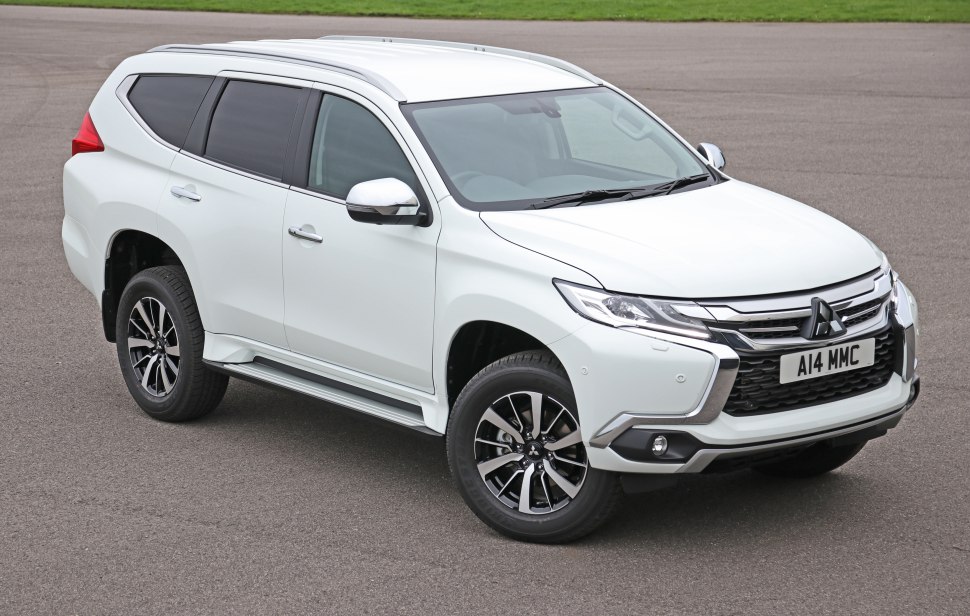
The Mitsubishi Pajero Sport III, a robust and versatile sport utility vehicle, represents the third generation of Mitsubishi’s popular mid-size SUV, known globally for its rugged capability and comfortable family transport. Produced from 2016 to 2019, this iteration built upon the Pajero Sport’s legacy by integrating a more refined design, advanced powertrain technology, and enhanced safety features, while retaining its fundamental body-on-frame architecture. Primarily targeted at markets outside North America, such as Southeast Asia, Australia, and parts of Europe, the {original_title} served as a crucial offering for consumers seeking a vehicle capable of tackling challenging terrains and heavy-duty towing, alongside providing spacious accommodation for up to seven passengers. Its introduction marked a significant step in Mitsubishi’s strategy to deliver a compelling blend of utility, durability, and modern amenities in the competitive SUV segment.
The Mitsubishi Pajero Sport III: Engineering and Design Prowess
Engine & Performance
At the heart of the Mitsubishi Pajero Sport III 2.4 DI-D (181 Hp) Automatic lies a formidable 2.4-liter Direct Injection Diesel (DI-D) engine, designated by the code 4N15. This inline four-cylinder powerplant, featuring a DOHC (Double Overhead Camshaft) valvetrain with four valves per cylinder, is engineered for both robust power delivery and efficiency. The engine’s displacement of 2442 cubic centimeters (149.02 cubic inches) is complemented by a sophisticated fuel injection system utilizing common rail technology, ensuring precise fuel delivery and optimal combustion. Further enhancing its performance is a turbocharger coupled with an intercooler, which significantly boosts air intake, resulting in a healthier power output and improved torque across the rev range.
This 2.4-liter diesel engine generates a robust 181 horsepower at 3500 revolutions per minute, providing ample motivation for a vehicle of its size and intended use. More critically for an SUV designed for towing and off-road excursions, it produces a substantial 317.15 lb.-ft. (430 Nm) of torque, readily available at a relatively low 2500 rpm. This broad torque band is essential for overcoming obstacles and confidently hauling heavy loads. Power is efficiently managed by an 8-speed automatic transmission, which ensures smooth gear changes and optimizes the engine’s output for various driving conditions, from highway cruising to challenging off-road trails. The Pajero Sport III achieves a top speed of 111.85 mph (180 km/h), a respectable figure for a vehicle in its class, demonstrating its capability for sustained highway travel. With a weight-to-power ratio of 10.7 kg/Hp (93.3 Hp/tonne) and a weight-to-torque ratio of 4.5 kg/Nm (221.6 Nm/tonne), the vehicle exhibits a commendable balance of strength and responsiveness, indicative of its purposeful engineering for diverse applications. The engine’s robust design is also reflected in its generous oil capacity of 8.4 liters (8.88 US quarts) and a coolant capacity of 7.7 liters (8.14 US quarts), ensuring durability and thermal stability under demanding conditions.
Design & Features
The Mitsubishi Pajero Sport III adopts a classic SUV body type, characterized by its imposing stance and practical design. With five doors and a spacious cabin configured to seat seven passengers, it caters directly to families and adventurers requiring significant cargo capacity and passenger accommodation. The vehicle’s dimensions are substantial, measuring 188.39 inches (4785 mm) in length, 71.46 inches (1815 mm) in width, and standing between 70.87 to 71.06 inches (1800-1805 mm) in height. A generous wheelbase of 110.24 inches (2800 mm) contributes to both interior volume and ride stability, while front and rear tracks of 59.84 inches (1520 mm) and 59.65 inches (1515 mm), respectively, ensure a stable footprint.
Beyond its generous proportions, the Pajero Sport III is engineered for serious capability. It boasts a substantial ground clearance of 8.58 inches (218 mm), which is crucial for navigating uneven terrain without scraping the undercarriage. Its off-road prowess is further highlighted by impressive approach, departure, and ramp-over angles of 30.0°, 24.2°, and 23.1° respectively, allowing it to tackle steep inclines, descents, and crests with confidence. The vehicle’s minimum turning circle of 36.75 feet (11.2 m) provides reasonable maneuverability for its size, an important consideration in urban environments or tight trails. The robust chassis is supported by a double wishbone front suspension and an independent multi-link rear suspension, a combination that aims to provide a balance between rugged off-road articulation and comfortable on-road dynamics. Stopping power is provided by ventilated disc brakes on both the front and rear axles, augmented by an Anti-lock Braking System (ABS) for enhanced safety and control during emergency braking. Steering is managed by an electric power-assisted rack and pinion system, offering ease of steering at low speeds and improved feedback at higher velocities. The vehicle rides on 265/60 R18 tires mounted on 7.5J x 18 wheel rims, providing a good balance of grip and ride comfort for diverse driving conditions. The fuel tank capacity of 17.96 US gallons (68 liters) ensures a substantial range, essential for long journeys or remote area travel.
Market Context and Legacy
The Mitsubishi Pajero Sport III, particularly the 2.4 DI-D Automatic variant, holds a significant position in its primary markets. Unlike the larger, more luxurious SUVs prevalent in the North American market, the Pajero Sport III carved its niche as a highly capable, value-oriented, and durable workhorse. It competes directly with other body-on-frame SUVs, offering a compelling package for families and businesses that require genuine off-road capability, substantial towing capacity, and a robust build quality that can withstand demanding conditions. Its rear-wheel-drive architecture, with the internal combustion engine driving the rear wheels, is a testament to its traditional SUV roots, prioritizing ruggedness and load-carrying ability. With a kerb weight ranging from 4276.97 to 4299.01 lbs (1940-1950 kg) and a maximum permissible weight of 5974.53 lbs (2710 kg), it offers a substantial payload capacity of 1675.51 to 1697.56 lbs (760-770 kg), making it a practical choice for hauling gear, passengers, or towing trailers. The vehicle’s compliance with Euro 2, Euro 4, and Euro 5 emission standards (depending on market and year of production) reflects Mitsubishi’s commitment to evolving environmental regulations, showcasing a balance between performance and ecological responsibility during its production run from 2016 to 2019. This generation of the Pajero Sport continued to uphold Mitsubishi’s reputation for building tough, reliable, and capable vehicles for the global stage.
Technical Specifications of the Mitsubishi Pajero Sport III 2.4 DI-D (181 Hp) Automatic
| Brand | Mitsubishi |
| Model | Pajero Sport |
| Generation | Pajero Sport III |
| Type (Engine) | 2.4 DI-D (181 Hp) Automatic |
| Start of production | 2016 year |
| End of production | 2019 year |
| Powertrain Architecture | Internal Combustion engine |
| Body type | SUV |
| Seats | 7 |
| Doors | 5 |
| Fuel Type | Diesel |
| Maximum speed | 111.85 mph (180 km/h) |
| Emission standard | Euro 2/Euro 4/Euro 5 |
| Weight-to-power ratio | 10.7 kg/Hp, 93.3 Hp/tonne |
| Weight-to-torque ratio | 4.5 kg/Nm, 221.6 Nm/tonne |
| Power | 181 Hp @ 3500 rpm. |
| Power per liter | 74.1 Hp/l |
| Torque | 317.15 lb.-ft. (430 Nm) @ 2500 rpm. |
| Engine layout | Front, Longitudinal |
| Engine Model/Code | 4N15 |
| Engine displacement | 2442 cm3 (149.02 cu. in.) |
| Number of cylinders | 4 |
| Engine configuration | Inline |
| Cylinder Bore | 86 mm (3.39 in.) |
| Piston Stroke | 105.1 mm (4.14 in.) |
| Compression ratio | 15.5:1 |
| Number of valves per cylinder | 4 |
| Fuel injection system | Diesel Commonrail |
| Engine aspiration | Turbocharger, Intercooler |
| Valvetrain | DOHC |
| Engine oil capacity | 8.4 l (8.88 US qt) |
| Coolant | 7.7 l (8.14 US qt) |
| Kerb Weight | 4276.97 – 4299.01 lbs. (1940-1950 kg) |
| Max. weight | 5974.53 lbs. (2710 kg) |
| Max load | 1675.51 – 1697.56 lbs. (760-770 kg) |
| Fuel tank capacity | 17.96 US gal (68 l) |
| Length | 188.39 in. (4785 mm) |
| Width | 71.46 in. (1815 mm) |
| Height | 70.87 – 71.06 in. (1800-1805 mm) |
| Wheelbase | 110.24 in. (2800 mm) |
| Front track | 59.84 in. (1520 mm) |
| Rear (Back) track | 59.65 in. (1515 mm) |
| Front overhang | 34.65 in. (880 mm) |
| Rear overhang | 43.5 in. (1105 mm) |
| Ride height (ground clearance) | 8.58 in. (218 mm) |
| Minimum turning circle (turning diameter) | 36.75 ft. (11.2 m) |
| Approach angle | 30.0° |
| Departure angle | 24.2° |
| Ramp-over (brakeover) angle | 23.1° |
| Drivetrain Architecture | The Internal combustion engine (ICE) drives the rear wheels of the vehicle. |
| Drive wheel | Rear wheel drive |
| Number of gears and type of gearbox | 8 gears, automatic transmission |
| Front suspension | Double wishbone |
| Rear suspension | Independent multi-link suspension |
| Front brakes | Ventilated discs |
| Rear brakes | Ventilated discs |
| Assisting systems | ABS (Anti-lock braking system) |
| Steering type | Steering rack and pinion |
| Power steering | Electric Steering |
| Tires size | 265/60 R18 |
| Wheel rims size | 7.5J x 18 |