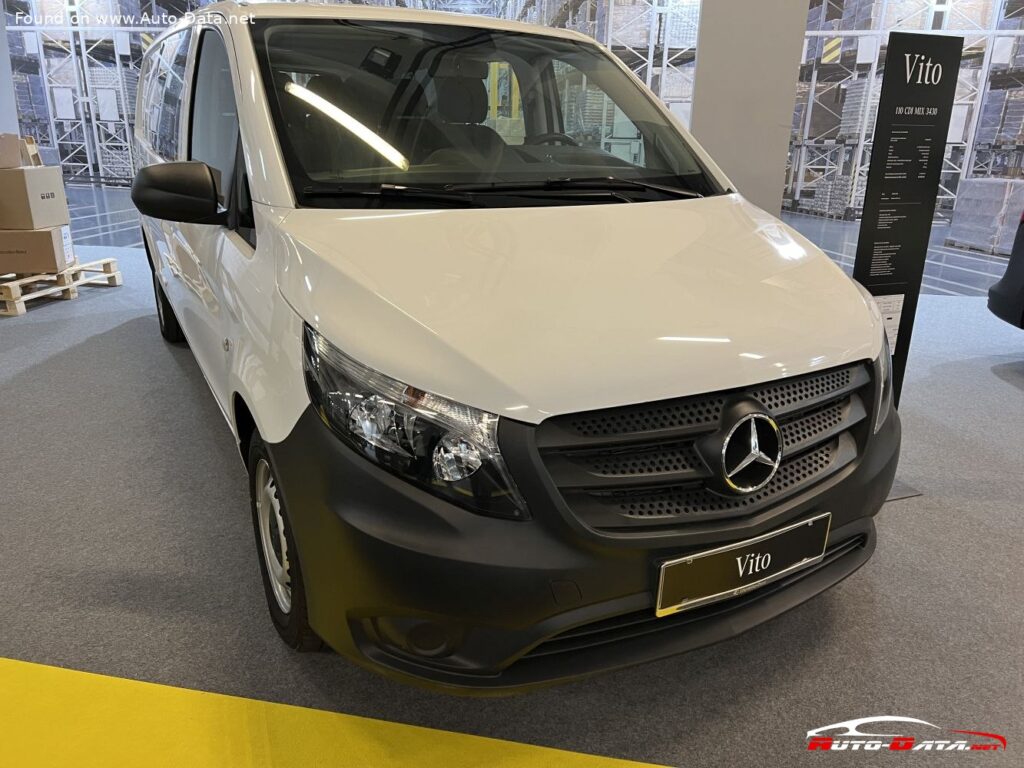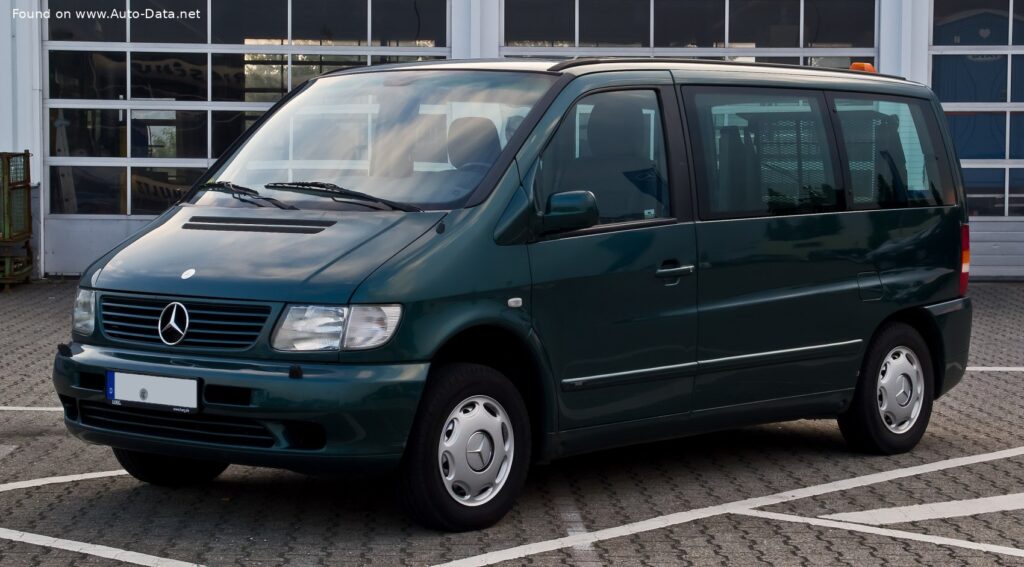
The Mercedes-Benz Vito (W638) V 200 CDI (102 Hp) represents a significant chapter in the evolution of light commercial vehicles and passenger vans, particularly within the European market. Introduced in 1999 as part of the W638 generation, this model swiftly established itself as a versatile and robust workhorse, blending Mercedes-Benz’s renowned engineering with practical utility. As a multi-purpose van, the Vito W638 was engineered to cater to a diverse clientele, from small businesses requiring reliable cargo transport to larger families seeking a spacious and comfortable people mover. The V 200 CDI variant, with its efficient diesel powertrain, was specifically designed to offer a compelling balance of performance, fuel economy, and durability, making it a popular choice across the continent for its entire production run, which concluded in 2003. Its front-wheel-drive architecture was a notable departure for Mercedes-Benz in this segment, optimizing interior space and improving handling dynamics for urban environments.
The Mercedes-Benz Vito (W638) V 200 CDI (102 Hp): A Market Overview
The W638 generation of the Mercedes-Benz Vito, including the V 200 CDI (102 Hp) model, was a pivotal offering from the German automaker, primarily targeting the highly competitive European and select Asian markets where compact and mid-size vans were in high demand. Unlike its larger, more traditional Sprinter sibling, the Vito was conceived as a more car-like van, focusing on maneuverability, passenger comfort, and a driving experience closer to that of a sedan. This was particularly evident in its V-Class passenger variants, which offered enhanced interior finishes and amenities. The V 200 CDI, specifically, became a benchmark for efficiency within its class, thanks to its advanced Common Rail Direct Injection (CDI) diesel engine technology. This innovation allowed for precise fuel delivery, leading to improved combustion, lower emissions, and significantly better fuel economy compared to older diesel designs. For fleet operators and private owners alike, the promise of lower running costs combined with Mercedes-Benz’s reputation for quality made the Vito an attractive proposition, solidifying its role as a versatile platform capable of adapting from a pure cargo van to a seven-seat passenger carrier or even a luxury shuttle. Its robust construction and practical design ensured a long service life, contributing to its enduring appeal in the used vehicle market long after its production ceased.
Powertrain and Performance of the Mercedes-Benz Vito (W638)
At the heart of the Mercedes-Benz Vito (W638) V 200 CDI (102 Hp) lies a sophisticated diesel engine, identified by the Mercedes-Benz internal code OM 611 DE22LA. This 2.2-liter, four-cylinder engine was a product of Mercedes-Benz’s commitment to modern diesel technology, featuring Common Rail Direct Injection (CDI) which was cutting-edge for its time. While the provided data notes it as “Naturally aspirated,” the presence of an intercooler and the CDI designation strongly indicate a turbocharged setup, which was standard for OM 611 engines to achieve optimal power and efficiency. The intercooler plays a crucial role in cooling the compressed air before it enters the engine, thereby increasing air density and improving combustion efficiency, which translates to better power output and reduced fuel consumption. This particular variant delivered a respectable 102 horsepower, a figure that, while not indicative of sporty performance, was entirely adequate for the vehicle’s intended purpose.
Paired with a 5-speed manual transmission, the V 200 CDI directed its power to the front wheels, a departure from Mercedes-Benz’s traditional rear-wheel-drive architecture for vans, chosen to optimize interior space and enhance driving dynamics. This powertrain configuration allowed the Vito to achieve a combined fuel economy of approximately 29 US miles per gallon (8.1 liters per 100 kilometers), an impressive figure for a vehicle of its size and capacity in the late 1990s and early 2000s. Such efficiency made it an economical choice for both commercial operations and long-distance family travel. Performance figures reflected its utilitarian nature: acceleration from 0 to 60 mph took approximately 19.6 seconds, with a maximum speed of around 96.31 mph. These metrics underscore that the Vito was engineered for reliable, efficient transport rather than outright speed, prioritizing torque for hauling and sustained cruising capability. The engine’s substantial 7.5-liter oil capacity and 11.1-liter coolant capacity further attest to its robust design, built for durability and extended service intervals under demanding conditions.
Design, Utility, and Safety Features
The design of the Mercedes-Benz Vito (W638) was a testament to functional aesthetics, characterized by its distinctive, aerodynamic profile that set it apart from more boxy competitors of its era. As a van, it offered a highly versatile body type with five doors, including large sliding side doors for easy access to both cargo and passenger areas, and typically seating for seven occupants in its V-Class configuration. The generous dimensions — a length of 183.46 inches, a width of 74.02 inches, and a height of 72.6 inches — contributed to a spacious interior, making it highly adaptable for various uses, from family outings to professional transport. The long 118.11-inch wheelbase ensured a stable ride, while the relatively tight minimum turning circle of