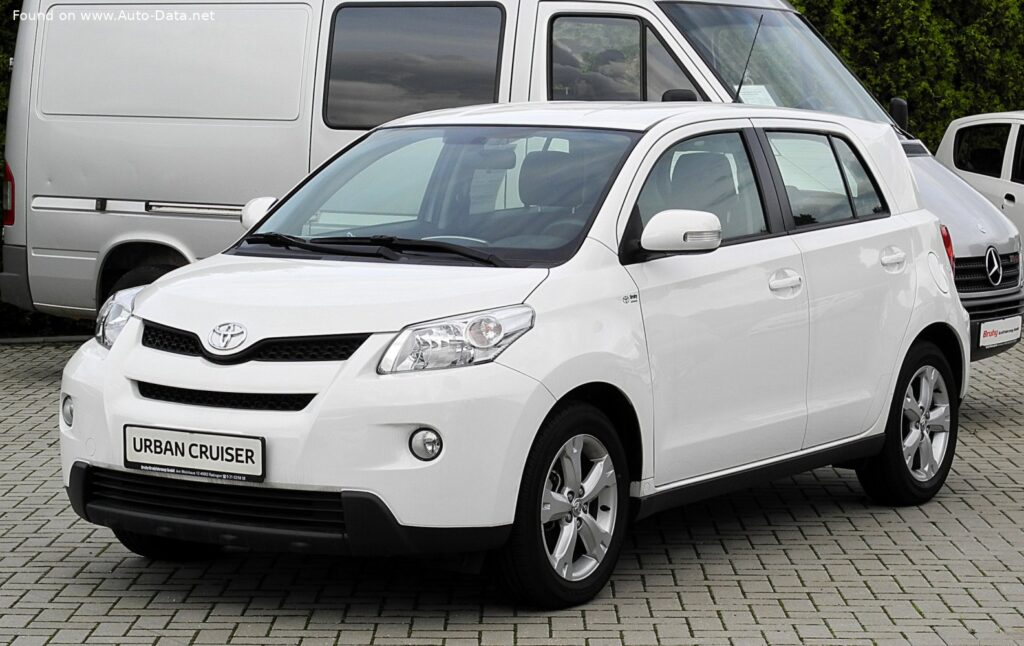
The Toyota Urban Cruiser I 1.33 VVT-i (100 Hp) represents a compelling entry in the burgeoning compact urban crossover segment, though it was primarily marketed outside of North America, particularly in Europe and Asia, from its production start in March 2008 until 2014. Conceived as a rugged yet refined solution for navigating congested cityscapes, this first-generation Urban Cruiser was designed to blend the practicalities of a hatchback with the adventurous styling cues of an SUV. Its introduction underscored Toyota’s commitment to offering diverse mobility solutions tailored to specific regional demands, emphasizing efficiency, maneuverability, and a surprisingly spacious interior within a compact footprint. This particular variant, powered by the efficient 1.33-liter VVT-i engine, delivered a balanced proposition of performance and economy, making it an attractive option for urban dwellers seeking a versatile and reliable vehicle.
Engine & Performance: The Heart of the Toyota Urban Cruiser I 1.33 VVT-i (100 Hp)
At the core of the Toyota Urban Cruiser I 1.33 VVT-i (100 Hp) lies the sophisticated 1NR-FE engine, a naturally aspirated, inline four-cylinder gasoline powerplant renowned for its efficiency and smooth operation. This 1.33-liter (1329 cm3 or 81.1 cu. in.) engine is a testament to Toyota’s engineering prowess, featuring a dual Variable Valve Timing – intelligent (Dual VVT-i) system. This advanced valvetrain technology independently controls the timing of both intake and exhaust valves, optimizing valve overlap across the engine’s operating range. The result is improved volumetric efficiency, leading to a flatter torque curve, enhanced fuel economy at lower engine speeds, and a more robust power delivery when needed. Furthermore, Dual VVT-i contributes significantly to reduced exhaust emissions, helping the Urban Cruiser meet the stringent Euro 4 emission standard.
The engine generates a respectable 100 horsepower at 6000 rpm, providing ample thrust for city driving and comfortable cruising on highways. Torque output stands at 97.36 lb.-ft. (132 Nm) delivered at a relatively low 3800 rpm, ensuring responsive acceleration from a standstill and strong mid-range pull. Power per liter is an impressive 75.2 Hp/l, indicating a highly efficient engine design. The engine’s internal architecture features a cylinder bore of 2.85 inches (72.5 mm) and a piston stroke of 3.17 inches (80.5 mm), coupled with a high compression ratio of 11.5:1, further optimizing combustion efficiency. Fuel is delivered via a direct injection system, precisely metering fuel into the combustion chambers for optimal air-fuel mixture control and reduced fuel consumption.
Mated to a precise 6-speed manual transmission, the 1.33 VVT-i engine propels the Urban Cruiser from 0 to 60 mph in a brisk 11.9 seconds, with a top speed of 108.74 mph (175 km/h). These performance figures are more than adequate for its intended urban environment, offering a nimble and engaging driving experience. Fuel economy is a standout feature for the Toyota Urban Cruiser I 1.33 VVT-i (100 Hp), reflecting its design focus on efficiency. The combined fuel consumption is an impressive 42.8 US mpg (5.5 l/100 km). In urban settings, it achieves 35.6 US mpg (6.6 l/100 km), while on the extra-urban cycle, it boasts an excellent 48 US mpg (4.9 l/100 km). These figures highlight its economical operation, a crucial factor for daily commuters. The vehicle’s kerb weight of 2469.18 lbs. (1120 kg) contributes to favorable weight-to-power and weight-to-torque ratios of 11.2 kg/Hp and 8.5 kg/Nm respectively, ensuring a lively and efficient driving dynamic.
Design & Features: Urban Practicality and Robust Aesthetics
The design philosophy behind the Toyota Urban Cruiser I is rooted in creating a vehicle that is both visually appealing and highly functional for urban living. Its body type is a 5-door hatchback, but its elevated stance, prominent wheel arches, and robust front and rear fascias give it a distinct crossover appearance. This design choice provided a higher seating position for improved visibility in traffic and easier ingress/egress, features highly valued by drivers in congested urban areas. The compact dimensions were key to its market appeal, with an overall length of 154.72 inches (3930 mm), a width of 67.91 inches (1725 mm), and a height of 60.04 inches (1525 mm). A wheelbase of 96.85 inches (2460 mm) contributes to a stable ride quality while maintaining excellent maneuverability, evidenced by its minimum turning circle of just 36.09 feet (11 m).
Despite its compact exterior, the interior of the Urban Cruiser I was surprisingly spacious and versatile, designed to accommodate five occupants comfortably. The rear seats could be folded, expanding the trunk (boot) space from a minimum of 11.09 cu. ft. (314 liters) to a generous maximum of 26.45 cu. ft. (749 liters). This flexibility made it highly practical for everything from daily commutes to weekend errands, allowing for the transport of larger items when needed. The max load capacity stands at 1036.17 lbs. (470 kg), further underscoring its utility.
Underneath, the Urban Cruiser features a well-engineered chassis designed to provide a comfortable yet agile ride. The front suspension employs an independent McPherson type, known for its excellent balance of ride comfort and handling precision. At the rear, a semi-independent suspension with longitudinal arms and transverse torsion shafts ensures compact packaging and robust performance. Braking performance is handled by ventilated discs at the front and solid discs at the rear, complemented by an Anti-lock Braking System (ABS) for enhanced safety during emergency stops. The vehicle rides on 195/60 R16 tires mounted on 16-inch wheel rims, providing a good blend of grip, ride comfort, and durability for diverse road conditions. The front-wheel-drive architecture, driven by the internal combustion engine, is a proven layout for efficiency and reliability in this segment, making the Toyota Urban Cruiser I 1.33 VVT-i (100 Hp) a practical and dependable choice for its target market.
Technical Specifications: Toyota Urban Cruiser I 1.33 VVT-i (100 Hp)
| Brand | Toyota |
| Model | Urban Cruiser |
| Generation | Urban Cruiser I |
| Type (Engine) | 1.33 VVT-i (100 Hp) |
| Start of production | March, 2008 year |
| End of production | 2014 year |
| Powertrain Architecture | Internal Combustion engine |
| Body type | Hatchback |
| Seats | 5 |
| Doors | 5 |
| Fuel consumption (economy) – urban | 35.6 US mpg (6.6 l/100 km) |
| Fuel consumption (economy) – extra urban | 48 US mpg (4.9 l/100 km) |
| Fuel consumption (economy) – combined | 42.8 US mpg (5.5 l/100 km) |
| Fuel Type | Petrol (Gasoline) |
| Acceleration 0 – 60 mph | 11.9 sec |
| Acceleration 0 – 100 km/h | 12.5 sec |
| Maximum speed | 108.74 mph (175 km/h) |
| Emission standard | Euro 4 |
| Weight-to-power ratio | 11.2 kg/Hp, 89.3 Hp/tonne |
| Weight-to-torque ratio | 8.5 kg/Nm, 117.9 Nm/tonne |
| Power | 100 Hp @ 6000 rpm |
| Power per liter | 75.2 Hp/l |
| Torque | 97.36 lb.-ft. (132 Nm) @ 3800 rpm |
| Engine Model/Code | 1NR-FE |
| Engine displacement | 81.1 cu. in. (1329 cm3) |
| Number of cylinders | 4 |
| Engine configuration | Inline |
| Cylinder Bore | 2.85 in. (72.5 mm) |
| Piston Stroke | 3.17 in. (80.5 mm) |
| Compression ratio | 11.5:1 |
| Number of valves per cylinder | 4 |
| Fuel injection system | Direct injection |
| Engine aspiration | Naturally aspirated engine |
| Valvetrain | Dual VVT-i |
| Engine oil capacity | 3.59 US qt (3.4 l) |
| Coolant | 4.33 US qt (4.1 l) |
| Kerb Weight | 2469.18 lbs. (1120 kg) |
| Max. weight | 3505.35 lbs. (1590 kg) |
| Max load | 1036.17 lbs. (470 kg) |
| Trunk (boot) space – minimum | 11.09 cu. ft. (314 l) |
| Trunk (boot) space – maximum | 26.45 cu. ft. (749 l) |
| Fuel tank capacity | 11.1 US gal (42 l) |
| Length | 154.72 in. (3930 mm) |
| Width | 67.91 in. (1725 mm) |
| Height | 60.04 in. (1525 mm) |
| Wheelbase | 96.85 in. (2460 mm) |
| Front track | 58.46 in. (1485 mm) |
| Rear (Back) track | 58.66 in. (1490 mm) |
| Minimum turning circle (turning diameter) | 36.09 ft. (11 m) |
| Drivetrain Architecture | Front wheel drive (ICE drives front wheels) |
| Drive wheel | Front wheel drive |
| Number of gears and type of gearbox | 6 gears, manual transmission + R |
| Front suspension | Independent type McPherson |
| Rear suspension | Semi-independent suspension, longitudinal arms with transverse torsion shafts |
| Front brakes | Ventilated discs |
| Rear brakes | Disc |
| Assisting systems | ABS (Anti-lock braking system) |
| Tires size | 195/60 R16 |
| Wheel rims size | 16 inches |