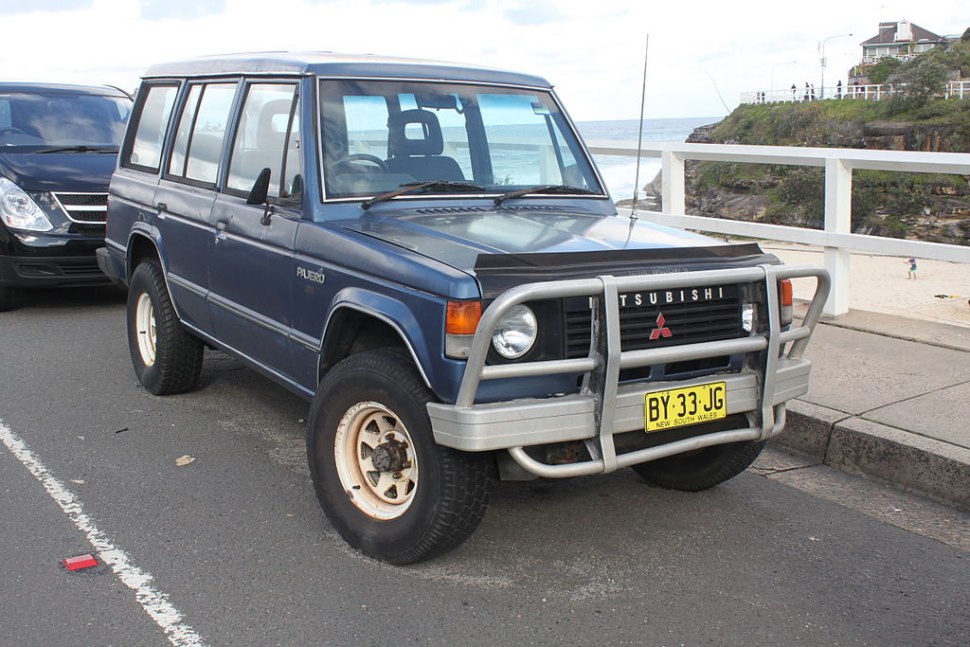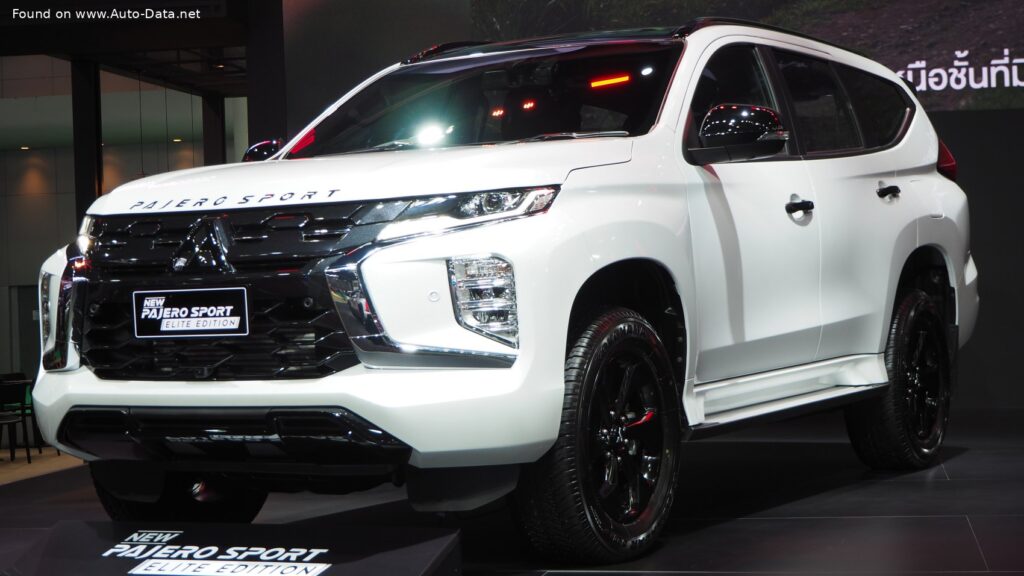
The Mitsubishi Pajero Sport III (facelift 2024) emerges as a robust and capable contender in the global mid-size SUV segment, particularly in markets across Asia, Australia, Africa, and parts of Europe, where its blend of utility, durability, and family-friendly features makes it a popular choice. Often referred to as a “Pickup Passenger Vehicle” (PPV) due to its ladder-frame chassis derived from the brand’s Triton/L200 pickup truck, the Mitsubishi Pajero Sport III (facelift 2024) offers a compelling package for consumers seeking a vehicle capable of navigating both urban landscapes and challenging off-road terrains. The 2024 facelift introduces a refreshed aesthetic and refined technical specifications, ensuring its continued relevance in a highly competitive market. This specific GT 2.4 variant, with its potent diesel powertrain and automatic transmission, exemplifies Mitsubishi’s commitment to delivering a vehicle that balances performance with practical considerations for its primary demographic. Unlike its larger, more globally recognized sibling, the Pajero (Montero in some markets), the Pajero Sport focuses on a slightly more compact, yet equally rugged, platform, catering to a demand for versatile SUVs that can handle diverse environments and demanding usage conditions outside of the North American market.
Engine and Performance of the Mitsubishi Pajero Sport III (facelift 2024)
Under the hood of the Mitsubishi Pajero Sport III (facelift 2024) GT 2.4 lies a highly efficient and durable 2.4-liter, 4-cylinder inline diesel engine, identified by the “Hyper Power/4N16” code. This powertrain is engineered to deliver robust performance, producing a substantial 184 horsepower at 3500 rpm. More critically for a vehicle of its stature and intended use, it generates an impressive 317.15 lb.-ft. (430 Nm) of torque, available across a broad and usable band from 2250 to 2500 rpm. This ample torque is crucial for towing, hauling, and navigating demanding off-road conditions, attributes highly valued in the markets where the Pajero Sport thrives. The engine’s advanced design incorporates a DOHC (Double Overhead Camshaft) valvetrain, a sophisticated Commonrail direct fuel injection system, and is augmented by a turbocharger with an intercooler. This combination ensures optimal combustion efficiency, reduced emissions, and sustained power delivery even under strenuous loads, making it well-suited for long-distance travel and challenging expeditions.
Mated to a smooth-shifting 6-speed automatic transmission, the powertrain architecture sends power to the rear wheels. While many in its segment offer four-wheel drive, this rear-wheel-drive setup provides a traditional, robust configuration favored for heavy-duty applications and offers a balance of efficiency and capability. The inclusion of a Start & Stop System underscores Mitsubishi’s focus on modern efficiency, helping to reduce fuel consumption and emissions, particularly in urban driving scenarios with frequent stops. The engine’s substantial oil capacity of 7.82 US quarts (7.4 liters) and coolant capacity of 8.14 US quarts (7.7 liters) indicate its design for longevity and sustained operation, crucial for reliability in diverse climates and operating conditions, from scorching deserts to humid tropics. The 75.3 horsepower per liter output is indicative of a well-tuned diesel engine, maximizing power from its displacement while maintaining durability.
Design, Features, and Robust Engineering
The Mitsubishi Pajero Sport III (facelift 2024) presents itself as a commanding and practical SUV, designed to accommodate families and their adventures with confidence. Its body type is a traditional 5-door SUV, featuring a spacious cabin capable of seating up to seven occupants across three rows, making it a versatile choice for larger families or those requiring significant passenger capacity. The 2024 facelift likely brings contemporary styling cues, enhancing its visual appeal with updated grille designs, lighting signatures, and possibly interior refinements, while retaining its rugged essence and functional design. Dimensionally, the vehicle measures 190.55 inches in length, 71.46 inches in width, and 72.24 inches in height, with a substantial wheelbase of 110.24 inches. These dimensions contribute to a commanding road presence and a stable ride, both on and off paved surfaces.
A notable feature for its intended markets is the generous ground clearance of 8.62 inches (219 mm), which, combined with front and rear tracks of 59.84 inches and 59.65 inches respectively, provides excellent capability for traversing uneven terrain and overcoming obstacles that are common outside of highly developed road networks. The minimum turning circle of 36.75 feet (11.2 meters) is commendable for a vehicle of this size, aiding maneuverability in tighter urban environments or challenging off-road trails. The suspension system is engineered for a balance of on-road comfort and off-road resilience. The front features a coil spring, double wishbone setup with a transverse stabilizer, offering precise steering and stability. The rear axle utilizes an independent multi-link spring suspension, also with a stabilizer, ensuring that even with its truck-based origins, the ride quality remains compliant and comfortable for passengers, a significant improvement over simpler leaf-spring setups often found in pure utility vehicles. This sophisticated rear suspension contributes significantly to both handling dynamics and passenger comfort, making long journeys less fatiguing.
Braking performance is handled by ventilated discs at both the front and rear, providing confident stopping power for a vehicle of its size and weight. Essential safety features include an Anti-lock Braking System (ABS), enhancing control during emergency braking maneuvers and preventing wheel lock-up on slippery surfaces. The electric power steering system, a rack and pinion type, offers ease of maneuverability, particularly in tighter spots, despite the vehicle’s considerable size. The vehicle rides on 265/60 R18 tires mounted on 7.5J x 18 wheel rims, a combination that provides a good balance of grip, durability, and ride comfort, suitable for a variety of road conditions, from paved highways to unpaved tracks. The large 68-liter (17.96 US gallon) fuel tank capacity ensures an adequate driving range, a practical consideration for long journeys in regions with less frequent fuel stations. Overall, the Mitsubishi Pajero Sport III (facelift 2024) GT 2.4 is a testament to Mitsubishi’s expertise in building rugged, reliable, and versatile SUVs designed for real-world utility and adventure.
Technical Specifications
| Brand | Mitsubishi |
| Model | Pajero Sport |
| Generation | Pajero Sport III (facelift 2024) |
| Type (Engine) | GT 2.4 (184 Hp) Automatic |
| Start of production | March, 2024 year |
| Powertrain Architecture | Internal Combustion engine |
| Body type | SUV |
| Seats | 7 |
| Doors | 5 |
| Fuel Type | Diesel |
| Power | 184 Hp @ 3500 rpm. |
| Power per liter | 75.3 Hp/l |
| Torque | 317.15 lb.-ft. (430 Nm) @ 2250-2500 rpm. |
| Engine layout | Front, Longitudinal |
| Engine Model/Code | Hyper Power/4N16 |
| Engine displacement | 2.4 l (2442 cm3 / 149.02 cu. in.) |
| Number of cylinders | 4 |
| Engine configuration | Inline |
| Cylinder Bore | 3.39 in. (86 mm) |
| Piston Stroke | 4.14 in. (105.1 mm) |
| Compression ratio | 15.2:1 |
| Number of valves per cylinder | 4 |
| Fuel injection system | Diesel Commonrail |
| Engine aspiration | Turbocharger, Intercooler |
| Valvetrain | DOHC |
| Engine oil capacity | 7.82 US qt (7.4 l) |
| Coolant | 8.14 US qt (7.7 l) |
| Engine systems | Start & Stop System |
| Fuel tank capacity | 17.96 US gal (68 l) |
| Length | 190.55 in. (4840 mm) |
| Width | 71.46 in. (1815 mm) |
| Height | 72.24 in. (1835 mm) |
| Wheelbase | 110.24 in. (2800 mm) |
| Front track | 59.84 in. (1520 mm) |
| Rear (Back) track | 59.65 in. (1515 mm) |
| Ride height (ground clearance) | 8.62 in. (219 mm) |
| Minimum turning circle (turning diameter) | 36.75 ft. (11.2 m) |
| Drivetrain Architecture | Internal combustion engine (ICE) drives rear wheels. |
| Drive wheel | Rear wheel drive |
| Number of gears and type of gearbox | 6 gears, automatic transmission |
| Front suspension | Coil spring, Double wishbone, Transverse stabilizer |
| Rear suspension | Independent multi-link spring suspension with stabilizer |
| Front brakes | Ventilated discs |
| Rear brakes | Ventilated discs |
| Assisting systems | ABS (Anti-lock braking system) |
| Steering type | Steering rack and pinion |
| Power steering | Electric Steering |
| Tires size | 265/60 R18 |
| Wheel rims size | 7.5J x 18 |