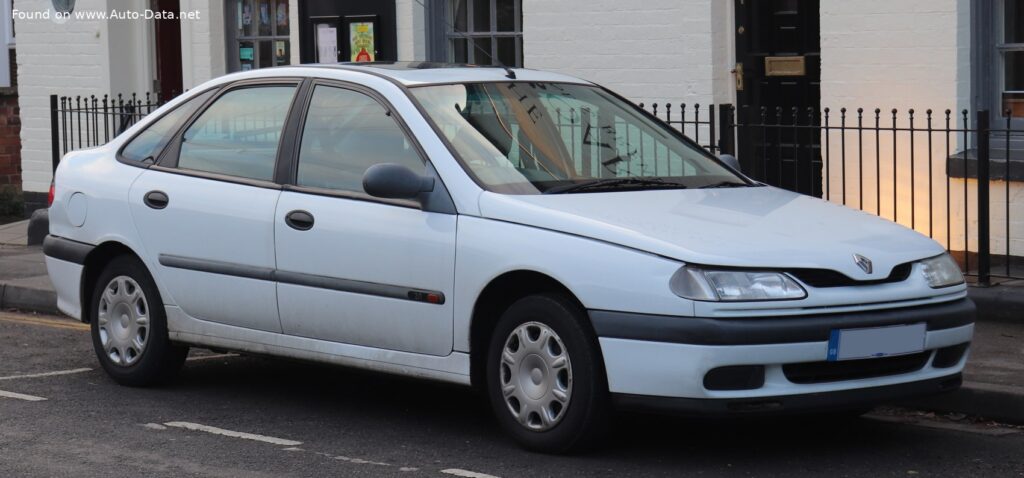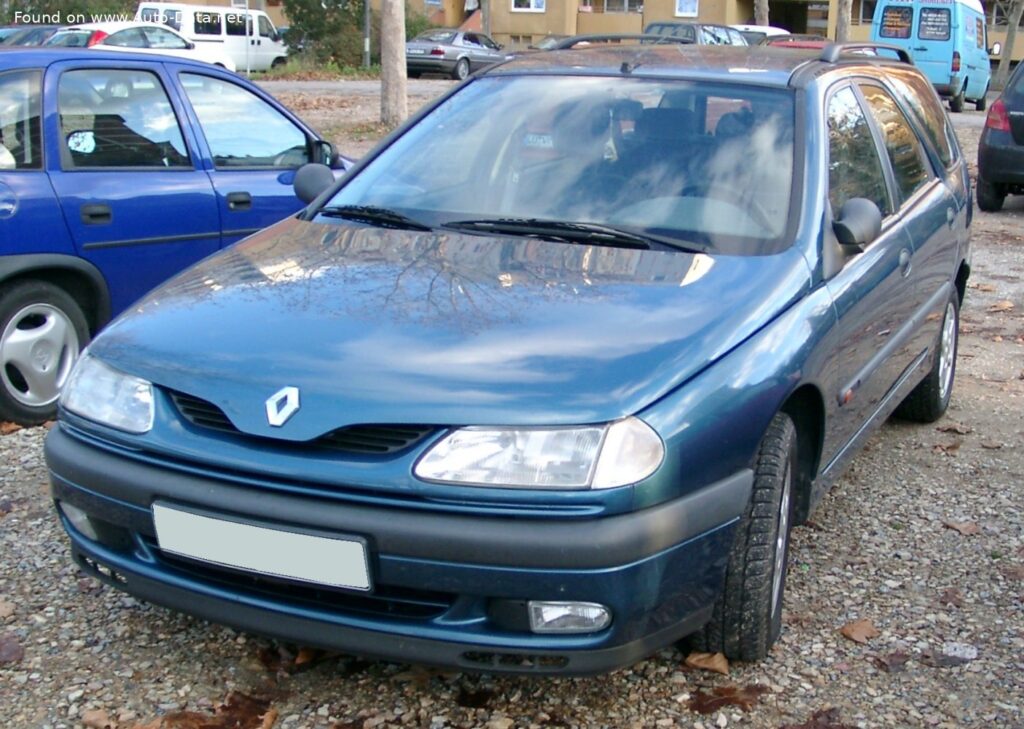
The Renault Laguna Grandtour 1.8 16V (120 Hp), produced between 1998 and 2000, represented a compelling offering in the highly competitive European D-segment. As the station wagon variant of the second-generation Laguna, the Grandtour was designed to cater to families and individuals prioritizing practicality, space, and comfort without compromising on driving dynamics. This particular iteration, powered by a 1.8-liter 16-valve engine, positioned itself as a sensible yet capable choice within its class, blending Renault’s reputation for safety and innovation with the inherent versatility of a station wagon body style. While not officially sold in the United States, the Laguna Grandtour played a significant role in solidifying Renault’s presence across European markets, offering a blend of French design flair and robust engineering that appealed to a broad customer base seeking a reliable and spacious family vehicle.
Engine and Performance: The Heart of the Renault Laguna Grandtour 1.8 16V (120 Hp)
At the core of the Renault Laguna Grandtour 1.8 16V (120 Hp) lies the F4P engine, a naturally aspirated inline four-cylinder unit renowned for its balance of efficiency and adequate power delivery. With an engine displacement of 1783 cubic centimeters (1.8 liters or 108.81 cubic inches), this powerplant was engineered for smooth operation and responsive performance in everyday driving scenarios. It generates a peak output of 120 horsepower at 5750 revolutions per minute, providing a respectable power-to-liter ratio of 67.3 horsepower per liter. Torque figures are equally important for a family hauler, and the engine delivers 121.7 lb.-ft. (165 Nm) of torque at a relatively low 3500 rpm. This characteristic ensures strong pull from lower engine speeds, which is crucial for urban driving, overtaking maneuvers, and when the vehicle is loaded with passengers or cargo.
The F4P engine features a DOHC (Dual Overhead Camshaft) valvetrain with four valves per cylinder, optimizing airflow for improved combustion efficiency. Fuel delivery is managed by a multi-port manifold injection system, a standard and reliable technology for the era, ensuring precise fuel metering. The engine’s configuration is front, transverse, driving the front wheels through a 5-speed manual transmission. This drivetrain architecture is typical for vehicles in this segment, offering a good balance of packaging efficiency and predictable handling dynamics. The compression ratio stands at 10:1, indicative of a design focused on maximizing power output while maintaining fuel economy.
In terms of performance, the Laguna Grandtour 1.8 16V could accelerate from 0 to 60 mph in a computed 10.5 seconds (0-100 km/h in 11.1 seconds), making it competitive within its class for the late 1990s. Its maximum speed of 121.17 mph (195 km/h) was more than sufficient for highway cruising on European autobahns. Fuel economy figures, while measured by the European cycle, translate to approximately 21.8 US mpg in urban conditions and an impressive 36.2 US mpg on the extra-urban cycle, highlighting its potential for economical long-distance travel. The 66-liter (17.44 US gallon) fuel tank further reinforced its touring capabilities, offering a substantial range between refills. The engine oil capacity is 5.3 liters, and the coolant system holds 7 liters, indicating robust thermal management for sustained performance.
Design and Features: Practicality Meets European Style
The Renault Laguna Grandtour’s design prioritizes functionality and space, embodying the quintessential European station wagon. Its five-door, five-seat configuration provides ample room for occupants and their belongings. With an overall length of 181.89 inches (4620 mm), a width of 68.9 inches (1750 mm), and a height of 57.09 inches (1450 mm), the Grandtour struck a balance between a manageable footprint and generous interior volume. The wheelbase of 105.12 inches (2670 mm) contributed to a stable ride and maximized cabin space, particularly for rear passengers.
One of the Grandtour’s most significant advantages was its cargo capacity. It offered a minimum trunk space of 31.43 cubic feet (890 liters), which could expand to a cavernous 65.33 cubic feet (1850 liters) with the rear seats folded down. This impressive volume made it an ideal choice for families, outdoor enthusiasts, or anyone needing to transport substantial luggage or gear. The kerb weight of 2843.96 lbs (1290 kg) and a maximum permissible weight of 4210.83 lbs (1910 kg) allowed for a substantial maximum load of 1366.87 lbs (620 kg), underscoring its utility.
For its time, the Laguna Grandtour incorporated key safety and comfort features. The vehicle was equipped with ABS (Anti-lock Braking System) as a standard assisting system, significantly enhancing braking performance and control, especially in adverse conditions. The braking system itself comprised ventilated discs at the front for effective heat dissipation and traditional drum brakes at the rear, a common setup for family vehicles of this vintage. Steering was handled by a rack and pinion system with hydraulic power steering, providing a direct feel and effortless maneuverability. The suspension system featured wishbones at the front, offering precise wheel control, and a torsion beam setup at the rear, a compact and robust design that maximized cargo space without overly compromising ride comfort. The car rode on 185/65 R14 tires mounted on 14-inch wheel rims, a practical choice offering a good balance of comfort and cost-effectiveness for tire replacement.
Market Position and Legacy
The Renault Laguna Grandtour 1.8 16V (120 Hp) occupied a vital niche in the European automotive landscape. It competed against other popular D-segment station wagons such as the Ford Mondeo Estate, Opel Vectra Caravan, and Peugeot 406 Break. Its primary appeal lay in its blend of spaciousness, comfortable ride quality, and a reputation for solid build quality that was improving with each Renault generation. The Grandtour was particularly favored by families and company car drivers who required a versatile vehicle for both daily commutes and longer journeys. Its conservative yet elegant styling, combined with a practical interior, ensured it remained a strong contender in a segment where utility often trumped outright flair.
While the Laguna nameplate, and indeed Renault’s direct presence, never fully established itself in the US market, the principles embodied by the Grandtour resonate with American consumers who value practicality and space in their vehicles. Its technical specifications—from the efficient 1.8-liter engine to its robust suspension and comprehensive safety features like ABS—reflect the global trends in automotive engineering during the late 20th century. The Laguna Grandtour’s legacy is one of a dependable, well-engineered family car that successfully met the demands of its target market, providing a comfortable and capable driving experience for thousands of European families.
Technical Specifications: Renault Laguna Grandtour 1.8 16V (120 Hp) (1998-2000)
Below is a comprehensive breakdown of the technical specifications for the Renault Laguna Grandtour 1.8 16V (120 Hp), offering a detailed look at its general characteristics, performance, engine, dimensions, and drivetrain.
| Brand | Renault |
| Model | Laguna |
| Generation | Laguna Grandtour |
| Type (Engine) | 1.8 16V (120 Hp) |
| Start of production | 1998 year |
| End of production | 2000 year |
| Powertrain Architecture | Internal Combustion engine |
| Body type | Station wagon (estate) |
| Seats | 5 |
| Doors | 5 |
| Fuel consumption (economy) – urban | 10.8 l/100 km (21.8 US mpg) |
| Fuel consumption (economy) – extra urban | 6.5 l/100 km (36.2 US mpg) |
| Fuel Type | Petrol (Gasoline) |
| Acceleration 0 – 60 mph | 10.5 sec |
| Maximum speed | 121.17 mph (195 km/h) |
| Weight-to-power ratio | 10.8 kg/Hp, 93 Hp/tonne |
| Weight-to-torque ratio | 7.8 kg/Nm, 127.9 Nm/tonne |
| Power | 120 Hp @ 5750 rpm |
| Power per litre | 67.3 Hp/l |
| Torque | 121.7 lb.-ft. @ 3500 rpm (165 Nm) |
| Engine layout | Front, Transverse |
| Engine Model/Code | F4P |
| Engine displacement | 1.8 l (1783 cm3 / 108.81 cu. in.) |
| Number of cylinders | 4 |
| Engine configuration | Inline |
| Cylinder Bore | 3.26 in. (82.7 mm) |
| Piston Stroke | 3.27 in. (83 mm) |
| Compression ratio | 10:1 |
| Number of valves per cylinder | 4 |
| Fuel injection system | Multi-port manifold injection |
| Engine aspiration | Naturally aspirated engine |
| Valvetrain | DOHC |
| Engine oil capacity | 5.3 l (5.6 US qt) |
| Coolant | 7 l (7.4 US qt) |
| Kerb Weight | 2843.96 lbs (1290 kg) |
| Max. weight | 4210.83 lbs (1910 kg) |
| Max load | 1366.87 lbs (620 kg) |
| Trunk (boot) space – minimum | 31.43 cu. ft. (890 l) |
| Trunk (boot) space – maximum | 65.33 cu. ft. (1850 l) |
| Fuel tank capacity | 17.44 US gal (66 l) |
| Length | 181.89 in. (4620 mm) |
| Width | 68.9 in. (1750 mm) |
| Height | 57.09 in. (1450 mm) |
| Wheelbase | 105.12 in. (2670 mm) |
| Front track | 58.27 in. (1480 mm) |
| Rear (Back) track | 57.48 in. (1460 mm) |
| Drivetrain Architecture | Front wheel drive, Internal Combustion engine |
| Drive wheel | Front wheel drive |
| Number of gears and type of gearbox | 5 gears, manual transmission |
| Front suspension | Wishbone |
| Rear suspension | Torsion |
| Front brakes | Ventilated discs |
| Rear brakes | Drum |
| Assisting systems | ABS (Anti-lock braking system) |
| Steering type | Steering rack and pinion |
| Power steering | Hydraulic Steering |
| Tires size | 185/65 R14 |
| Wheel rims size | 14 |