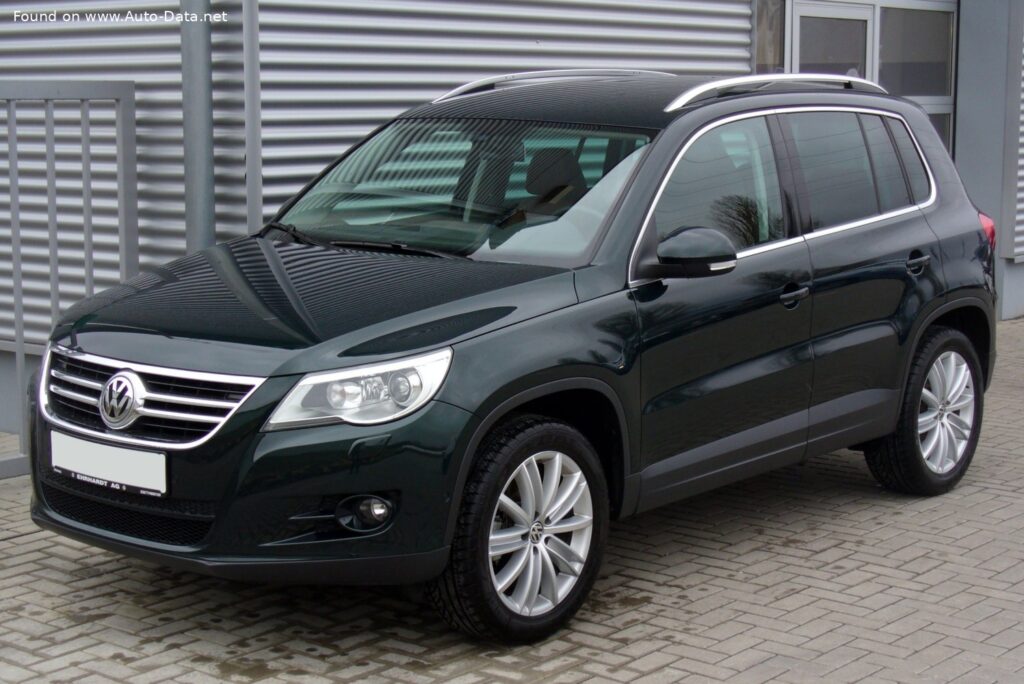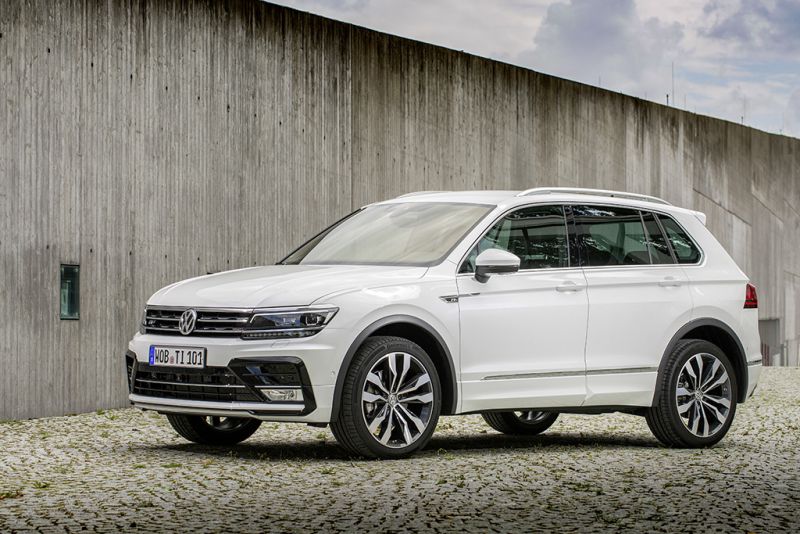
The Volkswagen Tiguan II 1.5 TSI (130 Hp) ACT represents a compelling entry in the highly competitive compact SUV segment, specifically tailored for the European market. As part of the second generation Tiguan, which debuted in 2016, this particular variant, identifiable by its 1.5-liter TSI engine with 130 horsepower and Active Cylinder Technology (ACT), offered a sophisticated blend of efficiency, practicality, and modern Volkswagen engineering. Produced for a brief window between January and July 2019, this model underscored Volkswagen’s commitment to optimizing internal combustion engines for lower emissions and improved fuel economy, even as the industry began its pivot towards electrification. The Tiguan II, known for its sharp styling, spacious interior, and refined driving dynamics, quickly became a cornerstone of Volkswagen’s global sales, offering a more versatile and family-friendly alternative to traditional sedans and hatchbacks.
Engine & Performance: The Volkswagen Tiguan II 1.5 TSI (130 Hp) ACT Powertrain
At the heart of this particular Volkswagen Tiguan II variant is the advanced 1.5-liter TSI (Turbocharged Stratified Injection) engine, a four-cylinder inline unit meticulously engineered for both spirited performance and remarkable efficiency. Designated with the engine code DACB, this powertrain features a displacement of 1498 cm3 (91.41 cu. in.), and is equipped with a sophisticated direct injection fuel system, a turbocharger, and an intercooler to maximize power output and responsiveness across the rev range. It delivers a respectable 130 horsepower at 5000 rpm, with a robust peak torque of 220 Nm (162.26 lb-ft) available from a low 1750 rpm and sustained up to 3500 rpm. This broad torque band ensures flexible driving characteristics, whether navigating urban environments or cruising on the open highway.
A key technological highlight of this engine is Volkswagen’s Active Cylinder Technology (ACT). This innovative system enhances fuel economy by seamlessly deactivating two of the four cylinders under light to moderate loads. For instance, when coasting or driving with minimal throttle input, the engine can operate on just two cylinders, significantly reducing fuel consumption and CO2 emissions without the driver perceiving any noticeable change in performance. This is complemented by a Start & Stop system, which further conserves fuel during idle periods, and a particulate filter to meet stringent European emission standards. The result is an impressive combined fuel economy rating of 5.7 l/100 km, translating to approximately 41.3 US miles per gallon, with urban consumption at 7.1 l/100 km (33.1 US mpg) and extra-urban at 5.0 l/100 km (47 US mpg). CO2 emissions stand at a commendably low 130 g/km, adhering to the Euro 6 emission standard.
Power is efficiently transferred to the front wheels via a precise 6-speed manual transmission, offering engaging control for the driver. This front-wheel-drive architecture, combined with the engine’s transverse layout, contributes to the Tiguan’s balanced handling and packaging efficiency. In terms of outright performance, the Volkswagen Tiguan II 1.5 TSI (130 Hp) ACT is capable of accelerating from 0 to 60 mph in a swift 9.7 seconds, reaching a maximum speed of 119.3 mph (192 km/h). The vehicle’s weight-to-power ratio is 11.1 kg/Hp (90 Hp/tonne), and its weight-to-torque ratio is 6.6 kg/Nm (152.2 Nm/tonne), indicating a well-balanced power delivery for its segment. The powertrain’s combination of direct injection, turbocharging, and cylinder deactivation technology exemplifies Volkswagen’s engineering prowess in delivering efficient yet dynamic performance in a compact SUV package.
Design & Features of the Volkswagen Tiguan II
The Volkswagen Tiguan II, including the 1.5 TSI (130 Hp) ACT variant, embodies a contemporary and purposeful design language that is both elegant and robust. As a five-door, five-seat SUV, it strikes a balance between urban maneuverability and family-friendly utility. Its dimensions are well-proportioned for the compact SUV class, with an overall length of 4486 mm (176.61 in.), a width of 1839 mm (72.4 in.) (2099 mm / 82.64 in. including mirrors), and a height of 1654 mm (65.12 in.). The generous wheelbase of 2677 mm (105.39 in.) is a significant contributor to the Tiguan’s spacious interior and stable ride quality, providing ample legroom for both front and rear passengers.
Practicality is a cornerstone of the Tiguan’s design. The vehicle boasts an impressive minimum trunk (boot) space of 615 liters (21.72 cu. ft.), which can expand to a cavernous 1655 liters (58.45 cu. ft.) with the rear seats folded down. This flexibility makes it highly suitable for families, outdoor enthusiasts, or anyone requiring substantial cargo capacity. The fuel tank capacity of 58 liters (15.32 US gallons) ensures a good driving range, complementing its efficient engine. Furthermore, the Tiguan II is designed for versatility, with a maximum roof load of 75 kg (165.35 lbs) and substantial towing capabilities, including a permitted trailer load with brakes (12%) of 1600 kg (3527.4 lbs) and without brakes of 750 kg (1653.47 lbs).
Underneath its stylish exterior, the Tiguan II features a well-engineered chassis designed for comfort and control. The vehicle is equipped with ventilated disc brakes at the front and disc brakes at the rear, ensuring confident stopping power, further enhanced by an Anti-lock Braking System (ABS). The steering system utilizes a rack and pinion setup with electric power steering, providing precise feedback and effortless maneuverability, particularly in tight urban spaces. With a minimum turning circle of 11.5 meters (37.73 ft.) and a ground clearance of 191 mm (7.52 in.), the Tiguan offers both agility and the ability to tackle light off-road conditions or challenging urban curbs. The standard tire size is 215/65 R17, mounted on 7J x 17 wheel rims, contributing to a comfortable ride and stable handling. The overall design ethos of the Volkswagen Tiguan II 1.5 TSI (130 Hp) ACT emphasizes a harmonious blend of sophisticated aesthetics, robust utility, and advanced engineering, making it a highly desirable option in its segment.
Technical Specifications
| Brand | Volkswagen |
| Model | Tiguan |
| Generation | Tiguan II |
| Type (Engine) | 1.5 TSI (130 Hp) ACT |
| Start of production | January, 2019 year |
| End of production | July, 2019 year |
| Powertrain Architecture | Internal Combustion engine |
| Body type | SUV |
| Seats | 5 |
| Doors | 5 |
| Fuel consumption (economy) – urban | 7.1 l/100 km (33.1 US mpg / 39.8 UK mpg) |
| Fuel consumption (economy) – extra urban | 5.0 l/100 km (47 US mpg / 56.5 UK mpg) |
| Fuel consumption (economy) – combined | 5.7 l/100 km (41.3 US mpg / 49.6 UK mpg) |
| CO2 emissions | 130 g/km |
| Fuel Type | Petrol (Gasoline) |
| Acceleration 0 – 100 km/h | 10.2 sec |
| Acceleration 0 – 62 mph | 10.2 sec |
| Acceleration 0 – 60 mph (Calculated by Auto-Data.net) | 9.7 sec |
| Maximum speed | 192 km/h (119.3 mph) |
| Emission standard | Euro 6 |
| Weight-to-power ratio | 11.1 kg/Hp (90 Hp/tonne) |
| Weight-to-torque ratio | 6.6 kg/Nm (152.2 Nm/tonne) |
| Power | 130 Hp @ 5000 rpm. |
| Power per litre | 86.8 Hp/l |
| Torque | 220 Nm @ 1750-3500 rpm. (162.26 lb.-ft.) |
| Engine layout | Front, Transverse |
| Engine Model/Code | DACB |
| Engine displacement | 1498 cm3 (91.41 cu. in.) |
| Number of cylinders | 4 |
| Engine configuration | Inline |
| Number of valves per cylinder | 4 |
| Fuel injection system | Direct injection |
| Engine aspiration | Turbocharger, Intercooler |
| Engine oil capacity | 4.3 l (4.54 US qt / 3.78 UK qt) |
| Engine oil specification | Log in to see. |
| Engine systems | Start & Stop System, Cylinder deactivation system, Particulate filter |
| Kerb Weight | 1445 kg (3185.68 lbs.) |
| Max. weight | 2100 kg (4629.71 lbs.) |
| Max load | 655 kg (1444.03 lbs.) |
| Trunk (boot) space – minimum | 615 l (21.72 cu. ft.) |
| Trunk (boot) space – maximum | 1655 l (58.45 cu. ft.) |
| Fuel tank capacity | 58 l (15.32 US gal / 12.76 UK gal) |
| Max. roof load | 75 kg (165.35 lbs.) |
| Permitted trailer load with brakes (8%) | 1800 kg (3968.32 lbs.) |
| Permitted trailer load with brakes (12%) | 1600 kg (3527.4 lbs.) |
| Permitted trailer load without brakes | 750 kg (1653.47 lbs.) |
| Permitted towbar download | 100 kg (220.46 lbs.) |
| Length | 4486 mm (176.61 in.) |
| Width | 1839 mm (72.4 in.) |
| Width including mirrors | 2099 mm (82.64 in.) |
| Height | 1654 mm (65.12 in.) |
| Wheelbase | 2677 mm (105.39 in.) |
| Front track | 1579-1589 mm (62.17 – 62.56 in.) |
| Rear (Back) track | 1570-1580 mm (61.81 – 62.2 in.) |
| Ride height (ground clearance) | 191 mm (7.52 in.) |
| Minimum turning circle (turning diameter) | 11.5 m (37.73 ft.) |
| Drivetrain Architecture | The Internal combustion engine (ICE) drives the front wheels of the vehicle. |
| Drive wheel | Front wheel drive |
| Number of gears and type of gearbox | 6 gears, manual transmission |
| Front brakes | Ventilated discs |
| Rear brakes | Disc |
| Assisting systems | ABS (Anti-lock braking system) |
| Steering type | Steering rack and pinion |
| Power steering | Electric Steering |
| Tires size | 215/65 R17 |
| Wheel rims size | 7J x 17 |