
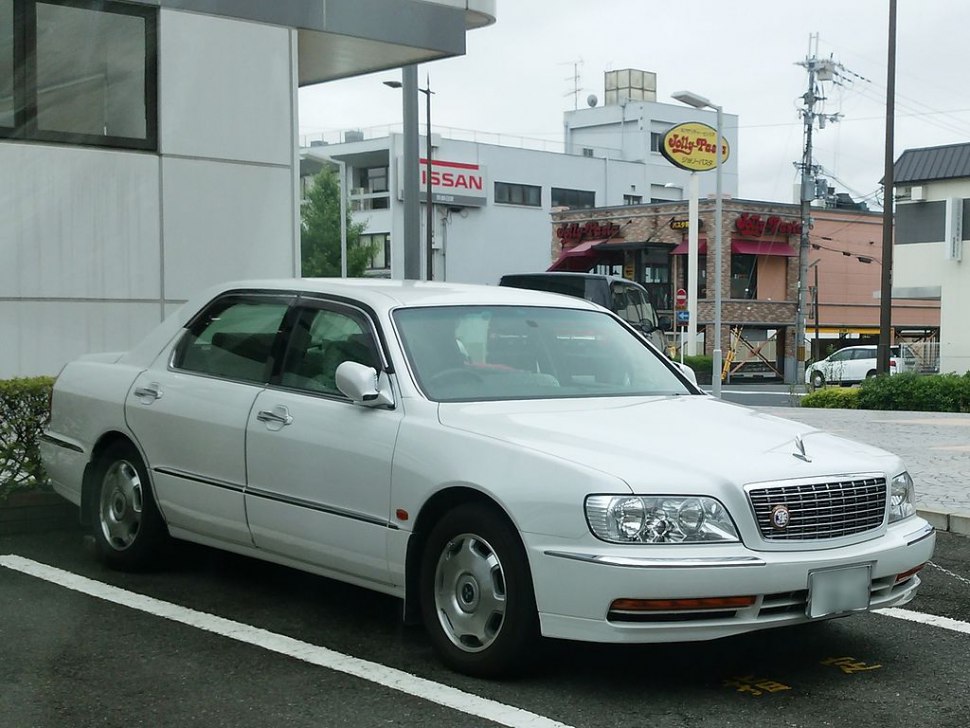
The Mitsubishi Proudia/Dignity represented Mitsubishi’s ambitious foray into the full-size luxury sedan segment within the highly competitive Japanese domestic market (JDM) at the turn of the millennium. Launched in 1999 and produced for a brief period until 2001, this flagship vehicle was a testament to Mitsubishi’s engineering capabilities and its desire to offer a premium, chauffeur-driven experience. The Proudia, meaning “proud” and “diamond,” was designed as the standard luxury sedan, while the Dignity, a portmanteau of “Dignified” and “Quality,” was the ultra-luxury, long-wheelbase variant, directly competing with established giants like the Toyota Celsior (Lexus LS 400 in the US) and Nissan Cima (Infiniti Q45). This first and only generation of the Mitsubishi Proudia/Dignity aimed to blend stately design, advanced technology, and refined performance into a sophisticated package, albeit with a unique front-wheel-drive architecture for its class.
Engineering and Performance of the Mitsubishi Proudia/Dignity
Powering the Mitsubishi Proudia/Dignity 3.5 24V (241 Hp) was a sophisticated 3.5-liter V6 engine, meticulously engineered to deliver a balance of smooth power and refinement befitting a luxury sedan. This naturally aspirated, 24-valve powerplant, designated as a DOHC (Double Overhead Camshaft) unit, was notable for its use of direct injection, a relatively advanced fuel delivery system for a non-turbocharged engine in the late 1990s. This technology allowed for more precise fuel metering, contributing to improved efficiency and power output. The engine produced a robust 241 horsepower at 5500 rpm, providing ample thrust for highway cruising and confident acceleration. Torque figures were equally impressive for its displacement, peaking at 343 Nm (252.98 lb.-ft.) at a relatively low 2500 rpm. This broad torque band ensured strong off-the-line performance and flexible power delivery throughout the rev range, making for a relaxed yet responsive driving experience.
The 3497 cm³ (213.4 cu. in.) V6 engine featured a bore of 93 mm (3.66 in.) and a piston stroke of 85.8 mm (3.38 in.), combined with a compression ratio of 10.4:1, optimizing combustion efficiency. Power was transmitted to the front wheels via a smooth-shifting 5-speed automatic transmission, a configuration that was somewhat unconventional for a full-size luxury sedan of that era, where rear-wheel drive was typically preferred for its handling dynamics and traditional luxury appeal. Despite its FWD setup, the Proudia/Dignity was engineered for comfort and stability, characteristic of its Japanese luxury competitors. The vehicle’s top speed was electronically limited to 180 km/h (111.85 mph), a common practice for JDM vehicles at the time, reflecting a gentleman’s agreement among Japanese automakers.
Fuel efficiency, while not the primary concern for a luxury flagship, was respectable for a vehicle of its size and power. The Mitsubishi Proudia/Dignity recorded an urban fuel consumption of 16 liters per 100 kilometers, equating to approximately 14.7 US mpg. On the highway, or extra-urban cycle, efficiency improved significantly to 9 liters per 100 kilometers, or about 26.1 US mpg. These figures highlight the engine’s capability to deliver reasonable economy when cruising, supported by the efficient 5-speed automatic gearbox. With a generous 80-liter (21.13 US gallon) fuel tank, the Proudia/Dignity offered a substantial cruising range, enhancing its suitability for long-distance travel. The vehicle’s weight-to-power ratio stood at 8.1 kg/Hp (123.6 Hp/tonne), indicating a solid performance capability for a sedan weighing 1950 kg (4299.01 lbs) at the curb.
Design and Features of the Mitsubishi Proudia/Dignity
The design philosophy behind the Mitsubishi Proudia/Dignity emphasized stately elegance and a commanding road presence. As a four-door, five-seat sedan, its dimensions were substantial, measuring 5050 mm (198.82 in.) in length, 1870 mm (73.62 in.) in width, and 1480 mm (58.27 in.) in height. A generous wheelbase of 2830 mm (111.42 in.) contributed significantly to the interior space and ride comfort, particularly for rear-seat passengers, a crucial aspect for a JDM luxury sedan often used for chauffeuring. The exterior styling was conservative yet sophisticated, featuring clean lines, a prominent grille, and large headlamps that conveyed an air of prestige and understated luxury, aligning with the aesthetic preferences of its target market.
Inside, the Proudia/Dignity was designed to offer a plush and serene cabin environment. While specific interior features beyond seating capacity are not detailed, it can be inferred that a flagship luxury sedan of this era would have included a comprehensive suite of amenities. These would likely have encompassed automatic climate control, premium audio systems, power-adjustable seating with memory functions, high-quality leather upholstery, wood or metallic trim accents, and extensive sound insulation to ensure a quiet ride. The trunk space was a practical 505 liters (17.83 cu. ft.), ample for luggage or golf clubs, catering to the needs of its executive clientele.
Underpinning the ride quality and handling were coil spring suspensions at both the front and rear, designed to absorb road imperfections effectively and provide a smooth, composed ride. Braking performance was handled by disc brakes on all four wheels, complemented by an Anti-lock Braking System (ABS), a critical safety feature that was becoming standard in premium vehicles of the late 1990s. Steering was managed by a rack and pinion system with hydraulic power steering, offering precise control and ease of maneuverability despite the vehicle’s size. The car rode on 225/60 R16 tires, providing a good balance of grip and ride comfort. Despite its relatively short production run, the Mitsubishi Proudia/Dignity stands as an intriguing example of Mitsubishi’s ambition in the luxury segment, showcasing advanced engineering and a refined package tailored for the discerning Japanese luxury car buyer.
Technical Specifications: Mitsubishi Proudia/Dignity 3.5 24V (241 Hp)
| Brand | Mitsubishi |
| Model | Proudia/Dignity |
| Generation | Proudia/Dignity |
| Type (Engine) | 3.5 24V (241 Hp) |
| Start of production | 1999 year |
| End of production | 2001 year |
| Powertrain Architecture | Internal Combustion engine |
| Body type | Sedan |
| Seats | 5 |
| Doors | 4 |
| Fuel consumption (economy) – urban | 16 l/100 km (14.7 US mpg) |
| Fuel consumption (economy) – extra urban | 9 l/100 km (26.1 US mpg) |
| Fuel Type | Petrol (Gasoline) |
| Maximum speed | 180 km/h (111.85 mph) |
| Weight-to-power ratio | 8.1 kg/Hp (123.6 Hp/tonne) |
| Weight-to-torque ratio | 5.7 kg/Nm (175.9 Nm/tonne) |
| Power | 241 Hp @ 5500 rpm |
| Power per litre | 68.9 Hp/l |
| Torque | 343 Nm @ 2500 rpm (252.98 lb.-ft. @ 2500 rpm) |
| Engine layout | Front, Transverse |
| Engine displacement | 3497 cm³ (3.5 l, 213.4 cu. in.) |
| Number of cylinders | 6 |
| Engine configuration | V-engine |
| Cylinder Bore | 93 mm (3.66 in.) |
| Piston Stroke | 85.8 mm (3.38 in.) |
| Compression ratio | 10.4:1 |
| Number of valves per cylinder | 4 |
| Fuel injection system | Direct injection |
| Engine aspiration | Naturally aspirated engine |
| Valvetrain | DOHC |
| Kerb Weight | 1950 kg (4299.01 lbs) |
| Trunk (boot) space – minimum | 505 l (17.83 cu. ft.) |
| Fuel tank capacity | 80 l (21.13 US gal) |
| Length | 5050 mm (198.82 in.) |
| Width | 1870 mm (73.62 in.) |
| Height | 1480 mm (58.27 in.) |
| Wheelbase | 2830 mm (111.42 in.) |
| Front track | 1615 mm (63.58 in.) |
| Rear (Back) track | 1615 mm (63.58 in.) |
| Drivetrain Architecture | The Internal combustion engine (ICE) drives the front wheels of the vehicle. |
| Drive wheel | Front wheel drive |
| Number of gears and type of gearbox | 5 gears, automatic transmission |
| Front suspension | Coil spring |
| Rear suspension | Coil spring |
| Front brakes | Disc |
| Rear brakes | Disc |
| Assisting systems | ABS (Anti-lock braking system) |
| Steering type | Steering rack and pinion |
| Power steering | Hydraulic Steering |
| Tires size | 225/60 R16 |
