
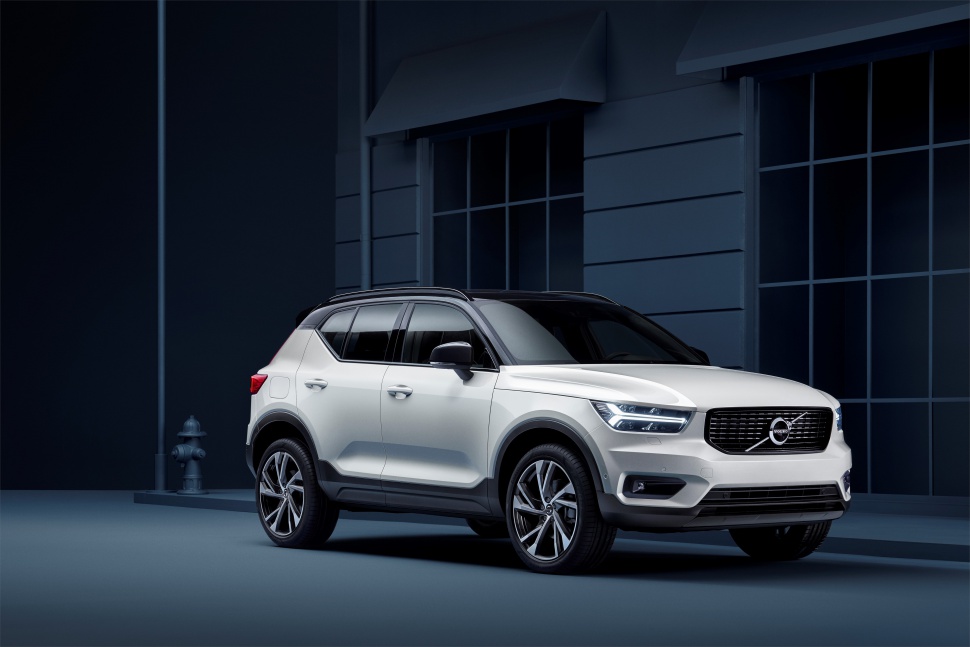
The Volvo XC40 1.5 T2 (129 Hp) represents a compelling entry into the compact luxury SUV segment, embodying Volvo’s modern design philosophy, commitment to safety, and increasingly diversified powertrain offerings. Launched in February 2020 and produced until March 2022, this particular variant of the XC40 was primarily tailored for European markets, where its efficient yet capable 1.5-liter engine and manual transmission appealed to consumers seeking a balance of urban agility, premium feel, and lower emissions. As a key player in Volvo’s third SUV line, the XC40 carved out its niche with distinctive styling, intelligent packaging, and a strong emphasis on user-centric technology, extending the brand’s reputation for Scandinavian elegance and robust engineering to a more accessible and youthful demographic.
Engine and Performance: The Volvo XC40 1.5 T2 Powertrain
At the heart of the Volvo XC40 1.5 T2 lies a meticulously engineered 1.5-liter (1477 cm³ or 90.13 cu. in.) inline three-cylinder gasoline engine, designated B3154T9. This compact powerhouse is transversely mounted at the front and features a sophisticated DOHC valvetrain with four valves per cylinder. To maximize efficiency and power output from its modest displacement, the engine incorporates direct fuel injection and a turbocharger with an intercooler, a common strategy in modern downsizing trends. This setup enables the engine to deliver a respectable 129 horsepower (Hp) at 5000 rpm, translating to a specific output of 87.3 Hp per liter, which is commendable for a non-performance-oriented engine.
Equally impressive is the torque delivery, with 245 Newton-meters (Nm) or 180.7 lb.-ft. available across a broad and usable rev range from 1620 to 3000 rpm. This flat torque curve is crucial for the XC40’s everyday drivability, ensuring responsive acceleration and minimizing the need for frequent gear changes, particularly in urban environments. Power is channeled to the front wheels via a precise 6-speed manual transmission, offering an engaging driving experience for those who prefer more direct control over their vehicle’s dynamics. The powertrain architecture is front-wheel drive, a configuration that prioritizes efficiency and packaging advantages for a compact SUV.
Performance figures for the Volvo XC40 1.5 T2 reflect its design as a practical and efficient urban cruiser rather than an outright speed demon. The vehicle accelerates from 0 to 60 mph in a calculated 10.4 seconds (0-100 km/h in 10.9 seconds), with a maximum speed of 111.85 mph (180 km/h). While not blisteringly fast, these numbers are entirely adequate for daily commuting and highway travel. Fuel efficiency, measured under the WLTP (Worldwide Harmonized Light Vehicles Test Procedure) cycle, showcases its economical nature. Combined fuel consumption ranges from 6.8 to 7.6 liters per 100 kilometers, which translates to an impressive 34.6 to 30.9 US miles per gallon. This efficiency is complemented by CO2 emissions ranging from 154 to 173 g/km, adhering to the stringent Euro 6d emission standard. Further enhancing its eco-credentials, the engine features a Start & Stop system and a particulate filter, reducing both fuel consumption and harmful emissions.
Design and Features: The Distinctive Volvo XC40 Aesthetic
The Volvo XC40 immediately stands out with its bold and youthful design, a fresh interpretation of Volvo’s contemporary Scandinavian aesthetic. As a compact SUV, it combines robust proportions with sophisticated details, making it equally at home in urban landscapes and on more adventurous excursions. The body type is a classic SUV configuration with five doors and seating for five occupants, offering practical access and versatility. Its dimensions—174.21 inches (4425 mm) in length, 73.35 inches (1863 mm) in width (excluding mirrors), and 65.04 inches (1652 mm) in height—contribute to its commanding road presence while maintaining maneuverability in tight spaces. The wheelbase of 106.38 inches (2702 mm) ensures a stable ride and contributes to a surprisingly spacious interior for its class.
Inside, the XC40 continues Volvo’s tradition of minimalist yet highly functional design. While specific interior features are not detailed in the raw data, as a modern Volvo, it would have included high-quality materials, ergonomic controls, and advanced infotainment systems. The cabin is designed to be intuitive and driver-focused, with ample storage solutions reflecting its practical intent. The trunk space is generous for a compact SUV, offering a minimum of 16.24 cubic feet (460 liters) with the rear seats up, expanding to a substantial 47.18 cubic feet (1336 liters) when the rear seats are folded, making it highly adaptable for cargo needs. The maximum roof load of 165.35 lbs (75 kg) further enhances its utility for carrying bicycles, roof boxes, or other equipment.
Safety, a cornerstone of the Volvo brand, is inherent in the XC40’s design. While not explicitly listed in detail, its robust structure, comprehensive airbag systems, and advanced driver-assistance systems (ADAS) are standard for modern Volvos, contributing to its strong safety ratings. The vehicle’s chassis features an independent McPherson strut front suspension with a coil spring and anti-roll bar, paired with an independent coil spring rear suspension with a transverse stabilizer, providing a comfortable yet composed ride. Braking performance is strong, with disc brakes at both the front (296-345 mm) and rear (302-340 mm), complemented by an Anti-lock Braking System (ABS) for enhanced control. The electric power steering system, with a minimum turning circle of 38.71 feet (11.8 m), ensures light and precise handling, making urban parking and tight turns effortless. With a ground clearance of 8.31 inches (211 mm) and respectable approach, departure, and ramp-over angles, the XC40 also offers a degree of capability for light off-road excursions, including a wading depth of 17.72 inches (450 mm), reinforcing its SUV credentials.
Technical Specifications: Volvo XC40 1.5 T2 (129 Hp)
| Brand | Volvo |
| Model | XC40 |
| Generation | XC40 |
| Type (Engine) | 1.5 T2 (129 Hp) |
| Production Start | February, 2020 |
| Production End | March, 2022 |
| Powertrain Architecture | Internal Combustion engine |
| Body Type | SUV |
| Seats | 5 |
| Doors | 5 |
| Fuel Consumption (Low Speed WLTP) | 8.8-9.6 l/100 km (26.7-24.5 US mpg) |
| Fuel Consumption (Medium Speed WLTP) | 6.6-7.4 l/100 km (35.6-31.8 US mpg) |
| Fuel Consumption (High Speed WLTP) | 5.8-6.6 l/100 km (40.6-35.6 US mpg) |
| Fuel Consumption (Very High Speed WLTP) | 7.0-8.0 l/100 km (33.6-29.4 US mpg) |
| Combined Fuel Consumption (WLTP) | 6.8-7.6 l/100 km (34.6-30.9 US mpg) |
| CO2 Emissions (WLTP) | 154-173 g/km |
| Combined Fuel Consumption (NEDC equivalent) | 6.3-6.4 l/100 km (37.3-36.8 US mpg) |
| CO2 Emissions (NEDC equivalent) | 142-146 g/km |
| Fuel Type | Petrol (Gasoline) |
| Acceleration 0-60 mph | 10.4 sec |
| Acceleration 0-100 km/h | 10.9 sec |
| Maximum Speed | 111.85 mph (180 km/h) |
| Braking Distance 100 km/h – 0 | 36 m |
| Emission Standard | Euro 6d |
| Power | 129 Hp @ 5000 rpm |
| Power per liter | 87.3 Hp/l |
| Torque | 245 Nm (180.7 lb.-ft.) @ 1620-3000 rpm |
| Maximum Engine Speed | 6000 rpm |
| Engine Layout | Front, Transverse |
| Engine Model/Code | B3154T9 |
| Engine Displacement | 1477 cm³ (1.5 l / 90.13 cu. in.) |
| Number of Cylinders | 3 |
| Engine Configuration | Inline |
| Cylinder Bore | 82 mm (3.23 in.) |
| Piston Stroke | 93.2 mm (3.67 in.) |
| Compression Ratio | 10.5:1 |
| Valves per Cylinder | 4 |
| Fuel Injection System | Direct injection |
| Engine Aspiration | Turbocharger, Intercooler |
| Valvetrain | DOHC |
| Engine Oil Capacity | 5.6 l (5.92 US qt) |
| Engine Systems | Start & Stop System, Particulate filter |
| Trunk (Boot) Space (Min) | 460 l (16.24 cu. ft.) |
| Trunk (Boot) Space (Max) | 1336 l (47.18 cu. ft.) |
| Fuel Tank Capacity | 54 l (14.27 US gal) |
| Max. Roof Load | 75 kg (165.35 lbs.) |
| Permitted Trailer Load (with brakes 12%) | 1600 kg (3527.4 lbs.) |
| Permitted Trailer Load (without brakes) | 750 kg (1653.47 lbs.) |
| Length | 4425 mm (174.21 in.) |
| Width | 1863 mm (73.35 in.) |
| Width with Mirrors Folded | 1910 mm (75.2 in.) |
| Width including Mirrors | 2034 mm (80.08 in.) |
| Height | 1652 mm (65.04 in.) |
| Wheelbase | 2702 mm (106.38 in.) |
| Front Track | 1601 mm (63.03 in.) |
| Rear (Back) Track | 1626 mm (64.02 in.) |
| Ride Height (Ground Clearance) | 211 mm (8.31 in.) |
| Drag Coefficient (Cd) | 0.34-0.37 |
| Minimum Turning Circle | 11.8 m (38.71 ft.) |
| Approach Angle | 21.7° |
| Departure Angle | 30.4° |
| Ramp-over (Brakeover) Angle | 21.9° |
| Wading Depth | 450 mm (17.72 in.) |
| Drivetrain Architecture | Internal combustion engine drives front wheels |
| Drive Wheel | Front wheel drive |
| Number of Gears and Type of Gearbox | 6 gears, manual transmission |
| Front Suspension | Independent, McPherson with coil spring and anti-roll bar |
| Rear Suspension | Independent coil spring, Transverse stabilizer |
| Front Brakes | Disc, 296-345 mm |
| Rear Brakes | Disc, 302-340 mm |
| Assisting Systems | ABS (Anti-lock braking system) |
| Steering Type | Steering rack and pinion |
| Power Steering | Electric Steering |
| Wheel Rims Size | 16; 17; 18 |
