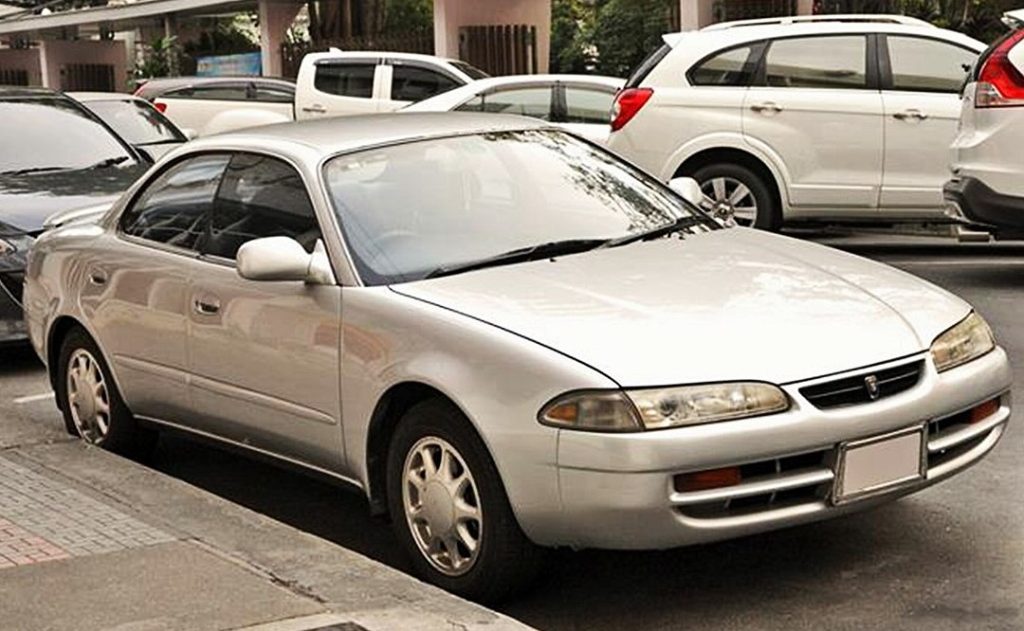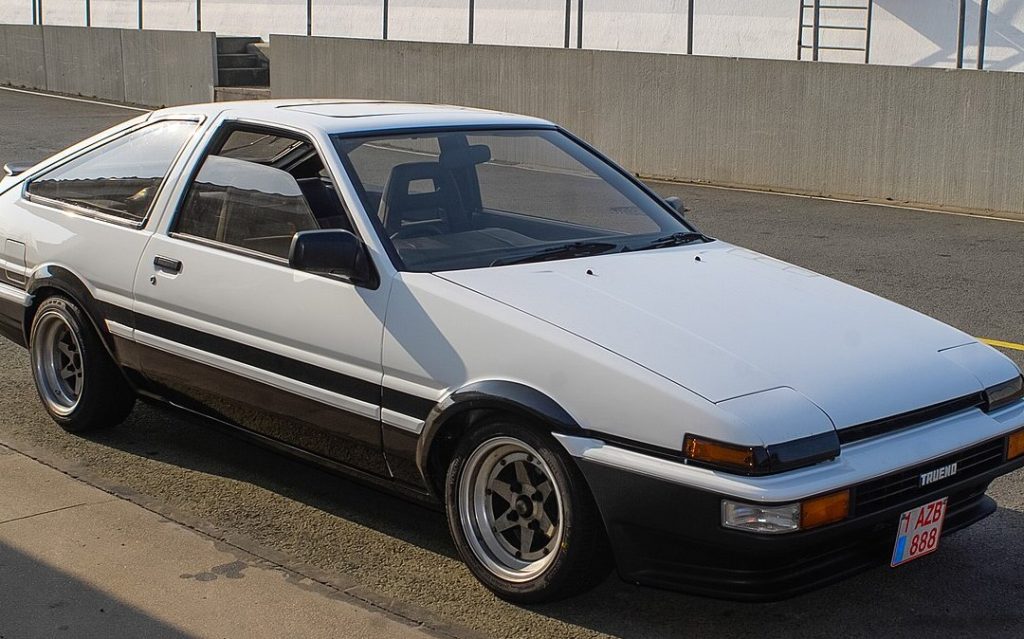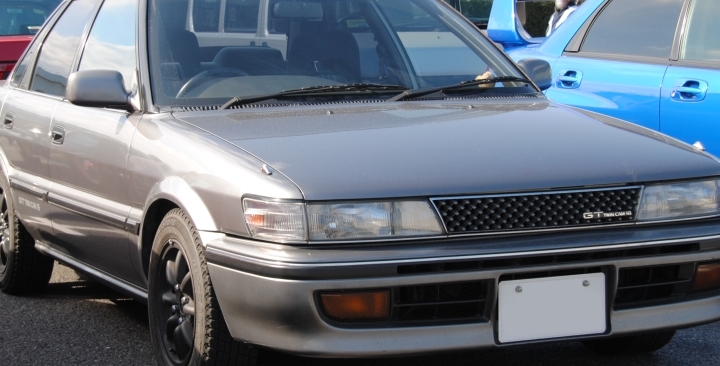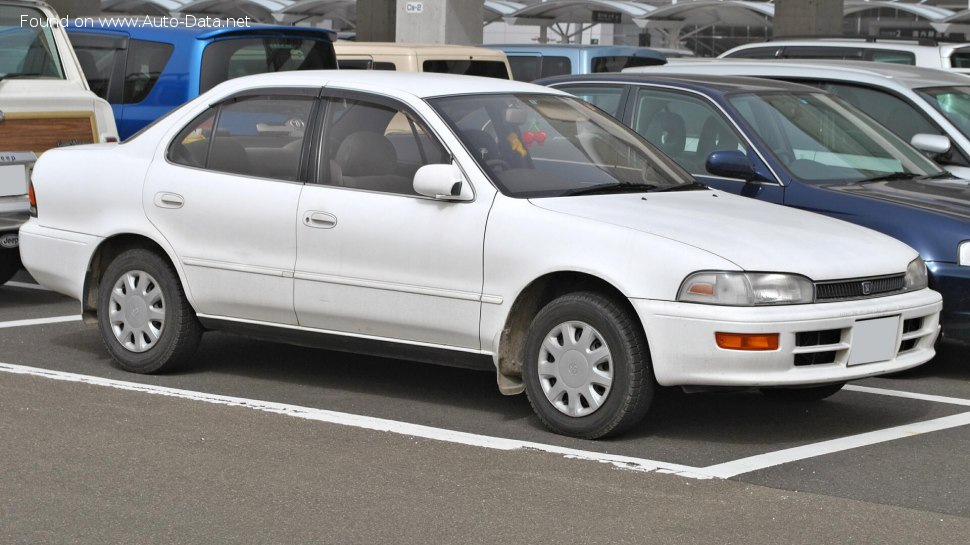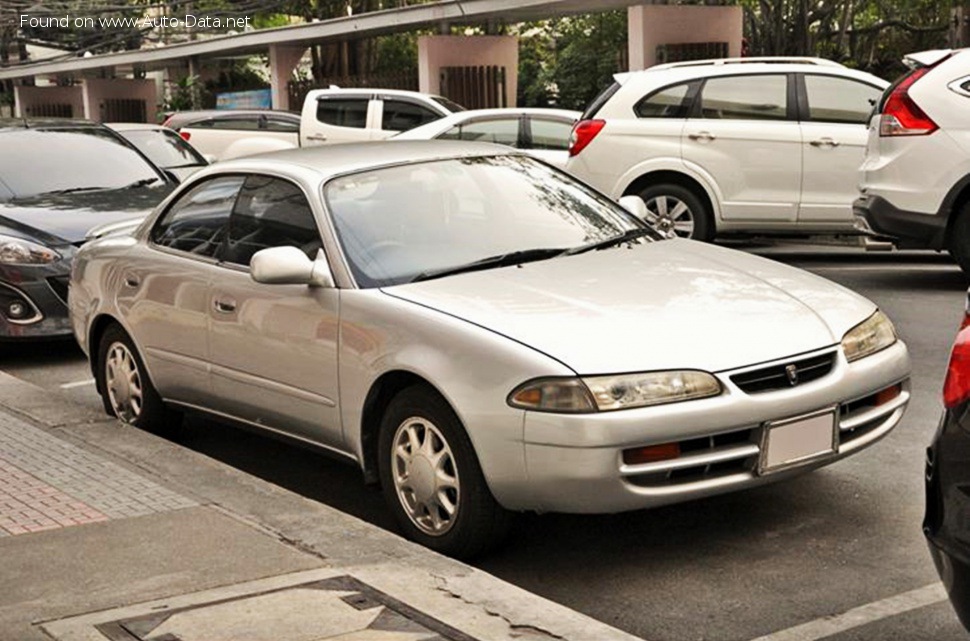
The Toyota Sprinter Marino 1.5 (105 Hp) Automatic represents a distinctive chapter in Toyota’s extensive history, specifically tailored for the Japanese Domestic Market (JDM) during the early to mid-1990s. Launched in 1992 and produced until 1997, the Sprinter Marino emerged as a stylish and practical four-door hardtop sedan, a body style that enjoyed considerable popularity in Japan for its elegant, pillarless design when the windows were lowered. Positioned as a more upscale and sporty variant of the popular Sprinter sedan, the Marino aimed to appeal to buyers seeking a blend of compact maneuverability, Toyota’s renowned reliability, and a touch of sophisticated aesthetics without venturing into larger, more expensive segments. It shared its platform with the Toyota Ceres, forming a twin model strategy common in the Japanese market to offer consumers more choice through different dealer networks. The Toyota Sprinter Marino 1.5 (105 Hp) Automatic was a testament to Toyota’s engineering prowess in creating versatile, segment-specific vehicles that catered to diverse consumer tastes while maintaining a core commitment to efficiency and build quality.
Engine and Performance of the Toyota Sprinter Marino
At the heart of the Toyota Sprinter Marino 1.5 (105 Hp) Automatic lies a meticulously engineered 1.5-liter (1498 cm3 or 91.41 cu. in.) inline four-cylinder engine. This powertrain, designated as a naturally aspirated unit, was designed to strike an optimal balance between fuel efficiency, smooth operation, and adequate power for urban and highway driving conditions prevalent in Japan. Featuring a Double Overhead Camshaft (DOHC) valvetrain with four valves per cylinder, the engine delivered a respectable 105 horsepower at a relatively high 6400 rpm. This DOHC configuration, advanced for a compact sedan of its era, allowed for better airflow and more precise valve timing, contributing to the engine’s spirited performance at higher revolutions per minute. The power per liter stood at 70.1 Hp/l, indicating a fairly efficient and well-tuned engine for its displacement.
Torque output for this 1.5-liter engine stood at 127 Nm (93.67 lb.-ft.) delivered at a low 3200 rpm. The early availability of peak torque meant that the Sprinter Marino offered responsive acceleration from a standstill and sufficient pulling power for daily commuting, even with the automatic transmission. The engine’s layout was front, transverse, a common and efficient configuration for front-wheel-drive vehicles, optimizing cabin space and weight distribution. Fuel was supplied via a multi-port manifold injection system, ensuring precise fuel delivery and combustion, which enhanced both power output and fuel economy. With a compression ratio of 9.4:1, the engine was designed to run efficiently on standard gasoline (petrol).
The power was transferred to the front wheels through a 4-speed automatic transmission. While not as sophisticated as modern multi-gear units, this automatic gearbox provided smooth and comfortable shifts, perfectly suited for the car’s intended role as a reliable and easy-to-drive daily vehicle. The drivetrain architecture, with the internal combustion engine driving the front wheels, contributed to predictable handling and good traction, especially in varied weather conditions. The weight-to-power ratio of 9.8 kg/Hp (101.9 Hp/tonne) and a weight-to-torque ratio of 8.1 kg/Nm (123.3 Nm/tonne) indicated a car that, while not a performance titan, was well-matched to its power output, offering a nimble and agile driving experience within its segment. Its focus was on dependability and economical operation rather than outright speed, qualities highly valued by its target demographic.
Design and Features of the Toyota Sprinter Marino
The design of the Toyota Sprinter Marino was one of its most compelling attributes, setting it apart from its more conventional sedan counterparts. Its most distinctive feature was its “hardtop” body type, characterized by the absence of a B-pillar, creating a sleek, uninterrupted window line when all side windows were lowered. This design choice gave the four-door sedan a coupe-like profile, lending it an air of elegance and sportiness that was highly sought after in the Japanese market during the 1990s. With a length of 172.64 inches (4385 mm), a width of 66.73 inches (1695 mm), and a height of 51.77 inches (1315 mm), the Marino possessed compact dimensions that made it well-suited for navigating crowded city streets and tight parking spaces, a critical consideration in its primary market.
Despite its compact exterior, the Sprinter Marino offered a practical interior layout with seating for five occupants across its four doors. The wheelbase of 97.05 inches (2465 mm) provided a stable ride and contributed to a reasonably spacious cabin for its class, making it comfortable for daily commutes and family use. The front track measured 57.87 inches (1470 mm), and the rear track was 57.48 inches (1460 mm), ensuring a balanced stance and decent roadholding capabilities. The minimum turning circle of 32.15 feet (9.8 meters) further underscored its urban agility, allowing for easy U-turns and maneuvering in confined spaces, a significant advantage in densely populated urban environments.
In terms of safety and convenience features for its time, the Sprinter Marino was equipped with a practical set of specifications. Braking duties were handled by ventilated discs at the front, offering effective stopping power and resistance to fade, while the rear utilized reliable drum brakes, a common and cost-effective solution for compact cars of this period. The car rode on 13-inch wheel rims, fitted with 175/70 R13 tires, providing a comfortable ride and predictable handling characteristics suitable for everyday driving. The fuel tank capacity of 13.21 US gallons (50 liters) offered a decent range, reducing the frequency of fuel stops, a beneficial aspect for both city and occasional longer-distance travel. The curb weight of 2270.76 lbs (1030 kg) further highlighted its lightweight construction, contributing to both its nimble handling and overall fuel efficiency. The Sprinter Marino was a prime example of Toyota’s ability to combine practical engineering with appealing design, creating a car that was both functional and aesthetically pleasing for its target audience seeking a blend of style and substance in a compact package.
Technical Specifications
| Brand | Toyota |
| Model | Sprinter |
| Generation | Sprinter Marino |
| Type (Engine) | 1.5 (105 Hp) Automatic |
| Start of production | 1992 year |
| End of production | 1997 year |
| Powertrain Architecture | Internal Combustion engine |
| Body type | Sedan |
| Seats | 5 |
| Doors | 4 |
| Fuel Type | Petrol (Gasoline) |
| Weight-to-power ratio | 9.8 kg/Hp, 101.9 Hp/tonne |
| Weight-to-torque ratio | 8.1 kg/Nm, 123.3 Nm/tonne |
| Power | 105 Hp @ 6400 rpm. |
| Power per litre | 70.1 Hp/l |
| Torque | 127 Nm @ 3200 rpm. (93.67 lb.-ft.) |
| Engine layout | Front, Transverse |
| Engine displacement | 1498 cm3 (91.41 cu. in.) |
| Number of cylinders | 4 |
| Engine configuration | Inline |
| Cylinder Bore | 74 mm (2.91 in.) |
| Piston Stroke | 87 mm (3.43 in.) |
| Compression ratio | 9.4:1 |
| Number of valves per cylinder | 4 |
| Fuel injection system | Multi-port manifold injection |
| Engine aspiration | Naturally aspirated engine |
| Valvetrain | DOHC |
| Kerb Weight | 1030 kg (2270.76 lbs.) |
| Fuel tank capacity | 50 l (13.21 US gal) |
| Length | 4385 mm (172.64 in.) |
| Width | 1695 mm (66.73 in.) |
| Height | 1315 mm (51.77 in.) |
| Wheelbase | 2465 mm (97.05 in.) |
| Front track | 1470 mm (57.87 in.) |
| Rear (Back) track | 1460 mm (57.48 in.) |
| Minimum turning circle (turning diameter) | 9.8 m (32.15 ft.) |
| Drivetrain Architecture | The Internal combustion engine (ICE) drives the front wheels of the vehicle. |
| Drive wheel | Front wheel drive |
| Number of gears and type of gearbox | 4 gears, automatic transmission |
| Front brakes | Ventilated discs |
| Rear brakes |