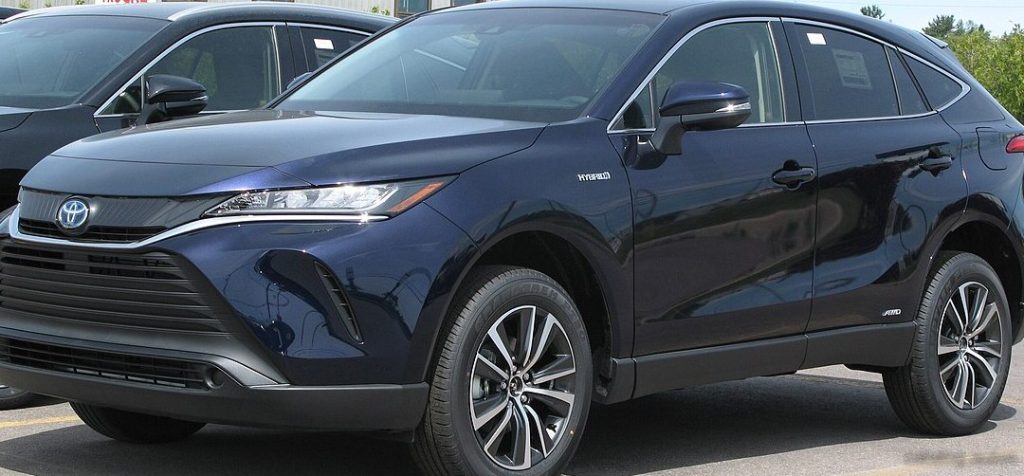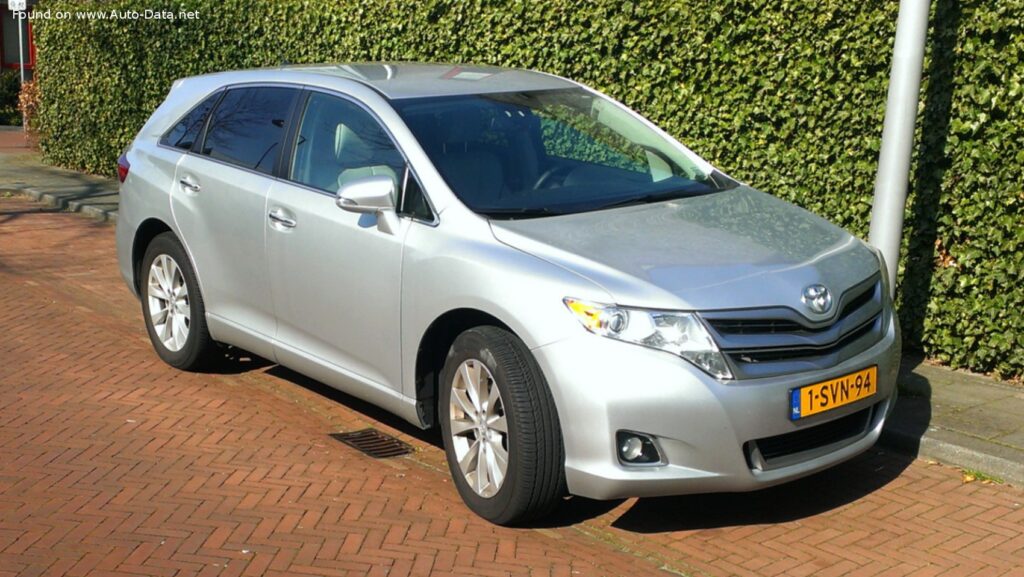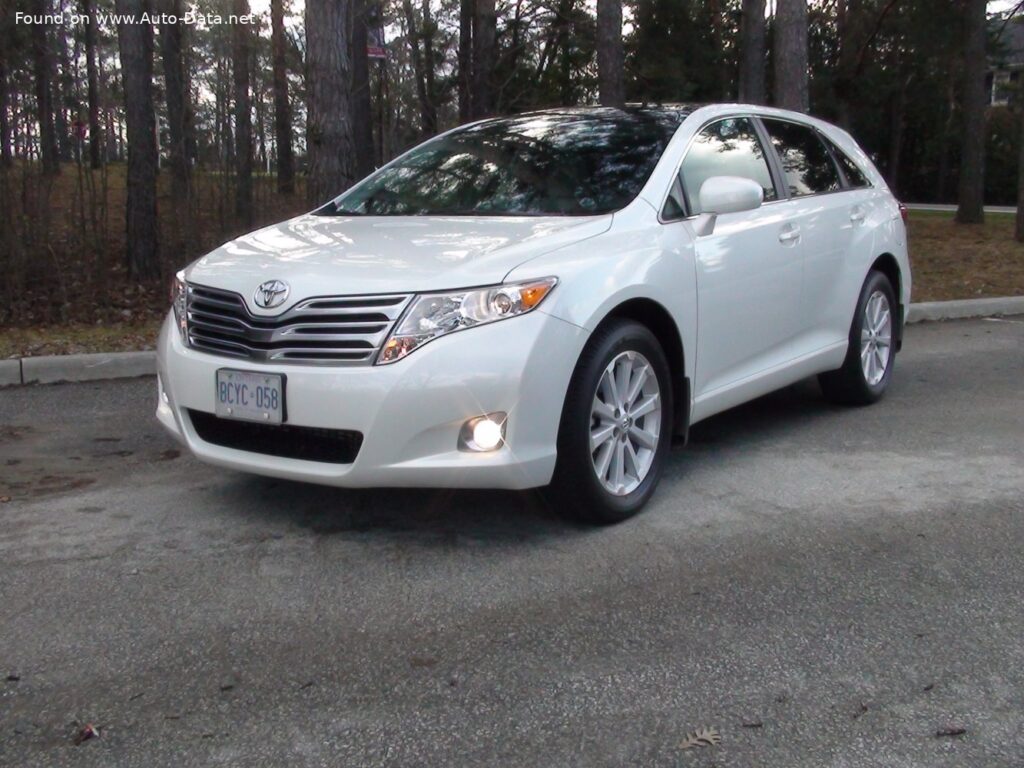
The Toyota Venza I (AV10) represents a significant entry into the evolving crossover segment, bridging the gap between traditional sedans and sport utility vehicles. Launched for the 2009 model year, with production spanning from 2008 to 2012, the first-generation Venza was designed primarily for the North American market, catering to consumers seeking the spaciousness and versatility of an SUV with the more car-like driving dynamics and fuel efficiency of a sedan. While officially categorized as a “station wagon (estate)” in some markets and specifications, its market positioning and design ethos firmly placed it within the rapidly expanding crossover utility vehicle (CUV) category in the United States. The AV10 generation, specifically the 2.7-liter variant detailed here, offered a compelling blend of practicality, comfort, and Toyota’s renowned reliability, quickly establishing its niche in a competitive landscape.
Engine and Performance of the Toyota Venza I (AV10)
At the heart of this particular Toyota Venza I (AV10) variant is a robust 2.7-liter inline-four gasoline engine, bearing the internal code 1AR-FE. This powerplant was engineered to deliver a balanced combination of power and efficiency suitable for a family-oriented crossover. With a displacement of 2694 cubic centimeters (164.4 cubic inches), the engine produces a respectable 182 horsepower at 4800 revolutions per minute (rpm). This power output, translating to 67.6 horsepower per liter, ensures competent acceleration and adequate passing capability for everyday driving scenarios. Torque figures stand at 240 Newton meters, or 177.01 pound-feet, peaking at 4000 rpm, providing a strong mid-range pull that benefits both city driving and highway cruising.
The 1AR-FE engine features a modern Double Overhead Camshaft (DOHC) valvetrain with four valves per cylinder, optimizing airflow for improved combustion efficiency and power delivery across the rev range. Fuel is delivered via a multi-port manifold injection system, a proven technology that ensures precise fuel atomization and mixing for consistent performance. As a naturally aspirated engine, it relies on atmospheric pressure for air intake, contributing to its linear power delivery and straightforward maintenance. The engine’s architecture is a front-longitudinal layout, typical for many front-wheel-drive vehicles, and it employs an inline-four-cylinder configuration with a square bore and stroke of 95 mm (3.74 inches) each. This configuration is often favored for its inherent balance and packaging efficiency. A compression ratio of 9.5:1 further optimizes the combustion process for regular unleaded gasoline. The powertrain architecture drives the front wheels, providing predictable handling characteristics and efficiency for its class. Notably, this specific variant is equipped with a 6-speed manual transmission, offering a more engaging driving experience than the automatic transmissions commonly found in Venza models for the US market.
Design and Features of the Toyota Venza
The design of the Toyota Venza was a deliberate departure from traditional SUV aesthetics, aiming for a sleeker, more car-like profile while retaining significant utility. Classified as a station wagon (estate) by its core specifications, its exterior styling in the North American market was marketed as a crossover, blending the practicality of a wagon with the elevated stance of an SUV. The Venza features a five-door body type, facilitating easy access for passengers and cargo, and comfortably accommodates five occupants across two rows of seating. Its overall dimensions contribute to its commanding yet refined presence: a length of 4801 mm (189.02 inches), a width of 1905 mm (75 inches), and a height of 1610 mm (63.39 inches). These measurements, combined with a substantial wheelbase of 2776 mm (109.29 inches), ensured a spacious interior cabin and a stable ride.
The Venza’s design language emphasized smooth lines and a somewhat aggressive front fascia, distinguishing it from other Toyota models of its era. The elevated seating position, a hallmark of crossovers, provided improved visibility for the driver, while the relatively low step-in height enhanced accessibility. Inside, the Venza was designed with practicality and comfort in mind, featuring ample cargo space behind the rear seats, which could be expanded further by folding them down. While specific interior features are not detailed in the provided data, typical Venza models of this generation offered amenities focused on convenience and passenger comfort, such as advanced audio systems, climate control, and various storage solutions. The vehicle’s suspension system, comprising an independent McPherson type at the front and an independent coil spring setup at the rear, was engineered to deliver a comfortable and composed ride, absorbing road imperfections effectively while maintaining stable handling dynamics. This all-independent suspension contributed significantly to the Venza’s car-like driving feel, differentiating it from more truck-based SUVs.
Detailed Technical Specifications for the Toyota Venza I (AV10)
| Brand | Toyota |
| Model | Venza |
| Generation | Venza I (AV10) |
| Type (Engine) | 2.7 (182 Hp) |
| Start of production | 2008 year |
| End of production | 2012 year |
| Powertrain Architecture | Internal Combustion engine |
| Body type | Station wagon (estate) |
| Seats | 5 |
| Doors | 5 |
| Fuel Type | Petrol (Gasoline) |
| Power | 182 Hp @ 4800 rpm. |
| Power per litre | 67.6 Hp/l |
| Torque | 240 Nm @ 4000 rpm. (177.01 lb.-ft. @ 4000 rpm.) |
| Engine layout | Front, Longitudinal |
| Engine Model/Code | 1AR-FE |
| Engine displacement | 2694 cm3 (164.4 cu. in.) |
| Number of cylinders | 4 |
| Engine configuration | Inline |
| Cylinder Bore | 95 mm (3.74 in.) |
| Piston Stroke | 95 mm (3.74 in.) |
| Compression ratio | 9.5:1 |
| Number of valves per cylinder | 4 |
| Fuel injection system | Multi-port manifold injection |
| Engine aspiration | Naturally aspirated engine |
| Valvetrain | DOHC |
| Engine oil capacity | 4.4 l (4.65 US qt | 3.87 UK qt) |
| Coolant | 7.1 l (7.5 US qt | 6.25 UK qt) |
| Fuel tank capacity | 67 l (17.7 US gal | 14.74 UK gal) |
| Length | 4801 mm (189.02 in.) |
| Width | 1905 mm (75 in.) |
| Height | 1610 mm (63.39 in.) |
| Wheelbase | 2776 mm (109.29 in.) |
| Front track | 1631 mm (64.21 in.) |
| Rear (Back) track | 1636 mm (64.41 in.) |
| Drivetrain Architecture | The Internal combustion engine (ICE) drives the front wheels of the vehicle. |
| Drive wheel | Front wheel drive |
| Number of gears and type of gearbox | 6 gears, manual transmission |
| Front suspension | Independent type McPherson |
| Rear suspension | Independent coil spring |