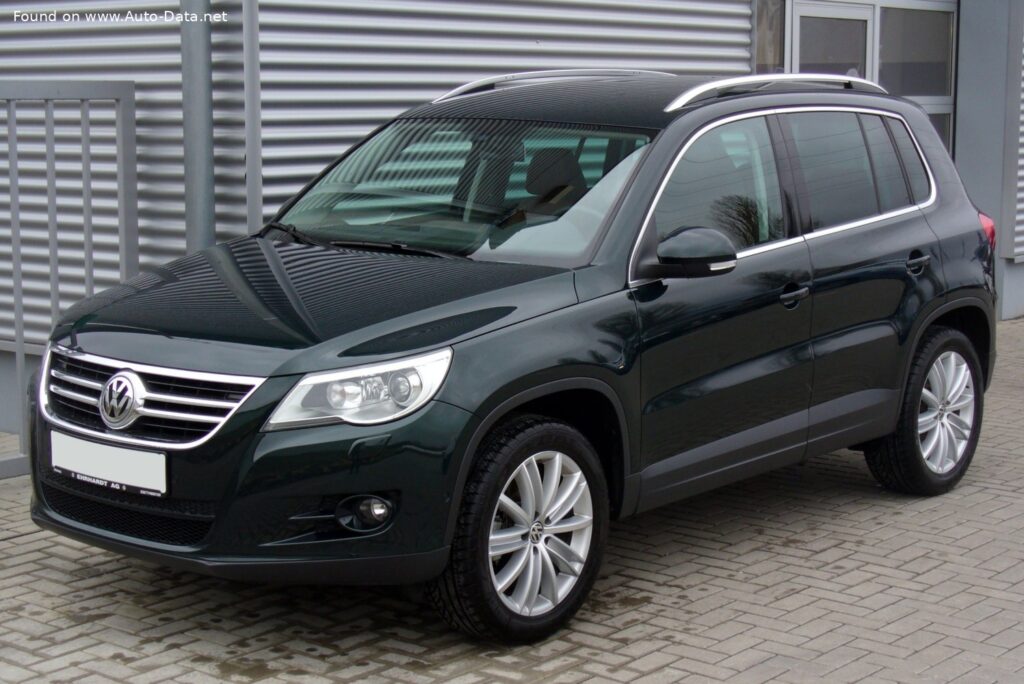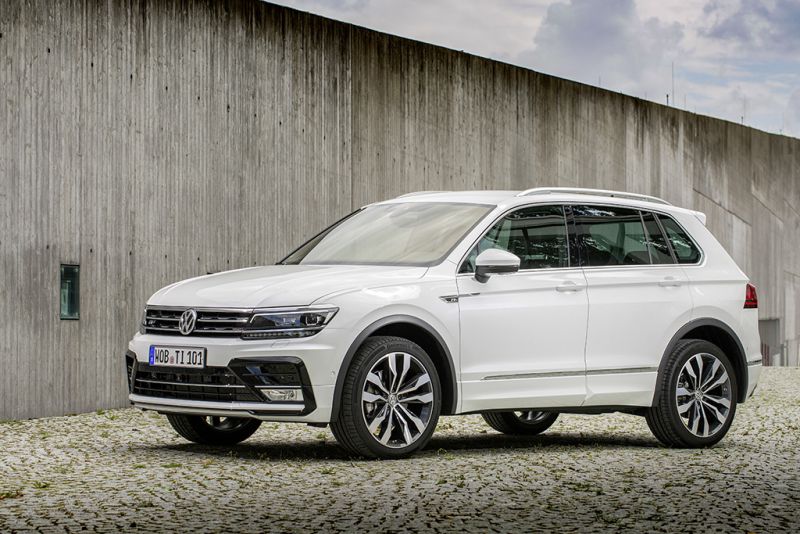
The Volkswagen Tiguan II 2.0 TDI (115 Hp) SCR represents a significant iteration in the evolution of Volkswagen’s highly successful compact SUV line. Introduced in 2016, this second-generation Tiguan quickly established itself as a formidable contender in the fiercely competitive global crossover market, particularly within Europe, where its blend of Germanic engineering, practical utility, and fuel efficiency resonated strongly with consumers. Produced until 2018 in this specific powertrain configuration, the Tiguan II built upon the strengths of its predecessor while introducing a more mature design language, enhanced technological features, and improved modularity. Positioned as a versatile family vehicle, it offered a compelling package for those seeking the elevated driving position and robust aesthetics of an SUV, combined with the refined driving dynamics and economical operation characteristic of Volkswagen passenger cars. This particular 2.0 TDI variant, equipped with Selective Catalytic Reduction (SCR) technology, underscored Volkswagen’s commitment to meeting stringent European emissions standards, making it an environmentally conscious choice for its time. The {original_title} model was a cornerstone of the Tiguan’s market presence, showcasing the brand’s expertise in diesel powertrain development for the European and other international markets where diesel remained a popular fuel choice.
Engine and Performance: The Volkswagen Tiguan II 2.0 TDI (115 Hp) SCR Powertrain
At the heart of the Volkswagen Tiguan II 2.0 TDI (115 Hp) SCR lies a meticulously engineered 2.0-liter (120.09 cu. in.) inline four-cylinder diesel engine, designated with the code DFGC. This powerplant utilizes Volkswagen’s renowned Turbocharged Direct Injection (TDI) system, augmented by an intercooler, to deliver a robust balance of power and exceptional fuel economy. With a peak output of 115 horsepower, achieved across a broad rev range from 2750 to 4500 RPM, the engine is tuned for smooth, accessible performance in everyday driving scenarios. More impressively, it generates a substantial 236.02 lb.-ft. of torque, available from a low 1700 RPM up to 2500 RPM. This wide torque band is crucial for the Tiguan’s SUV application, providing strong pulling power for acceleration and effortless cruising, even when the vehicle is loaded or towing.
The “SCR” designation highlights the inclusion of Selective Catalytic Reduction technology, a key system for reducing nitrogen oxide (NOx) emissions by injecting a urea-based additive (AdBlue) into the exhaust stream. This, combined with a particulate filter, ensures the Tiguan II 2.0 TDI meets the stringent Euro 6 emission standards, making it one of the cleaner diesel options available during its production years. Further enhancing its environmental credentials and efficiency, the engine incorporates a Start & Stop system, which automatically shuts off the engine when the vehicle is stationary and restarts it seamlessly when the driver intends to move, thereby conserving fuel and reducing emissions in urban traffic.
Performance figures for the Tiguan II 2.0 TDI (115 Hp) SCR are respectable for its class and power output. The SUV can accelerate from 0 to 60 mph in a computed 10.4 seconds, reaching a maximum speed of 114.95 mph. While not a performance-oriented SUV, these figures underscore its capability for confident highway merging and sustained cruising. Power is delivered to the front wheels via a precise 6-speed manual transmission, offering engaging control for the driver and contributing to the vehicle’s overall efficiency. The powertrain architecture features the engine mounted transversely at the front, driving the front wheels, which is a common and efficient layout for compact SUVs, optimizing interior space and manufacturing costs.
Fuel economy is a standout feature of this diesel variant. The combined cycle fuel consumption is rated at an impressive 49-50 US mpg (4.8-4.7 l/100 km), with extra-urban driving yielding up to 56 US mpg (4.2 l/100 km). Even in urban environments, the Tiguan manages a commendable 40.6-41.3 US mpg (5.8-5.7 l/100 km). These figures highlight the inherent efficiency of Volkswagen’s TDI technology, making the Tiguan II 2.0 TDI a highly economical choice for long-distance travel and daily commuting alike. With a fuel tank capacity of 15.32 US gallons (58 liters), the Tiguan boasts an excellent driving range between fill-ups, further enhancing its appeal as a practical and cost-effective family vehicle.
Design and Features: Practicality and Modernity in the Tiguan II
The Volkswagen Tiguan II, specifically the 2.0 TDI (115 Hp) SCR variant, embodies a design philosophy that prioritizes functionality, clean aesthetics, and robust utility. As a 5-door, 5-seat SUV, its body type is designed to accommodate families and their varied needs, offering a generous interior volume within a relatively compact footprint. The exterior design moved away from the softer lines of the first generation, adopting a sharper, more angular aesthetic that aligned with Volkswagen’s evolving design language for its SUVs. With a length of 176.61 inches (4486 mm), a width of 72.4 inches (1839 mm, expanding to 82.64 inches with mirrors), and a height of 65.12 inches (1654 mm), the Tiguan II strikes an excellent balance between interior space and exterior maneuverability. The wheelbase of 105.39 inches (2677 mm) contributes to both stable handling and a spacious cabin for all five occupants.
Inside, the Tiguan II offers a highly practical and versatile environment. The trunk space is particularly noteworthy, providing a minimum of 21.72 cubic feet (615 liters) with all seats in place. This capacity expands significantly to a cavernous 58.45 cubic feet (1655 liters) when the rear seats are folded down, showcasing the Tiguan’s ability to swallow large items or accommodate extensive luggage for family trips. This flexibility, combined with a maximum load capacity ranging from 1060.42 to 1523.39 pounds (481-691 kg), underscores its credentials as a highly adaptable utility vehicle. Furthermore, the Tiguan is rated for a maximum roof load of 165.35 pounds (75 kg) and impressive towing capabilities: up to 4409.25 pounds (2000 kg) with brakes (8% gradient) or 3968.32 pounds (1800 kg) with brakes (12% gradient), and 1653.47 pounds (750 kg) without brakes, making it suitable for a wide range of recreational or work-related hauling tasks.
From a driver’s perspective, the Tiguan II benefits from modern chassis and steering systems. It features a rack and pinion steering system with electric power steering, providing precise control and effortless maneuvering, especially in urban settings with its minimum turning circle of 37.73 feet (11.5 meters). Braking performance is handled by ventilated discs at the front and solid discs at the rear, supported by an Anti-lock Braking System (ABS) for enhanced safety and stability under hard braking. The vehicle rides on 215/65 R17 tires mounted on 7J x 17 wheel rims, a common specification that balances ride comfort with responsive handling. With a ground clearance of 7.52 inches (191 mm), the Tiguan II is well-equipped to handle light off-road excursions or navigate challenging urban obstacles with confidence, further enhancing its SUV appeal without compromising its on-road refinement.
Technical Specifications
| Brand | Volkswagen |
| Model | Tiguan |
| Generation | Tiguan II |
| Type (Engine) | 2.0 TDI (115 Hp) SCR |
| Start of production | 2016 year |
| End of production | 2018 year |
| Powertrain Architecture | Internal Combustion engine |
| Body type | SUV |
| Seats | 5 |
| Doors | 5 |
| Fuel consumption (economy) – urban | 40.6 – 41.3 US mpg (5.8 – 5.7 l/100 km) |
| Fuel consumption (economy) – extra urban | 56 US mpg (4.2 l/100 km) |
| Fuel consumption (economy) – combined | 49 – 50 US mpg (4.8 – 4.7 l/100 km) |
| CO2 emissions | 125 – 123 g/km |
| Fuel Type | Diesel |
| Acceleration 0 – 60 mph | 10.4 sec |
| Maximum speed | 114.95 mph (185 km/h) |
| Emission standard | Euro 6 |
| Weight-to-power ratio | 13 kg/Hp, 76.7 Hp/tonne |
| Weight-to-torque ratio | 4.7 kg/Nm, 213.5 Nm/tonne |
| Power | 115 Hp @ 2750-4500 rpm |
| Power per liter | 58.4 Hp/l |
| Torque | 236.02 lb.-ft. @ 1700-2500 rpm (320 Nm) |
| Engine layout | Front, Transverse |
| Engine Model/Code | DFGC |
| Engine displacement | 2.0 l (120.09 cu. in., 1968 cm3) |
| Number of cylinders | 4 |
| Engine configuration | Inline |
| Number of valves per cylinder | 4 |
| Fuel injection system | Diesel Commonrail |
| Engine aspiration | Turbocharger, Intercooler |
| Engine oil capacity | 4.97 US qt (4.7 l) |
| Engine systems | Start & Stop System, Particulate filter |
| Kerb Weight | 3304.73 – 3767.7 lbs. (1499-1709 kg) |
| Max. weight | 4828.12 lbs. (2190 kg) |
| Max load | 1060.42 – 1523.39 lbs. (481-691 kg) |
| Trunk (boot) space – minimum | 21.72 cu. ft. (615 l) |
| Trunk (boot) space – maximum | 58.45 cu. ft. (1655 l) |
| Fuel tank capacity | 15.32 US gal (58 l) |
| Max. roof load | 165.35 lbs. (75 kg) |
| Permitted trailer load with brakes (8%) | 4409.25 lbs. (2000 kg) |
| Permitted trailer load with brakes (12%) | 3968.32 lbs. (1800 kg) |
| Permitted trailer load without brakes | 1653.47 lbs. (750 kg) |
| Permitted towbar download | 220.46 lbs. (100 kg) |
| Length | 176.61 in. (4486 mm) |
| Width | 72.4 in. (1839 mm) |
| Width including mirrors | 82.64 in. (2099 mm) |
| Height | 65.12 in. (1654 mm) |
| Wheelbase | 105.39 in. (2677 mm) |
| Front track | 62.17 – 62.56 in. (1579-1589 mm) |
| Rear (Back) track | 61.81 – 62.2 in. (1570-1580 mm) |
| Ride height (ground clearance) | 7.52 in. (191 mm) |
| Minimum turning circle (turning diameter) | 37.73 ft. (11.5 m) |
| Drivetrain Architecture | The Internal combustion engine (ICE) drives the front wheels of the vehicle. |
| Drive wheel | Front wheel drive |
| Number of gears and type of gearbox | 6 gears, manual transmission |
| Front brakes | Ventilated discs |
| Rear brakes | Disc |
| Assisting systems | ABS (Anti-lock braking system) |
| Steering type | Steering rack and pinion |
| Power steering | Electric Steering |
| Tires size | 215/65 R17 |
| Wheel rims size | 7J x 17 |