
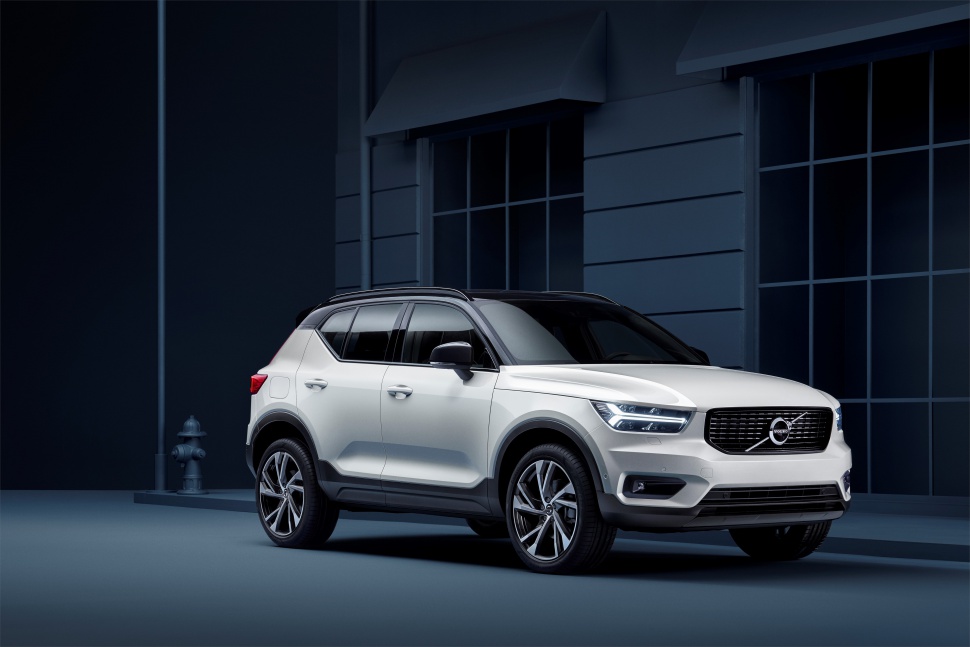
The Volvo XC40 2.0 D3 (150 Hp) represents a compelling entry in the premium compact SUV segment, a market characterized by fierce competition and a demand for both urban agility and versatile capability. Launched in March 2018 as part of the inaugural generation of the XC40, this particular variant, produced until June 2020, was primarily aimed at European markets where diesel powertrains remain a popular choice due to their robust torque delivery and fuel efficiency. As Volvo’s smallest SUV, the XC40 quickly established itself with a distinctive design language, advanced safety features, and a focus on practicality, embodying the brand’s contemporary shift towards a more youthful and dynamic aesthetic while retaining its core values of safety and Scandinavian luxury. This D3 variant, with its efficient 2.0-liter diesel engine and front-wheel-drive architecture, offered a balanced proposition for consumers seeking a sophisticated, economical, and capable vehicle for daily commuting and weekend adventures.
Engineering and Performance of the Volvo XC40 2.0 D3 (150 Hp)
At the heart of the Volvo XC40 2.0 D3 (150 Hp) lies a sophisticated 2.0-liter inline four-cylinder diesel engine, designated with the internal code D4204T16. This powertrain is a testament to Volvo’s commitment to efficiency and refined performance, delivering a robust 150 horsepower at 3750 revolutions per minute. More critically for a diesel engine, it generates a substantial 258.15 lb.-ft. of torque, available across a broad and highly usable rev range from 1800 to 4800 rpm. This impressive torque output is crucial for the vehicle’s dynamic performance, providing strong acceleration from a standstill and confident overtaking maneuvers, even when the vehicle is laden or ascending inclines. The engine’s architecture features four valves per cylinder and a common rail fuel injection system, optimized for precise fuel delivery and combustion efficiency.
Further enhancing its performance and environmental credentials, the engine incorporates a turbocharger and an intercooler, which significantly boost power output and overall efficiency by forcing more air into the cylinders. A particulate filter is also standard, ensuring compliance with stringent Euro 6 emission standards, a critical factor for its European market appeal. Power is transmitted to the front wheels via a smooth and precise 6-speed manual transmission, offering engaging driver control and allowing for optimal utilization of the engine’s torque curve. This front-wheel-drive setup, combined with the manual gearbox, contributes to a lighter kerb weight of 3617.79 lbs., which in turn benefits both agility and fuel economy. The vehicle boasts a weight-to-power ratio of 10.9 kg/Hp and a weight-to-torque ratio of 4.7 kg/Nm, indicating a well-balanced power-to-weight distribution for its class.
In terms of acceleration, the Volvo XC40 2.0 D3 (150 Hp) performs commendably for its segment, achieving 0 to 60 mph in an estimated 9.4 seconds. Its maximum speed is rated at 124.27 mph, making it perfectly capable of handling highway speeds with ease. Fuel efficiency is a key highlight, with combined WLTP figures ranging from 39.9 to 42.8 US mpg (5.5-5.9 l/100 km), and CO2 emissions between 143-154 g/km. The urban cycle, according to older economy ratings, sees approximately 42 US mpg (5.6 l/100 km), while extra-urban driving can achieve an impressive 51.1 US mpg (4.6 l/100 km). These figures underscore the D3’s role as a highly economical choice for drivers covering significant mileage, particularly in regions where diesel fuel remains economically advantageous.
Design and Features of the Volvo XC40
The Volvo XC40, including the 2.0 D3 (150 Hp) variant, stands out with its bold, contemporary design that injects a youthful and urban spirit into Volvo’s traditionally elegant aesthetic. As a compact SUV, it combines robust proportions with sophisticated details, such as the distinctive “Thor’s Hammer” LED daytime running lights and a prominent grille. Its five-door, five-seat body type ensures practical access and comfortable accommodation for passengers and cargo alike, making it an ideal choice for small families or individuals with an active lifestyle. The exterior dimensions of 174.21 inches in length, 73.35 inches in width (80.08 inches including mirrors), and 65.04 inches in height contribute to its commanding presence while retaining maneuverability in urban environments. A generous wheelbase of 106.38 inches further enhances ride comfort and interior space.
Inside, the XC40 embodies Scandinavian design principles, characterized by clean lines, premium materials, and intuitive ergonomics. While specific interior features for this variant are not detailed in the provided data, the XC40 generation is renowned for its innovative storage solutions, advanced infotainment system (typically featuring a large, vertically oriented touchscreen), and a comprehensive suite of safety technologies. Volvo’s commitment to safety is legendary, and the XC40 is no exception, featuring an array of standard and optional safety systems such as ABS (Anti-lock Braking System), and likely including advanced driver-assistance systems (ADAS) like City Safety, Run-off Road Mitigation, and Lane Keeping Aid, which were pioneering for its segment at the time of its launch. The vehicle’s independent McPherson front suspension with coil springs and an anti-roll bar, coupled with an independent coil spring rear suspension, ensures a comfortable yet composed ride, adept at absorbing road imperfections while maintaining stability.
Practicality is further emphasized by a minimum trunk space of 16.24 cubic feet (460 liters), which can be expanded by folding down the rear seats, offering ample room for luggage, groceries, or sports equipment. The fuel tank capacity of 14.27 US gallons (54 liters) ensures a good driving range, complementing its fuel-efficient diesel engine. For those needing to transport larger items, the XC40 2.0 D3 (150 Hp) is rated for a permitted trailer load with brakes of up to 3968.32 lbs. (1800 kg), highlighting its versatility. The steering system, a rack and pinion type with electric power steering, provides precise control and ease of maneuvering, particularly useful in tight parking situations, further aided by a minimum turning circle of 37.4 feet (11.4 meters). The combination of ventilated disc brakes at the front and disc brakes at the rear ensures strong and consistent stopping power, reinforcing the vehicle’s overall safety profile.
Technical Specifications: Volvo XC40 2.0 D3 (150 Hp)
| Brand | Volvo |
| Model | XC40 |
| Generation | XC40 |
| Type (Engine) | 2.0 D3 (150 Hp) |
| Start of Production | March, 2018 year |
| End of Production | June, 2020 year |
| Powertrain Architecture | Internal Combustion engine |
| Body Type | SUV |
| Seats | 5 |
| Doors | 5 |
| Fuel Consumption (WLTP) – Low Speed | 37.9 – 37.3 US mpg (6.2-6.3 l/100 km) |
| Fuel Consumption (WLTP) – Medium Speed | 42.8 – 41.3 US mpg (5.5-5.7 l/100 km) |
| Fuel Consumption (WLTP) – High Speed | 51.1 – 47 US mpg (4.6-5.0 l/100 km) |
| Fuel Consumption (WLTP) – Very High Speed | 39.9 – 36.2 US mpg (5.9-6.5 l/100 km) |
| Combined Fuel Consumption (WLTP) | 42.8 – 39.9 US mpg (5.5-5.9 l/100 km) |
| CO2 Emissions (WLTP) | 143-154 g/km |
| Fuel Consumption (Urban) | 42 US mpg (5.6 l/100 km) |
| Fuel Consumption (Extra Urban) | 51.1 US mpg (4.6 l/100 km) |
| Fuel Consumption (Combined) | 47 US mpg (5 l/100 km) |
| CO2 Emissions (Combined) | 125 g/km |
| Fuel Type | Diesel |
| Acceleration 0 – 60 mph | 9.4 sec |
| Maximum Speed | 124.27 mph (200 km/h) |
| Emission Standard | Euro 6 |
| Weight-to-Power Ratio | 10.9 kg/Hp |
| Weight-to-Torque Ratio | 4.7 kg/Nm |
| Power | 150 Hp @ 3750 rpm |
| Power per Liter | 76.2 Hp/l |
| Torque | 258.15 lb.-ft. @ 1800-4800 rpm (350 Nm) |
| Engine Layout | Front, Transverse |
| Engine Model/Code | D4204T16 |
| Engine Displacement | 120.16 cu. in. (1969 cm3) |
| Number of Cylinders | 4 |
| Engine Configuration | Inline |
| Cylinder Bore | 3.23 in. (82 mm) |
| Piston Stroke | 3.67 in. (93.2 mm) |
| Number of Valves per Cylinder | 4 |
| Fuel Injection System | Diesel Commonrail |
| Engine Aspiration | Turbocharger, Intercooler |
| Engine Oil Capacity | 5.49 US qt (5.2 l) |
| Engine Systems | Particulate filter |
| Kerb Weight | 3617.79 lbs. (1641 kg) |
| Max. Weight | 4673.8 lbs. (2120 kg) |
| Max Load | 1056.01 lbs. (479 kg) |
| Trunk (Boot) Space – Minimum | 16.24 cu. ft. (460 l) |
| Fuel Tank Capacity | 14.27 US gal (54 l) |
| Permitted Trailer Load with Brakes (12%) | 3968.32 lbs. (1800 kg) |
| Length | 174.21 in. (4425 mm) |
| Width | 73.35 in. (1863 mm) |
| Width Including Mirrors | 80.08 in. (2034 mm) |
| Height | 65.04 in. (1652 mm) |
| Wheelbase | 106.38 in. (2702 mm) |
| Front Track | 63.03 in. (1601 mm) |
| Rear (Back) Track | 64.02 in. (1626 mm) |
| Minimum Turning Circle (Turning Diameter) | 37.4 ft. (11.4 m) |
| Drivetrain Architecture | Internal combustion engine drives front wheels |
| Drive Wheel | Front wheel drive |
| Number of Gears and Type of Gearbox | 6 gears, manual transmission |
| Front Suspension | Independent, McPherson with coil spring and anti-roll bar |
| Rear Suspension | Independent coil spring |
| Front Brakes | Ventilated discs |
| Rear Brakes | Disc |
| Assisting Systems | ABS (Anti-lock braking system) |
| Steering Type | Steering rack and pinion |
| Power Steering | Electric Steering |
