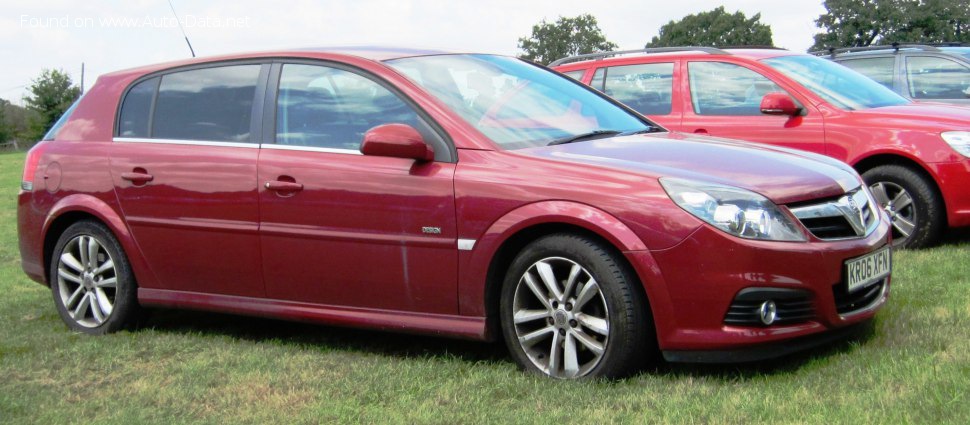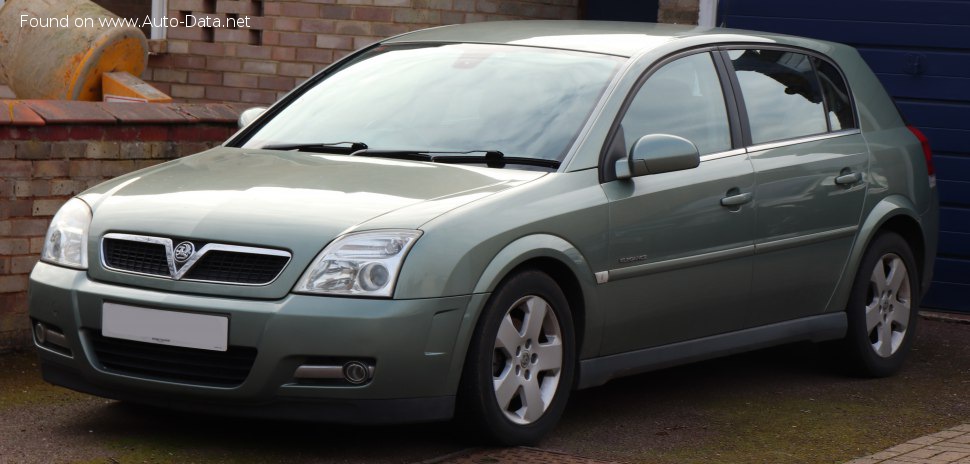
The Vauxhall Signum, specifically the 1.8i 16V ECOTEC (122 Hp) variant, represented a distinctive and somewhat unconventional offering in the European automotive landscape during its production run from 2003 to 2005. Positioned by General Motors’ UK subsidiary, Vauxhall, as a premium large hatchback, it aimed to blend the practicality of a wagon with the comfort and executive appeal of a sedan, carving out a niche above the more conventional Vectra. While the Vauxhall brand itself is primarily associated with the United Kingdom, its models, including the Signum, were largely rebadged versions of Opel vehicles sold across mainland Europe. The Signum was engineered to cater to drivers seeking enhanced rear passenger space and versatility without the traditional three-box sedan or full-size estate car silhouette. Its unique “hatchback” body type, often described as a five-door executive car or a large premium hatchback, was an attempt to redefine the segment, prioritizing passenger comfort and innovative interior configurations over conventional luggage capacity. This particular iteration, powered by the reliable 1.8-liter ECOTEC engine, offered a balanced blend of performance and efficiency, making it a compelling option for those valuing practicality and a refined driving experience within its target market.
Engine and Performance: The Vauxhall Signum 1.8i 16V ECOTEC
At the heart of the Vauxhall Signum 1.8i 16V ECOTEC (122 Hp) lay the Z18XE engine, a naturally aspirated, 1.8-liter inline-four gasoline unit renowned for its balance of power delivery and fuel economy within its class. This powerplant, part of GM’s ECOTEC family, was designed with an emphasis on “Ecology, Economy, and Technology,” aiming to deliver efficient performance while meeting stringent emission standards of its time. Generating a respectable 122 horsepower at 6000 revolutions per minute (rpm), the engine provided sufficient motivation for the Signum’s substantial frame. Torque output stood at 123.17 pound-feet (167 Nm) at a relatively accessible 3800 rpm, ensuring decent low-end pull and flexibility in everyday driving scenarios. The engine’s configuration, featuring a DOHC (Double Overhead Camshaft) valvetrain with 4 valves per cylinder and multi-port manifold injection, contributed to its smooth operation and responsive nature. With an engine displacement of 109.6 cubic inches (1796 cm3) and a compression ratio of 10.5:1, the Z18XE was a well-engineered unit for its era.
Power was channeled to the front wheels through a precise 5-speed manual transmission, offering engaging control for the driver and contributing to the vehicle’s overall efficiency. This powertrain architecture, with the internal combustion engine driving the front wheels, was a common and effective setup for vehicles in this segment. Performance figures for the Signum 1.8i 16V ECOTEC were competitive for a family-oriented vehicle of the early 2000s. It could achieve a maximum speed of 121.79 miles per hour (196 km/h), demonstrating its capability for sustained highway cruising. Fuel economy was a key consideration for the ECOTEC engine. The combined fuel consumption was rated at an estimated 29.8 US miles per gallon (7.9 l/100 km), with urban driving yielding approximately 21.4 US mpg (11 l/100 km) and extra-urban driving achieving a more impressive 38.6 US mpg (6.1 l/100 km). These figures, alongside CO2 emissions of 190 g/km, ensured the vehicle met the Euro 4 emission standard, reflecting its commitment to environmental performance. The weight-to-power ratio stood at 11.6 kg/Hp (86.2 Hp/tonne), while the weight-to-torque ratio was 8.5 kg/Nm (118 Nm/tonne), indicating a well-balanced power delivery for its curb weight of 3119.54 pounds (1415 kg).
Design and Features of the Vauxhall Signum
The Vauxhall Signum’s design was a bold departure from conventional segment norms, characterized by its distinctive hatchback body type that blurred the lines between a traditional sedan and a spacious wagon. Measuring 183.11 inches (4651 mm) in length, 70.79 inches (1798 mm) in width (80.16 inches or 2036 mm including mirrors), and 57.72 inches (1466 mm) in height, the Signum presented a substantial and commanding presence on the road. Its extended wheelbase of 111.42 inches (2830 mm), shared with the long-wheelbase version of the Vectra, was a crucial element in its design philosophy, specifically engineered to maximize rear passenger legroom and comfort – a key selling point for the model. The exterior styling was aerodynamic, boasting a low drag coefficient (Cd) of 0.28, which contributed to both fuel efficiency and reduced wind noise at higher speeds.
Inside, the Signum was configured for five occupants across five doors, emphasizing versatility and passenger-centric design. The interior was particularly innovative for its time, featuring a “FlexSpace” seating system that allowed the two outer rear seats to slide fore and aft, recline, and even fold flat, providing exceptional adaptability for luggage or passenger comfort. This system also included a multi-functional central armrest that could house various amenities like a coolbox, DVD player, or fold-out tables, enhancing the premium experience for rear passengers. Minimum trunk space was a practical 12.89 cubic feet (365 liters), which could be expanded significantly to a cavernous 49.79 cubic feet (1410 liters) with the rear seats folded, rivaling many station wagons in cargo capacity.
In terms of chassis and safety, the Vauxhall Signum was built on a robust platform designed for comfort and predictable handling. The front suspension utilized an independent McPherson strut setup with coil springs and an anti-roll bar, providing a good balance of ride comfort and steering precision. The rear featured an independent multi-link suspension, a more sophisticated arrangement that enhanced stability and ride quality, particularly important for a vehicle designed for longer journeys. Braking performance was assured by ventilated discs at the front and solid discs at the rear, complemented by an Anti-lock Braking System (ABS) as a standard assisting system, a crucial safety feature for vehicles of this era, preventing wheel lock-up during hard braking and maintaining steering control. The overall design and features of the Signum underscored its ambition to offer a unique, premium, and highly versatile motoring experience, particularly for those who frequently carried passengers or valued flexible interior space.
Technical Specifications: Vauxhall Signum 1.8i 16V ECOTEC (122 Hp)
| Brand | Vauxhall |
| Model | Signum |
| Generation | Signum |
| Type (Engine) | 1.8i 16V ECOTEC (122 Hp) |
| Start of production | 2003 year |
| End of production | 2005 year |
| Powertrain Architecture | Internal Combustion engine |
| Body type | Hatchback |
| Seats | 5 |
| Doors | 5 |
| Fuel consumption (economy) – urban | 21.4 US mpg (11 l/100 km) |
| Fuel consumption (economy) – extra urban | 38.6 US mpg (6.1 l/100 km) |
| Fuel consumption (economy) – combined | 29.8 US mpg (7.9 l/100 km) |
| CO2 emissions | 190 g/km |
| Fuel Type | Petrol (Gasoline) |
| Maximum speed | 121.79 mph (196 km/h) |
| Emission standard | Euro 4 |
| Weight-to-power ratio | 11.6 kg/Hp, 86.2 Hp/tonne |
| Weight-to-torque ratio | 8.5 kg/Nm, 118 Nm/tonne |
| Power | 122 Hp @ 6000 rpm |
| Power per litre | 67.9 Hp/l |
| Torque | 123.17 lb.-ft. @ 3800 rpm (167 Nm @ 3800 rpm) |
| Engine layout | Front, Transverse |
| Engine Model/Code | Z18XE |
| Engine displacement | 109.6 cu. in. (1796 cm3) |
| Number of cylinders | 4 |
| Engine configuration | Inline |
| Cylinder Bore | 3.17 in. (80.5 mm) |
| Piston Stroke |