
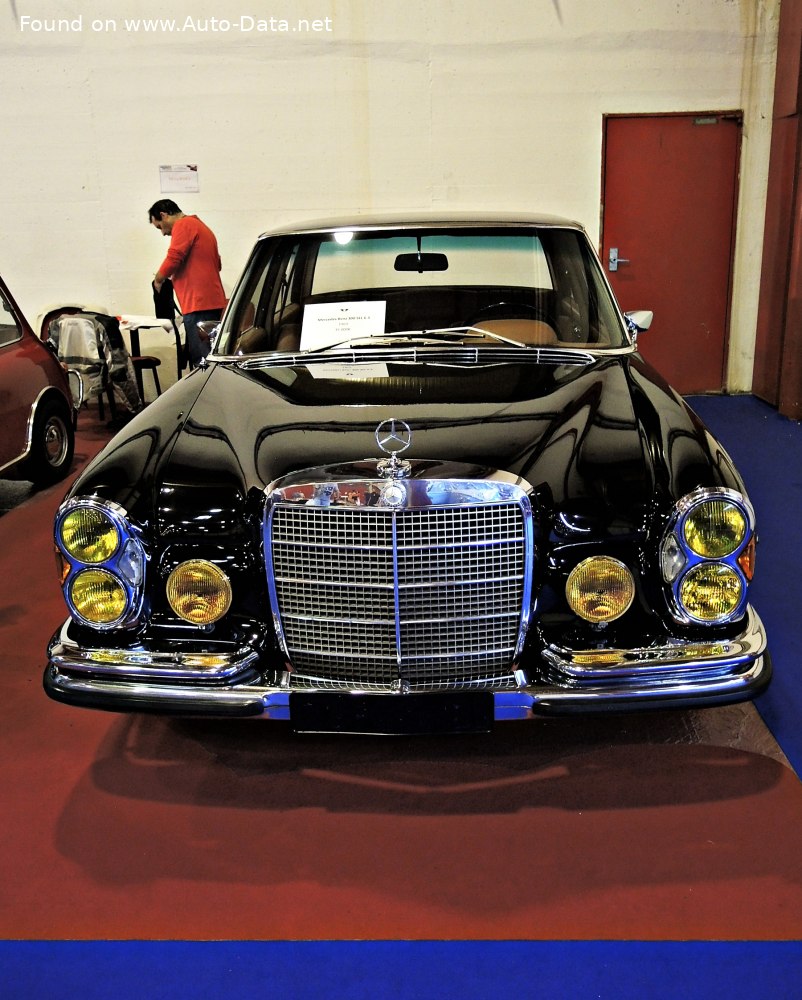
The Mercedes-Benz W109 SEL 300 SEL (170 Hp) Automatic stands as a testament to automotive luxury and engineering prowess from the mid-1960s. Produced between September 1965 and December 1967, this generation of the S-Class, specifically the W109, represented the pinnacle of the Mercedes-Benz lineup, catering to discerning buyers who sought unparalleled comfort, advanced technology, and a commanding road presence. The “SEL” designation in the Mercedes-Benz W109 SEL 300 SEL name signifies “Sonderklasse, Einspritzmotor, Lang” (Special Class, Fuel Injection Engine, Long Wheelbase), highlighting its status as an extended-wheelbase luxury sedan equipped with a sophisticated fuel-injected engine. This particular model, the 300 SEL, was powered by a robust 3.0-liter inline-six engine, paired with a smooth automatic transmission, solidifying its reputation as a flagship vehicle in its primary European market and among global automotive enthusiasts.
Engineering Excellence and Performance of the Mercedes-Benz W109 SEL
At the heart of the Mercedes-Benz W109 SEL 300 SEL lies its legendary M 189 VII / 189.988 engine. This naturally aspirated, front-longitudinal inline-six powerplant boasted a displacement of 2996 cubic centimeters (182.83 cubic inches). For its era, the use of a multi-port manifold injection system was a significant technological advancement, contributing to both its impressive power output and refined operation, especially when compared to carbureted rivals. This sophisticated fuel delivery system allowed the engine to produce a respectable 170 horsepower at 5400 rpm, with a robust peak torque of 249 Newton-meters (183.65 lb.-ft.) delivered at 4000 rpm. The power-per-liter figure of 56.7 Hp/l underscored the engine’s efficient design.
Mated to a 4-speed automatic transmission, the powertrain delivered a driving experience characterized by effortless cruising and smooth power delivery. While not designed as a sports car, the 300 SEL offered commendable performance for a luxury sedan of its size and weight. It could accelerate from 0 to 60 mph in a brisk 10.6 seconds, reaching a maximum speed of 114.95 mph (185 km/h). These figures were competitive for the period and allowed the W109 SEL to maintain its composure and authority on the burgeoning European autobahns and American highways. The vehicle’s weight-to-power ratio of 9.6 kg/Hp and weight-to-torque ratio of 6.6 kg/Nm further illustrate its balanced engineering, providing a sense of solidity and controlled motion rather than outright raw speed. Fuel economy, while not a primary concern for buyers of such a luxury vehicle, was rated at 17.2 US mpg (13.7 l/100 km) combined, a reasonable figure given the engine’s displacement and the vehicle’s substantial curb weight of 3615.58 lbs (1640 kg).
Design, Features, and Legacy of the W109 SEL
The design of the Mercedes-Benz W109 SEL is a masterclass in understated elegance and functional luxury, defining the automotive aesthetic of the mid-20th century. As a 4-door, 5-seat sedan, its proportions were stately, with a generous length of 196.85 inches (5000 mm), a width of 71.26 inches (1810 mm), and a height of 56.69 inches (1440 mm). The extended 112.2-inch (2850 mm) wheelbase was a defining characteristic of the “SEL” variant, providing significantly enhanced rear passenger legroom and contributing to an exceptionally smooth ride. This additional space was a key differentiator, cementing its status as a chauffeur-driven vehicle or a comfortable long-distance cruiser for discerning owners.
Beyond its elegant lines, the W109 SEL was a pioneer in several technological aspects that contributed to its superior ride quality and safety for the era. A standout feature was its full air suspension system. Both the front and rear suspensions utilized air springs, with the front featuring a double wishbone setup and the rear employing a trailing arm design. This advanced air suspension provided an unparalleled level of ride comfort, automatically leveling the car regardless of load and absorbing road imperfections with remarkable effectiveness. This technology was a significant luxury differentiator, offering a “magic carpet” ride that few competitors could match. Braking was handled by disc brakes on both the front and rear wheels, a forward-thinking safety feature for the 1960s, offering superior stopping power and fade resistance compared to drum brakes prevalent on many vehicles of the time. Steering was managed by a cone worm system with recirculation balls, augmented by hydraulic power steering, ensuring precise control and reduced driver effort, especially at low speeds. The vehicle rode on 6J x 14-inch wheel rims, providing a comfortable balance of handling and ride characteristics. The robust construction, rear-wheel-drive architecture, and meticulous attention to detail throughout the vehicle underscored Mercedes-Benz’s commitment to durability and refined luxury, establishing the W109 SEL as an enduring icon of automotive excellence.
Technical Specifications
| Brand | Mercedes-Benz |
| Model | W109 |
| Generation | W109 SEL |
| Type (Engine) | 300 SEL (170 Hp) Automatic |
| Start of Production | September, 1965 year |
| End of Production | December, 1967 year |
| Powertrain Architecture | Internal Combustion engine |
| Body Type | Sedan |
| Seats | 5 |
| Doors | 4 |
| Fuel Consumption (Combined) | 13.7 l/100 km | 17.2 US mpg | 20.6 UK mpg | 7.3 km/l |
| Fuel Type | Petrol (Gasoline) |
| Acceleration 0 – 60 mph | 10.6 sec |
| Acceleration 0 – 62 mph (0 – 100 km/h) | 11.2 sec |
| Maximum Speed | 185 km/h | 114.95 mph |
| Weight-to-Power Ratio | 9.6 kg/Hp | 103.7 Hp/tonne |
| Weight-to-Torque Ratio | 6.6 kg/Nm | 151.8 Nm/tonne |
| Power | 170 Hp @ 5400 rpm |
| Power per Liter | 56.7 Hp/l |
| Torque | 249 Nm @ 4000 rpm | 183.65 lb.-ft. @ 4000 rpm |
| Engine Layout | Front, Longitudinal |
| Engine Model/Code | M 189 VII / 189.988 |
| Engine Displacement | 2996 cm3 | 182.83 cu. in. |
| Number of Cylinders | 6 |
| Engine Configuration | Inline |
| Cylinder Bore | 85 mm | 3.35 in. |
| Piston Stroke | 88 mm | 3.46 in. |
| Compression Ratio | 8.8:1 |
| Number of Valves per Cylinder | 2 |
| Fuel Injection System | Multi-port manifold injection |
| Engine Aspiration | Naturally aspirated engine |
| Valvetrain | SOHC |
| Kerb Weight | 1640 kg | 3615.58 lbs. |
| Max. Weight (Gross Weight) | 2140 kg | 4717.89 lbs. |
| Max Load | 500 kg | 1102.31 lbs. |
| Fuel Tank Capacity | 82 l | 21.66 US gal | 18.04 UK gal |
| Length | 5000 mm | 196.85 in. |
| Width | 1810 mm | 71.26 in. |
| Height | 1440 mm | 56.69 in. |
| Wheelbase | 2850 mm | 112.2 in. |
| Front Track | 1482 mm | 58.35 in. |
| Rear (Back) Track | 1485 mm | 58.46 in. |
| Drivetrain Architecture | The Internal combustion engine (ICE) drives the rear wheels of the vehicle. |
| Drive Wheel | Rear wheel drive |
| Number of Gears and Type of Gearbox | 4 gears, automatic transmission |
| Front Suspension | Double wishbone, Air suspension |
| Rear Suspension | Air suspension, Trailing arm |
| Front Brakes | Disc |
| Rear Brakes | Disc |
| Steering Type | Cone worm with recirculation balls |
| Power Steering | Hydraulic Steering |
| Wheel Rims Size | 6J x 14 |
