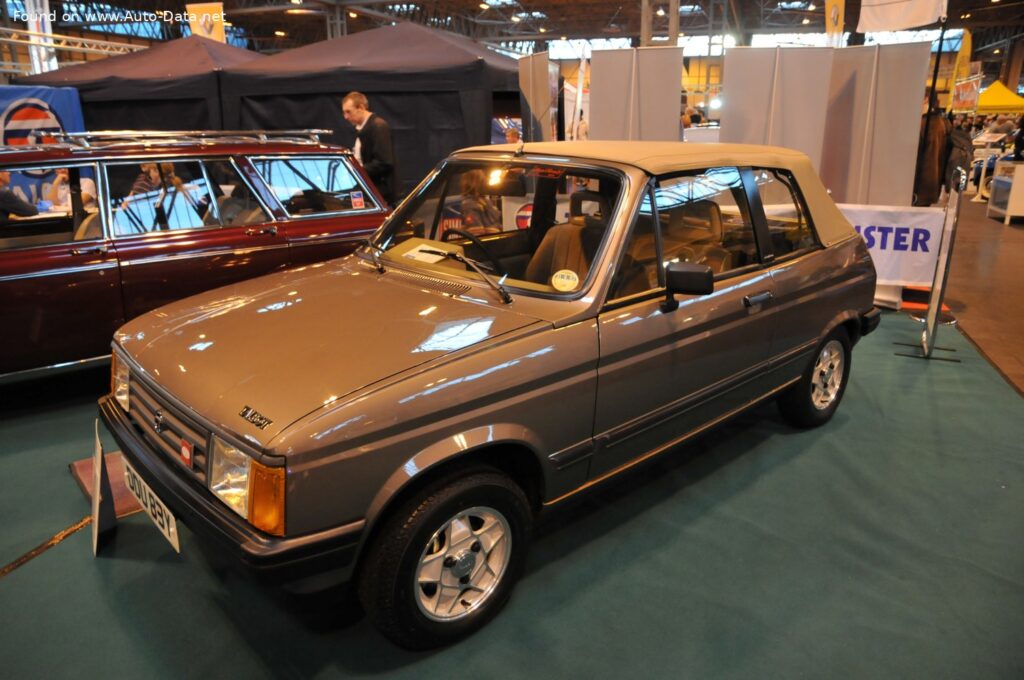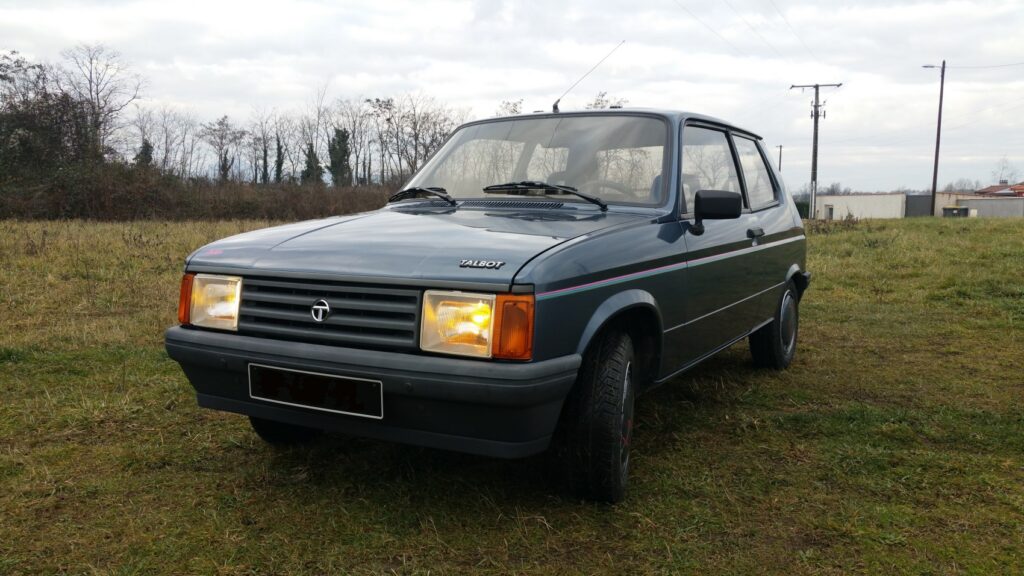
The Talbot Samba was a supermini car produced between 1981 and 1986, primarily for the European market. Rooted in the earlier Peugeot 104, the Samba represented the final automotive offering from the Talbot marque, a brand created by Chrysler Europe and later acquired by Peugeot. While never officially sold in the United States, the Samba was a significant vehicle in Europe, offering an affordable and relatively stylish option in the competitive small car segment. The 1.4-liter version, producing 60 horsepower, was a common variant, aimed at providing a balance between economy and usability. The Samba’s production coincided with a period of significant change in the European automotive industry, and its ultimate discontinuation marked the end of the Talbot nameplate.
The Talbot Samba: A European Supermini
The Talbot Samba emerged from a period of restructuring within the European automotive landscape. Chrysler Europe, facing financial difficulties, was acquired by Peugeot in 1978, leading to the creation of the Talbot brand to continue production of existing Chrysler models. The Samba, launched in 1981, was the first entirely new model developed under the Talbot banner. It was based on the Peugeot 104 platform, but featured distinct styling and aimed to appeal to a broader customer base. The car was available in three- and five-door hatchback configurations, and a convertible version, the Samba Cabriolet, was also produced by Pininfarina. The 1.4-liter engine variant, discussed here, was a mainstay of the Samba lineup, offering a practical and economical choice for everyday driving.
Origins and Market Positioning
The Talbot Samba was conceived as a direct competitor to popular superminis like the Renault 5, Fiat Uno, and Ford Fiesta. In a European market increasingly focused on fuel efficiency and affordability, the Samba aimed to provide a stylish and well-equipped package at a competitive price point. While the car didn’t achieve the sales success of some of its rivals, it established a niche for itself, particularly in France and the United Kingdom. The Samba’s relatively modern design, coupled with its practical interior and available features, made it an attractive option for young drivers and urban commuters. The 1.4-liter engine provided adequate performance for typical city driving and allowed for comfortable cruising on highways.
Engine & Performance
The Talbot Samba 1.4 utilized a naturally aspirated, 1.4-liter inline-four cylinder gasoline engine. This engine, derived from the Peugeot 104’s powertrain, produced 60 horsepower. While not a performance-oriented vehicle, the 1.4-liter engine provided sufficient power for the Samba’s lightweight chassis. Power was delivered to the front wheels through a four-speed manual transmission, although a three-speed automatic transmission was also offered as an option. The engine’s relatively simple design contributed to its reliability and ease of maintenance. Fuel economy was a key consideration for buyers in the early 1980s, and the Samba 1.4 delivered respectable figures for its time, typically achieving around 40-45 miles per gallon in mixed driving conditions. The engine’s modest torque output meant that acceleration was not particularly brisk, but it was adequate for navigating urban environments and maintaining comfortable speeds on open roads. The engine’s design prioritized fuel efficiency and durability over outright performance, reflecting the prevailing automotive trends of the era.
Design & Features
The Talbot Samba was a three or five-door hatchback, characterized by its angular styling and relatively compact dimensions. The design, penned by Italian design house Bertone, was considered modern and appealing for its time. The car featured a steeply raked windscreen, a short rear overhang, and a distinctive front grille. The interior was functional and relatively spacious for a supermini, offering seating for five passengers. The dashboard layout was straightforward, with clearly labeled controls and a simple instrument cluster. The Samba 1.4 typically came equipped with basic features such as cloth upholstery, a heater, and a basic radio. Higher trim levels offered additional features like central locking, electric windows, and a sunroof. Safety features were limited by the standards of the time, with seatbelts being the primary safety equipment. The Samba Cabriolet, produced by Pininfarina, added a touch of style and exclusivity to the range, appealing to buyers seeking a more open-air driving experience. The overall design of the Samba focused on practicality, affordability, and a modern aesthetic.
The End of an Era
Despite its merits, the Talbot Samba faced increasing competition from newer and more sophisticated superminis. Peugeot, focusing its resources on the Peugeot 205, gradually phased out the Talbot brand. Production of the Samba ceased in 1986, marking the end of the Talbot nameplate. While the Samba did not achieve widespread recognition in the United States, it remains a fondly remembered vehicle in Europe, representing a unique chapter in automotive history. The car’s legacy lies in its contribution to the supermini segment and its role as the final product of the Talbot marque.
Technical Specifications
| Brand | Talbot |
| Model | Samba |
| Generation | Samba (51A) |
| Type (Engine) | 1.4 (60 Hp) |
| Start of production | 1983 |
| End of production | 1986 |
| Powertrain Architecture | Internal Combustion engine |
| Body type | Hatchback |
| Fuel Type | Petrol (Gasoline) |
| Power | 60 Hp |
| Engine aspiration | Naturally aspirated engine |