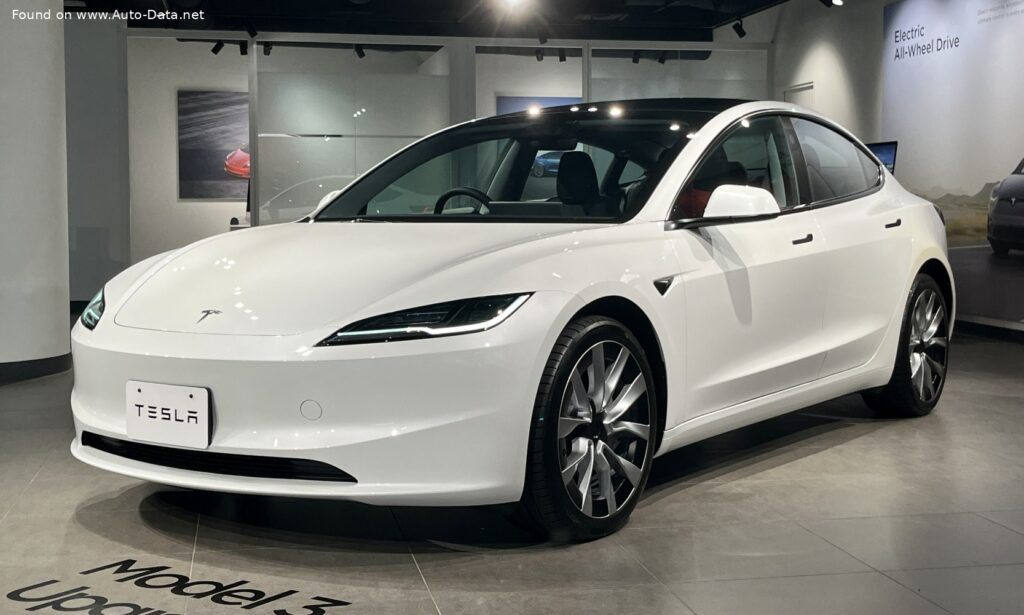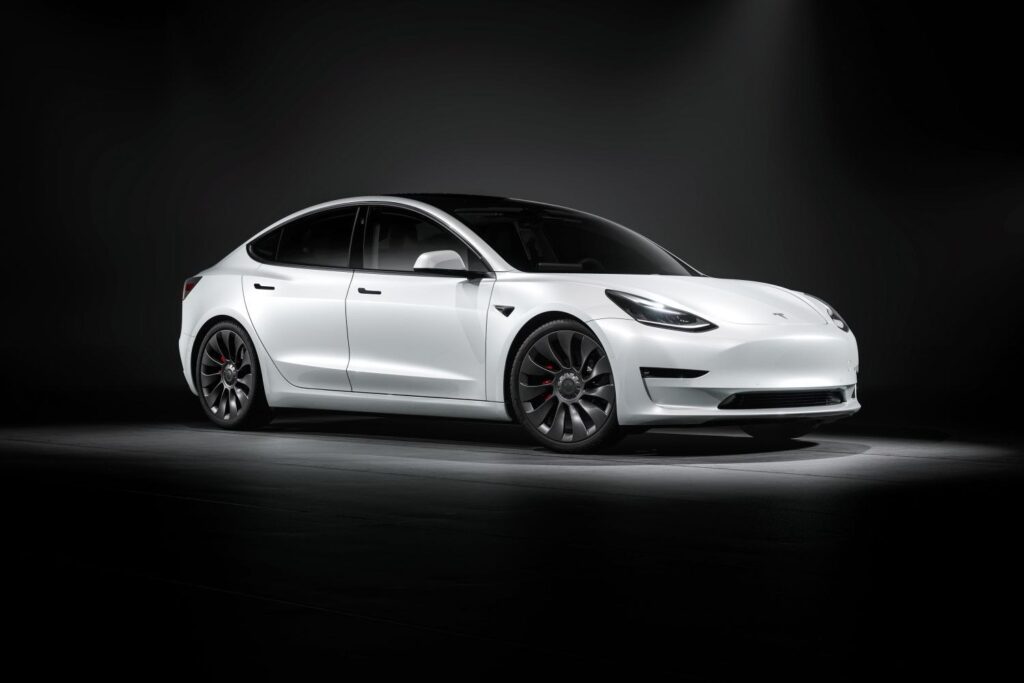
The Tesla Model 3, launched in 2017, quickly became a pivotal vehicle in the widespread adoption of electric vehicles. The 2020 facelift represented a significant evolution of the original design, focusing on improved efficiency, build quality, and features. This iteration, specifically the 60 kWh variant producing 325 horsepower, aimed to deliver a compelling balance of performance, range, and affordability within the premium compact sedan segment. While Tesla’s model naming conventions can be complex, this version occupied a key position in the lineup, offering a more accessible entry point to the Tesla ecosystem compared to the Long Range and Performance models.
Tesla Model 3 (Facelift 2020) 60 kWh: An Overview
The Model 3 facelift, produced from November 2021 to 2023, continued Tesla’s mission to accelerate the world’s transition to sustainable energy. It built upon the foundation of the original Model 3, addressing early criticisms and incorporating advancements in battery technology and manufacturing processes. The 60 kWh version, utilizing Lithium Iron Phosphate (LiFePO4) battery chemistry, was particularly notable for its cost-effectiveness and improved thermal stability. This model was primarily sold in markets where the Standard Range Plus model was previously offered, providing a competitive option against established gasoline-powered vehicles and other emerging electric alternatives.
Engine & Performance
The Tesla Model 3 60 kWh is powered by a single electric motor located on the rear axle, delivering 325 horsepower at 5525 rpm and 420 Nm (309.78 lb.-ft.) of torque available from 325 to 5200 rpm. This configuration results in a rear-wheel-drive powertrain. The single-speed automatic transmission, inherent to electric vehicle design, provides seamless acceleration. Performance figures include a 0-60 mph time of 5.8 seconds, a 0-62 mph time of 6.1 seconds, and a 0-100 km/h time of 6.1 seconds. The vehicle achieves a maximum speed of 225 km/h (139.81 mph). The weight-to-power ratio is 5.4 kg/Hp, or 186.2 Hp/tonne, contributing to its responsive driving experience. The LiFePO4 battery provides a gross capacity of 60 kWh, enabling a WLTP-rated all-electric range of 491 km (305.09 miles).
Design & Features
The Model 3 is a four-door sedan with a fastback roofline, emphasizing aerodynamic efficiency. The 2020 facelift brought subtle but impactful design changes, including revised front and rear fascias, updated interior materials, and improved sound insulation. The minimalist interior is dominated by a large central touchscreen that controls most vehicle functions, eliminating traditional physical buttons. Key features include Tesla’s Autopilot system, offering advanced driver-assistance features such as adaptive cruise control and lane keeping assist. Safety is paramount, with a comprehensive suite of active and passive safety systems, including automatic emergency braking, forward collision warning, and multiple airbags. The vehicle offers seating for five passengers and provides 649 liters (22.92 cubic feet) of trunk space. The focus on over-the-air software updates allows for continuous improvement and the addition of new features throughout the vehicle’s lifespan.
Technical Specifications
| Brand | Tesla |
| Model | Model 3 |
| Generation | Model 3 (facelift 2020) |
| Type (Engine) | 60 kWh (325 Hp) |
| Start of production | November, 2021 |
| End of production | 2023 |
| Powertrain Architecture | BEV (Electric Vehicle) |
| Body type | Sedan, Fastback |
| Seats | 5 |
| Doors | 4 |
| Fuel Type | Electricity |
| Acceleration 0 – 100 km/h | 6.1 sec |
| Acceleration 0 – 62 mph | 6.1 sec |
| Acceleration 0 – 60 mph | 5.8 sec |
| Maximum speed | 225 km/h (139.81 mph) |
| Weight-to-power ratio | 5.4 kg/Hp, 186.2 Hp/tonne |
| Gross battery capacity | 60 kWh |
| Battery technology | Lithium iron phosphate (LiFePO4) |
| All-electric range (WLTP) | 491 km (305.09 mi) |
| Average Energy consumption (WLTP) | 14.0 kWh/100 km (22.53 kWh/100 mi) |
| MPGe | 150 |
| km/kWh | 7.1 |
| mi/kWh | 4.4 |
| Electric motor power | 325 Hp @ 5525 rpm |
| Electric motor Torque | 420 Nm @ 325-5200 rpm (309.78 lb.-ft. @ 325-5200 rpm) |
| Electric motor location | Rear axle, Transverse |
| System power | 325 Hp @ 5525 rpm |
| Kerb Weight | 1745 kg (3847.07 lbs) |
| Trunk (boot) space – minimum | 649 l (22.92 cu. ft) |
| Length | 4694 mm (184.8 in) |
| Width | 1849 mm (72.8 in) |
| Width with mirrors folded | 1933 mm (76.1 in) |
| Width including mirrors | 2088 mm (82.2 in) |
| Height | 1443 mm (56.81 in) |
| Wheelbase | 2875 mm (113.19 in) |
| Front track | 1580 mm (62.2 in) |
| Rear (Back) track | 1580 mm (62.2 in) |
| Front overhang | 841 mm (33.11 in) |
| Rear overhang | 978 mm (38.5 in) |
| Ride height (ground clearance) | 140 mm (5.51 in) |
| Minimum turning circle (turning diameter) | 11.6 m (38.06 ft) |
| Drivetrain Architecture | One electric motor drives the rear wheels |
| Drive wheel | Rear wheel drive |
| Number of gears and type of gearbox | 1 gears, automatic transmission |
| Front suspension | Double wishbone |
| Rear suspension | Independent multi-link suspension |
| Front brakes | Ventilated discs, 320×25 mm |
| Rear brakes | Ventilated discs, 335×20 mm |
| Assisting systems | ABS (Anti-lock braking system) |
| Steering type | Steering rack and pinion |
| Power steering | Electric Steering |
| Tires size | 235/45 R18; 235/40 R19 |
| Wheel rims size | 18; 19 |
The Tesla Model 3 60 kWh (facelift 2020) represented a crucial step in making electric vehicles more accessible and appealing to a wider audience. Its combination of performance, range, technology, and relative affordability solidified its position as a leading contender in the rapidly evolving electric vehicle market.