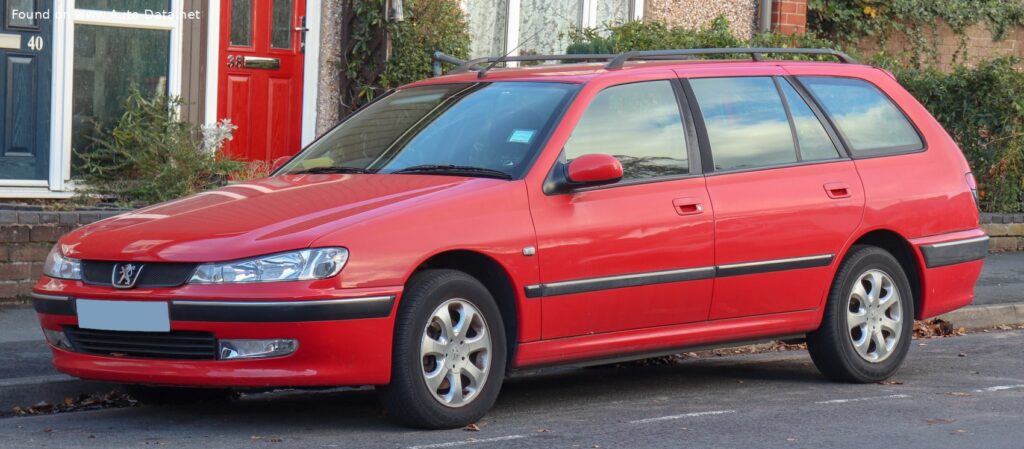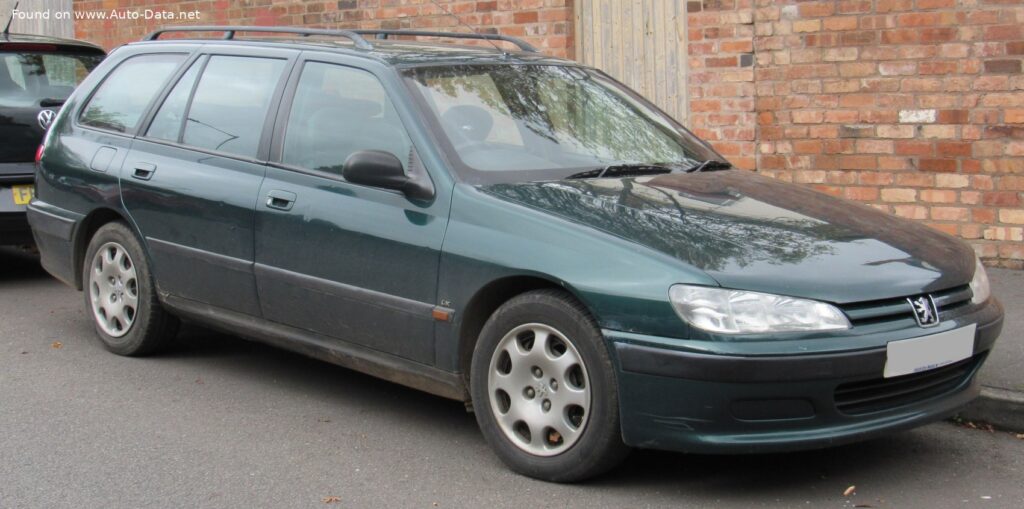
The Peugeot 406 Break, specifically the Phase I model produced from 1996 to 1999, represents a significant offering from the French automaker in the mid-size station wagon segment. While not widely sold in the United States, the 406 held a prominent position in the European market, competing with vehicles like the Ford Mondeo Estate, Vauxhall/Opel Vectra Estate, and Renault Laguna Estate. The “Break” designation, traditional for Peugeot station wagons, signified its practicality and spaciousness, catering to families and those requiring substantial cargo capacity. This particular variant, powered by a 1.9-liter diesel engine producing 75 horsepower, was aimed at buyers prioritizing fuel efficiency and reliability over outright performance. The 406, as a whole, was a crucial model for Peugeot, representing a move upmarket in terms of design, technology, and perceived quality.
Peugeot 406 Break: A European Family Hauler
The 406 Break built upon the success of the 405, offering a more refined and modern package. The Phase I models, produced between 1995 and 1997 (with some overlap into 1999 for the Break), established the core design and mechanical features of the range. The station wagon body style, or “Break” as Peugeot termed it, was a key component of the 406’s appeal, providing a versatile alternative to the sedan. It was designed to offer a blend of comfort, practicality, and a touch of French flair, appealing to a broad demographic within the European market. The 1.9 D engine option was particularly popular in countries where diesel fuel was more affordable and where long-distance driving was common.
Engine & Performance
The heart of this 406 Break is the DHW XUD9SD 1.9-liter naturally aspirated diesel engine. This engine, a mainstay of Peugeot’s lineup for many years, is known for its durability and fuel efficiency, rather than its blistering performance. Producing 75 horsepower, the engine delivers adequate power for everyday driving, but acceleration is modest. Torque figures, while not explicitly stated in the provided data, are typically in the range of 120-130 lb-ft, providing reasonable pulling power for a loaded vehicle. The engine is mechanically simple, relying on indirect fuel injection, which was common for diesel engines of that era. This simplicity contributes to its reliability, but also results in higher levels of noise and vibration compared to more modern diesel engines.
The 406 Break’s performance is geared towards economy. Expect a 0 to 60 mph time in the region of 13-15 seconds, and a top speed around 95-100 mph. The focus wasn’t on speed, but on providing a comfortable and economical means of transporting passengers and cargo. The engine is coupled with a manual transmission, typically a five-speed unit, maximizing fuel efficiency. The suspension setup prioritizes ride comfort, making it well-suited for long journeys. While not a sporty vehicle, the 406 Break offers a stable and predictable driving experience.
Design & Features
The 406 Break’s design, penned by Pininfarina, is characterized by its elegant and flowing lines. The Phase I models feature a relatively understated aesthetic, with a focus on practicality and functionality. The station wagon body style extends the roofline rearward, creating a large and usable cargo area. The rear suspension is independent, contributing to a comfortable ride and good handling characteristics. Interior space is generous, both for passengers and luggage. The dashboard layout is functional and ergonomically designed, although the materials used are typical of vehicles from the mid-1990s – durable but not particularly luxurious.
Standard features on the 1.9 D Break typically included power steering, central locking, and electric front windows. Higher trim levels offered features such as air conditioning, alloy wheels, and a sunroof. Safety features, while limited by the standards of today, included seatbelts and a driver’s airbag. The 406 Break’s primary appeal lay in its practicality and spaciousness. The large cargo area, with its flat floor and wide opening, made it ideal for carrying bulky items. The rear seats could be folded down to further increase cargo capacity. The vehicle’s robust construction and reliable engine made it a popular choice for families and those who needed a versatile and dependable vehicle.
Technical Specifications
| Brand | Peugeot |
| Model | 406 |
| Generation | 406 Break (Phase I, 1996) |
| Type (Engine) | 1.9 D (75 Hp) |
| Start of production | 1996 |
| End of production | 1999 |
| Powertrain Architecture | Internal Combustion engine |
| Body type | Station wagon (estate) |
| Fuel Type | Diesel |
| Power | 75 Hp |
| Engine Model/Code | DHW XUD9SD |
| Engine aspiration | Naturally aspirated engine |
| Engine oil capacity | 4 l (4.23 US qt | 3.52 UK qt) |
| Engine oil specification | Log in to see. |
| Coolant | 8 l (8.45 US qt | 7.04 UK qt) |
The Peugeot 406 Break, particularly the 1.9 D variant, represents a practical and reliable choice for those seeking a spacious and fuel-efficient station wagon. While not a performance-oriented vehicle, its durability, comfortable ride, and generous cargo capacity made it a popular choice in Europe during the late 1990s. Its legacy lies in providing a dependable and versatile vehicle for families and individuals alike, embodying Peugeot’s commitment to practicality and understated elegance.