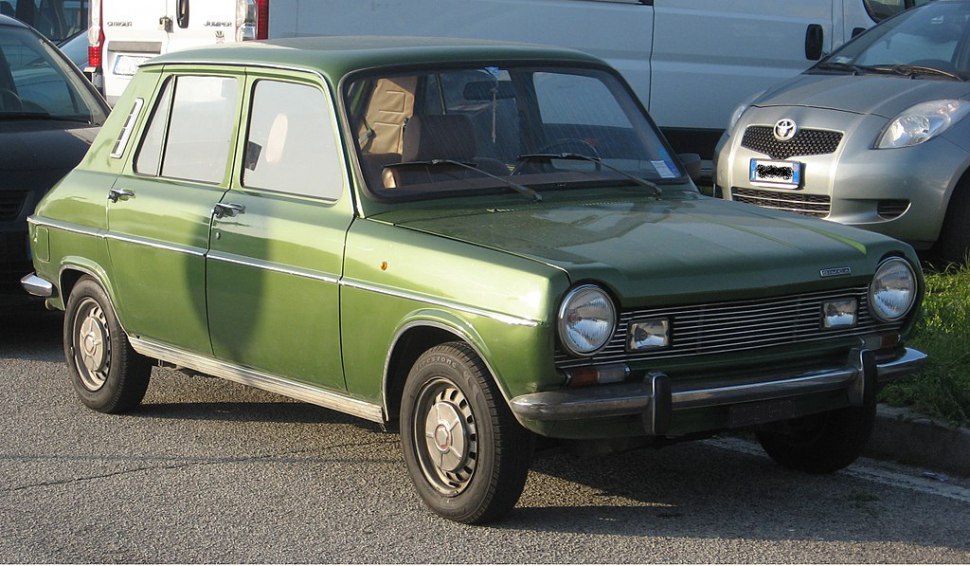
The Talbot Simca 1100 was a small family car produced from 1968 to 1976, initially by Simca, and later by Chrysler after the 1968 Simca-Chrysler merger, and finally by Talbot after the 1978 Chrysler Europe restructuring. It represented a significant departure for Simca, moving away from their traditionally rear-engined designs to a more conventional front-wheel-drive layout. The 1100, in its various trim levels including the 1.1 LS and GLS, was a popular choice in Europe, particularly in France and the United Kingdom, offering a practical and relatively affordable option in the small family car segment. While never officially sold in the United States, the 1100’s innovative design and engineering influenced the development of front-wheel-drive vehicles globally. This article focuses on the 1.1 LS and GLS variants produced between 1968 and 1976.
The Talbot Simca 1100: A European Compact
The Simca 1100 was conceived as a replacement for the Simca 1000, aiming to provide a more spacious and modern vehicle. Its design was heavily influenced by the need for practicality and efficiency, reflecting the automotive trends of the late 1960s. The car’s compact dimensions and front-wheel-drive configuration maximized interior space, making it a versatile option for families. The later rebranding under Talbot reflected Chrysler’s attempts to consolidate its European brands and create a distinct identity. The 1.1 LS and GLS models represented mid-range trims, offering a balance of comfort and features without the expense of the top-of-the-line versions.
Engine & Performance
The Talbot Simca 1100 1.1 LS and GLS were powered by a 1.1-liter (1097cc) inline-four cylinder, naturally aspirated gasoline engine. This engine produced 60 horsepower, which, while modest by modern standards, was competitive for its time and market segment. The engine featured a single overhead camshaft and a two-barrel Solex carburetor. The front-wheel-drive layout, a relatively new feature for Simca, contributed to good traction and handling, particularly in adverse weather conditions.
Performance was adequate for everyday driving. The 1100 wasn’t designed for outright speed, but rather for fuel efficiency and usability. Acceleration was reasonable, and the car was capable of maintaining highway speeds, although with limited reserves of power for overtaking. The four-speed manual transmission was standard, providing a direct and engaging driving experience. While an automatic transmission was offered in some markets, it was less common. The engine’s relatively small displacement and simple design contributed to its reliability and ease of maintenance. The engine’s placement ahead of the front axle, combined with the front-wheel drive, resulted in a favorable weight distribution, enhancing handling characteristics.
Design & Features
The Talbot Simca 1100 was a practical and functional hatchback, a body style gaining popularity in Europe during the late 1960s and early 1970s. The hatchback configuration provided easy access to the cargo area, enhancing the car’s versatility. The exterior styling was relatively understated, reflecting the design trends of the era. The car featured a boxy shape with a sloping rear window, maximizing interior space.
The 1.1 LS and GLS models offered a step up in terms of features and comfort compared to the base models. The GLS, in particular, included features such as upgraded upholstery, more comprehensive instrumentation, and often, features like a vinyl roof. Interior space was a key selling point, with the 1100 offering a surprisingly roomy cabin for its compact dimensions. The front seats were comfortable, and the rear seats provided adequate space for passengers. Safety features were relatively basic by modern standards, but included seat belts and a collapsible steering column. The car’s suspension system, featuring independent front suspension and a torsion beam rear suspension, provided a comfortable ride, absorbing bumps and irregularities in the road surface effectively. The steering was light and precise, making the car easy to maneuver in urban environments. The 1100’s design prioritized practicality and usability, making it a popular choice for families and commuters.
Technical Specifications
| Brand | Talbot Simca |
| Model | 1100 Hatchback 1.1 LS, GLS |
| Generation | Simca 1100 Hatchback |
| Engine Type | 1.1 LS, GLS (60 Hp) |
| Start of Production | 1968 |
| End of Production | 1976 |
| Powertrain Architecture | Internal Combustion Engine |
| Body Type | Hatchback |
| Fuel Type | Petrol (Gasoline) |
| Power | 60 Hp |
| Engine Aspiration | Naturally Aspirated |
The Talbot Simca 1100, despite its relatively short production run under the Talbot name, left a lasting legacy. It demonstrated Simca’s ability to adapt to changing market demands and embrace new technologies, such as front-wheel drive. The car’s practicality, efficiency, and relatively affordable price point made it a popular choice in Europe, and its design influenced the development of subsequent small family cars. While it never achieved significant sales success in the United States, the 1100 remains a significant example of European automotive engineering from the late 1960s and early 1970s. Its innovative features and functional design continue to be appreciated by classic car enthusiasts today. The 1100’s story is a testament to the dynamic nature of the automotive industry and the constant pursuit of improved design and performance.
The transition from Simca to Chrysler and then to Talbot reflects the turbulent period in the European automotive industry during the 1970s. Chrysler’s acquisition of Simca was intended to create a stronger European presence, but ultimately proved unsuccessful. The rebranding as Talbot was an attempt to distance the company from Chrysler’s struggles and establish a new identity. However, the Talbot brand ultimately failed to gain significant traction, and production of the 1100 ceased in 1976. Despite its relatively short lifespan, the Talbot Simca 1100 remains a fondly remembered and historically significant vehicle.