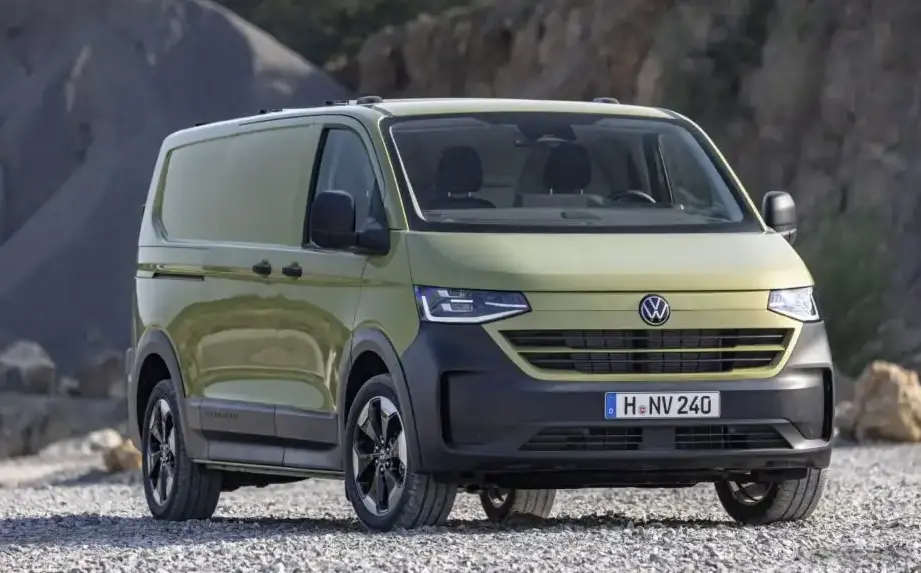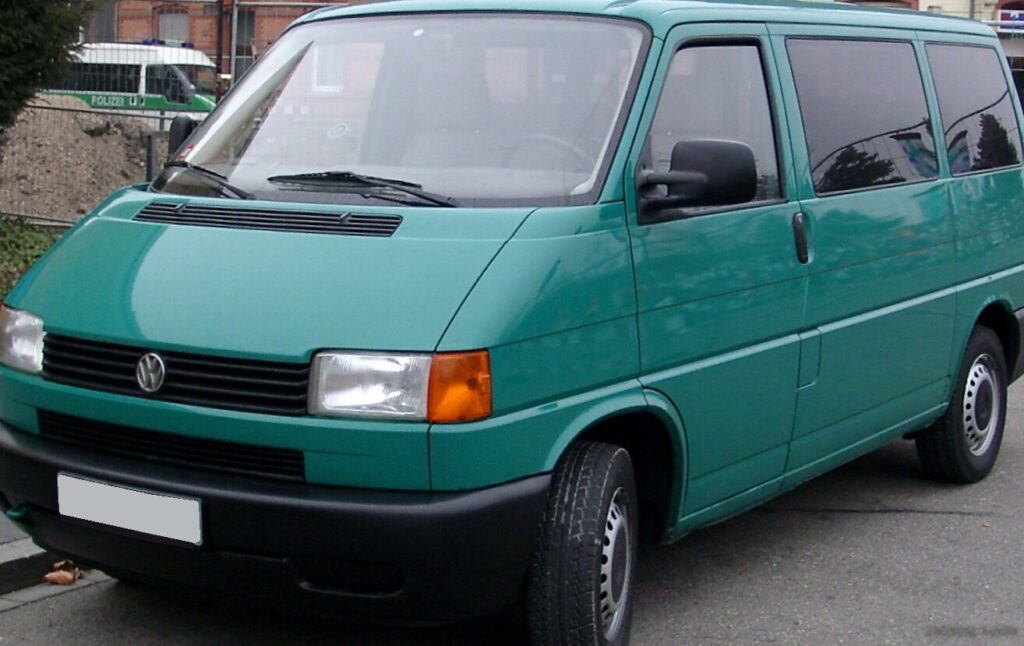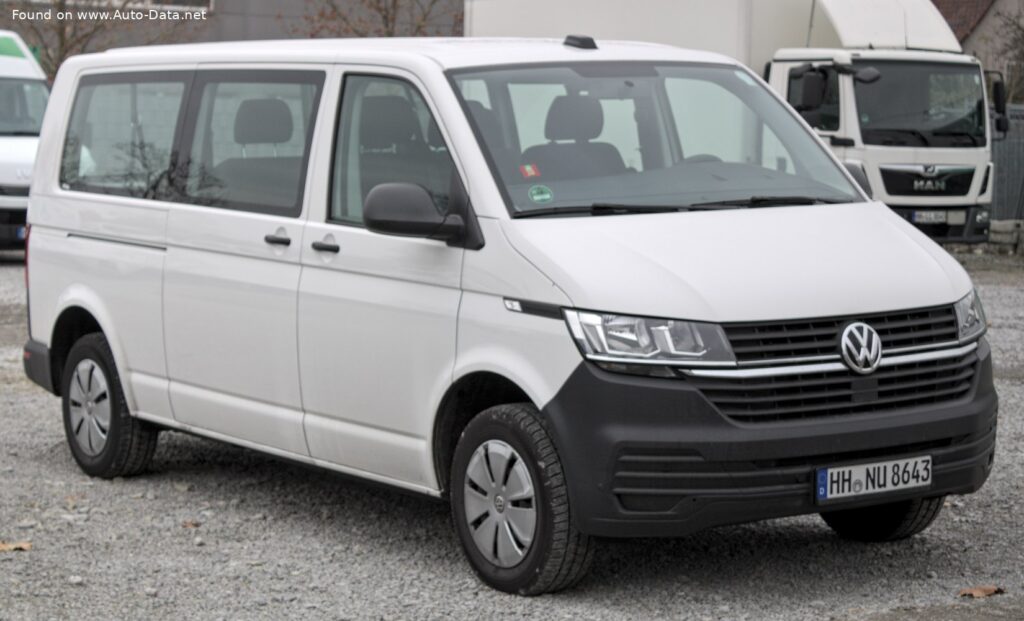
The Volkswagen Transporter, known as the Bulli in some markets, is a mainstay of the commercial vehicle segment in Europe and beyond. The T6.1 generation, a significant facelift of the T6, arrived in 2019, bringing updated styling, enhanced technology, and improved efficiency. This article focuses on the Volkswagen Transporter (T6.1) Kombi 2.0 TDI (150 Hp) L2H3 model produced between 2020 and 2022, a versatile panel van popular with businesses and families alike. The “Kombi” designation indicates a passenger-carrying variant, bridging the gap between a pure cargo van and a full-fledged people carrier. The L2H3 signifies the vehicle’s body length and roof height, denoting a long wheelbase and high roof configuration, maximizing interior space.
Volkswagen Transporter T6.1: Overview and Market Position
The Transporter T6.1 represents Volkswagen Commercial Vehicles’ commitment to providing a practical and adaptable vehicle for a wide range of applications. While not officially sold in the United States, the Transporter enjoys immense popularity in Europe, South America, and Australia, where it serves as a workhorse for tradespeople, a base for campervan conversions, and a family vehicle. The T6.1 facelift was crucial in maintaining the Transporter’s competitive edge against rivals like the Ford Transit, Mercedes-Benz Vito, and Fiat Ducato. The 2.0 TDI engine, in its 150 horsepower guise, offered a balance of performance and fuel economy, making it a popular choice for operators prioritizing both cost-effectiveness and usability.
Engine & Performance
The heart of the Transporter T6.1 Kombi 2.0 TDI (150 Hp) L2H3 is Volkswagen’s EA288MAR 2.0-liter turbocharged diesel engine. This inline-four cylinder engine produces 150 horsepower at 3250-3750 rpm and 340 Nm (250.77 lb.-ft.) of torque between 1500 and 3000 rpm. The engine features a diesel commonrail fuel injection system and a turbocharger with an intercooler, optimizing combustion and boosting power output. Power is delivered to the front wheels via a six-speed manual transmission. Acceleration from 0 to 100 km/h (0-62 mph) takes 12.2 seconds, while 0-60 mph is achieved in 11.6 seconds. The vehicle has a top speed of 173 km/h (107.5 mph). Fuel economy is rated at 6.3-7.4 l/100 km (37.3 – 31.8 US mpg), with CO2 emissions ranging from 165-194 g/km, adhering to Euro 6d-ISC-FCM emission standards. The inclusion of a Start & Stop system and a particulate filter further contributes to reducing emissions.
Design & Features
The Transporter T6.1 Kombi L2H3 is a four or five-door van characterized by its practical and functional design. The L2 (long wheelbase) provides ample cargo space, while the H3 (high roof) allows for comfortable standing room for most adults. The Kombi variant features seating for up to nine passengers, making it suitable for larger families or shuttle services. The interior is designed with durability and usability in mind, featuring hard-wearing materials and a functional dashboard layout. Standard features typically include ABS (Anti-lock braking system), power steering, and a driver’s airbag. The T6.1 facelift brought subtle styling updates, including a revised front grille, new headlights, and updated interior trim. The vehicle’s dimensions are: Length 5304 mm (208.82 in), Width 1904 mm (74.96 in) including mirrors 2297 mm (90.43 in), Height 2477 mm (97.52 in), and Wheelbase 3400 mm (133.86 in). Ground clearance is 202 mm (7.95 in).
Technical Specifications
| Brand | Volkswagen |
| Model | Transporter |
| Generation | Transporter (T6.1, facelift 2019) Kombi |
| Type (Engine) | 2.0 TDI (150 Hp) L2H3 |
| Start of production | 2020 |
| End of production | 2022 |
| Powertrain Architecture | Internal Combustion engine |
| Body type | Van |
| Seats | 4-9 |
| Doors | 4-5 |
| Fuel consumption (urban) | 7.4-8.3 l/100 km (31.8 – 28.3 US mpg) |
| Fuel consumption (extra urban) | 5.6-6.8 l/100 km (42 – 34.6 US mpg) |
| Fuel consumption (combined) | 6.3-7.4 l/100 km (37.3 – 31.8 US mpg) |
| CO2 emissions | 165-194 g/km |
| Fuel Type | Diesel |
| Acceleration 0 – 100 km/h | 12.2 sec |
| Acceleration 0 – 62 mph | 12.2 sec |
| Acceleration 0 – 60 mph | 11.6 sec |
| Maximum speed | 173 km/h (107.5 mph) |
| Emission standard | Euro 6d-ISC-FCM |
| Weight-to-power ratio | 13.2 kg/Hp |
| Weight-to-torque ratio | 5.8 kg/Nm |
| Power | 150 Hp @ 3250-3750 rpm |
| Torque | 340 Nm @ 1500-3000 rpm (250.77 lb.-ft.) |
| Engine layout | Front, Transverse |
| Engine Model/Code | EA288MAR / DNAA |
| Engine displacement | 1968 cm3 (120.09 cu. in.) |
| Number of cylinders | 4 |
| Engine configuration | Inline |
| Cylinder Bore | 81 mm (3.19 in.) |
| Piston Stroke | 95.5 mm (3.76 in.) |
| Compression ratio | 15.5:1 |
| Number of valves per cylinder | 4 |
| Fuel injection system | Diesel Commonrail |
| Engine aspiration | Turbocharger, Intercooler |
| Valvetrain | DOHC |
| Engine oil capacity | 7.4 l (7.82 US qt | 6.51 UK qt) |
| Kerb Weight | 1976-2274 kg (4356.33 – 5013.31 lbs.) |
| Max. weight | 2800-3200 kg (6172.94 – 7054.79 lbs.) |
| Max load | 824-926 kg (1816.61 – 2041.48 lbs.) |
| Trunk (boot) space – maximum | 9300 l (328.43 cu. ft.) |
| Fuel tank capacity | 70 l (18.49 US gal | 15.4 UK gal) |
| AdBlue tank | 22 l (5.81 US gal | 4.84 UK gal) |
| Permitted trailer load with brakes (12%) | 2500 kg (5511.56 lbs.) |
| Permitted trailer load without brakes | 750 kg (1653.47 lbs.) |
| Permitted towbar download | 100 kg (220.46 lbs.) |
| Length | 5304 mm (208.82 in.) |
| Width | 1904 mm (74.96 in.) |
| Width including mirrors | 2297 mm (90.43 in.) |
| Height | 2477 mm (97.52 in.) |
| Wheelbase | 3400 mm (133.86 in.) |
| Front overhang | 906 mm (35.67 in.) |
| Rear overhang | 998 mm (39.29 in.) |
| Ride height (ground clearance) | 202 mm (7.95 in.) |
| Minimum turning circle | 13.2 m (43.31 ft.) |
| Drive wheel | Front wheel drive |
| Number of gears | 6 gears, manual transmission |
| Front brakes | Ventilated discs, 308×29.5 mm |
| Rear brakes | Ventilated discs, 294×22 mm |
| Tires size | 205/65 R16; 215/65 R16 |
| Wheel rims size | 6.5J x 16 |
The Volkswagen Transporter T6.1 Kombi 2.0 TDI (150 Hp) L2H3 remains a highly capable and versatile vehicle, offering a compelling blend of practicality, efficiency, and reliability. Its enduring popularity is a testament to its well-engineered design and adaptability to a wide range of commercial and personal needs.