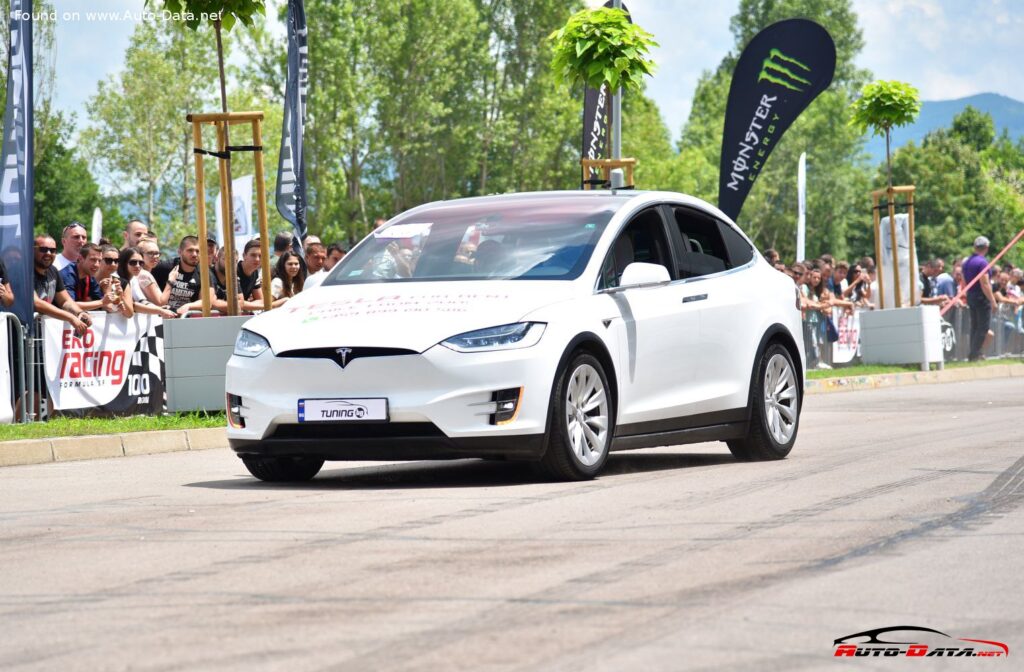
The Tesla Model X 100D, produced from January 2017 to February 2019, represents a pivotal moment in the evolution of electric SUVs. As the second vehicle in Tesla’s lineup, following the Model S, the Model X aimed to combine the practicality of an SUV with the performance and zero-emission benefits of an all-electric powertrain. The 100D variant, equipped with a 100 kWh battery pack, offered an extended range and solidified Tesla’s position as a leader in the burgeoning electric vehicle market. It quickly became a popular choice for families seeking a spacious, technologically advanced, and environmentally conscious vehicle.
Tesla Model X 100D: A Technological Leap
The Model X 100D is characterized by its distinctive “Falcon Wing” doors, a feature designed to provide easy access to the second and third-row seats in tight parking spaces. Beyond this signature design element, the vehicle embodies Tesla’s commitment to innovation in battery technology, electric motors, and autonomous driving features. The 100D model specifically focused on maximizing range and efficiency, making it a compelling option for long-distance travel. It’s important to note that the Model X was initially conceived to address a gap in the market for a premium, all-electric SUV, a segment largely untapped before Tesla’s entry.
Engine & Performance
The Tesla Model X 100D utilizes a dual-motor, all-wheel-drive (AWD) powertrain. Each motor independently powers the front and rear axles, providing precise torque vectoring for enhanced handling and stability. Both motors produce 262 horsepower and 330 Nm (243.4 lb.-ft.) of torque, resulting in a combined system output of 422 horsepower. This allows for brisk acceleration, achieving 0-60 mph in approximately 4.7 seconds and a 0-100 km/h time of 4.9 seconds. The vehicle boasts a maximum speed of 155.34 mph (250 km/h). The powertrain’s efficiency is reflected in its energy consumption figures: 16.8 kWh per 100 km (27.04 kWh per 100 miles), equating to 125 MPGe and a range of 6 km per kWh (3.7 miles per kWh). The battery pack, a lithium-ion unit with a gross capacity of 100 kWh and operating at 350V, is positioned beneath the floor, contributing to a low center of gravity and improved handling.
Design & Features
The Tesla Model X 100D is a five-door SUV with seating for up to seven passengers. Its exterior design is sleek and aerodynamic, with a drag coefficient of 0.24, contributing to its efficiency. The Falcon Wing doors are the most visually striking feature, offering a unique entry and exit experience. Inside, the Model X is characterized by its minimalist interior, dominated by a large 17-inch touchscreen that controls most vehicle functions. The spacious cabin provides ample headroom and legroom for all occupants. Safety features are comprehensive, including ABS (Anti-lock Braking System) and a suite of advanced driver-assistance systems (ADAS) that contribute to enhanced safety and convenience. The vehicle’s air suspension system provides a comfortable ride and allows for adjustable ride height. Trunk space is generous, ranging from 357 liters (12.61 cu. ft.) with all seats in use to 2166 liters (76.49 cu. ft.) with the rear seats folded down.
Technical Specifications
| Brand | Tesla |
| Model | Model X |
| Generation | Model X |
| Type (Engine) | 100D 100 kWh (422 Hp) Dual Motor AWD |
| Start of production | January, 2017 |
| End of production | February, 2019 |
| Powertrain Architecture | BEV (Electric Vehicle) |
| Body type | SUV |
| Seats | 7 |
| Doors | 5 |
| Fuel Type | Electricity |
| Acceleration 0 – 100 km/h | 4.9 sec |
| Acceleration 0 – 62 mph | 4.9 sec |
| Acceleration 0 – 60 mph | 4.7 sec |
| Maximum speed | 250 km/h (155.34 mph) |
| Weight-to-power ratio | 5.8 kg/Hp, 171.6 Hp/tonne |
| Gross battery capacity | 100 kWh |
| Battery voltage | 350 V |
| Battery technology | Lithium-ion (Li-Ion) |
| Battery location | Below the floor |
| All-electric range (WLTP) | 523 km (324.98 mi) |
| All-electric range (NEDC) | 565 km (351.07 mi) |
| Average Energy consumption (NEDC) | 16.8 kWh/100 km (27.04 kWh/100 mi) |
| Kerb Weight | 2459 kg (5421.17 lbs.) |
| Max. weight | 3079 kg (6788.03 lbs.) |
| Max load | 620 kg (1366.87 lbs.) |
| Trunk (boot) space – minimum | 357 l (12.61 cu. ft.) |
| Trunk (boot) space – maximum | 2166 l (76.49 cu. ft.) |
| Permitted trailer load with brakes (12%) | 2250 kg (4960.4 lbs.) |
| Permitted towbar download | 54 kg (119.05 lbs.) |
| Length | 5036 mm (198.27 in.) |
| Width | 1999 mm (78.7 in.) |
| Width with mirrors folded | 2072 mm (81.57 in.) |
| Width including mirrors | 2271 mm (89.41 in.) |
| Height | 1684 mm (66.3 in.) |
| Wheelbase | 2965 mm (116.73 in.) |
| Front track | 1705 mm (67.13 in.) |
| Rear (Back) track | 1710 mm (67.32 in.) |
| Front overhang | 974 mm (38.35 in.) |
| Rear overhang | 1097 mm (43.19 in.) |
| Ride height (ground clearance) | 183-223 mm (7.2 – 8.78 in.) |
| Drag coefficient (Cd) | 0.24 |
| Minimum turning circle (turning diameter) | 11.8 m (38.71 ft.) |
| Drivetrain Architecture | One electric motor drives the front wheels, one electric motor drives the rear wheels. |
| Drive wheel | All wheel drive (4×4) |
| Number of gears and type of gearbox | 1 gears, automatic transmission |
| Front suspension | Double wishbone, Transverse stabilizer, Air suspension |
| Rear suspension | Independent multi-link suspension, Air suspension, Transverse stabilizer |
| Front brakes | Ventilated discs, 355×32 mm |
| Rear brakes | Ventilated discs, 365×28 mm |
| Assisting systems | ABS (Anti-lock braking system) |
| Steering type | Steering rack and pinion |
| Power steering | Electric Steering |
| Tires size Front | 255/45 R20; 265/45 R20; 265/35 R22 |
| Tires size Rear | 275/45 R20; 275/45 R20; 285/35 R22 |
| Wheel rims size Front | 9J x 20; 9J x 22 |
| Wheel rims size Rear | 9.5J x 20; 10J x 20; 10J x 22 |
The Tesla Model X 100D was a significant step forward in electric vehicle technology, offering a compelling combination of performance, range, and practicality. It helped to establish Tesla as a major player in the automotive industry and paved the way for the widespread adoption of electric vehicles.