
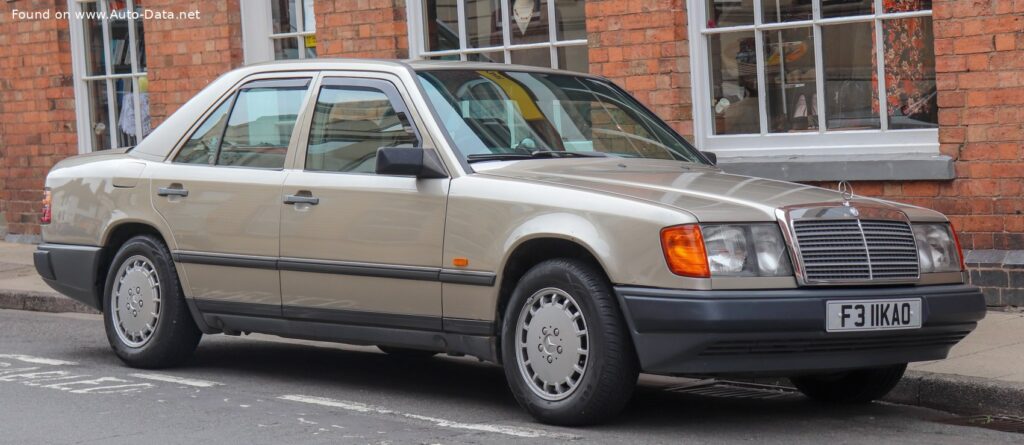
The Mercedes-Benz W124 represents a pivotal era for the German automaker, bridging the gap between the earlier, more utilitarian W115 and W123 models and the more technologically advanced designs of the 1990s. Produced from 1985 to 1996, the W124 was lauded for its robust build quality, sophisticated engineering, and understated elegance. The 200 model, powered by a 2.0-liter engine producing 109 horsepower, served as an entry point into the W124 range, offering a balance of performance and fuel efficiency. While not initially a major seller in the United States (the W124 was introduced to the US in 1986, with the 200 model arriving later), it established Mercedes-Benz as a premium brand focused on safety and durability.
The Mercedes-Benz W124 200: A Detailed Overview
The W124 was designed with a focus on longevity and passenger safety, incorporating features like crumple zones and anti-lock braking systems (ABS) – innovations for its time. The 200 model, specifically, was aimed at buyers seeking a comfortable and reliable sedan for daily use. It represented a significant step forward in terms of refinement compared to its predecessors, offering a more modern driving experience. The W124’s design language, characterized by clean lines and a relatively conservative aesthetic, proved remarkably enduring, influencing Mercedes-Benz styling for years to come.
Engine & Performance
The heart of the W124 200 is the M102 V 20 engine, a 1,997 cc (121.86 cubic inches) inline-four cylinder powerplant. This engine, producing 109 horsepower at 5,200 rpm and 170 Nm (125.39 lb-ft) of torque at 2,500 rpm, was known for its smooth operation and reliability. The engine utilized a carburetor fuel injection system, a common feature for the time, and a single overhead camshaft (SOHC) valvetrain. While not a performance-oriented engine, it provided adequate power for comfortable cruising and everyday driving. Acceleration from 0 to 100 km/h (0-62 mph) took approximately 12.6 seconds, with a top speed of 187 km/h (116.2 mph). The engine’s weight-to-power ratio of 11.6 kg/Hp and weight-to-torque ratio of 7.4 kg/Nm contributed to a reasonably responsive driving experience. Fuel economy was respectable for the era, achieving approximately 11.2 liters per 100 km (21 US mpg) in urban conditions and 6.7 liters per 100 km (35.1 US mpg) on the open road.
Design & Features
The W124 200 is a four-door sedan with a classic three-box design. Its body construction emphasized rigidity and crash safety, utilizing high-strength steel. The interior was designed for comfort and practicality, offering seating for five passengers. Key features included hydraulic power steering, disc brakes on all four wheels, and a four-speed manual transmission. The W124’s suspension system – featuring wishbone front suspension and an independent multi-link rear suspension – provided a comfortable and controlled ride. The trunk offered a generous 520 liters (18.36 cubic feet) of storage space. While not brimming with advanced technology by today’s standards, the W124 200 represented a significant leap forward in terms of build quality, refinement, and safety compared to its predecessors. The vehicle’s understated elegance and durable construction contributed to its enduring appeal.
Technical Specifications
| Brand | Mercedes-Benz |
| Model | W124 |
| Generation | W124 |
| Type (Engine) | 200 (109 Hp) |
| Start of production | March, 1985 |
| End of production | September, 1986 |
| Powertrain Architecture | Internal Combustion engine |
| Body type | Sedan |
| Seats | 5 |
| Doors | 4 |
| Fuel consumption (urban) | 11.2 l/100 km (21 US mpg) |
| Fuel consumption (extra urban) | 6.7 l/100 km (35.1 US mpg) |
| Fuel Type | Petrol (Gasoline) |
| Acceleration 0 – 100 km/h | 12.6 sec |
| Acceleration 0 – 62 mph | 12.6 sec |
| Acceleration 0 – 60 mph | 12 sec |
| Maximum speed | 187 km/h (116.2 mph) |
| Weight-to-power ratio | 11.6 kg/Hp |
| Weight-to-torque ratio | 7.4 kg/Nm |
| Power | 109 Hp @ 5200 rpm |
| Torque | 170 Nm @ 2500 rpm (125.39 lb.-ft. @ 2500 rpm) |
| Engine layout | Front, Longitudinal |
| Engine Model/Code | M 102 V 20 / 102.922 |
| Engine displacement | 1997 cm3 (121.86 cu. in.) |
| Number of cylinders | 4 |
| Engine configuration | Inline |
| Cylinder Bore | 89 mm (3.5 in.) |
| Piston Stroke | 80.25 mm (3.16 in.) |
| Compression ratio | 9.1:1 |
| Number of valves per cylinder | 2 |
| Fuel injection system | Carburettor |
| Engine aspiration | Naturally aspirated |
| Valvetrain | SOHC |
| Engine oil capacity | 4.5 l (4.76 US qt | 3.96 UK qt) |
| Coolant | 8.5 l (8.98 US qt | 7.48 UK qt) |
| Kerb Weight | 1260 kg (2777.82 lbs.) |
| Max. weight | 1780 kg (3924.23 lbs.) |
| Max load | 520 kg (1146.4 lbs.) |
| Trunk (boot) space – minimum | 520 l (18.36 cu. ft.) |
| Fuel tank capacity | 70 l (18.49 US gal | 15.4 UK gal) |
| Length | 4740 mm (186.61 in.) |
| Width | 1740 mm (68.5 in.) |
| Height | 1446 mm (56.93 in.) |
| Wheelbase | 2800 mm (110.24 in.) |
| Front track | 1497 mm (58.94 in.) |
| Rear (Back) track | 1488 mm (58.58 in.) |
| Drivetrain Architecture | Rear wheel drive |
| Number of gears and type of gearbox | 4 gears, manual transmission |
| Front suspension | Wishbone |
| Rear suspension | Independent multi-link suspension |
| Front brakes | Disc |
| Rear brakes | Disc |
| Steering type | Cone worm with recirculation balls |
| Power steering | Hydraulic Steering |
| Tires size | 185/65 R15 |
| Wheel rims size | 6J x 15 |
The Mercedes-Benz W124 200, while not the most powerful or technologically advanced model in the range, remains a highly regarded vehicle. Its combination of robust engineering, comfortable ride, and understated styling has ensured its continued popularity among enthusiasts and collectors. It stands as a testament to Mercedes-Benz’s commitment to quality and durability during a significant period in automotive history.
