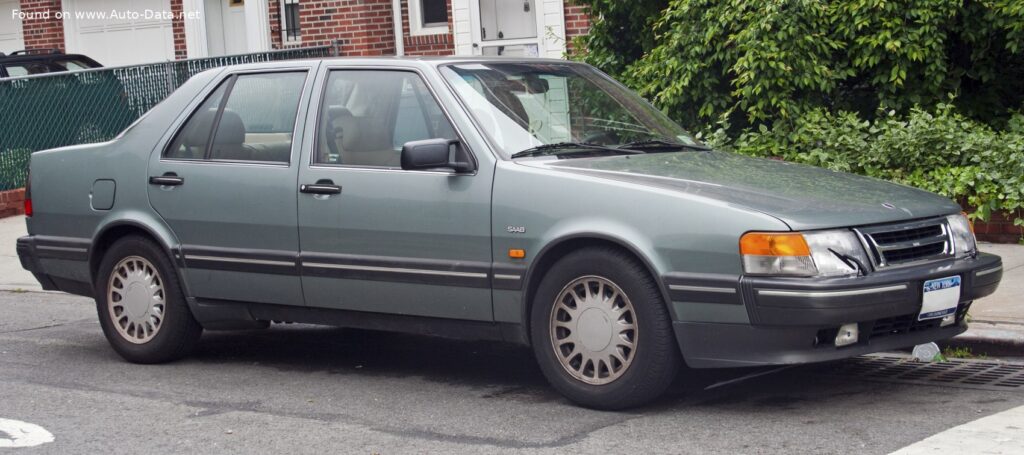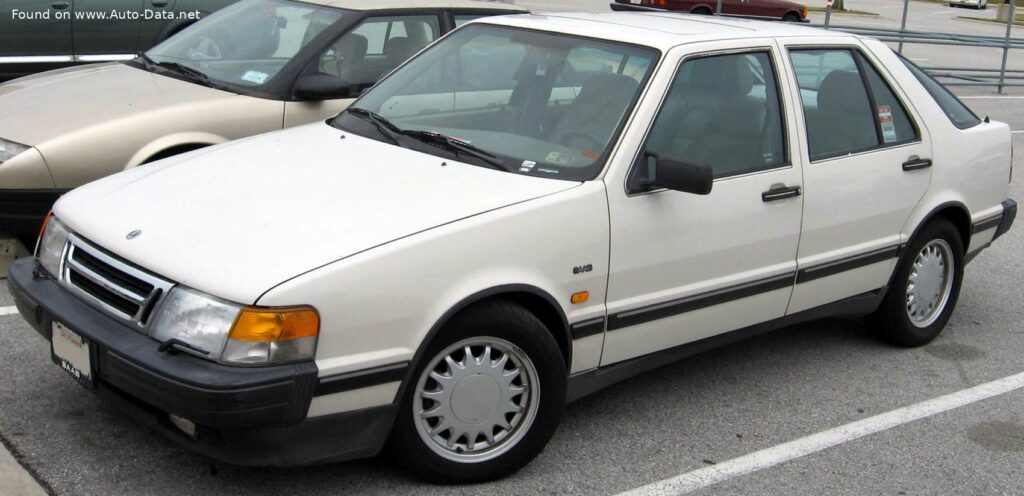
The Saab 9000 Hatchback 2.0 16V CS, produced from 1993 to 1998, represents a significant evolution in Saab’s model lineup. Positioned as a spacious, comfortable, and technologically advanced family car, the 9000 aimed to bridge the gap between the smaller Saab 900 and the more luxurious Saab 9000 CD. This model, particularly the 2.0 16V CS variant with its 131 horsepower engine, was a popular choice in European markets, offering a blend of performance, practicality, and Saab’s distinctive Scandinavian design ethos. While never officially sold in large numbers in the United States, the 9000 gained a following among enthusiasts who appreciated its unique character and engineering.
The Saab 9000: A Legacy of Innovation
The 9000 series, launched in 1984, was Saab’s first venture into a larger, more mainstream segment. It replaced the aging Saab 99 and aimed to compete with established European rivals like the BMW 5 Series and Audi 100. The hatchback body style, offered alongside a sedan, provided enhanced practicality and cargo space. The “CS” designation in the 2.0 16V CS model indicates a specific trim level, typically featuring enhanced equipment and a sportier aesthetic compared to base models. The 16V designation refers to the engine’s four-valve-per-cylinder cylinder head, a feature that improved breathing and increased power output.
Engine & Performance
The heart of the Saab 9000 Hatchback 2.0 16V CS is its 1985 cc (121.13 cubic inches) inline-four cylinder engine. This naturally aspirated engine, designated the B204, produces 131 horsepower at 6100 rpm and 177 Nm (130.55 lb-ft) of torque at 4300 rpm. The engine utilizes multi-port fuel injection and a double overhead camshaft (DOHC) valvetrain, contributing to its relatively high power output for its displacement – 66 horsepower per liter. Power is delivered to the front wheels via a five-speed manual transmission. Acceleration from 0 to 100 km/h (0-62 mph) takes 11.5 seconds, while 0 to 60 mph is achieved in approximately 10.9 seconds. The car boasts a top speed of 200 km/h (124.27 mph). The weight-to-power ratio of 10.4 kg/Hp and a weight-to-torque ratio of 7.7 kg/Nm indicate a reasonably balanced performance profile for its era.
Design & Features
The Saab 9000 Hatchback is characterized by its distinctive, aerodynamic design. The sloping rear hatch and wraparound rear window are hallmarks of Saab’s styling language of the period. The interior prioritizes ergonomics and functionality, with a driver-focused layout and comfortable seating for five passengers. The 9000 offered a generous amount of interior space, with a trunk capacity ranging from 487 liters (17.2 cubic feet) with the rear seats up to 883 liters (31.18 cubic feet) with them folded down. Safety was a key consideration in the 9000’s design, and the 2.0 16V CS model was equipped with an Anti-lock Braking System (ABS) as standard, a relatively advanced feature for the early 1990s. Hydraulic power steering provided ease of maneuverability. The car’s overall length is 4761 mm (187.44 inches), with a width of 1788 mm (70.39 inches) and a height of 1420 mm (55.91 inches). The wheelbase measures 2672 mm (105.2 inches).
Technical Specifications
| Brand | Saab |
| Model | 9000 |
| Generation | 9000 Hatchback |
| Type (Engine) | 2.0 16V CS (131 Hp) |
| Start of production | 1993 |
| End of production | 1998 |
| Powertrain Architecture | Internal Combustion engine |
| Body type | Hatchback |
| Seats | 5 |
| Doors | 5 |
| Fuel consumption (combined) | 9.2 l/100 km |
| Fuel consumption (US mpg) | 25.6 US mpg |
| Fuel consumption (UK mpg) | 30.7 UK mpg |
| Fuel consumption (km/l) | 10.9 km/l |
| Fuel Type | Petrol (Gasoline) |
| Acceleration 0 – 100 km/h | 11.5 sec |
| Acceleration 0 – 62 mph | 11.5 sec |
| Acceleration 0 – 60 mph | 10.9 sec |
| Maximum speed | 200 km/h (124.27 mph) |
| Weight-to-power ratio | 10.4 kg/Hp |
| Weight-to-torque ratio | 7.7 kg/Nm |
| Power | 131 Hp @ 6100 rpm |
| Power per litre | 66 Hp/l |
| Torque | 177 Nm @ 4300 rpm (130.55 lb.-ft. @ 4300 rpm) |
| Engine layout | Front, Transverse |
| Engine Model/Code | B204 |
| Engine displacement | 1985 cm3 (121.13 cu. in.) |
| Number of cylinders | 4 |
| Engine configuration | Inline |
| Cylinder Bore | 90 mm (3.54 in.) |
| Piston Stroke | 78 mm (3.07 in.) |
| Compression ratio | 10.1:1 |
| Number of valves per cylinder | 4 |
| Fuel injection system | Multi-port manifold injection |
| Engine aspiration | Naturally aspirated engine |
| Valvetrain | DOHC |
| Engine oil capacity | 5 l (5.28 US qt | 4.4 UK qt) |
| Coolant capacity | 9 l (9.51 US qt | 7.92 UK qt) |
| Kerb Weight | 1360 kg (2998.29 lbs.) |
| Max. weight | 1920 kg (4232.88 lbs.) |
| Max load | 560 kg (1234.59 lbs.) |
| Trunk (boot) space – minimum | 487 l (17.2 cu. ft.) |
| Trunk (boot) space – maximum | 883 l (31.18 cu. ft.) |
| Fuel tank capacity | 66 l (17.44 US gal | 14.52 UK gal) |
| Length | 4761 mm (187.44 in.) |
| Width | 1788 mm (70.39 in.) |
| Height | 1420 mm (55.91 in.) |
| Wheelbase | 2672 mm (105.2 in.) |
| Front track | 1522 mm (59.92 in.) |
| Rear (Back) track | 1492 mm (58.74 in.) |
| Drivetrain Architecture | Front wheel drive |
| Number of gears and type of gearbox | 5 gears, manual transmission |
| Front suspension | Wishbone |
| Rear suspension | Suspension with traction connecting levers |
| Front brakes | Ventilated discs |
| Rear brakes | Disc |
| Assisting systems | ABS (Anti-lock braking system) |
| Steering type | Steering rack and pinion |
| Power steering | Hydraulic Steering |
| Tires size | 195/65 R15 |
| Wheel rims size | 15 |
The Saab 9000 Hatchback 2.0 16V CS, while not a high-performance sports car, offered a compelling package of comfort, practicality, and understated style. Its blend of Scandinavian design, innovative safety features, and reliable powertrain made it a popular choice for discerning drivers in Europe during the 1990s. Although its presence in the US market was limited, the 9000 remains a fondly remembered and appreciated vehicle among Saab enthusiasts.