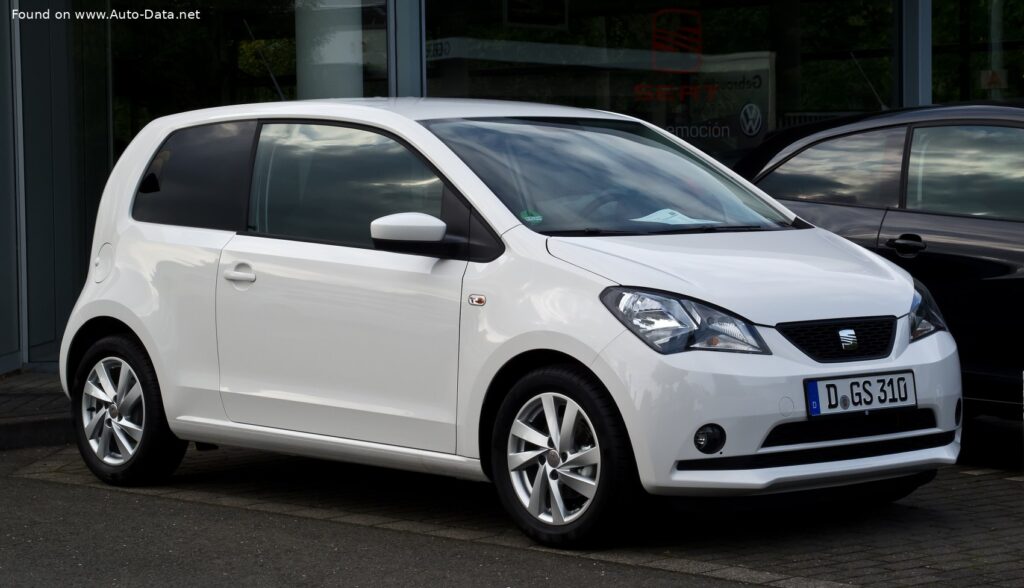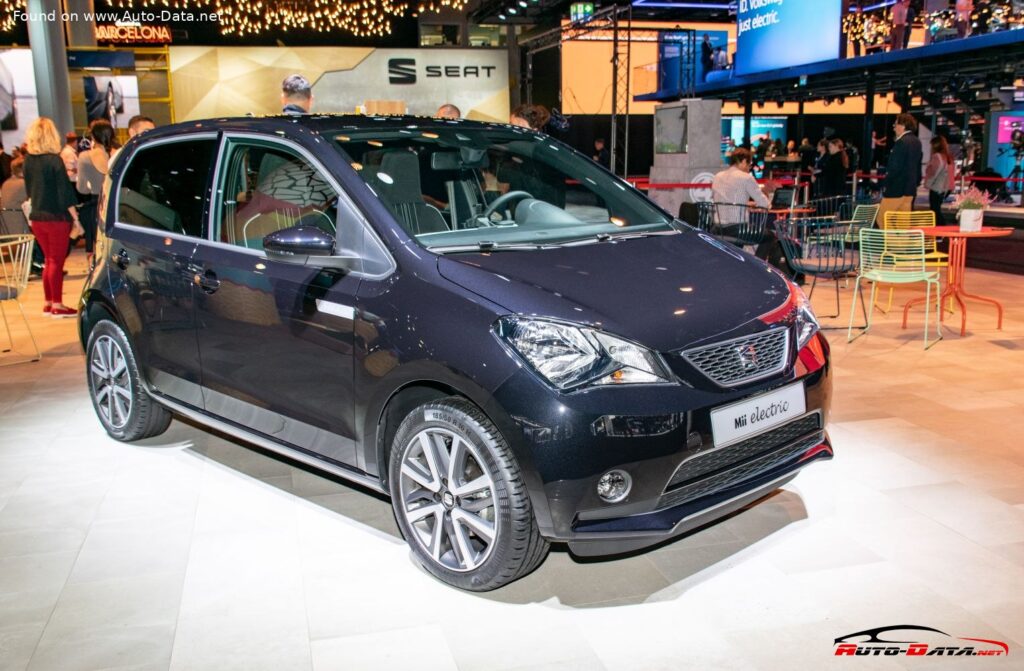
The SEAT Mii Electric is a city car produced by the Spanish automobile manufacturer SEAT from 2019 to 2021. As part of the Volkswagen Group, the Mii Electric shares its platform and core components with the Volkswagen e-up! and Škoda Citigoe iV. Designed primarily for the European market, it represented SEAT’s entry into the all-electric vehicle segment, offering a compact and affordable electric option for urban commuters. While not officially sold in the United States, understanding the Mii Electric provides insight into the growing trend of small, efficient electric vehicles gaining popularity globally.
SEAT Mii Electric: An Overview
The Mii Electric emerged as SEAT’s response to increasing demand for electric vehicles, particularly in densely populated European cities. It’s a five-door hatchback, designed to maximize interior space within a small footprint. The vehicle’s focus is on practicality, ease of use, and zero-emission driving. The Mii Electric was positioned as an accessible electric vehicle, aiming to broaden the appeal of electric mobility beyond early adopters. Production spanned a relatively short period, reflecting the rapid evolution of battery technology and the introduction of newer electric models within the Volkswagen Group.
Engine & Performance
The SEAT Mii Electric is powered by a single electric motor producing 83 horsepower (Hp) and 212 Nm (156.36 lb.-ft.) of torque. This motor is mounted on the front axle in a transverse configuration, driving the front wheels. The powertrain utilizes a 36.8 kWh gross battery capacity, with a usable capacity of 32.3 kWh. The battery, utilizing Lithium-ion technology, is located under the floor of the vehicle, contributing to a lower center of gravity and improved stability. Acceleration from 0 to 100 km/h (0-62 mph) takes 12.3 seconds, while 0 to 60 mph is achieved in approximately 11.7 seconds. The top speed is electronically limited to 130 km/h (80.78 mph). The weight-to-power ratio is 14 kg/Hp, and the weight-to-torque ratio is 5.5 kg/Nm. The single-speed automatic transmission simplifies the driving experience, focusing on efficient power delivery.
Design & Features
The SEAT Mii Electric maintains the familiar hatchback body style of the conventional Mii, with subtle design cues to indicate its electric nature. The five-door configuration provides easy access to both front and rear seats. Inside, the Mii Electric offers seating for five passengers. Key features include ABS (Anti-lock braking system) for enhanced safety, electric power steering for ease of maneuverability, and a range of interior trim options. Trunk space ranges from 250 liters (8.83 cu. ft.) with the rear seats up to 923 liters (32.6 cu. ft.) with the rear seats folded down, offering reasonable cargo capacity for a vehicle of its size. The vehicle’s compact dimensions – a length of 3556 mm (140 in.), a width of 1645 mm (64.76 in.), and a height of 1481 mm (58.31 in.) – make it well-suited for navigating narrow city streets and parking in tight spaces.
Charging and Range
The Mii Electric offers a WLTP-certified all-electric range of 250-259 km (155.34 – 160.94 mi). Average energy consumption is rated at 14.4-14.9 kWh/100 km (23.17 – 23.98 kWh/100 mi), equating to approximately 145-141 MPGe. Using a standard charging setup, a full charge can take several hours. The battery voltage is 307V. The Mii Electric’s range and charging times were competitive within its segment, making it a viable option for daily commutes and urban driving.
Technical Specifications
| Brand | Seat |
| Model | Mii |
| Generation | Mii Electric |
| Type (Engine) | 36.8 kWh (83 Hp) |
| Start of production | 2019 |
| End of production | 2021 |
| Powertrain Architecture | BEV (Electric Vehicle) |
| Body type | Hatchback |
| Seats | 5 |
| Doors | 5 |
| Fuel Type | Electricity |
| Acceleration 0 – 100 km/h | 12.3 sec |
| Acceleration 0 – 62 mph | 12.3 sec |
| Acceleration 0 – 60 mph | 11.7 sec |
| Maximum speed | 130 km/h (80.78 mph) |
| Weight-to-power ratio | 14 kg/Hp |
| Weight-to-torque ratio | 5.5 kg/Nm |
| Gross battery capacity | 36.8 kWh |
| Net (usable) battery capacity | 32.3 kWh |
| Battery voltage | 307 V |
| Battery technology | Lithium-ion (Li-Ion) |
| Battery location | Below the floor |
| All-electric range (WLTP) | 250-259 km (155.34 – 160.94 mi) |
| Average Energy consumption (WLTP) | 14.4-14.9 kWh/100 km (23.17 – 23.98 kWh/100 mi) |
| Average Energy consumption | 12.7-12.9 kWh/100 km (20.44 – 20.76 kWh/100 mi) |
| Electric motor power | 83 Hp |
| Electric motor Torque | 212 Nm (156.36 lb.-ft.) |
| Electric motor location | Front axle, Transverse |
| Electric motor type | Synchronous |
| System power | 83 Hp |
| System torque | 212 Nm (156.36 lb.-ft.) |
| Kerb Weight | 1160 kg (2557.36 lbs.) |
| Max. weight | 1530 kg (3373.07 lbs.) |
| Max load | 370 kg (815.71 lbs.) |
| Trunk (boot) space – minimum | 250 l (8.83 cu. ft.) |
| Trunk (boot) space – maximum | 923 l (32.6 cu. ft.) |
| Length | 3556 mm (140 in.) |
| Width | 1645 mm (64.76 in.) |
| Width including mirrors | 1910 mm (75.2 in.) |
| Height | 1481 mm (58.31 in.) |
| Wheelbase | 2421 mm (95.31 in.) |
| Drivetrain Architecture | One electric motor drives the front wheels. |
| Drive wheel | Front wheel drive |
| Number of gears and type of gearbox | 1 gears, automatic transmission |
The SEAT Mii Electric, though short-lived, played a role in demonstrating the viability of affordable electric vehicles for urban environments. Its compact size, practical features, and zero-emission operation made it an attractive option for environmentally conscious drivers in Europe. While not available in the US market, it represents a significant step in the evolution of electric mobility and the broader adoption of sustainable transportation solutions.