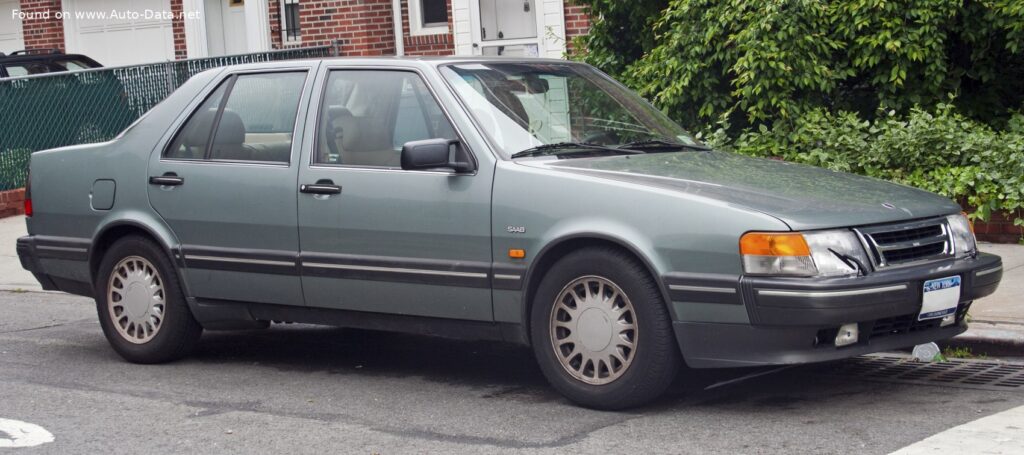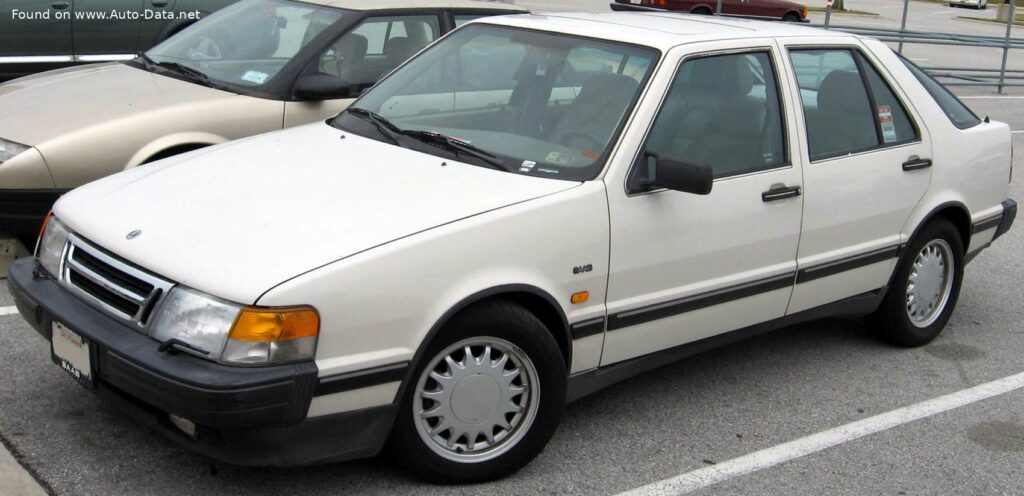
The Saab 9000 Hatchback 2.3 16V CSE represents a significant evolution in Saab’s model lineup, produced between 1993 and 1998. Positioned as a spacious, comfortable, and technologically advanced family car, the 9000 aimed to blend Scandinavian practicality with a sporty driving experience. This generation of the 9000, particularly the 2.3 16V CSE variant, offered a compelling alternative to more mainstream European and Japanese offerings, emphasizing safety, innovative design, and a unique driving character. While never a high-volume seller in the United States, the 9000 cultivated a loyal following among those seeking a distinctive and well-engineered vehicle.
Saab 9000 Hatchback 2.3 16V CSE: An Overview
The 9000 series, launched in 1984, was Saab’s attempt to move upmarket and compete with executive cars from BMW, Audi, and Mercedes-Benz. The hatchback body style, introduced later in the production run, provided increased versatility and cargo capacity compared to the original sedan. The “CSE” designation denoted a specific trim level, typically including enhanced equipment and a more refined interior. The 2.3-liter 16-valve engine was a key component of the CSE model, offering a balance of performance and fuel efficiency. The Saab 9000 was a crucial model for the brand, showcasing its commitment to innovation and independent engineering.
Engine & Performance
The heart of the Saab 9000 Hatchback 2.3 16V CSE is its naturally aspirated, inline-four cylinder B234 engine. Displacing 2.3 liters (2290 cm³ or 139.74 cu. in.), this engine produces 147 horsepower at 5600 rpm and 205 Nm (151.2 lb.-ft.) of torque at 3800 rpm. This configuration delivers a power-to-liter ratio of 64.2 hp/l. Power is delivered to the front wheels via a five-speed manual transmission. The 9000 CSE achieves a 0-100 km/h (0-62 mph) acceleration time of 10 seconds, and a 0-60 mph time of approximately 9.5 seconds. Its top speed is rated at 210 km/h (130.49 mph). The engine’s weight-to-power ratio is 9.3 kg/Hp, and the weight-to-torque ratio is 6.6 kg/Nm, indicating a reasonably efficient powertrain for its time. The engine utilizes multi-port fuel injection and a double overhead camshaft (DOHC) valvetrain, contributing to its responsive performance.
Design & Features
The Saab 9000 Hatchback is characterized by its distinctive, aerodynamic design. The five-door hatchback body style offers practical access to a spacious interior and a generous cargo area. The trunk provides 487 liters (17.2 cu. ft.) of space with the rear seats up, expanding to 883 liters (31.18 cu. ft.) when folded down. Inside, the 9000 prioritizes driver comfort and ergonomics. Saab was renowned for its attention to driver-focused design, and the 9000 features a well-laid-out dashboard and supportive seats. Safety was also a key consideration, with the inclusion of an Anti-lock Braking System (ABS) as standard equipment. The 9000’s design language, while distinctly Saab, also reflected the broader trends of the early 1990s, emphasizing smooth lines and a relatively understated aesthetic. The vehicle’s dimensions are: length 4761 mm (187.44 in.), width 1778 mm (70 in.), and height 1420 mm (55.91 in.).
Technical Specifications
| Brand | Saab |
| Model | 9000 |
| Generation | 9000 Hatchback |
| Type (Engine) | 2.3 16V CSE (147 Hp) |
| Start of production | 1993 |
| End of production | 1998 |
| Powertrain Architecture | Internal Combustion engine |
| Body type | Hatchback |
| Seats | 5 |
| Doors | 5 |
| Fuel consumption (combined) | 9.2 l/100 km |
| Fuel consumption (US mpg) | 25.6 US mpg |
| Fuel consumption (UK mpg) | 30.7 UK mpg |
| Fuel consumption (km/l) | 10.9 km/l |
| Fuel Type | Petrol (Gasoline) |
| Acceleration 0 – 100 km/h | 10 sec |
| Acceleration 0 – 62 mph | 10 sec |
| Acceleration 0 – 60 mph | 9.5 sec |
| Maximum speed | 210 km/h (130.49 mph) |
| Weight-to-power ratio | 9.3 kg/Hp |
| Weight-to-torque ratio | 6.6 kg/Nm |
| Power | 147 Hp @ 5600 rpm |
| Power per litre | 64.2 Hp/l |
| Torque | 205 Nm @ 3800 rpm (151.2 lb.-ft. @ 3800 rpm) |
| Engine layout | Front, Transverse |
| Engine Model/Code | B234 |
| Engine displacement | 2290 cm³ (139.74 cu. in.) |
| Number of cylinders | 4 |
| Engine configuration | Inline |
| Cylinder Bore | 90 mm (3.54 in.) |
| Piston Stroke | 90 mm (3.54 in.) |
| Compression ratio | 10.5:1 |
| Number of valves per cylinder | 4 |
| Fuel injection system | Multi-port manifold injection |
| Engine aspiration | Naturally aspirated engine |
| Valvetrain | DOHC |
| Engine oil capacity | 5 l (5.28 US qt | 4.4 UK qt) |
| Coolant capacity | 9 l (9.51 US qt | 7.92 UK qt) |
| Kerb Weight | 1360 kg (2998.29 lbs.) |
| Max. weight | 1920 kg (4232.88 lbs.) |
| Max load | 560 kg (1234.59 lbs.) |
| Trunk (boot) space – minimum | 487 l (17.2 cu. ft.) |
| Trunk (boot) space – maximum | 883 l (31.18 cu. ft.) |
| Fuel tank capacity | 66 l (17.44 US gal | 14.52 UK gal) |
| Length | 4761 mm (187.44 in.) |
| Width | 1778 mm (70 in.) |
| Height | 1420 mm (55.91 in.) |
| Wheelbase | 2672 mm (105.2 in.) |
| Front track | 1522 mm (59.92 in.) |
| Rear track | 1492 mm (58.74 in.) |
| Drivetrain Architecture | Front wheel drive |
| Number of gears | 5 gears, manual transmission |
| Front suspension | Wishbone |
| Rear suspension | Suspension with traction connecting levers |
| Front brakes | Ventilated discs |
| Rear brakes | Disc |
| Assisting systems | ABS (Anti-lock braking system) |
| Steering type | Steering rack and pinion |
| Power steering | Hydraulic Steering |
| Tires size | 195/65 R15 |
| Wheel rims size | 15 |
The Saab 9000 Hatchback 2.3 16V CSE, while discontinued in 1998, remains a respected vehicle among enthusiasts. Its blend of practicality, performance, and distinctive Scandinavian design continues to appeal to those seeking a unique and well-engineered automobile.