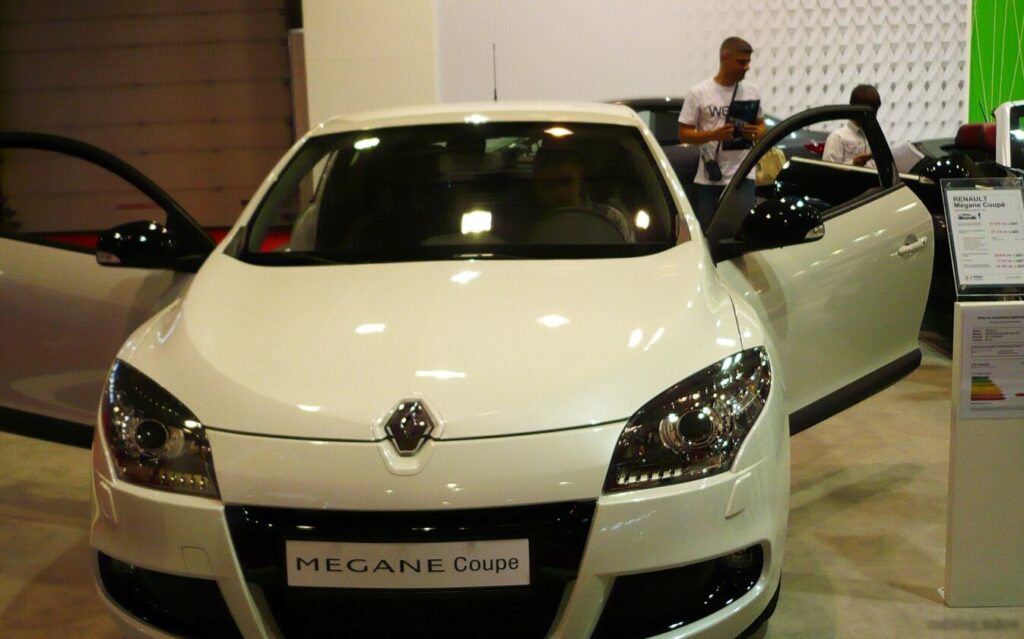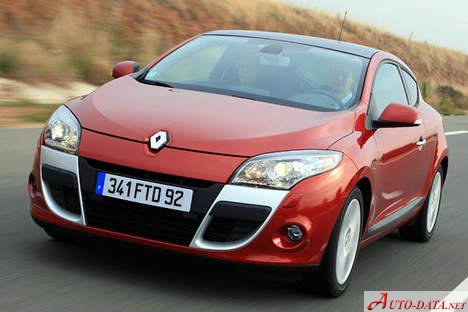
The Renault Megane III Coupe 1.6 16V, produced between 2008 and 2012, represents Renault’s entry into the compact coupe market. As part of the broader Megane III range, this model aimed to offer a more stylish and sporty alternative to the hatchback and estate versions. While the Megane was a mainstay in European markets, it wasn’t directly sold in the United States. However, understanding its specifications and position within the European automotive landscape provides insight into the trends of the time – a focus on fuel efficiency, accessible performance, and appealing design within the C-segment.
Renault Megane III Coupe 1.6 16V: An Overview
The Megane III, launched in 2008, was a significant update to Renault’s popular compact model. The Coupe variant, specifically, targeted buyers seeking a more dynamic and visually appealing vehicle. It offered a three-door body style, seating for five, and a range of engines, including the 1.6-liter 16V petrol engine discussed here. This engine was positioned as a balance between affordability and performance, making the Coupe accessible to a wider audience. The car competed with models like the Peugeot RCZ, Opel Astra Coupe, and Volkswagen Scirocco in the European market.
Engine & Performance
The heart of the Megane III Coupe 1.6 16V is a 1.6-liter inline-four cylinder petrol engine, designated the K4M 858. This naturally aspirated engine produces 110 horsepower (Hp) at 6000 rpm and 151 Newton-meters (111.37 lb.-ft.) of torque at 4250 rpm. While not a high-performance engine, it provides adequate power for everyday driving. The engine features multi-port fuel injection and a double overhead camshaft (DOHC) valvetrain, contributing to its relatively efficient operation. The power-to-weight ratio is 11 kg/Hp, and the torque-to-weight ratio is 8 kg/Nm.
Performance figures include a 0-100 km/h (0-62 mph) acceleration time of 10.5 seconds and a top speed of 190 km/h (118.06 mph). Fuel economy is rated at 7.1 liters per 100 kilometers (33.1 US mpg) combined, with 9.7 l/100km (24.2 US mpg) in urban conditions and 5.6 l/100km (42 US mpg) on the extra-urban cycle. CO2 emissions are rated at 163 g/km, placing it within the Euro 4 emission standard.
Design & Features
The Megane III Coupe boasts a sleek, three-door coupe body style. Its design emphasized a sporty aesthetic, with a sloping roofline and a more aggressive front fascia compared to the hatchback version. The interior offered seating for five passengers, although rear passenger space was somewhat limited due to the coupe configuration.
Standard features typically included air conditioning, power windows, and a basic audio system. Safety features, common for vehicles of this era, included Anti-lock Braking System (ABS). The car’s suspension utilized an independent McPherson strut setup at the front and a torsion beam at the rear, providing a balance between comfort and handling. The steering system is a rack and pinion type with electric power steering. Trunk space is a practical 344 liters (12.15 cu. ft.) minimum, expanding to 377 liters (13.31 cu. ft.) with the rear seats folded.
Technical Specifications
| Brand | Renault |
| Model | Megane |
| Generation | Megane III Coupe |
| Type (Engine) | 1.6 16V (110 Hp) |
| Start of production | 2008 |
| End of production | 2012 |
| Powertrain Architecture | Internal Combustion engine |
| Body type | Coupe |
| Seats | 5 |
| Doors | 3 |
| Fuel consumption (urban) | 9.7 l/100 km (24.2 US mpg) |
| Fuel consumption (extra urban) | 5.6 l/100 km (42 US mpg) |
| Fuel consumption (combined) | 7.1 l/100 km (33.1 US mpg) |
| CO2 emissions | 163 g/km |
| Fuel Type | Petrol (Gasoline) |
| Acceleration 0 – 100 km/h | 10.5 sec |
| Acceleration 0 – 62 mph | 10.5 sec |
| Acceleration 0 – 60 mph | 10 sec |
| Maximum speed | 190 km/h (118.06 mph) |
| Emission standard | Euro 4 |
| Weight-to-power ratio | 11 kg/Hp |
| Weight-to-torque ratio | 8 kg/Nm |
| Power | 110 Hp @ 6000 rpm |
| Torque | 151 Nm @ 4250 rpm (111.37 lb.-ft. @ 4250 rpm) |
| Engine layout | Front, Transverse |
| Engine Model/Code | K4M 858 |
| Engine displacement | 1598 cm3 (97.52 cu. in.) |
| Number of cylinders | 4 |
| Engine configuration | Inline |
| Cylinder Bore | 79.5 mm (3.13 in.) |
| Piston Stroke | 80.5 mm (3.17 in.) |
| Compression ratio | 10:1 |
| Number of valves per cylinder | 4 |
| Fuel injection system | Multi-port manifold injection |
| Engine aspiration | Naturally aspirated engine |
| Valvetrain | DOHC |
| Engine oil capacity | 4.8 l (5.07 US qt | 4.22 UK qt) |
| Coolant | 5.3 l (5.6 US qt | 4.66 UK qt) |
| Kerb Weight | 1205 kg (2656.57 lbs.) |
| Max. weight | 1728 kg (3809.59 lbs.) |
| Max load | 523 kg (1153.02 lbs.) |
| Trunk (boot) space – minimum | 344 l (12.15 cu. ft.) |
| Trunk (boot) space – maximum | 377 l (13.31 cu. ft.) |
| Fuel tank capacity | 60 l (15.85 US gal | 13.2 UK gal) |
| Max. roof load | 80 kg (176.37 lbs.) |
| Permitted trailer load with brakes (12%) | 1300 kg (2866.01 lbs.) |
| Permitted trailer load without brakes | 640 kg (1410.96 lbs.) |
| Permitted towbar download | 75 kg (165.35 lbs.) |
| Length | 4299 mm (169.25 in.) |
| Width | 1804 mm (71.02 in.) |
| Width including mirrors | 2037 mm (80.2 in.) |
| Height | 1423 mm (56.02 in.) |
| Wheelbase | 2640 mm (103.94 in.) |
| Front track | 1546 mm (60.87 in.) |
| Rear (Back) track | 1547 mm (60.91 in.) |
| Front overhang | 862 mm (33.94 in.) |
| Rear overhang | 797 mm (31.38 in.) |
| Ride height (ground clearance) | 120 mm (4.72 in.) |
| Minimum turning circle (turning diameter) | 10.95 m (35.93 ft.) |
| Drive wheel | Front wheel drive |
| Number of gears and type of gearbox | 6 gears, manual transmission |
| Front suspension | Independent type McPherson |
| Rear suspension | Torsion |
| Front brakes | Ventilated discs |
| Rear brakes | Disc |
| Assisting systems | ABS (Anti-lock braking system) |
| Steering type | Steering rack and pinion |
| Power steering | Electric Steering |
| Tires size | 205/55 R16; 205/50 R17 |
| Wheel rims size | 6.5J x 16; 6.5J x 17 |
The Renault Megane III Coupe 1.6 16V, while not a performance icon, offered a compelling package of style, efficiency, and practicality within the European C-segment. Its focus on accessible motoring and attractive design contributed to its popularity during its production run.